
Genesis: Revolutionizing Robotic Training With Unprecedented Speed

December 20, 2024
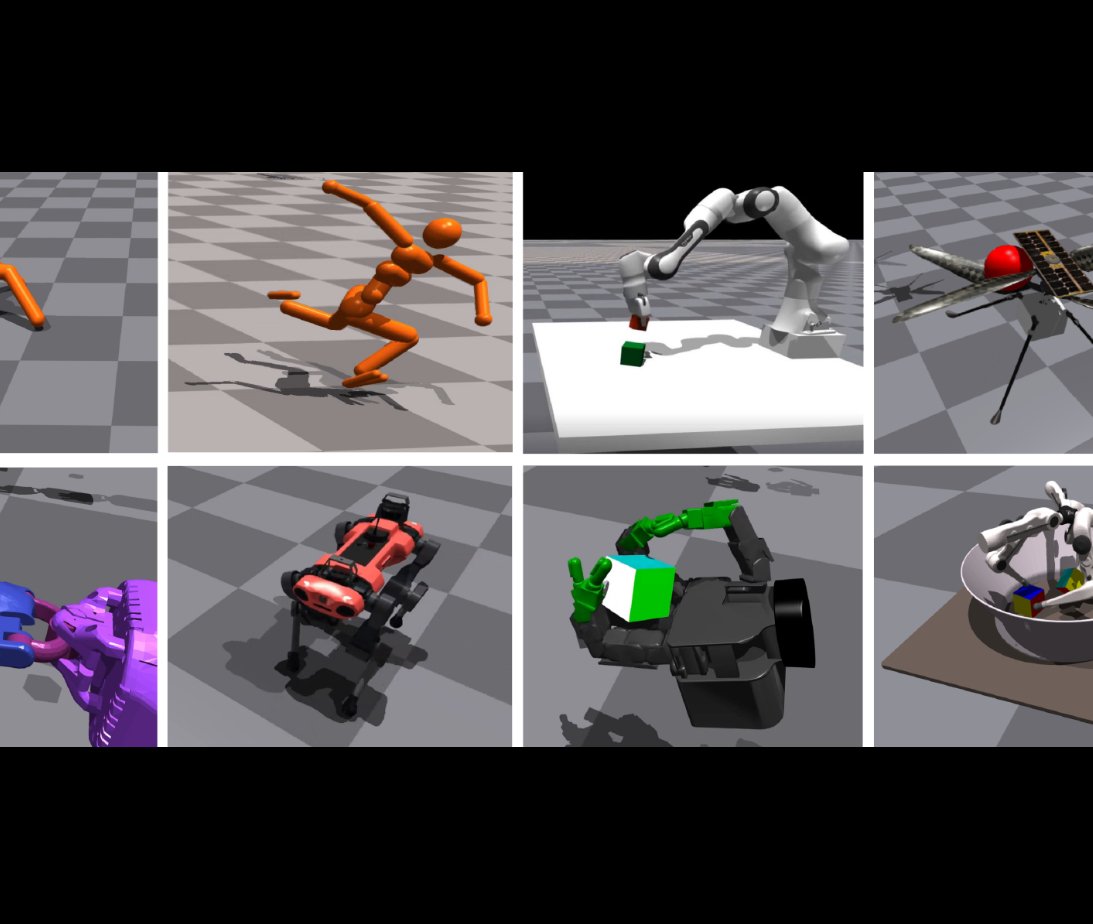
In the ever-evolving field of artificial intelligence and robotics, time has always been a critical limiting factor. Training robots to perform complex tasks traditionally required years or even decades due to the need for real-world simulations or hardware trials. However, a groundbreaking new physics simulation platform named Genesis is poised to upend this paradigm. By enabling robotic systems to train 430,000 times faster than real-world conditions, Genesis compresses decades of learning into mere hours. Its innovative use of 3D worlds generated from simple text descriptions could redefine the possibilities of AI and robotics across industries.
The Genesis Breakthrough: A New Era of Simulated Learning
At its core, Genesis leverages advanced physics engines and state-of-the-art computational power to create hyper-realistic 3D environments. What makes it revolutionary is its ability to construct these environments using text-to-3D world generation. Researchers input textual descriptions, and the system automatically generates training scenarios tailored to specific tasks. This removes the bottleneck of manually designing simulation environments, which traditionally required significant expertise and time.
Speed as the Game-Changer
By operating 430,000 times faster than reality, Genesis allows robots to experience years’ worth of trial-and-error learning in a fraction of the time. For example, tasks like mastering intricate surgical procedures, complex manufacturing operations, or autonomous driving, which previously took years to train, can now be achieved in hours or days.
Physics-Based Realism
Unlike conventional training methods, Genesis incorporates highly accurate physics simulations that mimic real-world conditions such as gravity, friction, and material properties. This ensures that robots trained within these virtual environments are well-prepared for deployment in real-world scenarios.
Text-to-3D Simulations
The ability to generate training environments from text inputs is a significant innovation. By simply describing a scenario—such as “a factory assembly line with varying conveyor speeds and random obstacles”—Genesis conjures a detailed, interactive simulation. This dramatically lowers the barrier to entry for creating custom training scenarios.
How Genesis Works: The Technology Behind the Speed
The secret behind Genesis lies in its combination of several cutting-edge technologies:
Neural Rendering and Text-to-World Translation
Genesis employs neural rendering models to translate text inputs into highly detailed 3D environments. These models are trained on vast datasets of real-world environments, allowing them to generate realistic visuals, objects, and interactions.
Parallelized Simulation
By using massive parallel computing infrastructures, Genesis can run thousands of training simulations simultaneously. Each simulation trains a robot on a slightly different variation of the task, ensuring robust and comprehensive learning.
Reinforcement Learning Integration
Genesis is designed to work seamlessly with reinforcement learning algorithms, a cornerstone of modern AI. Robots are rewarded for completing tasks effectively and penalized for errors, allowing them to iteratively refine their behaviors.
Physics-Accelerated Computation
Leveraging GPU-accelerated physics engines, Genesis can simulate complex dynamics—like fluid interactions, rigid body collisions, or soft material deformations—at speeds far beyond what traditional simulators can achieve.
Applications Across Industries
The potential applications of Genesis are as vast as its capabilities. Here’s how it could transform various sectors:
Healthcare
Robots in the medical field, such as surgical assistants, often require extensive training to perform delicate procedures. With Genesis, these robots can practice millions of surgeries in hours, ensuring precision and reducing the likelihood of errors.
Manufacturing
Industrial robots that handle tasks like assembly, welding, or quality inspection can benefit from Genesis’s rapid training cycles. Factories could deploy more versatile robots, capable of adapting to different tasks and environments on the fly.
Autonomous Vehicles
Self-driving cars need to navigate countless scenarios, from bad weather to unpredictable pedestrians. Genesis can generate these scenarios at scale, allowing autonomous systems to perfect their driving algorithms quickly and safely.
Defense and Disaster Response
Robots used for bomb disposal, search and rescue, or reconnaissance missions often face unpredictable environments. Genesis can prepare them by exposing them to diverse challenges, ensuring they’re ready for real-world deployment.
Space Exploration
Space exploration robots must operate in extreme conditions where real-world testing is impractical. Genesis can simulate extraterrestrial environments, such as Martian terrain or asteroid surfaces, enabling robots to train for their missions before leaving Earth.
Ethical Implications and Challenges
While Genesis represents a monumental leap forward, it also raises important ethical questions and practical challenges:
Bias in Training Data
The quality of Genesis’s text-to-3D environments depends on the data used to train its models. If biases exist in this data, robots could inherit these biases, leading to suboptimal or even harmful behaviors.
Energy Consumption
High-speed, large-scale simulations require immense computational resources, which can have significant energy footprints. Balancing the benefits of Genesis with its environmental impact will be crucial.
Over-Reliance on Simulations
While Genesis’s simulations are highly realistic, they are not a perfect substitute for real-world experience. Over-reliance on virtual training could result in robots encountering unforeseen challenges when deployed.
Accessibility and Equity
The cutting-edge nature of Genesis means it may initially be accessible only to large corporations or wealthy nations. Ensuring equitable access to such transformative technology will be critical in maximizing its global impact.
Genesis vs. Traditional Training: A Comparative Analysis
Aspect Genesis Traditional Training
Speed 430,000 times faster than reality Limited by real-world time
Cost High upfront computational costs, but scalable Expensive due to physical setups and resources
Flexibility Text-to-3D generation enables customization Requires manual environment design
Scalability Thousands of parallel simulations possible Limited to one scenario at a time
Accuracy High realism with physics-based simulations Directly aligned with real-world conditions
A Glimpse Into the Future: Robots Evolved
The speed and flexibility of Genesis hint at a future where robots can evolve at an unprecedented pace. By running millions of iterations in hours, Genesis could enable robots to achieve levels of skill, adaptability, and intelligence previously thought impossible.
Hyper-Adaptive Systems
Robots trained with Genesis could become hyper-adaptive, capable of learning new tasks in real time based on their extensive virtual training experience.
Collaborative Robots
Genesis could facilitate the development of robots that work seamlessly with humans, understanding nuanced commands and adjusting their actions based on human behavior.
Continuous Learning
Future iterations of Genesis could allow robots to update their skills continuously, even after deployment, ensuring they remain effective in dynamic environments.
Impression
Genesis represents a monumental leap in robotic training, compressing decades of learning into hours and redefining what’s possible in AI and robotics. Its text-to-3D world generation, combined with physics-based realism and unparalleled speed, makes it a transformative tool for industries ranging from healthcare to space exploration.
However, as we embrace this new era, we must also navigate the ethical and practical challenges it presents. By addressing issues like bias, energy consumption, and equitable access, we can ensure that Genesis fulfills its potential as a force for global good.
As Genesis continues to evolve, one thing is clear: the future of robotics has arrived, and it’s faster, smarter, and more innovative than ever before.



No comments yet.