The Great Model: Sir Christopher Wren’s Vision for St. Paul’s Cathedral

December 29, 2024
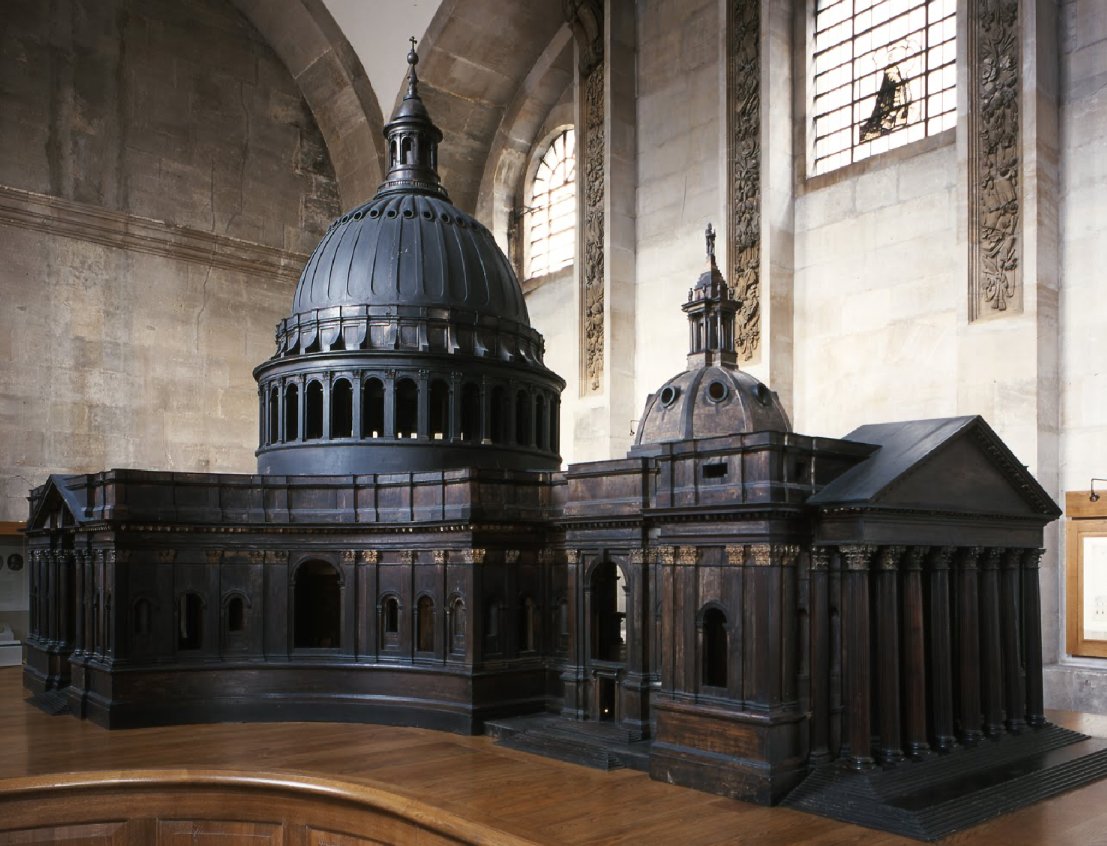
The Great Model, created by Sir Christopher Wren and brought to life by master carpenter William Cleere, is an enduring artifact of architectural ambition. This intricate 1:25 scale model was designed to showcase Wren’s original proposal for St. Paul’s Cathedral, a grandiose vision of baroque splendor that aimed to redefine ecclesiastical architecture in London. Although the design was ultimately rejected, the Great Model remains an invaluable piece of history, providing insight into Wren’s creative process and the architectural challenges of 17th-century England.
This article delves into the history, craftsmanship, and legacy of the Great Model, exploring its connection to St. Paul’s Cathedral and its significance as an artistic and historical treasure.
The Context: Rebuilding St. Paul’s Cathedral After the Great Fire
In 1666, the Great Fire of London devastated much of the city, including the medieval St. Paul’s Cathedral, which had stood as a religious landmark for centuries. The destruction of the old cathedral presented an opportunity to rebuild on a scale that matched London’s aspirations as a global city. Sir Christopher Wren, already an esteemed scientist and architect, was appointed to oversee the design and construction of the new cathedral.
Wren’s vision for St. Paul’s was ambitious: he sought to create a structure that combined the grandeur of classical European churches with innovative architectural techniques. However, designing such a monumental building required more than just sketches and drawings. To convey his ideas effectively and ensure every detail was understood, Wren commissioned the construction of the Great Model in 1673.
The Great Model: A Monument of Architectural Precision
The Great Model was not just a tool for visualization; it was a masterpiece of craftsmanship and engineering. Created by William Cleere under Wren’s supervision, the model cost approximately £600—equivalent to the price of a good London house at the time.
Scale and Detail
The model was built at a 1:25 scale, large enough to allow viewers to walk through it at eye level. This immersive design provided a sense of what the interior of the cathedral would feel like, complete with arches, domes, and intricate details. The scale ensured that even the smallest architectural elements were accurately represented, from the curvature of the domes to the placement of decorative reliefs.
Materials and Colors
Cleere used high-quality wood to construct the model, which was painted “stone colors” to mimic the intended appearance of the finished cathedral. Grey paint represented the lead used for the domes, while gilded details highlighted areas of ornamentation. The interior featured fictive reliefs and other decorative touches, showcasing Wren’s vision for a richly adorned church.
Functionality
The Great Model was more than an artistic representation; it was a working tool. It allowed Wren and his team to test how different architectural elements fit together, offering a three-dimensional perspective that drawings could not provide. Moreover, the model served as a permanent record, ensuring that Wren’s vision could be realized even if something happened to him during the lengthy construction process.
The Design Proposal and Its Rejection
The Great Model represented Wren’s initial proposal for St. Paul’s Cathedral, a design that was grand and symmetrical, with a massive central dome flanked by smaller domes and a bell cupola halfway down the nave. The overall structure was inspired by European baroque architecture, particularly the work of Gian Lorenzo Bernini and Francesco Borromini.
Despite its ambitious design, the proposal was ultimately rejected by church officials. Their concerns included:
•Liturgical Functionality: The clergy felt that the design prioritized aesthetics over practicality, particularly in the layout of the quire (choir) and nave.
•Structural Complexity: The central dome and other elements were considered too ambitious and potentially impractical to build with the technology available at the time.
•Aesthetic Preferences: Some church officials favored a more traditional English Gothic style, which contrasted sharply with Wren’s baroque vision.
Evolution of the Final Design
Although the Great Model was rejected, it heavily influenced the final design of St. Paul’s Cathedral, completed in 1710. Many elements of the model are evident in the finished structure, though significant changes were made:
The Quire Extension
In the final design, the quire was extended to provide more space for clergy and choir, reflecting the church’s liturgical needs.
The West Front
The West Front of the cathedral underwent a complete redesign, incorporating a grand portico and twin bell towers. These elements gave the building a sense of balance and grandeur that was missing from the Great Model.
The Central Dome and Bell Towers
While the central dome remained a defining feature, the bell cupola was replaced with two bell towers on either side of the nave. This change not only improved the aesthetic symmetry of the cathedral but also addressed structural concerns.
The Great Model as a Historical Artifact
Today, the Great Model is preserved in St. Paul’s Cathedral, where it serves as a testament to Wren’s ingenuity and vision. Visitors can admire its intricate details and gain a deeper understanding of the architectural challenges faced during the cathedral’s construction.
Educational Value
The model is a valuable resource for historians, architects, and students, providing insights into 17th-century architectural practices and techniques. It also highlights the collaborative nature of large-scale projects, showcasing the contributions of craftsmen like William Cleere and Edward Woodroffe.
Artistic Merit
Beyond its functional purpose, the Great Model is a work of art in its own right. Its precision and beauty reflect the dedication and skill of those who created it, making it a cultural treasure.
Legacy of Vision
The model symbolizes Wren’s forward-thinking approach to architecture. Even though his original design was not fully realized, the Great Model ensures that his vision continues to inspire.
The Lasting Influence of the Great Model
St. Paul’s Cathedral, as built, is widely regarded as one of the finest examples of English baroque architecture. While the Great Model differs in many ways from the final structure, its influence is undeniable.
Architectural Innovations
The model allowed Wren to experiment with ideas that were ahead of their time, paving the way for innovations in structural engineering and design.
Culture
The Great Model and the finished cathedral both embody the resilience and ambition of post-fire London, reflecting a city determined to rebuild and thrive.
Impression
The Great Model stands as a bridge between Sir Christopher Wren’s original intentions and the final realization of St. Paul’s Cathedral. Although the design it represents was never fully built, the model encapsulates the spirit of innovation and ambition that defined the project.
Through its intricate details and historical significance, the Great Model offers a glimpse into the mind of one of history’s greatest architects. It serves as a reminder that even unrealized dreams can leave a lasting legacy, inspiring generations to come.