Mitchell Funk’s “San Francisco Tenderloin Colorful Street Scene”: A Visual Ode to Urban Identity and Expression

January 3, 2025
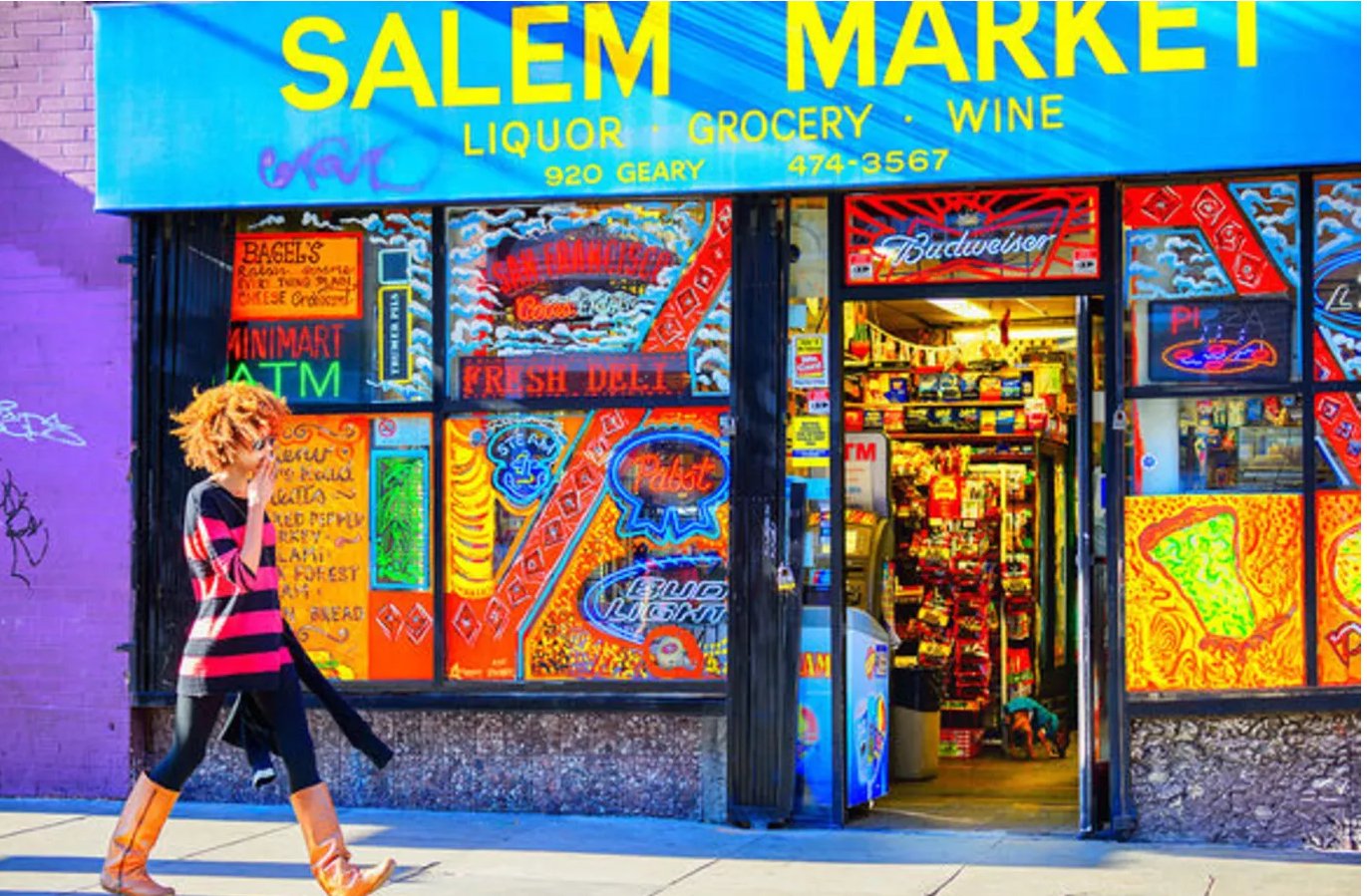
Mitchell Funk’s photograph, San Francisco Tenderloin Colorful Street Scene. Hip Girl Street Art (2013), is a vivid, layered exploration of urban life, individuality, and artistic expression. Known for his mastery of color, composition, and storytelling, Funk captures the essence of the Tenderloin, one of San Francisco’s most vibrant yet complex neighborhoods. This 2013 image is not merely a visual document but a piece of art that reveals the raw beauty, challenges, and uniqueness of urban existence through the interplay of color, characters, and street culture.
The Artist: Mitchell Funk and His Colorful Vision
Mitchell Funk is widely recognized for his pioneering work in color photography. Beginning in the 1970s, when color photography was still in its infancy as a fine art medium, Funk used vibrant hues and innovative compositions to transform everyday urban scenes into dynamic works of art. His photographic style bridges documentary and art, capturing the spirit of the moment while embedding it with a sense of timelessness.
Funk’s focus on urban landscapes often centers on how people interact with their environments, especially in areas where cultural and social dynamics are at their peak. The Tenderloin district, known for its mix of poverty, resilience, and creativity, becomes a canvas for Funk’s lens, where every element contributes to a greater story.
The Setting: San Francisco’s Tenderloin District
The Tenderloin is one of San Francisco’s most storied neighborhoods. While often concealed by its challenges, the area has a rich cultural and historical significance. Known for its diverse population, street art, and vibrant subcultures, the Tenderloin is a microcosm of urban life in all its beauty and complexity. It’s a place where social boundaries blur, and art becomes a tool for both expression and survival.
Funk’s photograph captures the heart of the Tenderloin by showcasing its raw, unfiltered essence. The colorful street art, bustling atmosphere, and eclectic characters tell a story of a community that thrives despite adversity. His work underscores the importance of seeing beyond surface-level judgments to appreciate the human creativity and resilience that define such neighborhoods.
The Subject: Hip Girl and Street Art
The central figure in this image, a “hip girl,” becomes a symbol of youthful rebellion, individuality, and self-expression. Her style, likely a mix of thrift-store finds and carefully curated pieces, reflects the eclectic and unapologetically bold nature of the Tenderloin’s residents. She’s not just a passerby; she embodies the spirit of the neighborhood—a living piece of street art herself.
The street art in the background serves as more than a backdrop. It is a reflection of the community’s collective voice, a testament to the creativity that thrives in urban spaces. Bold colors and chaotic lines mirror the energy of the Tenderloin, where art often becomes a way to claim space and assert identity.
Color and Composition: A Dynamic Palette
One of the hallmarks of Funk’s photography is his use of color to evoke emotion and energy. In San Francisco Tenderloin Colorful Street Scene, the vibrant hues of the street art contrast with the muted tones of the urban surroundings, creating a dynamic interplay that draws the viewer’s eye. The bold yellows, reds, and blues of the graffiti add a sense of vitality, while the softer tones of the street and buildings provide balance and depth.
The composition is equally powerful. Funk places the “hip girl” in a way that she becomes part of the larger scene while still standing out as an individual. Her posture and movement suggest a sense of purpose, as if she’s navigating the city on her own terms. This balance between the individual and the environment is a recurring theme in Funk’s work, emphasizing the interconnectedness of people and their surroundings.
Themes Explored in the Photograph
Urban Identity: Funk’s photograph delves into the concept of identity within the urban landscape. The Tenderloin, with its diverse population and vibrant street culture, becomes a stage where individuals assert who they are. The “hip girl” represents this identity—a mix of defiance, creativity, and authenticity.
Resilience and Creativity: The Tenderloin has long been a neighborhood where adversity and creativity coexist. The street art, the girl’s style, and the vibrancy of the scene reflect a community that continues to thrive despite challenges. Funk captures this spirit of resilience through his lens.
The Role of Street Art: In this image, street art is more than a decorative element—it’s a form of communication. It tells the stories of the neighborhood, expressing both joy and struggle. Funk’s inclusion of street art highlights its significance as a voice for the voiceless and a way to transform public spaces into canvases for expression.
The Intersection of Chaos and Order: The photograph juxtaposes the chaotic energy of the street art with the structured elements of the urban environment. This tension reflects the complexity of urban life, where beauty often emerges from disorder.
The Broader Cultural Context
Funk’s San Francisco Tenderloin Colorful Street Scene can also be viewed as part of a larger cultural movement that values the documentation and celebration of urban life. In the early 2010s, there was a growing interest in street photography and urban exploration, fueled by social media platforms that allowed artists to share their work with global audiences. Funk’s image resonates with this trend, offering an authentic glimpse into a neighborhood that is often misunderstood or overlooked.
Additionally, the photograph speaks to the broader narrative of gentrification and cultural preservation. As neighborhoods like the Tenderloin face increasing pressure from development and rising costs, Funk’s work serves as a visual archive of a specific time and place, preserving its essence for future generations.
Impression and Legacy
Mitchell Funk’s work, including this photograph, continues to inspire both artists and viewers. His ability to find beauty and meaning in the everyday serves as a reminder of the power of photography to transform how we see the world. In San Francisco Tenderloin Colorful Street Scene, Funk not only captures a moment but also invites us to reflect on the broader themes of urban life, identity, and creativity.
The photograph remains a testament to the enduring spirit of the Tenderloin and its residents. It challenges us to look beyond stereotypes and appreciate the richness of urban culture, celebrating the individuals and communities that make our cities vibrant and alive.
Final Thoughts
Mitchell Funk’s San Francisco Tenderloin Colorful Street Scene. Hip Girl Street Art (2013) is more than a photograph; it’s a story, a celebration, and a call to appreciate the beauty in unexpected places. Through his masterful use of color, composition, and storytelling, Funk transforms a simple street scene into a powerful exploration of urban life and human creativity.
The Tenderloin, with all its complexities, comes alive through Funk’s lens, reminding us of the importance of seeing the world with both curiosity and empathy. In a rapidly changing world, images like this serve as both art and documentation, preserving the spirit of a place and its people for generations to come.

No comments yet.