
Black Panther 2.0: The Fastest Four-Legged Robot in History

January 20, 2025
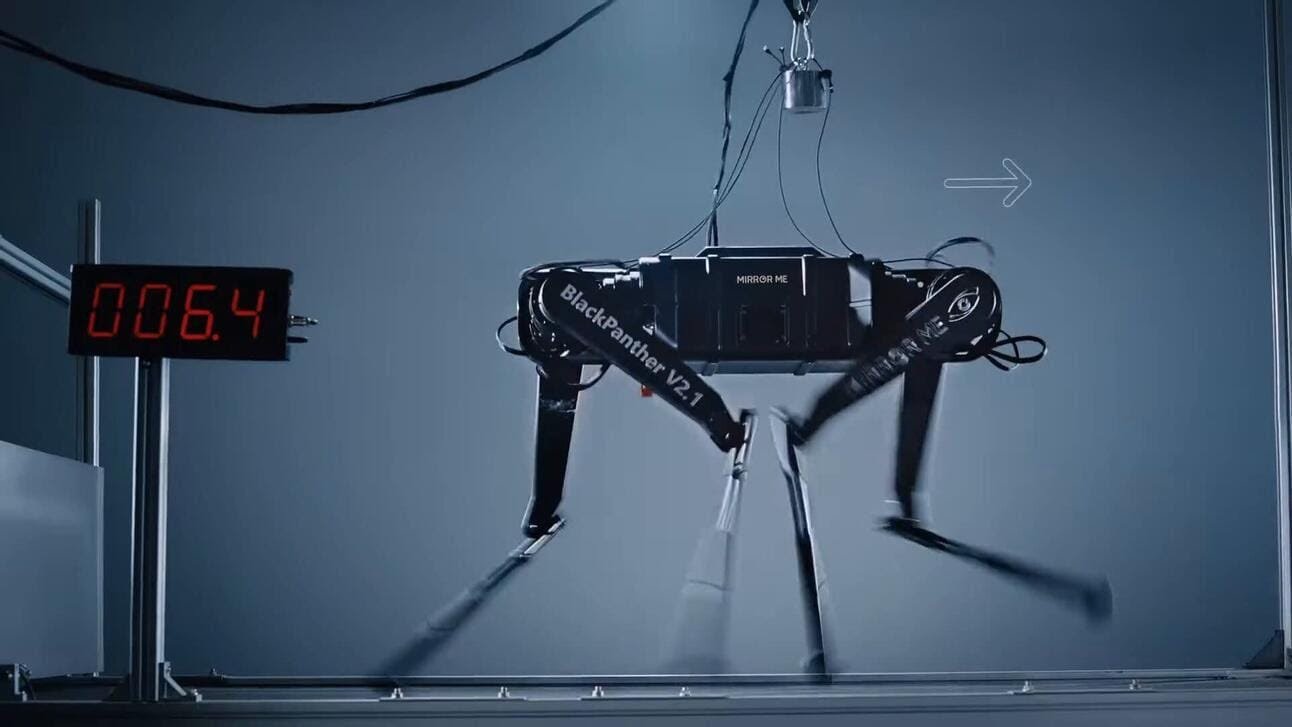
The world of robotics has reached an exhilarating milestone with the Black Panther 2.0, a groundbreaking quadrupedal robot that has shattered the world record for a 100-meter sprint. In a stunning feat of engineering, Black Panther 2.0 completed the distance in under 10 seconds, effectively cutting the previous record of 19.87 seconds in half. This remarkable achievement underscores the incredible strides made in robotics, artificial intelligence, and biomechanics, heralding a future where robots may rival and even surpass the capabilities of real animals.
Nature-Inspired Engineering: The Design Behind Black Panther 2.0
At the core of Black Panther 2.0’s success lies its nature-inspired design, which takes cues from some of the fastest and most agile creatures in the animal kingdom. Engineers modeled the robot after panthers, known for their explosive speed and flexible movement, and jerboas, small desert rodents famed for their remarkable jumping abilities. The result is a sophisticated quadruped that balances speed, agility, and endurance in a compact and efficient form.
The robot’s body is built using lightweight yet durable carbon-fiber limbs, which provide the strength needed for high-speed locomotion without compromising weight. The spring-loaded joints are a crucial aspect of its design, mimicking the tendon and muscle structure of real animals to facilitate energy-efficient movement. These components work together to allow Black Panther 2.0 to achieve unprecedented agility, acceleration, and stability across various terrains.
By emulating the biomechanics of these animals, the robot can maintain rapid strides while conserving energy, a trait critical for achieving top speeds over longer distances. This innovative approach to robotics design blurs the line between biological and artificial movement, paving the way for more efficient, lifelike robots.
AI-Powered Adaptability: Intelligent Movement in Any Terrain
While the physical construction of Black Panther 2.0 is impressive, it is the robot’s artificial intelligence that truly sets it apart. Powered by cutting-edge machine learning algorithms, Black Panther 2.0 possesses an unparalleled ability to adapt to different terrains and optimize its movements in real-time. The AI system continuously analyzes environmental data, adjusting stride length, gait, and joint flexibility to maintain peak efficiency and balance.
This adaptability allows the robot to move fluidly over a variety of surfaces, from smooth tracks to rugged terrain. Whether sprinting on asphalt, maneuvering through rocky landscapes, or navigating grassy fields, Black Panther 2.0 adjusts its running mechanics to achieve optimal performance with minimal energy loss. The AI’s capacity for real-time learning also means that the robot improves with each run, refining its techniques and becoming increasingly efficient over time.
Beyond speed, the AI’s dynamic control system enables the robot to make split-second decisions to avoid obstacles and maintain stability at high velocities. This capability is crucial for practical applications in fields such as search and rescue, military reconnaissance, and disaster response, where robots must navigate unpredictable environments with precision and reliability.
World-Class Performance: Faster Than Most Humans
Black Panther 2.0’s achievement of running 100 meters in under 10 seconds is nothing short of extraordinary. At 83 pounds and standing just two feet tall, it now boasts speeds that surpass most human sprinters. For context, elite human athletes, such as Olympic sprinters, complete the 100-meter dash in approximately 9.5 to 10 seconds. While the robot remains slower than nature’s fastest land animal—the cheetah, which can reach speeds of up to 75 miles per hour—its rapid improvement suggests that it may soon challenge even the fastest members of the animal kingdom.
This breakthrough signifies a turning point in the development of quadrupedal robots. Previous iterations of such robots were often hindered by limited speed, power inefficiencies, and challenges in maintaining stability. However, Black Panther 2.0’s success demonstrates the potential of combining advanced materials, bio-inspired mechanics, and artificial intelligence to create machines that can rival natural creatures in terms of speed and agility.
Implications for Future Robotics
The success of Black Panther 2.0 represents more than just a record-breaking sprint; it sets a new standard for the entire field of robotics. The technological advancements behind this robot have far-reaching implications for industries ranging from transportation and logistics to healthcare and entertainment.
Search and Rescue Operations:
In disaster-stricken areas where human access is limited or dangerous, quadrupedal robots with high-speed mobility could provide crucial assistance. Black Panther 2.0’s ability to quickly traverse debris-laden terrain could make it an invaluable tool for locating survivors or delivering emergency supplies.
Military and Defense Applications:
Military forces around the world are constantly exploring ways to leverage robotic systems for reconnaissance, surveillance, and logistics. With its speed, agility, and adaptability, Black Panther 2.0 could be deployed for scouting missions, patrolling hazardous areas, or even carrying lightweight payloads.
Athletics and Competitive Robotics:
The rise of high-performance robots could lead to entirely new competitive sports involving machines racing, navigating obstacle courses, and testing their agility in controlled environments. These events could not only showcase engineering achievements but also drive further innovation in the field.
Healthcare and Mobility Assistance:
With further refinements, the underlying technology of Black Panther 2.0 could be adapted for use in mobility assistance devices for individuals with disabilities. AI-powered exoskeletons or prosthetics inspired by the robot’s biomechanics could provide greater independence and improved quality of life for users.
Space Exploration:
The rugged, adaptable nature of Black Panther 2.0 makes it a potential candidate for extraterrestrial exploration missions. Future iterations could be used to traverse the challenging terrains of planets like Mars, where high-speed mobility is essential for covering vast distances efficiently.
The Road Ahead: Surpassing Nature
Despite its groundbreaking performance, the team behind Black Panther 2.0 is not resting on its laurels. Their long-term vision is to create robots that can not only match but exceed the mobility of real animals. By continuing to refine the AI algorithms, improve materials, and enhance power efficiency, they aim to develop robots capable of running faster than the swiftest creatures on Earth.
Future versions of the robot may incorporate advanced energy storage systems, such as lightweight batteries or fuel cells, to extend operational range without compromising speed. Additionally, further advancements in AI could enable autonomous decision-making, allowing robots to carry out complex missions with minimal human intervention.
The challenge of surpassing the mobility of biological organisms is daunting, but with the rapid pace of technological progress, it is no longer a distant dream. Black Panther 2.0’s record-breaking sprint is a powerful testament to human ingenuity and the limitless possibilities of robotics.
Impression
Black Panther 2.0 has rewritten the rulebook for quadrupedal robots, proving that high-speed mobility is no longer exclusive to the animal kingdom. With its nature-inspired design, AI-driven adaptability, and world-class performance, this robot stands as a beacon of progress in robotics and artificial intelligence. As engineers continue to push the boundaries of what is possible, we may soon witness robots that not only rival but surpass the agility, speed, and endurance of the fastest creatures on Earth.
Whether it’s in disaster relief, military operations, or even outer space, Black Panther 2.0 is a harbinger of a future where robots move with unprecedented speed and precision, transforming the way we interact with the world around us. The race has only just begun.
No comments yet.