Guillermo Galetti: The Scrap Thief Redefining Biomechanical Art

January 30, 2025
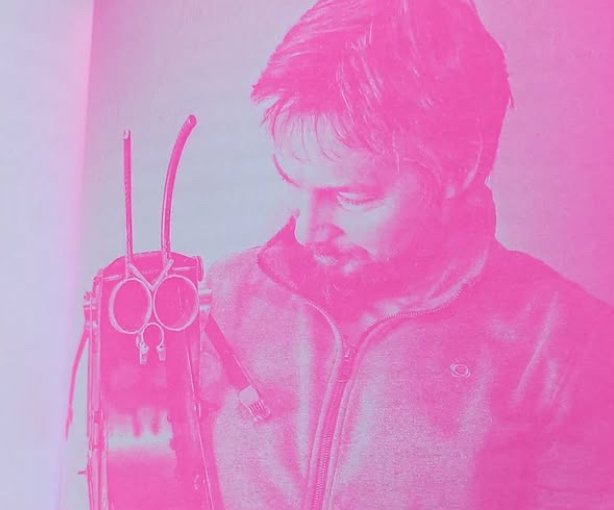
Art has always been a medium for transformation—turning paint into landscapes, stone into statues, and imagination into reality. But few artists embody the idea of transformation as literally as Guillermo Galetti, better known as the “Ladrón de Chatarra” (Scrap Thief). Through his remarkable ability to reshape discarded metal, Galetti has redefined biomechanical art, blending craftsmanship, engineering, and creativity to bring his kinetic sculptures to life.
From his humble beginnings in Argentina to his rise as an internationally recognized artist, Galetti’s journey is a testament to the power of innovation and resourcefulness. His unique approach to art challenges conventional perspectives, proving that discarded materials can become mesmerizing masterpieces. With over 153,000 YouTube subscribers and a growing social media presence, his work has captivated audiences worldwide, inspiring others to explore the untapped potential in everyday materials.
From Physical Education to Metal Artistry
Galetti’s path to becoming a biomechanical artist was far from traditional. Born in Argentina, he originally pursued a career in physical education, an unexpected foundation for a future in sculpture. However, his love for craftsmanship and blacksmithing eventually took center stage, leading him to explore ways to merge metalwork, mechanics, and artistic expression.
His early experiences with blacksmithing provided him with essential technical skills—forging, welding, and manipulating metal—which later became crucial in shaping his signature style. Unlike many artists who start with a canvas or a block of clay, Galetti began with scrap metal, seeing potential in materials others discarded.
His background in physical education also influenced his approach to sculpture. His understanding of movement, biomechanics, and human anatomy allowed him to create kinetic sculptures that are not just static figures but moving, expressive works of art. These elements gave birth to his mechanical caricatures, a genre that combines whimsical design with functionality, creating pieces that seem to have a life of their own.
The Birth of Mechanical Caricatures
At the heart of Galetti’s work lies a unique style he calls “mechanical caricatures.” These creations are more than sculptures—they are animated characters made entirely from recycled metal, gears, springs, and other mechanical components.
Rather than merely assembling metal pieces into recognizable forms, Galetti imbues them with personality, humor, and movement. His pieces often feature exaggerated expressions, intricate details, and interactive components, making them feel alive.
Some of his most iconic works include:
•Humanoid robots that mimic human gestures with comical exaggeration.
•Animal sculptures that capture the essence of their real-life counterparts, with flapping wings, moving tails, and expressive faces.
•Steampunk-inspired contraptions, blending fantasy and engineering.
•Custom commissions, where he crafts personalized mechanical caricatures for clients worldwide.
This blend of art and mechanics sets him apart from traditional sculptors. His works are not just visually engaging but also invite viewers to interact with them, creating a deeper connection between the audience and the artwork.
The Art of Breathing Life into Scrap Metal
Galetti’s creative process is a meticulous dance between engineering and artistry. Each sculpture begins with an idea, often inspired by everyday objects, pop culture, or his own imagination. From there, he follows a structured yet highly experimental process:
Scavenging and Selection
As his moniker suggests, Galetti is a “scrap thief”—constantly on the lookout for discarded metal parts that can be repurposed into art. His workshop is filled with old gears, chains, pipes, and industrial waste, each piece waiting for a new life.
Unlike conventional artists who start with raw materials, Galetti begins with found objects, letting their shapes and textures guide his designs. This approach adds an element of improvisation, where the limitations of the materials fuel creative problem-solving.
Conceptualization and Design
Once he has the necessary components, Galetti sketches rough designs, visualizing how each part will fit together. His background in blacksmithing allows him to predict which metals can be bent, welded, or reshaped, ensuring that each sculpture maintains both aesthetic appeal and mechanical functionality.
Assembly and Welding
The real magic happens in the assembly phase. Using welding techniques, Galetti carefully joins pieces together, balancing structural integrity with artistic expression. Since many of his sculptures incorporate moving parts, he must ensure that every gear and lever functions smoothly.
This phase requires a deep understanding of mechanical engineering. Unlike static sculptures, kinetic pieces must be precisely balanced, allowing movement without compromising stability.
Fine-Tuning and Animation
Once the structure is complete, Galetti fine-tunes the sculpture, adjusting mechanisms to ensure fluid motion and expressive movement. Many of his works include crank-powered or motorized components, adding an interactive element that further enhances the viewer’s engagement.
Finally, he applies finishing touches, such as polishing, painting, or patina treatments, giving each piece a distinct, aged look. The result is a functional work of art, seamlessly blending industrial aesthetics with organic movement.
Global Recognition and Digital Influence
Galetti’s work has gained international attention, thanks in large part to his engaging online presence. Through YouTube and social media, he has built a vibrant community of art enthusiasts, makers, and engineers who admire his ability to turn discarded materials into mesmerizing sculptures.
•YouTube (153,000+ subscribers): His channel offers an intimate look at his creative process, featuring step-by-step builds, behind-the-scenes insights, and time-lapse videos of his work.
•Facebook & Instagram: His pages are filled with dynamic showcases of his latest creations, engaging directly with fans and collectors.
•Workshops and Exhibitions: Galetti has been invited to art festivals, maker fairs, and international exhibitions, where he demonstrates his process live, inspiring aspiring artists and inventors.
His influence extends beyond the art world—engineers, tinkerers, and educators alike appreciate his work for its fusion of creativity and mechanical ingenuity.
The Philosophy Behind the Scrap
At its core, Galetti’s art challenges how we perceive waste and creativity. His philosophy revolves around three key ideas:
Transformation and Sustainability
By using recycled metal, Galetti promotes sustainability in art. His work serves as a reminder that beauty and functionality can emerge from materials we often overlook. In a world increasingly concerned with waste, his sculptures offer a thought-provoking perspective on repurposing and conservation.
The Power of Imagination
Galetti sees potential where others see junk. His ability to reimagine discarded materials as moving, expressive characters speaks to the power of creativity and resourcefulness.
Art as a Universal Language
Despite being rooted in industrial materials, his work resonates with audiences worldwide. Whether through humor, movement, or sheer craftsmanship, his sculptures evoke emotions that transcend cultural and linguistic barriers.
The Future of the Scrap Thief
Galetti shows no signs of slowing down. As he continues to experiment with new materials, techniques, and interactive designs, his influence in the biomechanical art world grows stronger.
Potential future directions include:
•Larger-scale installations that incorporate advanced robotics.
•Collaborations with engineers and animators to create more complex kinetic sculptures.
•Educational programs and workshops to teach others the art of repurposing scrap metal.
His journey proves that art can emerge from the most unexpected places and that true creativity lies not in the materials we use, but in how we use them.
The Bequest of a Modern-Day Alchemist
Guillermo Galetti, the “Ladrón de Chatarra,” has redefined what it means to be an artist in the modern age. Through his biomechanical sculptures, he breathes new life into discarded metal, proving that ingenuity and imagination can transform the ordinary into the extraordinary.
His work is more than just art—it’s a movement, inspiring people to see potential where others see waste, to embrace craftsmanship, and to push the boundaries of creativity. In a world obsessed with the new, Galetti reminds us that sometimes, the most incredible creations come from what we leave behind.