Flying the Cadillac of Tomorrow: General Motors Unveils the eVOL Concept Aircraft

April 18, 2025
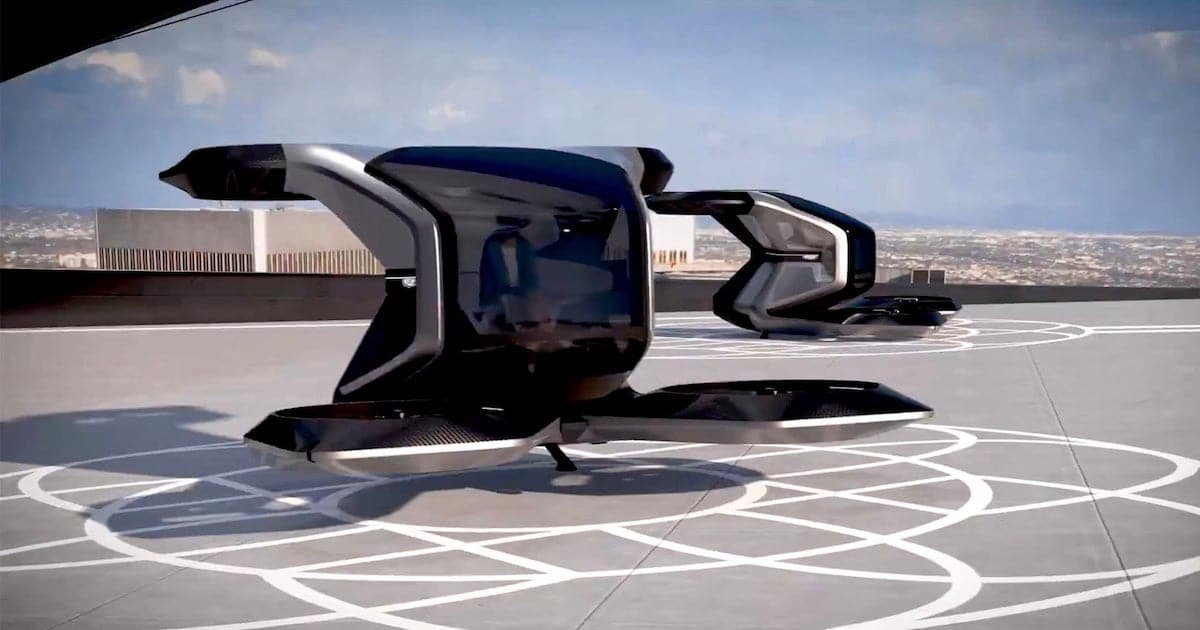
For decades, science fiction has conjured up sleek personal aircraft darting over the heads of traffic-clogged streets. Today, the line between fiction and function grows increasingly faint. General Motors has introduced its most futuristic vision yet: the Cadillac eVOL, an all-electric single-seater aircraft built for short-distance air travel.
With its dragonfly-like profile, whisper-quiet propulsion, and vertical takeoff and landing capability, the Cadillac eVOL is no longer just a design study—it’s a declaration.
This is Cadillac’s first formal venture into aerial mobility, and it signals a significant expansion of the brand’s ethos. Long known for crafting roadbound luxury vehicles, Cadillac now ascends—quite literally—into the skies with a vision that matches premium travel with urban efficiency.
At the pithy of the eVOL is a desire to eliminate one of modern life’s most oppressive burdens: ground traffic. Instead of crawling through congested city streets, Cadillac proposes you glide above them.
Introducing the eVOL: Cadillac’s Leap into the Air
At 8.5 feet long, 8.2 feet wide, and just 4.4 feet tall, the Cadillac eVOL cuts a compact, aerodynamic profile. Weighing in at 1,500 pounds and built atop GM’s revolutionary Ultium battery architecture, this aircraft is a lean machine made for low-altitude transit. It’s designed for solo flight—just one passenger—but what it lacks in size, it makes up for in ambition.
A 90-kilowatt electric motor powers the craft’s four rotors, arranged in a symmetric X-formation for vertical lift. This propulsion system allows the eVOL to take off and land like a helicopter, making it perfect for urban settings where runway access is impossible. It tops out at 56 miles per hour—not fast by aircraft standards, but more than adequate for short-range hops across dense cities or suburban corridors.
The eVOL’s range is between 10 and 20 miles per charge, a modest but intentional design decision. Cadillac sees this vehicle not as a cross-country solution, but as a remedy to last-mile mobility—a supplement to car travel and a game-changer for gridlock-weary commuters.
The Design: Inspired by Nature, Informed by Efficiency
Look at the eVOL from above, and the comparison to a dragonfly becomes clear. With its angular canopy, slender limbs, and multiple rotor wings, it’s not just bio-inspired—it looks ready to zip across a cybernetic meadow. But don’t mistake its aesthetic for fragility. The eVOL was engineered for safety, balance, and minimal environmental disruption.
The sleek frame is built from ultra-light composite materials, giving it structural strength without sacrificing speed. Its canopy offers panoramic visibility for the pilot, with digital interfaces integrated seamlessly into the curved display ahead. It’s not just transportation—it’s theater in the sky.
Noise pollution is also a major concern with traditional helicopters and aviation prototypes. The eVOL’s rotors operate nearly silently, promising less disruption to cityscapes and neighborhoods. This low acoustic footprint is critical if aerial vehicles are to integrate into daily life without backlash from below.
The Ultium Advantage: Battery Power Meets Lift
Central to the eVOL’s feasibility is GM’s Ultium battery platform, the same cutting-edge technology powering electric vehicles like the Cadillac LYRIQ and GMC Hummer EV. Ultium was designed to be modular, scalable, and durable, and in the eVOL, it’s stretched to its most ambitious purpose yet.
The energy density of Ultium allows for the high power output needed for vertical lift without excessive weight. And crucially, it offers fast recharge cycles—an important factor for commercial viability. Urban aerial mobility will only succeed if these vehicles can return to the sky quickly after landing.
Safety protocols baked into the Ultium design, including redundancy systems, thermal protection, and real-time performance monitoring, make the battery platform well-suited to the unpredictability of airborne travel. If automotive electrification was Ultium’s first act, aviation may well be its second.
From Ground to Sky: Cadillac’s Expanding Identity
Cadillac has long been synonymous with American luxury, innovation, and prestige. But in recent years, the brand has undergone a metamorphosis. Gone are the days of oversized sedans and chrome-heavy silhouettes. In their place: sleek crossovers, all-electric performance vehicles, and now the eVOL—a machine that doesn’t even touch the ground.
This airborne concept represents Cadillac’s desire to lead not just in product, but in the evolving definition of what luxury means. Today’s luxury isn’t simply leather seats and quiet cabins—it’s time saved, commutes shortened, and access expanded. The eVOL takes these ideas to the sky, literally elevating them.
By blending performance, sustainability, and aspirational design, Cadillac positions itself at the intersection of two megatrends: electrification and personal mobility. The eVOL is a natural evolution, not a novelty.
Safety, Autonomy, and Regulation
A major hurdle for any aerial mobility initiative is safety—not just for passengers, but for pedestrians and infrastructure below. Cadillac has not yet revealed the full autonomy level of the eVOL, but industry speculation suggests semi-autonomous piloting capability, with a combination of AI guidance and human override.
Sensors embedded throughout the craft will allow for real-time environmental awareness—think LIDAR, infrared cameras, and obstacle detection systems similar to those in advanced EVs. Redundant systems ensure that if one motor or rotor fails, others can compensate to maintain flight stability and complete safe landings.
From a regulatory standpoint, GM has already initiated exploratory conversations with urban transportation authorities, civil aviation boards, and safety agencies. In the U.S., this means meeting FAA standards for airworthiness, pilot licensing, and airspace coordination—a complex but necessary path for mass adoption.
Urban Integration: A New Kind of Infrastructure
Of course, no flying car will succeed if the cities it operates in aren’t prepared. The introduction of the eVOL implies the need for “skyports”—compact landing and recharging hubs stationed atop buildings, parking structures, or dedicated helipads. These wouldn’t resemble airports so much as automated charging docks, where passengers embark, recharge, and disembark with seamless verticality.
GM envisions an integrated system of urban takeoff and landing zones, potentially linked to ride-share apps or personal vehicle parking centers. Think: drive to a garage, step into an eVOL, and fly across town in eight minutes instead of crawling through 45 minutes of bumper-to-bumper congestion.
City planners and private developers are already exploring rooftop retrofits and modular vertiport designs. The eVOL won’t just require a change in mindset—it will reshape architecture itself.
Competitive Landscape: Where Cadillac Lands
The race to dominate the aerial mobility space is already crowded. Companies like Joby Aviation, Lilium, Volocopter, and Hyundai’s Supernal division have invested heavily in eVTOL (electric vertical takeoff and landing) prototypes. Even startups like Archer and Wisk Aero have announced urban air taxi projects.
But where many focus on fleet operations—serving multiple passengers in autonomous, Uber-like settings—Cadillac’s eVOL feels more personal. It’s not about mass transit. It’s about giving the individual user a taste of the sky. Think of it as the iPod to everyone else’s jukebox—a single-use experience designed to change behavior and expectations.
And let’s not forget the symbolic value. Cadillac entering the air mobility sector signals a broader cultural shift: when legacy automakers start building aircraft, the age of the flying car isn’t speculative. It’s operational.
Sustainability and the Promise of Clean Skies
One of the key selling points for the eVOL is its minimal environmental footprint. Traditional aviation burns vast amounts of fuel per passenger mile. By contrast, the eVOL runs entirely on electric power, and when charged through renewable energy grids, its operation is effectively carbon-neutral.
In congested cities struggling with emissions, this represents a potential breakthrough. Cleaner skies, quieter neighborhoods, and smoother commutes—all without contributing to ground-level smog.
Moreover, GM plans to design the eVOL’s production line to follow circular economy principles. Recyclable composite materials, low-waste construction processes, and battery lifecycle tracking will ensure the aircraft stays as green in manufacturing as it is in flight.
Future Vision: What Comes After eVOL?
While the eVOL is currently a concept, it’s part of a broader future-forward strategy from General Motors. Executives have hinted at a multi-tiered ecosystem of mobility solutions: from autonomous EVs and self-driving taxis to modular micro aircraft and intercity air corridors.
There may be a larger four-seater version in the pipeline. There may be fleet models for luxury air taxi services in Dubai or New York. The eVOL is not the end—it’s the first drop in a tidal wave of vertical mobility innovation.
For Cadillac, it opens new categories of luxury. For GM, it opens a new dimension of engineering. And for the public, it opens the sky—once fantasy, now viable.
Flow
The Cadillac eVOL isn’t here to replace cars—it’s here to rethink them. In an era where gridlock chokes productivity and pollution clouds cityscapes, the idea of an elegant, personal, quiet aircraft seems not only appealing but essential. It’s a reminder that luxury can still inspire, that innovation can still surprise, and that the future, once unimaginable, is now only a few feet above our heads.
As you fasten your seatbelt in the back of a Cadillac LYRIQ or Escalade IQ, just imagine this: one day soon, you might look up and see another Cadillac—gliding silently across the sky.



No comments yet.