Tommy Richman and Paco’s LETTERMAN: A Cool, Shimmering Transmission of a New Era

April 26, 2025
In a music landscape increasingly dominated by formula and spectacle, Tommy Richman and Paco’s LETTERMAN floats in like a hallucination — effortless, ethereal, and charged with a cool that feels entirely unmanufactured. It is a song that doesn’t announce itself loudly, but rather radiates outward: a slow ripple across the waters of alternative R&B, funk revivalism, and genreless sound experiments that define the frontier of modern music.
Released as part of Richman’s COYOTE project, LETTERMAN isn’t merely a track; it’s a texture, a fleeting but intoxicating mood. In collaboration with Paco, Richman offers not a banger for arenas or a TikTok earworm engineered for virality, but something more elusive — a whispered transmission between planets, where everything familiar sounds just a little off in the most perfect way.
The Sound of Suspended Gravity
From the first notes of LETTERMAN, the listener is dropped into a weightless soundscape: muted drums, lush yet skeletal guitar riffs, and bass that moves more like vapor than pulse. There’s something both intimate and expansive about the production, a quality that mirrors the emotional push-pull at the heart of the song.
Richman’s vocals — soft, elastic, half-sung and half-spoken — stretch across the track like tendrils of smoke. He isn’t trying to overpower the beat. Instead, he rides it loosely, allowing space between phrases, letting silence become as meaningful as sound. Paco’s contribution — subtle, complementary, textural — blends into the atmosphere seamlessly, adding flavor without ever jostling for attention.
The result is a kind of controlled looseness. Every element seems casual, unforced, but there’s a meticulous intention behind the apparent slackness. It’s an aesthetic that prizes vibe over virtuosity, but it never feels lazy. Rather, LETTERMAN creates its own gravitational field, drawing listeners into a world where coolness is defined not by detachment but by a deep, intuitive understanding of timing, texture, and tone.
Lyrical Minimalism: Sketching a World with Few Words
The lyrics of LETTERMAN are less a narrative and more a collage of impressions: references to fast moves, fleeting lovers, low-key flexes, and moods that shift like twilight. Like the song itself, the words are about capturing a feeling rather than telling a linear story.
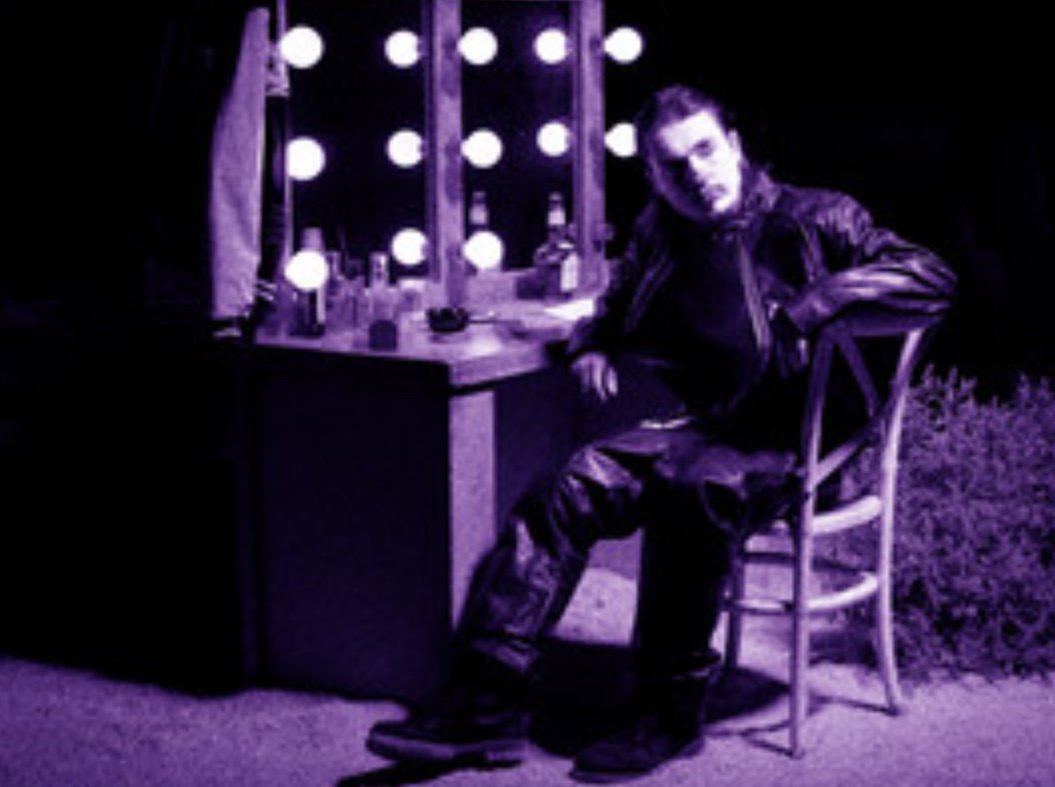
Richman doesn’t spell everything out. He hints, he alludes, he shrugs off explanations. This lyrical minimalism feels almost cinematic, like short film shots strung together loosely: a jacket slung over a chair, a speeding car seen through rain-smeared glass, a late-night encounter that might mean everything or nothing at all.
Paco’s verses mirror this approach, layering additional imagery without ever breaking the song’s dream logic. Their combined voices sketch out a world that feels vivid and blurry at once — a mood more than a map.
In an era that often demands artists “explain themselves” or hyper-package their narratives, LETTERMAN revels in mystery. It trusts the listener to fill in the blanks. It knows that feeling is a more powerful hook than understanding.
Visual Language: A VHS Dream
The visuals accompanying LETTERMAN (whether through official video or fan interpretations) lean heavily into lo-fi aesthetics: grainy textures, washed-out colors, shaky handheld footage that evokes 1990s skate tapes, indie movies, and late-night cable oddities.
Tommy Richman’s fashion choices — often a blend of nostalgic streetwear, normcore twists, and flashes of ironic glamour — reinforce the mood. A loose-fitting Letterman jacket (of course), beat-up sneakers, baggy jeans, and cheap silver chains combine into a look that feels simultaneously thoughtless and carefully iconographic.
In this way, LETTERMAN becomes part of a larger visual and sonic universe that Richman is building — a place where thrift-store treasures and digital detritus become totems of authenticity, where glamour is measured not in polish but in attitude.
This universe feels lived-in, worn at the edges, full of private jokes and half-forgotten moments. It’s a perfect match for the song’s sound: faded but vital, nostalgic but forward-moving.
Tommy Richman and Paco: Architects of the In-Between
Both Tommy Richman and Paco exemplify a new archetype in 2025’s musical landscape: artists who resist neat classification, who move between genres, moods, and aesthetics without ever seeming to “switch lanes.” They don’t sample influences as much as they embody them — absorbing decades of funk, R&B, hip-hop, indie rock, and electronica, and exhaling them in ways that feel organic rather than referential.
Their collaboration on LETTERMAN feels less like two artists featuring on a track and more like two frequencies syncing up. There is no sense of competitive posturing. Instead, there is an ease, a natural overlap of sensibilities.
This ease is part of what makes LETTERMAN feel so essential. In a music world often obsessed with maximalism — bigger drops, louder hooks, more collaborators — Richman and Paco remind us that some of the most powerful songs arrive like soft breezes, not sonic storms.
Cultural Moment: Why LETTERMAN Resonates Now
In 2025, listeners are more genre-agnostic, more DIY-attuned, and more emotionally fluent than ever before. LETTERMAN taps directly into this cultural vein. It speaks to a generation weary of heavy-handed narratives and over-marketed authenticity. It offers something subtler, something that demands patience and rewards repeated listens.
It also reflects a broader trend: the resurgence of funk, slow-groove R&B, and lo-fi aesthetics as dominant cultural currents. But where others lean heavily into retro pastiche, Richman and Paco use these textures as raw materials to build something new — something unmistakably theirs.
Moreover, LETTERMAN resonates emotionally. It captures the restless yearning that defines so much of contemporary youth culture: the desire for connection and transcendence in a world that often feels chaotic, disjointed, and sped-up beyond recognition.
Flow
LETTERMAN by Tommy Richman and Paco is more than a song. It is a soft signal from a parallel world — a glimpse into the possible futures of popular music, where genre is fluid, coolness is innate, and emotion is not shouted but breathed.


No comments yet.