The Making of a Hellraiser: Andy Irons Before the Glory

May 4, 2025
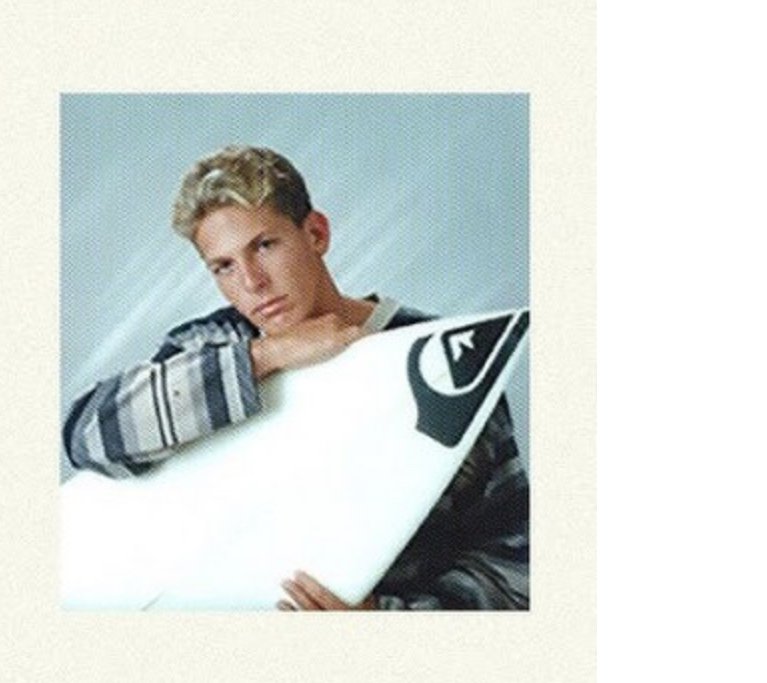
Before the trophies and the magazine covers, before the duels with Slater and the roar of beachside crowds, Andy Irons was a kid with bleached hair, bruised knees, and a singular obsession: waves. Raised on the garden island of Kauai in Hawaii, Andy wasn’t born into fame—he carved it out, rail by rail, wipeout by wipeout.
Andy Irons and the Radicals, a new episodic series chronicling the roots of one of surfing’s most electric figures, opens not with the victories but with the rawness of youth. It begins where it must: in the backyard shore breaks, the hand-me-down boards, the lineups where boys became men far too early.
The Early Heat: Grom Culture on the North Shore
In the early 1990s, being a “grom” in Hawaii didn’t mean summer camps and foam boards. It meant being tested. The ocean was teacher and tormentor, offering both high and hard lessons. Respect wasn’t given—it was earned through commitment, humility, and pain.
Andy Irons absorbed this ethos early. The youngest of three, he and his brother Bruce quickly learned to navigate not just the surf but the social topography of Hawaiian breaks—where pecking orders were enforced with the same force as the swell.
Influence and Imitation: The Icons of a Generation
A young surfer’s style is forged in emulation. For Andy, that meant watching—and chasing—the likes of Sunny Garcia, Derek and Michael Ho, Chris Ward, Cory and Shea Lopez, and Matt Archbold. These weren’t just surfers—they were characters, each with a unique blend of aggression, flow, and personality.
- Sunny Garcia was raw power—his cutbacks like axe blows. He carried the pride of Hawaii on his back, and his presence in the water was unmistakable.
- Derek and Michael Ho offered technical mastery and finesse, showing that local pride could blend with global precision.
- Chris Ward brought chaos—a reckless grace that defied structure.
- The Lopez brothers, Cory and Shea, added polish and aerial innovation, bridging classic rail work with progressive flair.
- Matt Archbold, with his punk edge and heavy style, modeled how to surf with feeling—angry, joyful, all at once.
Surfing as Escape—and Proof
Out of small-town pressure. Out of the shadow of older siblings. Out of the churn of teenage confusion. Surfing gave him control. The board was both shield and weapon. It let him speak in a language where words failed.
From Fear to Fire: Confronting the Ocean and the Self
Few sports ask as much of a child as surfing. The risks are real. A misjudged drop can mean a concussion, a hold-down, or worse. Yet for Andy, fear didn’t paralyze. It sharpened. It honed his timing. His decision-making. His rage.
In Chapter One: The Making of a Hellraiser, we see the early cracks of what would become his signature style: aggressive, technical, expressive. Andy didn’t ride waves so much as attack them. Where others would line up for a smooth section, he would draw lines that looked like errors—until they weren’t.
He wasn’t just surfing to win. He was surfing to prove he existed.
Bruce Irons and the Sibling Rivalry That Built a Champion
No portrait of Andy is complete without Bruce. The Irons brothers were both competitive and close—two halves of a talent explosion. Bruce was style. Andy was fire. Together, they pushed each other toward extremes.
Their rivalry wasn’t toxic—it was formative. When Bruce landed an air, Andy wanted to land one higher. When Andy paddled into something overhead, Bruce followed. It was a creative, sometimes brutal partnership that forced both to refine and expand their surfing.
The Radicals: Redefining What Surfing Looked Like
To call this generation of surfers “radicals” isn’t marketing—it’s observation. They disrupted a conservative, sponsorship-driven circuit with raw energy and authenticity. They made mistakes. They raged. They refused to flatten themselves into brand mascots.
Andy’s early years were filled with punk edges and unfiltered emotions. But they were also grounded in a deep reverence for the sport. He didn’t just want to be famous—he wanted to be good. He studied footage. He obsessed over lines and lip placement. He trained, often in solitude.
What made Andy radical wasn’t rebellion—it was sincerity.
Andy’s transition from local hero to global competitor wasn’t seamless. He bristled at rules. He hated losing. He often let his temper show. But as he matured, he began to see the tour not as a constraint but as another arena—another wave to master.
The junior comps were brutal, stacked with talent and politics. But Andy’s results, though inconsistent at first, hinted at something larger. He wasn’t just another Hawaiian charger. He had game—in airs, tubes, and turns.
What separated him was his ability to harness emotion, not suppress it. He could surf angry and win. That’s rare. That’s lethal.
Kauai’s Role: The Island That Raised Him
Kauai, often overshadowed by Oahu’s North Shore, has its own mythology. Lusher. Quieter. Tighter-knit. But make no mistake—its waves are serious. Its locals are fiercer. And its pride runs deep.
For Andy, Kauai wasn’t just home. It was calibration. Every return grounded him. Every paddle out was a reminder of his roots. Even after global wins, he always spoke of home with reverence. The island didn’t give him an easy path. But it gave him depth.
And in turn, he put Kauai on the map in a way few ever had.
The Hustle
Andy Irons and the Radicals doesn’t seek to canonize Andy. It seeks to understand him. To peel back the myth and find the boy who stood up on broken boards and wouldn’t come in until sunset. It reminds us that icons don’t arrive fully formed. They’re shaped—by place, people, struggle, and storm.
The Making of a Hellraiser is a beginning, not a climax. It tells us that behind every career highlight is a childhood wipeout. Behind every sponsor photo is a scraped elbow.

No comments yet.