UNDERCOVER x Modern Matter: Reconstructing the Misprint, Reimagining the Archive

May 15, 2025
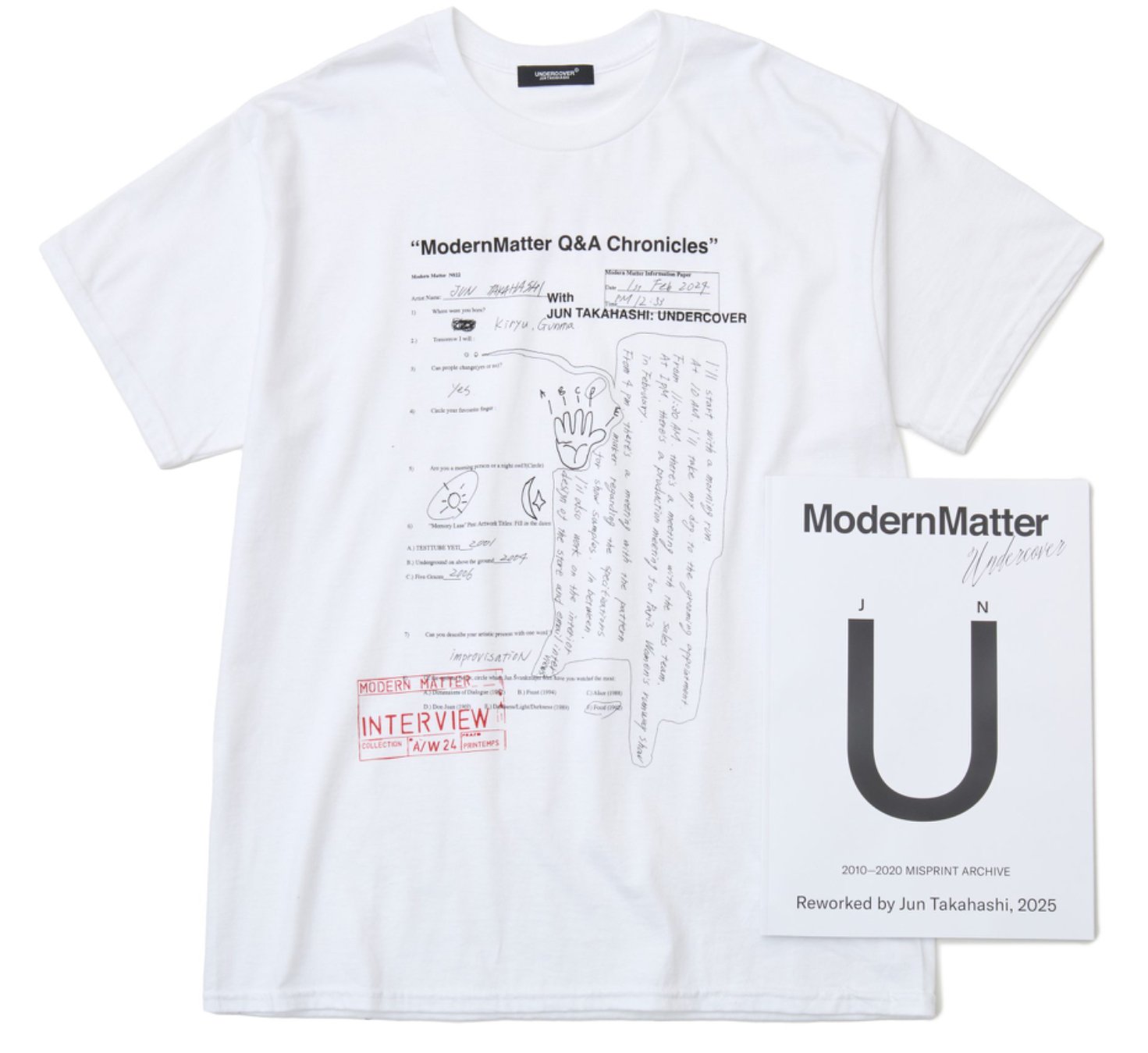
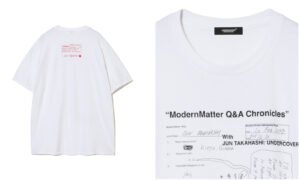
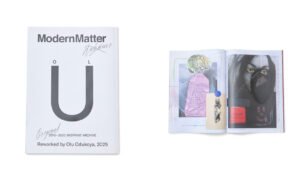
In an age where fashion flow are abundant and often commodified, there is something markedly different—deliberately subversive, even quietly philosophical—about the latest project uniting UNDERCOVER’s Jun Takahashi and Modern Matter’s Olu Odukoya. Titled with understated simplicity, the collaboration centers around a reworked collection of archival zines and a capsule T-shirt series built from a decade of Modern Matter’s misprinted materials. But to reduce this endeavor to another ‘fashion x publishing’ link-up would be to misunderstand the full conceptual depth at play. This is not about trend cycling or limited drops. It’s about the mutability of form, the beauty of error, and the art of the reassembled image in a collapsing media age.
UNDERCOVER and the Cult of Disruption
Jun Takahashi has long operated within the fissures of fashion. UNDERCOVER, founded in 1990, is not simply a streetwear label nor a high-fashion house—it is a laboratory for aesthetic contradiction. Takahashi fuses punk with precision, delicacy with distortion, philosophy with pop culture. His seasonal collections often read like novels: character studies of dystopian youth, surrealist epilogues to societal breakdowns, or quiet meditations on the violence of beauty. His collaborations—ranging from Nike Gyakusou to Valentino—have always managed to retain that subterranean tension, evoking mystery rather than mass appeal.
This alignment with Modern Matter is particularly poignant. Olu Odukoya’s editorial vision for the publication—formerly known as Matter—has consistently blurred the lines between magazine, object, and art book. Eschewing commercial gloss, Modern Matter operates like a manifesto: minimalist layouts, destabilized hierarchies between art and fashion, and print production that borders on sculptural. The magazine is known for its rigorous collaborations with fashion luminaries who, like Takahashi, exist on the edge of legibility: Margiela, Helmut Lang, Alaïa, among others.
Together, Takahashi and Odukoya have not simply created products. They have unearthed fragments from the margins—misprints, off-register pages, defunct test prints—and turned them into new cultural provocations. The result is a zine that resists order and a series of T-shirts that invert commercial logic, grounding the project not in polish but in poetic dissonance.
Misprints as Memory: The Zine as Palimpsest
At the heart of this project lies a conceptual insistence on the misprinted archive. For Modern Matter, this isn’t mere recycling. It is a visual and philosophical excavation—an act of treating error as artifact. The zine that results from this collaboration feels less like a publication and more like a palimpsest: images double over one another, texts partially reveal themselves like archaeological traces, and design grids collapse into visual entropy.
The misprint, often dismissed as a production flaw, becomes here the locus of new meaning. It suggests temporal overlap—moments from different decades, issues, or ideologies bleeding into each other. It calls to mind Walter Benjamin’s notion of the “aura”—that irreproducible quality of an object touched by time. These aren’t just mistakes; they are metaphors for media’s fragility, for the instability of cultural memory.
The decision to reprint and remix these flawed pages becomes a radical gesture in an era of high-resolution obsession. Where most luxury collaborations aim for pristine presentation and digitally sterilized precision, UNDERCOVER and Modern Matter point instead to disintegration. They suggest that memory is unreliable, that media erodes, and that from this instability, new possibilities can emerge.
The T-Shirt as Medium, Not Merchandise
Fashion’s embrace of the T-shirt has always walked a fine line between communication and commodity. In this collaboration, however, the T-shirt functions as a canvas of subversion, a surface that activates Modern Matter’s visual language through Takahashi’s deconstructive sensibility.
Each T-shirt is screen-printed with collaged fragments from Modern Matter’s archives—faded typography, misregistered photography, abstracted forms. But what’s more crucial is that these are not designed to be coherent. There is no central logo, no clear branding, no conventional aesthetic structure. The tees carry the same fragmented visual logic as the zine—half-glimpsed faces, broken sentences, images turned upside down.
Wearing one of these garments becomes akin to walking through a memory glitch. The wearer becomes part of the publication itself—an embodied archive of Modern Matter’s failures and Takahashi’s aesthetic refusal. This is not merch, but media in motion.
There’s also a subtle rejection of the logomania that plagues contemporary streetwear. These T-shirts don’t shout their affiliations. They don’t pander to resale culture. They exist in the same liminal space as the magazine: objects of curiosity, not declarations of taste. They ask to be considered, not consumed.
Cultural Implications: Archivalism, Error, and the New Authenticity
It’s worth framing this project within the broader cultural moment of archivalism. From Balenciaga’s distressed silhouettes to the obsession with ‘00s runway scans, there is a deep hunger for the past—but not in a pristine form. What resonates now is deterioration, fragmentation, and reassembly.
The UNDERCOVER x Modern Matter project lands squarely in this zone. But where others aestheticize archival decay, Takahashi and Odukoya animate it. Their collaboration suggests that archives are not just static vaults but living, decaying, shifting repositories. The misprint isn’t an aesthetic—it’s an epistemology.
In doing so, they also challenge fashion’s addiction to perfection. What does it mean to build something beautiful from errors? What does it mean to center failure, not as a problem to be solved, but a site of creative rethinking?
The collaboration rejects the notion of the archive as a prestige object. Instead, it treats the archive as compost—rich with unintended meaning, capable of sprouting new cultural organisms. This idea is deeply aligned with contemporary art practices, but rarely applied with such discipline to fashion.
The Connection as Medium
Perhaps the most quietly radical thing about this project is the way it redefines the fashion collaboration itself. Rather than a marketing tactic or seasonal stunt, this feels like a long-form conversation—between two minds fluent in fragmentation, between publishing and apparel, between image and object.
Odukoya and Takahashi don’t simply share aesthetics—they share sensibilities. Both are interested in narrative without climax, composition without centrality, and communication through rupture. This project is not about fusion; it’s about parallel play. Each brings their own medium—print and cloth—and lets the other contaminate it, subvert it, reframe it.
The result is a new hybrid form. Not quite a fashion capsule. Not quite a publication. But something else entirely: a moving archive of absence, imperfection, and experimental memory. In a marketplace addicted to clarity, this ambiguity feels deeply necessary.
Impression
In the end, the UNDERCOVER x Modern Matter collaboration leaves us with more questions than answers. What is the value of an image no longer legible? What is the cultural work of a misprint? Can fashion operate as a form of publishing? Can publishing exist as wearable media?
What remains are fragments. Pages that bleed. T-shirts that whisper. A partnership that doesn’t just repackage the past, but destabilizes it. This isn’t about looking back. It’s about looking sideways—into the marginalia, into the void between format and failure, where meaning pulses, quietly.
This flow is not about remembering Modern Matter as it was. It’s about confronting what it almost was. What it could be, again. What it is, now—when given back to the public in pieces, to be read, worn, and misread anew.