Apple Releases Holiday Film Shot On iPhone 17 Pro With Real Woodland Puppets

November 29, 2025
a holiday
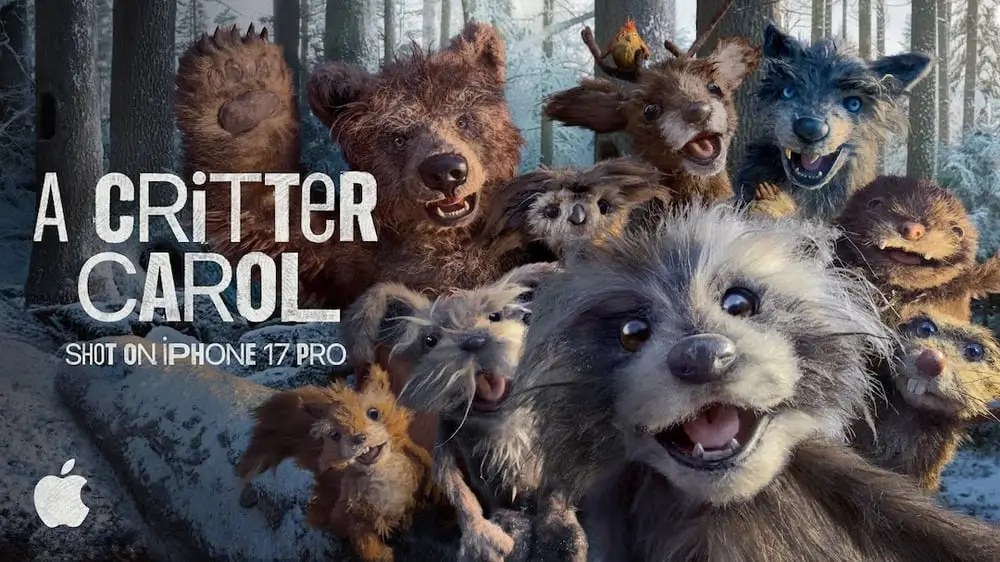
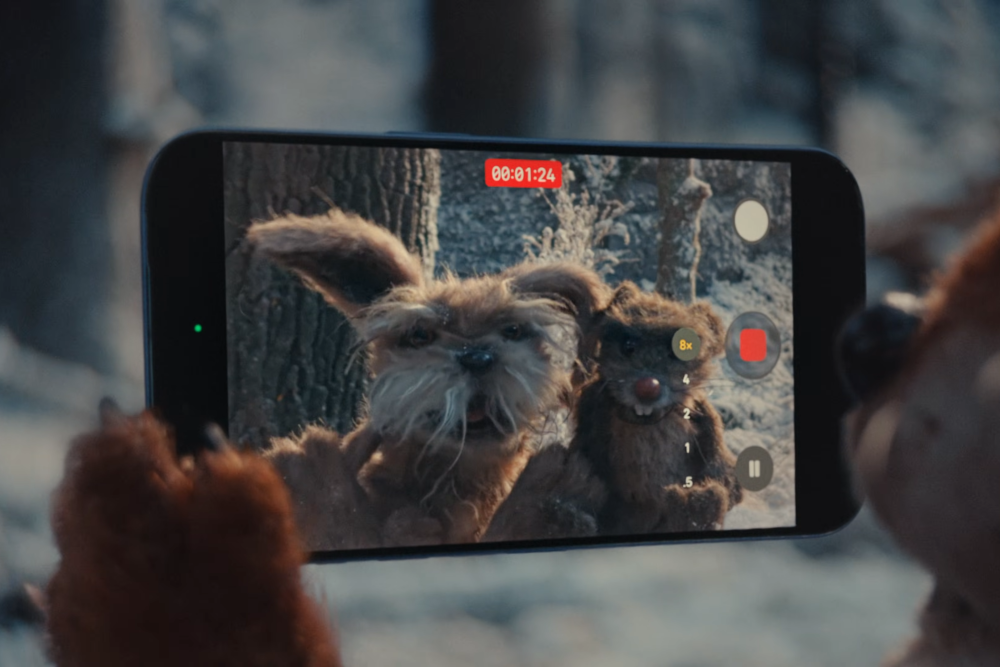
Apple’s annual holiday film tradition has become a cultural event unto itself—equal parts seasonal sentiment and technical showcase. But this year’s release marks a distinct aesthetic shift. Instead of leaning into digital animation or live-action drama, Apple crafted an intimate woodland tale using a full cast of handmade puppets and shot the entire project with the iPhone 17 Pro. The result is a film that feels both nostalgic and groundbreaking, blending artisanal craft with cutting-edge mobile cinematography in a way that reframes what a holiday commercial can look like.
Titled The Longest Winter Leaf, the short follows a diminutive forest creature—stitched from wool, moss dyes, and delicate wire armature—as it tries to preserve the last leaf before winter takes hold. It’s classic Apple storytelling: simple premise, profound emotional undertone, executed with immaculate detail. But it’s the puppetry, the tactile textures, and the iPhone’s ability to capture miniature nuance that make the film feel unlike anything else in the holiday advertising landscape this year.
a return
In an era when most brands rely on CGI-heavy spectacle, Apple’s choice to build a miniature world from scratch signals a countercultural move. The puppets are fully practical, crafted by an international team whose backgrounds span feature films, European stop-motion studios, and boutique creature workshops. Their process—felting, stitching, sculpting, aging fabric, and threading micro-mechanisms—offers an antidote to the glossy unreality saturating today’s digital content.
This is Apple pointing to a broader cultural desire: authenticity over artifice, tactility over synthetic perfection. Hand-touched objects inherently carry emotional weight, and the puppets’ tiny imperfections—slightly uneven fur, microscopically frayed edges, fabric seams—add humanity rather than subtract from it. Apple is tapping into a deeply resonant aesthetic shift, one that suggests the holiday season feels warmer when grounded in things made by real hands.
cinema
Where the puppets establish emotional tone, the iPhone 17 Pro becomes the enabler of visual intimacy. Apple positions the device not as a gimmick but as a legitimate filmmaking tool capable of navigating miniature environments with a precision traditional cinema cameras often can’t match.
The new Ultra Macro TelePhoto mode does most of the heavy lifting. It allows the camera to lock focus on tiny details: glass bead eyes, frost-dappled fur, soft fibers of wool snow drifting across the set. A redesigned sensor and expanded dynamic range handle low-light woodland scenes that mix warm lantern glow with cool winter tones. The iPhone’s size becomes a creative advantage—it slips into small clearings, glides beneath branches, and frames scenes that feel genuinely lived-in.
What’s striking is not the sharpness alone but the softness. Apple doesn’t oversaturate or chase hyper-clarity. Instead, the color science leans into quiet cools, muted neutrals, and winter greys, with gentle warmth radiating from the puppets’ world. It feels like watching a handcrafted fairy tale through a lens that respects the physical textures in front of it.
a story
Even with its technical achievements, the film succeeds because it prioritizes emotion. The Longest Winter Leaf centers on a simple metaphor: holding onto something meaningful when everything is changing. The protagonist—nicknamed “Sprig” by the puppeteers—embodies the vulnerability and optimism of the season. Its mission to protect a solitary leaf becomes a gentle symbol of memory, connection, and perseverance.
The puppetry’s expressive constraints amplify the emotional impact. Sprig can’t “act” like a CG character; its emotions rely on tiny movements: a tilt of the head, a tremble in its felt ears, a slow reach toward the leaf. These subtle gestures invite the viewer to lean in, paying attention to details in a way live-action storytelling rarely requires anymore. Apple is reminding us that smallness can be powerful, and silence can be cinematic.
The forest itself becomes a character—bioluminescent moths crafted from translucent felt, bark-textured elders made from layered textiles, moss that glows faintly under winter moonlight. The world feels like something from a Scandinavian folklore book, yet rendered with Apple’s signature polish.
stir
Apple reveals that artists from Japan, Denmark, the UK, New Zealand, and the U.S. collaborated on the puppets, sets, and miniature ecosystems. Textile artists hand-wove garments for the forest elders, sculptors carved tiny wood-like forms from foam resin, and stop-motion animators gave Sprig its signature micro-movements. Every element carries a global fingerprint.
The iPhone 17 Pro followed them everywhere: mounted on robotic sliders for stop-motion consistency, paired with a handheld gimbal for smooth sweeps, and used in macro rigs built specifically for the project. Apple shows the iPhone not as a consumer product dropped into a professional environment but as an adaptable cinematography device that can handle the demands of handcrafted filmmaking. It’s aspirational, yes, but also grounded. This is the type of film that creators can—if not replicate—learn from, borrow from, and reinterpret in their own experimental work.
flow
This holiday release fits squarely within Apple’s broader creative identity: emotionally resonant storytelling that positions technology as a tool for human expression rather than a replacement for it. The company’s marketing has increasingly gravitated toward narratives of craft, community, and creativity—moving away from product-first demos and toward cinematic expressions of mood and meaning.
By choosing puppetry over CGI, miniature forests over digital backdrops, and a story about memory over a story about spectacle, Apple signals where its brand values currently sit. Technology is at its best when it amplifies humanity, not when it eclipses it. The iPhone 17 Pro, in this context, becomes more than a phone. It becomes a collaborator in world-building, a tool that respects the hands of the artists shaping the story.
message
Apple’s holiday films tend to linger—on feeds, in cultural memory, in the annual conversation about which brands “won the season.” The Longest Winter Leaf will likely be remembered not for its technical flex (though the macro cinematography is stunning) but for its embrace of a visual language that feels refreshingly analog and emotionally grounded.
In a digital world full of noise, Apple chose quiet. In a season dominated by blockbuster-style ads, Apple chose a puppet holding a leaf. And in a moment when the future of creativity feels increasingly automated, Apple chose something explicitly handmade.
That contrast—technology and touch, cinema and craft, miniature and monumental—makes this year’s holiday film not just an ad but a statement. It’s Apple saying that imagination doesn’t have to be synthetic to feel modern, and sentiment doesn’t have to be loud to resonate. The iPhone 17 Pro allows us to see this world up close, but it’s the puppets, and the human hands that made them, that make the story feel alive.