BLACKPINK’s Jennie Puts ‘Ruby’ on the Menu With Limited-Edition HARIBO ‘Ruby Hearts’ Gummies

December 4, 2025
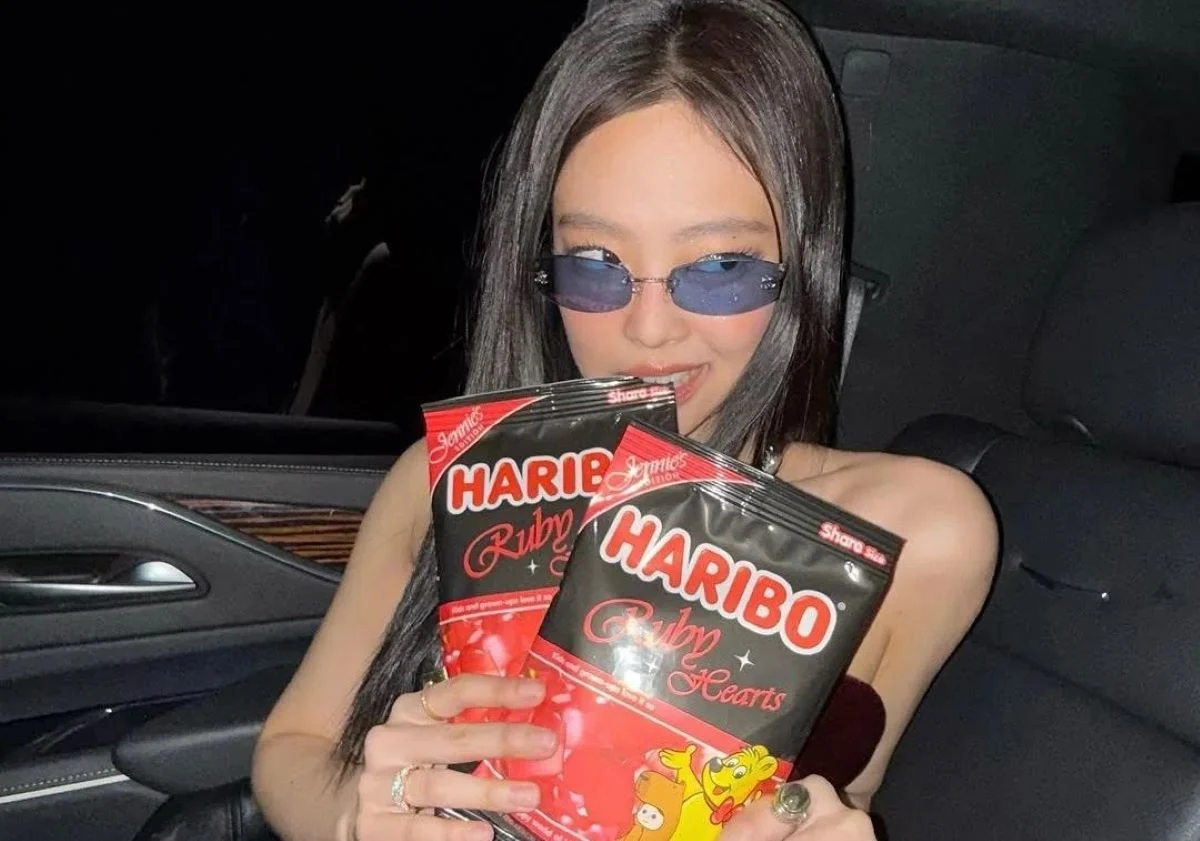
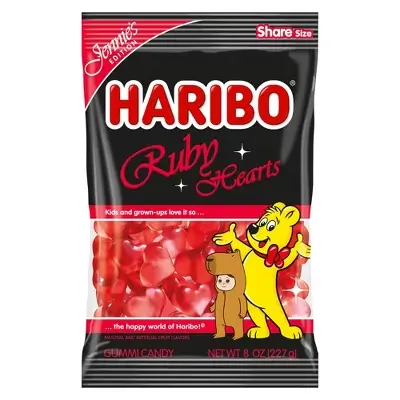
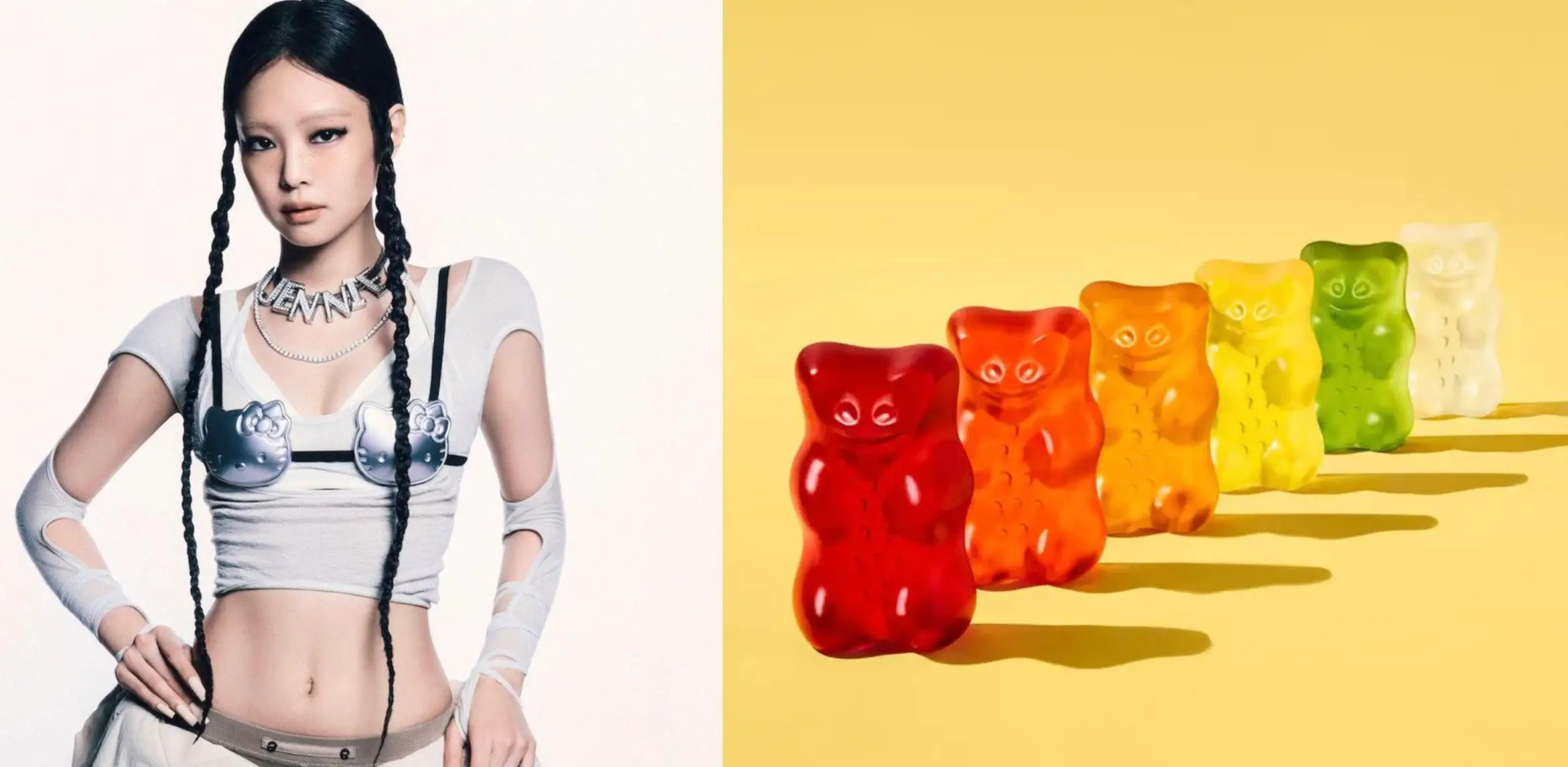
In the increasingly intertwined worlds of pop culture, luxury branding, and confectionery nostalgia, collaborations rarely land with the instant cultural velocity of Jennie Kim’s latest move. As BLACKPINK’s resident fashion polymath and the creative force behind her label, ODDATELIER, Jennie has learned to navigate partnerships with a surgeon’s precision. So when HARIBO quietly teased a ruby-tinted silhouette of a gummy heart earlier this week, the internet didn’t simply speculate—it detonated. The reveal of the limited-edition HARIBO ‘Ruby Hearts’ gummies, inspired by Jennie’s solo track “Ruby,” marks yet another example of how celebrity branding has shifted from traditional endorsements into world-building.
This collab is not merely about flavor; it is about emotional architecture, identity, and the soft power Jennie wields across global youth culture. HARIBO, at over a century old, has undergone countless reinventions, but the “Ruby Hearts” campaign stands apart for its fusion of K-pop glamour, visual storytelling, and lifestyle positioning. While BLACKPINK has long been associated with premium partnerships—from Chanel to Celine to Gentle Monster—this unexpected confectionery crossover broadens the map. Jennie isn’t simply endorsing a candy; she’s reframing it for a new generation of consumers who treat pop idols as aesthetic curators.
From the outset, what makes Ruby Hearts compelling is its narrative origin. In 2023, Jennie released “Ruby,” a shimmering solo track that marries warm synths with her relaxed, jewel-like tone. The song plays with imagery of red gemstones, inner glow, and understated confidence—concepts now translated into a candy experience. HARIBO has crafted the Ruby Hearts gummies in a deep, jewel-toned red with a subtle crystalline sheen, echoing the reflective metaphor at the core of the song. The flavor profile aligns with Jennie’s artistic palette: not too sweet, slightly floral, and softly tangy, with notes reminiscent of raspberry-rose and lychee.
The packaging tells another story. Instead of leaning into HARIBO’s primary colors, Ruby Hearts arrives in a satin-matte black pouch with ruby detailing, a nod to Jennie’s long-standing visual code. The typeface references her ODDATELIER branding, while the heart motifs feel like a cross between K-pop photocard culture and luxury cosmetics design. It’s the kind of bag consumers won’t simply throw away; it’s destined for vanities, desk drawers, and collector shelves. HARIBO isn’t just selling candy; they’re selling an artefact.
View this post on Instagram
This connection also arrives at a moment when food and fashion have become powerful cultural allies. Fans are no longer content with merch—they want edible, wearable, collectible, and experiential memorabilia. Brands from Tiffany & Co. to McDonald’s have leaned into “drops,” and Jennie, whose influence shapes trends across Asia, Europe, and the US, sits at the center of this shift. HARIBO partnering with her may seem surprising from a legacy standpoint, but strategically it is razor-sharp: access to global Gen Z, unparalleled engagement, and built-in narrative depth through Jennie’s artistic universe.
Within hours of the announcement, Ruby Hearts dominated Korean and international social feeds. Pop-up displays in Seoul and Tokyo reportedly drew queues reminiscent of sneaker drops, with fans eager to snap photos of the jeweled heart installations. The promotional images—Jennie holding the candy as if revealing a precious stone—have already become their own moodboard currency. This is not simply a snack; it is a cultural signal.
Jennie’s ability to influence across categories comes from her unique mainstream-luxury balance. She floats between worlds: the pop superstar, the Paris Fashion Week muse, the soft-spoken soloist, the entrepreneur quietly architecting her own creative brand. Ruby Hearts allows her to expand her influence into a realm that is lighthearted, nostalgic, and universally accessible. Not every fan can buy her Chanel look, but almost every fan can buy a bag of Ruby Hearts. This democratization is powerful—and clever.
There is also a subtle branding genius in linking candy to a song. Listeners who discover “Ruby” through the collaboration will associate the flavor with the track’s mood. It becomes synesthetic marketing: sound becomes taste; branding becomes ambience; artistry becomes product. This approach is increasingly common in K-pop, where albums come with scent cards, textured photobooks, and QR-activated video experiences. HARIBO, by stepping into this multisensory framework, situates itself within a fan-driven ecosystem that thrives on detail and emotional attachment.
Critics may argue that collaborations like this over-commodify music. But in reality, the Jennie x HARIBO partnership feels more sophisticated than cash-grab endorsements of the past. It reflects a cultural evolution in which products become extensions of an artist’s aesthetic language. Jennie’s fans aren’t being sold candy—they’re being invited into a mood, a color story, a tiny universe in which ruby hearts symbolize warmth, clarity, and confidence. HARIBO benefits by placing itself at the heart of a global narrative powered by fandom passion.
As the limited-edition drop prepares for international distribution, anticipation only grows. Secondary market chatter already suggests resellers plotting multipacks, though Jennie herself emphasized in the release notes that the gummies were meant “to be shared.” And indeed, the idea of sharing feels baked into the campaign—a nod to childhood, friendship, and sweetness, all filtered through Jennie’s minimalist cool. This is perhaps why the collab resonates so deeply: it marries simplicity with cultural impact.
Ultimately, Ruby Hearts stands as a reminder of Jennie’s unique position in contemporary culture. She moves markets without forcing momentum, preferring a gentle push rather than spectacle. Her partnerships feel instinctive, intimate, and far more aligned with personal storytelling than many celebrity branding attempts. HARIBO, by handing her the keys to reinvent the gummy heart, has tapped into a story much larger than candy—a story about how icons shape the world not only through music, but through the everyday objects we reach for..