Amy Allen and the New Architecture of Pop

December 5, 2025
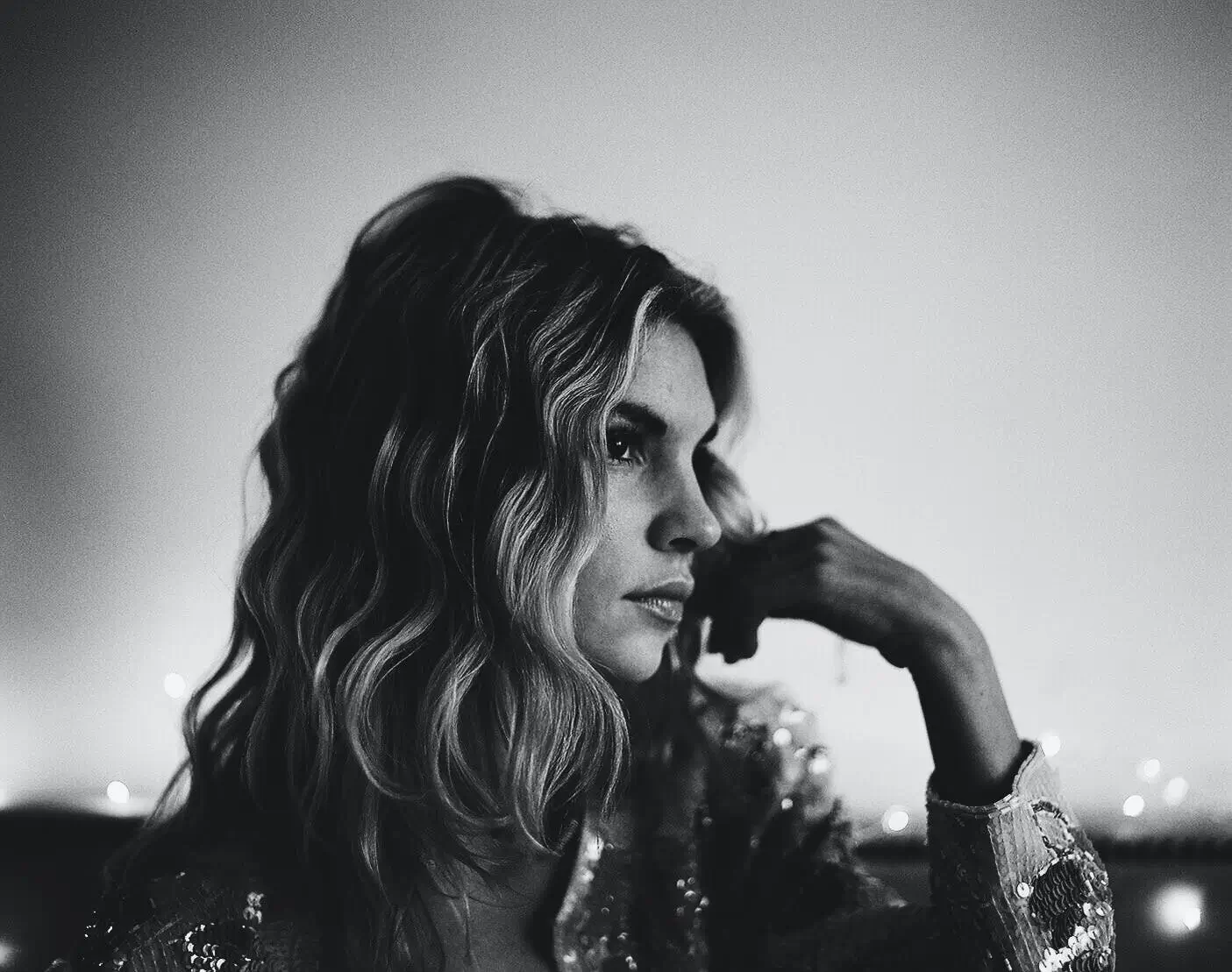
begin
Before Amy Allen was shaping the emotional vocabulary of modern pop, she was a teenager playing in bars along the Maine coast — small rooms where songs either connected instantly or disappeared into conversation noise. Those early performances taught her something no conservatory could: how an honest lyric cuts through distraction better than any production trick.
She eventually left those pub stages for Berklee College of Music, pivoting from nursing school into a world where songwriting could be a profession rather than a hobby. Her early bands and artist projects — including Amy & the Engine — served as a kind of apprenticeship. These were the years spent writing constantly, touring in vans, and slowly refining a voice that balanced vulnerability with a sharp, observational wit.
The transition from aspiring artist to in-demand writer wasn’t a door-swing moment but a gradual recognition. Allen had a gift not only for telling her own stories, but for ventriloquizing emotion on behalf of other artists — shaping words that sounded like they belonged to the performer while still carrying her signature emotional DNA.
prior
Her breakout as a behind-the-scenes force came in the late 2010s with songs that felt both diaristic and universal. Selena Gomez’s “Back to You” and Halsey’s “Without Me” showcased Allen’s ability to condense complicated emotional dynamics into lines that feel instantly lived-in. They had the cadence of confession but the structure of pop precision.
Once those records took off, doors began opening in every direction. She started writing with Harry Styles, the Jonas Brothers, Tate McRae and a rising wave of young artists who were learning how to blend arena-sized hooks with conversational storytelling. Allen became the writer you called when you wanted a song to sound like it was torn from a journal but destined for radio.
These early successes introduced the industry to the Amy Allen toolkit: melodic lift in the chorus, small but vivid narrative details, and a refusal to sand down the edges of emotion in favor of universal clichés. Her songs didn’t float past you; they stuck.
sabrina
Every pop era has a behind-the-scenes architect. For the past two years, that role has undeniably belonged to Amy Allen — especially through her creative partnership with Sabrina Carpenter.
Their collaborations didn’t just yield hits; they shaped a cultural moment. “Espresso” became the caffeine-fueled soundtrack of summer, a song whose breezy confidence transformed Carpenter from rising star into household name. “Please Please Please” followed with whip-smart lyricism and a chorus engineered for stadiums and TikTok captions at the same time. The song hit No. 1 on the Billboard Hot 100, but more importantly, it entered the public lexicon — a sign of how deeply Allen understands the psychology of a line that lingers.
Perhaps the most remarkable feat was her work on Carpenter’s album Short n’ Sweet, for which Allen co-wrote every track. In an age where albums often feel like playlists stitched together, this body of work carried a unified emotional language: flirty, self-aware, vulnerable but defiant. Allen and Carpenter created a tone that resonated across continents, streaming platforms, and social feeds. It felt like a pop era with an actual point of view.
Her success with Carpenter vaulted Allen to the top of the Hot 100 Songwriters chart and cemented her position as the quiet architect of one of the year’s biggest musical breakthroughs.
flow
When Amy Allen won the 2025 Grammy Award for Songwriter of the Year, Non-Classical, the industry wasn’t just celebrating her catalog. It was acknowledging a shift in the cultural understanding of what — and who — defines pop music.
Songwriters have long been the invisible scaffolding supporting the careers of stars. Yet Allen’s win, the first for a woman since the category’s creation, signaled a broader movement toward recognizing the creative power behind the scenes. It wasn’t an anomaly; it was an overdue correction in an industry historically shaped by women but run by men.
Her nominations across categories — including Song of the Year, Album of the Year, and Best Song Written for Visual Media — illustrated the breadth of her influence. From chart-topping singles to film soundtracks, Allen’s fingerprints were everywhere. The awards season narrative simply caught up.
The Grammy was less a culmination than a declaration: songwriters of Allen’s caliber aren’t accessories to pop. They are architects of it.
sig
What makes an Amy Allen song instantly recognizable? It isn’t the genre, the tempo, or the production style — she writes across too many styles for that. It’s the emotional clarity.
In an era shaped by algorithmic playlists and social-media micro-moments, Allen has mastered the art of writing the line that can serve multiple functions at once. Her lyrics feel conversational enough for a text message, polished enough for radio, and sharp enough for TikTok virality. It’s a delicate balancing act: clean enough for mass appeal, honest enough to feel handcrafted.
Her style is defined by a few recurring strengths:
Conversational storytelling
Allen writes the way people actually speak when they’re trying not to reveal too much but end up revealing everything. Her lines often contain a sly joke or a self-aware twist, the kind of lyric that listeners instinctively latch onto.
Emotional compression
Entire situationships unfold within a few strategically chosen details. A single metaphor. A throwaway line. A shift in tone. Her songs don’t overexplain — they trust the listener’s emotional literacy.
Melodic height
Her choruses don’t just widen; they lift. The melodies feel cathartic, like the emotional release at the climax of a film. This contrast between conversational verses and soaring choruses creates a pull that keeps listeners replaying.
Her writing reflects a truth about the present moment: in a world overflowing with content, what stands out is not noise but clarity.
stir
A defining feature of Allen’s rise is the shift from writing isolated singles to shaping cohesive artistic worlds. Her collaborations often span full projects, allowing her to influence not just a song but a persona, an era, a narrative arc.
This mirrors a broader industry trend. The most iconic pop eras today — from Taylor Swift’s folklore/evermore suites to Olivia Rodrigo’s tightly aesthetic cycles — emerge from deep, sustained writer-artist partnerships. Allen’s work with Carpenter functions in the same way: a shared creative language that evolves across albums, visuals, performances, and fan communities.
Allen’s role extends beyond the song file. She’s influencing tone, storytelling, cultural positioning — the intangible scaffolding that turns songs into eras and eras into cultural memory.
fwd
In a streaming world where borders matter less than playlists, Amy Allen’s reach has gone global. Her collaborations extend into K-pop, film, and multi-territory releases, reflecting the increasingly international ecosystem of pop writing rooms.
Her work on Rosé’s collaborations, including cross-genre duets and bilingual arrangements, demonstrates her ability to shape records that resonate across continents. These songs perform as well in Seoul as they do in New York or Sydney, proving that emotional clarity transcends language.
This global fluency is no longer optional for top-tier songwriters. Allen’s success underscores the accelerating reality of a borderless pop landscape — one where writers must adapt to diverse vocal styles, cultural contexts, and fan ecosystems.
why
Songwriting today exists in a paradox. Data is everywhere — streaming analytics, skip rates, viral metrics — yet the songs that break through are often the ones that feel the least engineered.
Allen has spoken in interviews about resisting formulaic approaches to writing, choosing instead to rely on “feel” — the intangible sense of whether a song hits in the gut. That instinct has proven more reliable than any predictive model.
Her success suggests a cultural fatigue with algorithmic sameness. Audiences crave songs that say something, songs that feel like they were written from a place of actual experience rather than demographic targeting.
Allen’s process is a reminder that human imperfection, not data, is what gives pop its magic.
amy
While the world celebrates Amy Allen the songwriter, there is also Amy Allen the artist — a quieter but equally compelling thread. Her solo releases, from the AWW! EP to her full-length Amy Allen, carry a rawness that feels more vulnerable than her pop smashes for others.
These songs reveal her own voice: wistful, smoky, sometimes aching, always intimate. Where her writing for others sparkles with wit, her artist work leans into softness and reflection. It’s a dual career path shared by other writer-turned-artists like Julia Michaels and Victoria Monét, but Allen’s approach is uniquely subtle. She isn’t chasing chart dominance with her own music; she’s carving out a space where her personal storytelling can breathe.
Her tours — including opening slots for Bleachers — have helped her bridge the gap between studio and stage, allowing fans to see the writer behind the hits as a performer in her own right.
potential
Amy Allen’s ascent marks more than individual success. It signals a cultural and structural shift in pop music.
Her visibility helps normalize women occupying the highest tiers of writing and production, a space where they have been historically underrepresented. Her Grammy win functions as a proof point and an invitation: the studio is no longer a boys’ club by default.
Her career also demonstrates the power of adaptability. Allen moves comfortably between genres, between continents, between writing for others and expressing herself. For emerging writers, she represents a roadmap where versatility is strength rather than compromise.
And finally, her rise reinforces the importance of emotional authenticity in a hyper-digital age. Listeners — whether on TikTok or in a stadium — respond to truth delivered with craft. Allen is proving that carefully written songs still have the power to define culture, even in a moment dominated by snippets and scrolls.
fin
Amy Allen’s story is not a typical rise-to-fame narrative. There’s no overnight breakthrough, no viral fluke, no tabloid-friendly persona. Instead, her ascent reflects the slow accumulation of craft, instinct, partnership and emotional intelligence.
She has become the invisible heartbeat of contemporary pop — the writer behind the lines people scream in cars, quote in captions, and whisper during heartbreak. Her Grammy coronation simply affirms what audiences already know: Amy Allen isn’t just writing hits. She’s shaping how a generation talks about love, loss, confidence and desire.
Songwriter of the Year doesn’t quite capture it. Amy Allen is one of the defining storytellers of modern pop music — and the future she’s helping build sounds more expansive, more honest, and more human than ever.