Y-3 Sets the Tone for Its Spring/Summer 2026 Collection

December 6, 2025
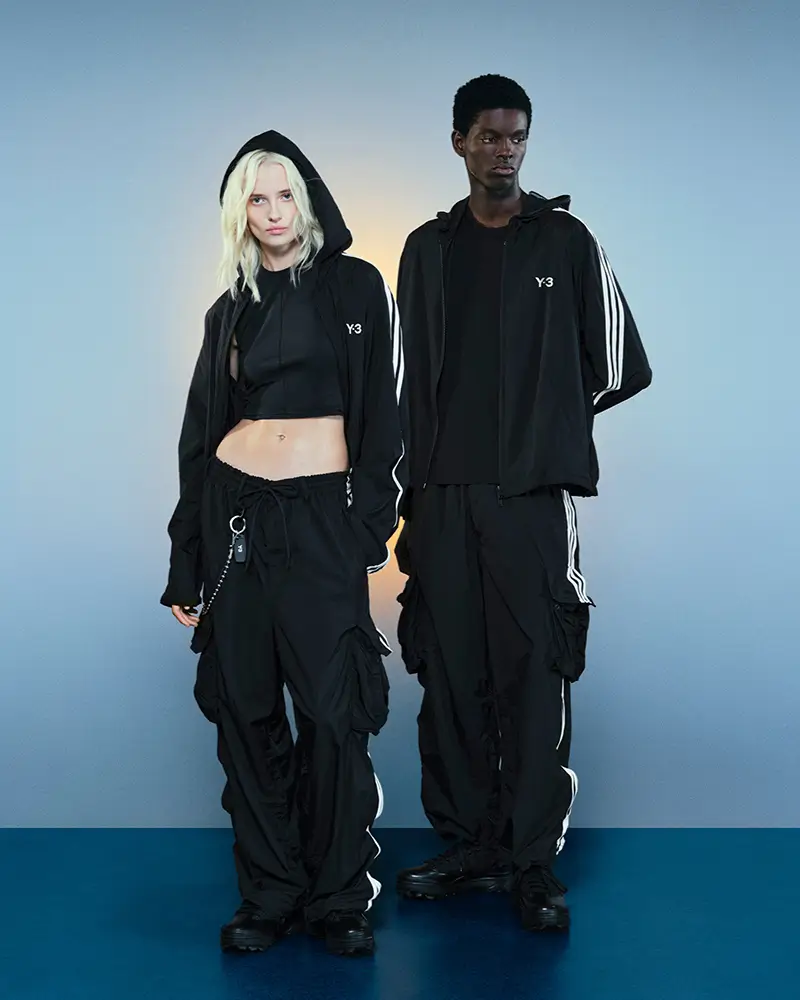
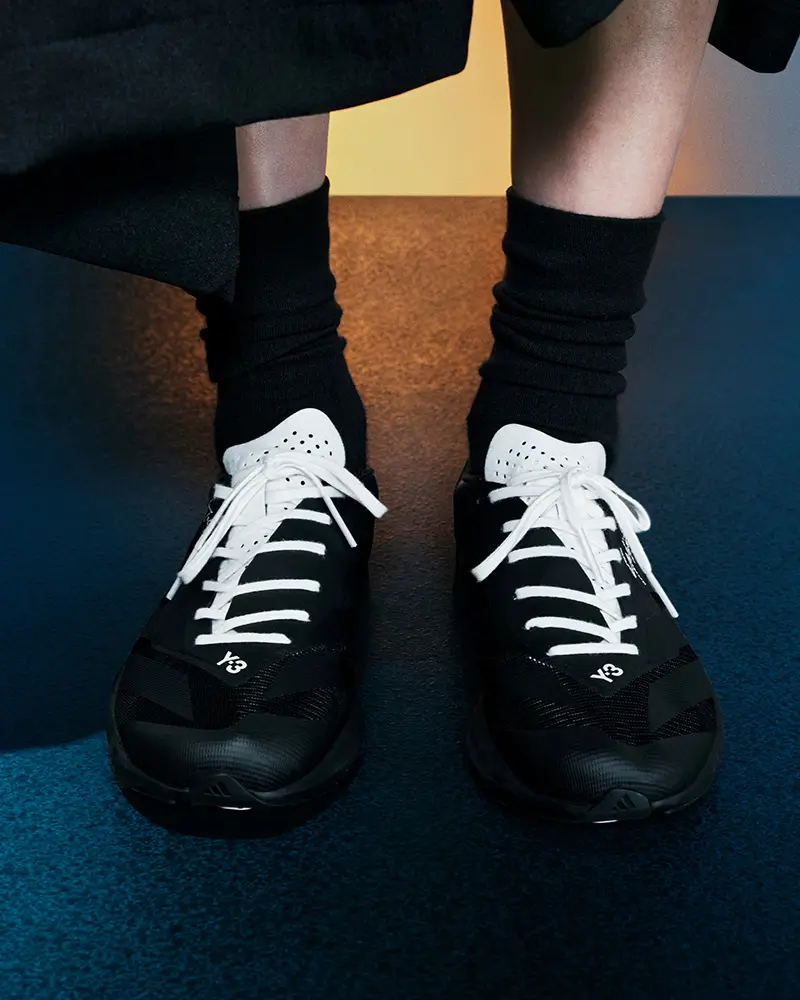
The Spring/Summer 2026 season opens with a statement of confidence from Y-3, as the brand releases Chapter 1 of its latest collection alongside a visually commanding lookbook. The collaborative venture between adidas and Yohji Yamamoto continues its exploration of tension—between softness and intensity, tradition and futurism, the raw and the refined. The new imagery, shot by Oscar Foster Kayne, pushes this philosophy further, capturing silhouettes suspended between movement and stillness, delicacy and structure.
Y-3 has always existed at the intersection of sport and avant-garde minimalism, fusing Yamamoto’s deconstructed sensibility with adidas’s technical lineage. Yet, for Spring/Summer 2026, the dialogue feels sharper, more distilled. The collection leans into formal experimentation, rendered through a crisp monochromatic palette that underscores its architectural qualities. Through padded volumes, wired stripes, engineered tailoring, and footwear refined into new silhouettes, the label reaffirms its place at the forefront of conceptual sportswear.
phil
The first chapter of the collection is built around monochrome—but in Y-3’s hands, monochrome becomes a prism rather than a constraint. Instead of prioritizing color, the brand chooses to focus on tonal depth, texture, and the emotional resonance of light and shadow.
Yamamoto has long celebrated the poetry of minimal palettes. For Spring/Summer 2026, the purity of black and white is used to emphasize silhouette, material, and gesture. The clothes feel sculpted, almost carved from fabric, making each fold, raw edge, and structured seam more pronounced.
This approach allows the wearer to engage with form rather than color—an invitation for movement, interpretation, and personal styling. Within this framework, the garments achieve a fluid dialogue with the body, shifting from softness to structure depending on how they’re worn. Monochrome is not absence; it is clarity.
struct
The standout theme of Chapter 1 is the interplay between rigid structure and flowing construction. Y-3 uses these contrasts to tell a story of duality—strength and vulnerability, precision and organic motion.
Padded bombers appear as the protagonists of this experiment. These jackets embrace volume, but not in a conventional puffed sense; instead, they feel architectural, defined by sharp edges and controlled lines. Paired with wide, flowing cargo trousers, they form silhouettes that feel simultaneously grounded and weightless.
The trousers, with their sweeping lines and elongated proportions, introduce a softness that counters the bomber’s sculptural density. This balance is quintessential Yamamoto: garments that contradict themselves in order to achieve harmony.
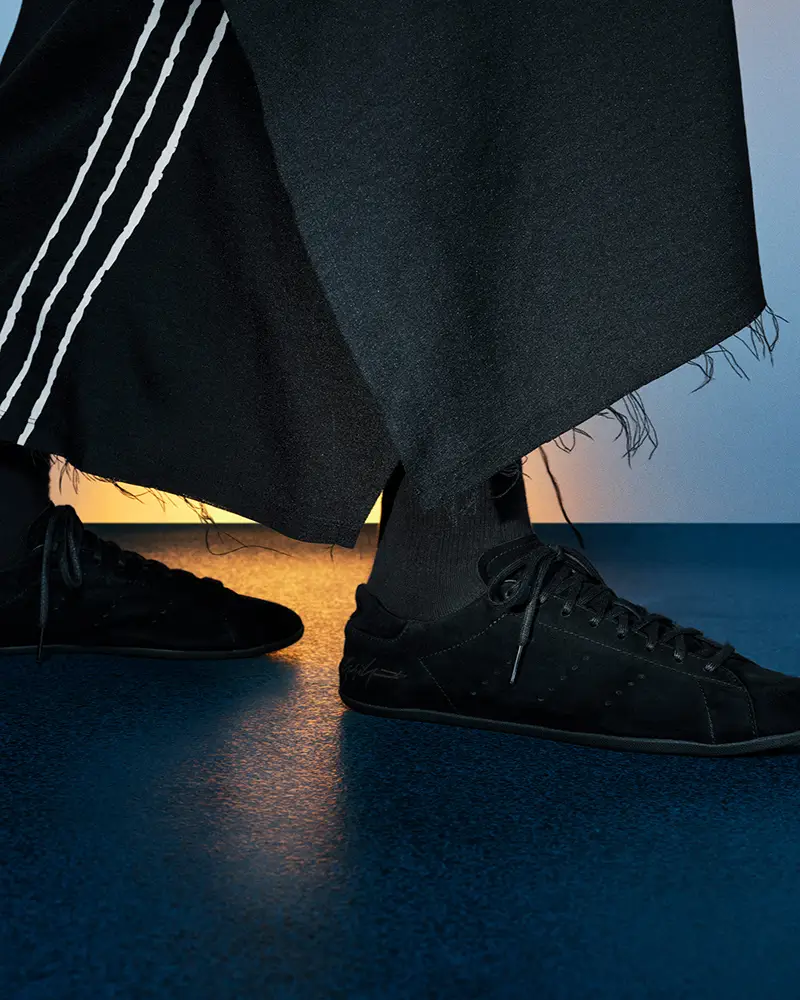
Another highlight is the introduction of raw, unfinished details—edges that appear frayed, seams that seem intentionally incomplete. These touches add a sense of immediacy, as though the garments are captured mid-process. In contrast, the surrounding pieces maintain clean, refined shapes that reinforce the deliberate tension at the heart of the collection.
lang
One of the most intriguing innovations of Spring/Summer 2026 is the integration of wired Three Stripes into select garments. This design element allows the wearer to physically shape the stripes, bending them into structural accents or soft curves depending on the look they want to create.
This addition introduces a performative quality to the clothing—each piece becomes a dynamic canvas, capable of morphing throughout the day. In a way, it reflects Yamamoto’s desire to challenge conventional ideas of permanence in fashion.
The wired stripes also echo themes of architecture and sculpture, aligning with the collection’s broader movements toward control and intentional distortion. Whether subtle or exaggerated, the wearer becomes part of the design process, shaping the identity of the garment in real time.
stir
Photographed by Oscar Foster Kayne, the lookbook functions as a visual extension of the collection’s contrasts. Kayne captures models in moments of tension—bodies in mid-movement, garments caught in shifting light, fabrics bending and twisting as if resisting and yielding simultaneously.
The compositions highlight the dialogue between softness and strength. Shadows emphasize the peaks and valleys of padded pieces, while the lighter garments blur slightly at the edges, suggesting momentum.
Kayne’s visuals insist that Y-3 is not static; it is atmospheric. Even in moments of stillness, the collection seems to breathe, expand, and contract.
The photography also pays homage to Yamamoto’s long-standing affinity for simplicity. The monochromatic setting ensures that attention remains fixed on silhouette and materiality, allowing each garment to act as its own sculptural form.
evolve
Y-3’s footwear has always served as a bridge between adidas’s athletic heritage and Yamamoto’s avant-garde sensibilities. For Spring/Summer 2026, the label extends this dialogue with a mix of reinterpretations and fresh evolutions.
reimagined
The iconic GSG9 boot returns in a surprising new form: brogue detailing. This fusion of militaristic structure with classic menswear patterning underscores the season’s exploration of contradiction. The heavy, protective form of the boot gains delicate flourishes, creating a piece that sits comfortably between combat utility and refined design.
y-3 stan low pro
A new highlight of the chapter is the Y-3 STAN LOW PRO, which reinterprets the beloved adidas Stan Smith through a sharper, more contemporary lens. The silhouette becomes sleeker, lower, and more minimal. Y-3’s signature monochrome palette allows the form to take center stage, stripping away excess and focusing on silhouette and proportion.
return
Two essential Y-3 models—the TOKYO and the REGU LOW—return in newly refined monochromatic finishes. Their reintroduction signals Y-3’s respect for its own lineage, while also offering continuity for followers of the brand’s classic silhouettes.
In particular, the REGU LOW’s sculpted midsole and understated upper lend themselves well to the collection’s architectural sensibility. Meanwhile, the TOKYO’s subtle technical elements feel newly contextualized within the season’s formal experimentation.
y-3 adizero rc6
The ADIZERO RC6 continues Y-3’s blending of performance running with streetwear culture. Lightweight, finely tuned, and visually stripped back, the RC6 introduces a sense of motion to the collection. Its presence broadens the Chapter 1 narrative, hinting at the brand’s versatility and future exploration of sport-infused minimalism.
move
While the collection is rooted in monochrome minimalism, its emotional tone is remarkably expressive. Spring/Summer 2026 appears to be a season of reflection—one where clothing becomes an extension of internal states rather than external declarations.
Yamamoto’s work often gravitates toward introspection, and this season is no different. The garments encourage the wearer to play with form, experimenting with the boundaries between structure and fluidity. The pieces feel like tools for expression rather than decorative objects.
The controlled distortions, wired details, and layering possibilities suggest a world in flux—a world where adaptability, transformation, and interpretation are more valuable than strict definitions. Y-3’s Chapter 1 captures this ethos with clarity and restraint, offering a quiet but compelling vision for the season ahead.
mat
Central to the collection is a deep respect for materiality. The fabrics used this season engage in subtle dialogues with light, weight, and texture.
The padded bombers derive their sculptural volume from advanced insulation techniques, making the pieces lightweight despite their presence. The cargo trousers rely on fluid textiles that respond intuitively to movement. Meanwhile, the raw edges and unfinished elements evoke the immediacy of Yamamoto’s hand-driven craft, reminding wearers that fashion remains a deeply tactile art.
The monochromatic palette amplifies the technical precision of these materials. Without color to distract, the viewer becomes attuned to the grain of the fabric, the geometry of the seams, and the way each piece interacts with the environment.
idea
Y-3 has long refused to be limited by standard definitions of sportswear. Instead, it treats sport—and movement—as expressive tools.
Chapter 1 of the Spring/Summer 2026 collection continues this legacy, demonstrating that sportswear can be conceptual, abstract, and poetic. While adidas supplies decades of expertise in performance innovation, Yamamoto transforms those foundations into narrative shapes.
The wired Three Stripes embody this philosophy perfectly. Rather than serving as a mere branding detail, they become functional markers of expression. The wearer can bend, manipulate, and distort the stripes, reshaping the garment’s purpose and personality.
Here, sport is not about competition; it is about gesture, form, and identity.
prologue
The release of Chapter 1 sets the tone for the broader Spring/Summer 2026 collection, hinting at themes that will evolve in subsequent drops. Y-3 collections often unfold like stories—each chapter adding layers of context, nuance, and experimentation.
This opening chapter feels like a declaration: a return to architectural silhouettes, stripped-down palettes, and sculptural contrasts. It also signals Y-3’s renewed commitment to innovation in footwear and garment engineering, with the wired stripes and brogue-detailed boots serving as key technical highlights.
More than anything, Chapter 1 establishes Spring/Summer 2026 as a season of introspective energy—subtle, thoughtful, and deeply rooted in material exploration.
fin
Y-3’s Spring/Summer 2026 Chapter 1 is not loud, but it is powerful. Instead of relying on bold color or overt trends, the collection builds tension through form, texture, and subtle contrasts. It is an exercise in pared-back innovation, where monochrome becomes an expressive terrain and structure becomes a tool for storytelling.
Yamamoto’s influence remains unmistakable—the raw edges, the sculptural silhouettes, the interplay of softness and severity. Yet adidas’s technical foundations keep the collection grounded, functional, and future-ready.
Oscar Foster Kayne’s lookbook captures the essence of the season: a world where shadows and light tell the story as effectively as fabric and stitching. Through his lens, Y-3’s garments rise beyond utility, becoming meditations on movement, presence, and identity.
As Chapter 1 opens the door to the Spring/Summer 2026 narrative, it confirms one truth: Y-3 continues to redefine sportswear not by chasing trends, but by shaping frameworks—inviting us to explore the quiet power of design, one sculptural silhouette at a time.