The Knockout Rounds Mark a Key Moment for the NBA Cup

December 8, 2025
When the NBA introduced its In-Season Tournament a year ago, the reaction was a mix of curiosity, confusion, and cautious optimism. Fans wondered how the league—already saturated with tradition, rivalries, and an 82-game regular season—could convince players and audiences to care about a brand-new competition wedged into the calendar. Pundits debated either this was innovation or gimmickry. Players, for the most part, waited to see how the format would feel under pressure. And the league, with Adam Silver steering the experiment, insisted that basketball could sustain a midseason bolt of urgency.
Now, as the 2025 edition of the NBA Cup enters its knockout rounds tomorrow, the answer is clear: the tournament has become the league’s most intriguing narrative engine outside the playoffs themselves. It has created stakes where there were none, forged new stars, revealed surprising weaknesses, and forced teams to confront versions of themselves they usually don’t see until April or May. The NBA Cup isn’t just working—it’s redefining the emotional rhythms of the season.
The group stage is over. The knockout bracket is set. And tomorrow, the league shifts into a single-elimination mode that exposes both brilliance and fragility. One game to advance. One game to survive. One game to shape an early chapter of basketball mythology.
stir
When the league unveiled the In-Season Tournament, it was openly modeled on European soccer’s domestic cups. Silver referenced the FA Cup and Copa del Rey as frameworks for injecting surprise into a long season. But the NBA Cup has evolved into something uniquely American: a hybrid of tournament basketball, broadcast spectacle, and curated drama.
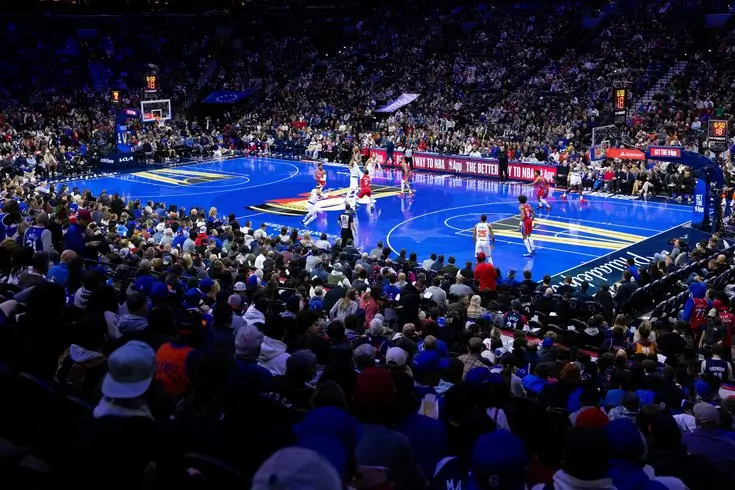
Unlike the marathon of the playoffs, the NBA Cup operates at a sprint. The group-stage games felt like mini-rivalries scattered randomly across the schedule—court designs blazing with bold colors, teams wearing alternate kits, and players openly discussing the desire to win the prize money. That $500,000 per player payout looms large not for superstars, but for role players, rookies, veteran journeymen—those whose stories often sit at the edges of the spotlight.
But beyond the money, something else has emerged: pride. The tournament counts toward regular-season standings, but its structure adds a layer of competitive personality. Teams that float through early-season games suddenly treat Cup nights like playoff auditions. Coaches tighten rotations. Fans show up louder. And players—aware that the entire basketball world is paying attention—lean into the intensity.
The result is a tournament that feels organic, not forced. Basketball culture found a way to make the NBA Cup its own.
urge
Tomorrow, that cultural shift crystallizes. The knockout rounds—quarterfinals, semifinals, and the final—distill the essence of high-stakes basketball. The NBA rarely offers single-elimination drama outside of the Play-In Tournament. But the Cup amplifies it: every possession, every substitution, every coaching adjustment carries a weight normally reserved for the postseason.
It’s also the part of the tournament where identity hardens.
A high-octane offense that thrives in December pacing might suddenly freeze under the pressure of a “win or go home” scenario. A role player who normally averages 11 points may rise into folklore with a 30-point outburst. Rotations that feel secure may fracture. And teams that assumed they were contenders may discover they are anything but.
The knockout rounds expose who is ready to thrive under spotlight heat—and who still needs time in the kiln.
View this post on Instagram
flow
One of the biggest questions entering last year’s inaugural Cup was whether the league’s star players would embrace it. Would they see it as expendable? Would they rest? Would they treat it like a preseason exhibition dressed in regular-season clothes?
They answered emphatically.
Stars have leaned into the tournament as a narrative accelerant. Last year, LeBron James—nearing forty yet playing with ferocious urgency—showed the first blueprint for how a superstar could weaponize the Cup. He treated it like a legacy project, a chance to add something new when the basketball world assumed his résumé was complete.
This year, the trend continues. Young stars see the Cup as a proving ground. Established superstars see it as a pressure test for their teams. And emerging players see it as a platform to rewrite their career trajectories. With knockout games beginning tomorrow, expect the league’s most recognizable faces to approach these matchups with a mixture of hunger and theatricality.
After all, the bright lights aren’t optional. They’re baked into the format.
fwd
Perhaps the most fascinating evolution of the tournament is the way coaches have adapted. In the regular season, coaching philosophies vary widely. Some prioritize long-term growth; others focus on short bursts of dominance. But the Cup compresses time and forces strategic decisiveness.
Tomorrow’s games will showcase rotations that resemble playoff structures, not December tinkering. Expect:
• shorter benches
• targeted defensive assignments
• stack scouting
• switch-heavy coverages
• crunch-time lineups treated like data-gathering for May and June
The Cup has inadvertently become a coaching laboratory. The “win tonight or go home” urgency accelerates development. Adjustments arrive faster. Weaknesses are punished immediately. There is no back half of a home-and-away to stabilize a misfire. Coaches must trust their instincts or watch their tournament run dissolve.
The beauty of this format is that it doesn’t simply reward the best team—it rewards the smartest.
show
Last year’s finals took place in Las Vegas, and the league turned the neutral-court environment into a spectacle. Neon-lit courts, immersive graphics, musical performances, and curated celebrity seating heightened the theater of the event. This year, the quarterfinals and semifinals will echo that atmosphere, even in home arenas.
As knockout games unfold tomorrow, expect environments that feel unlike typical early-season matchups. Arenas will buzz with playoff-level electricity, amplified by the knowledge that the tournament is short enough for fans to track every narrative in real time. The NBA Cup has effectively created a second momentum arc—parallel to the regular season but more compressed, more intense, more cinematic.
The Cup doesn’t replace the playoffs. It doesn’t try to. Instead, it offers a December postseason simulation, injecting drama into a portion of the calendar that once drifted quietly between early excitement and All-Star Weekend.
tempo
More than anything, the NBA Cup has shifted the psychological pacing of the NBA. December is no longer a lull. Teams can no longer spend early winter weeks experimenting without consequence. And fans—accustomed to reserving emotional energy for spring—find themselves invested in meaningful basketball long before All-Star ballots are cast.
This shift matters.
It keeps the league front-of-mind during a busy sports calendar, where the NFL and college football traditionally dominate late fall and early winter. It boosts viewership at a time when broadcasts often struggled for attention. And it gives the NBA a consistent storytelling engine—something its global audience craves.
Tomorrow’s knockout rounds represent the first pressure point of the basketball year. Not the playoffs, not the trade deadline, not All-Star Weekend. December. The NBA has successfully engineered meaning where there was none, and the Cup is the catalyst.
tension
As with any new format, purists remain skeptical. Some believe the Cup disrupts the natural cadence of the season. Others feel the alternate courts, branding, and spectacle distract from basketball purity. And some simply dislike change.
Yet innovation has always driven the league forward. The three-point line was once controversial. The Play-In Tournament was met with resistance. Even the draft lottery endured years of debate before becoming standard.
The NBA Cup represents the league’s latest attempt to adapt to an evolving entertainment landscape. And the knockout rounds tomorrow will demonstrate why the Cup is sticking: the drama is real, the competition is fierce, and the product is compelling.
Tradition shapes identity. Innovation fuels longevity. The Cup exists precisely at that crossroads.
idea
The NBA Cup is only in its second year, yet it already feels like a fixture. The league may refine formats, adjust seeding rules, or tweak the visual presentation. It may expand international involvement or experiment with additional incentives. But the core truth remains: the Cup works.
It injects meaning into a portion of the season once dismissed as background noise. It creates urgency, discovery, chaos, and triumph. It highlights the beauty of basketball’s unpredictability. And most importantly, it brings out the emotional stakes that define the NBA at its best.
Tomorrow, as the knockout rounds begin, the tournament will again reveal why the experiment succeeded: basketball, when pushed into a crucible of immediacy, becomes electrifying.
December belongs to the NBA Cup now. And the drama is only just beginning
No comments yet.