Kim Kardashian and Her ‘Break The Internet’ Pose Are Coming to Fortnite

December 12, 2025
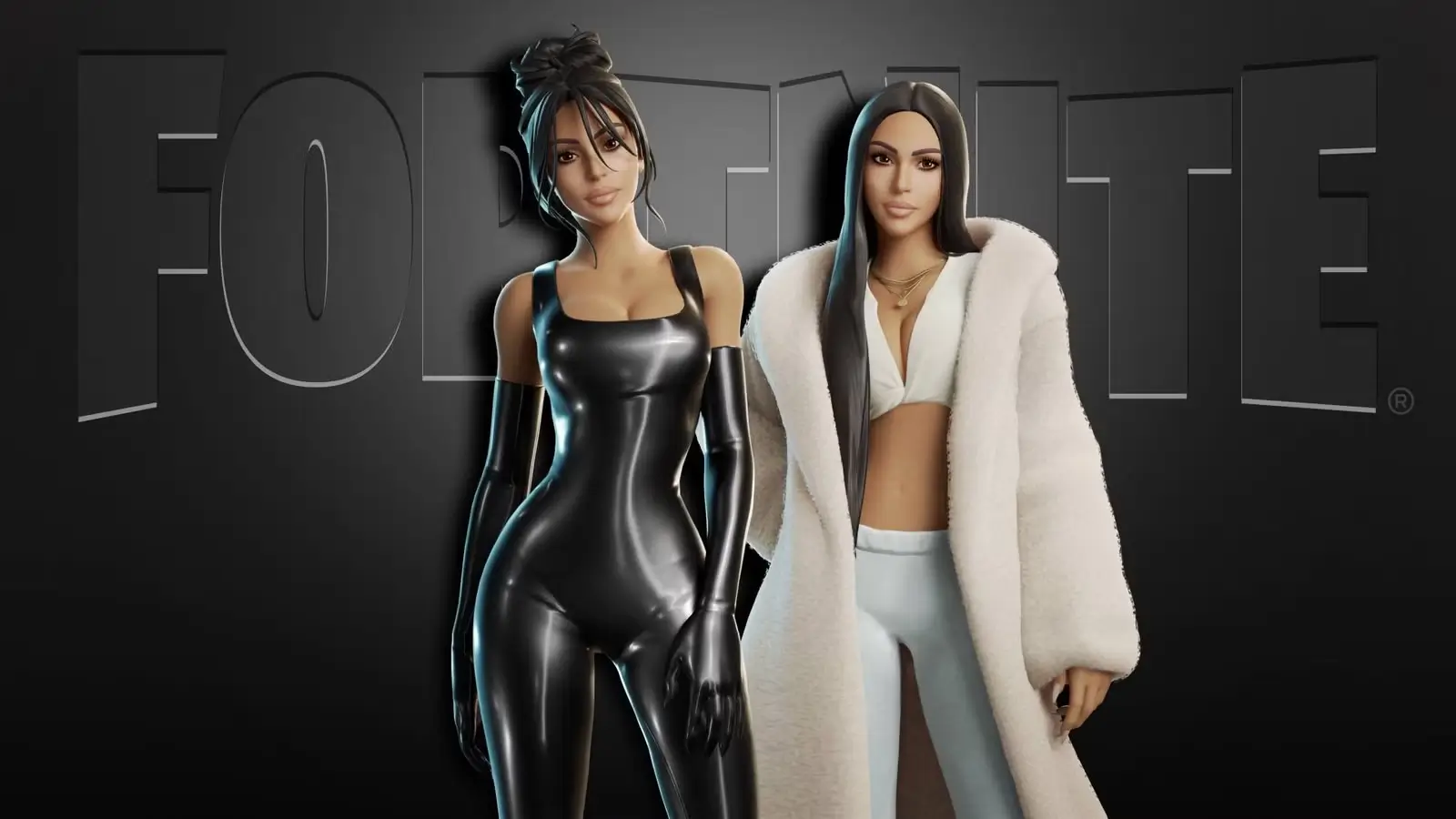
When Kim Kardashian posed for Paper Magazine in 2014, balancing a champagne flute on her back as liquid arced into a waiting glass, the internet didn’t just break—it recalibrated. The image wasn’t accidental virality; it was constructed spectacle. It revealed that attention could be choreographed, controversy could be aestheticized, and celebrity could function as a feedback loop between audience and platform.
That photograph became more than a cover. It became a cultural marker for a new era of online consciousness—one where images didn’t simply circulate, they detonated.
why
More than a decade later, Fortnite stands as one of the most powerful cultural engines of the digital age. No longer just a battle royale game, it has evolved into a participatory media environment—part social network, part stage, part archive. Music debuts, fashion collaborations, cinematic moments, and celebrity mythologies now unfold inside its universe.
Bringing Kim Kardashian’s “Break The Internet” pose into Fortnite feels less like a crossover and more like an alignment. Both understand attention not as something fleeting, but as something that can be engineered, replayed, and shared endlessly.
stir
In Fortnite, identity is not static. Players perform themselves through skins, emotes, and movements. An emote isn’t just an animation—it’s a citation. A reference. A signal that says, I know where this comes from.
The “Break The Internet” pose translates perfectly into that language. Stripped of photographic realism and reborn as a stylized gesture, it becomes cultural shorthand. One movement, instantly legible. No caption required.
fortnite
One of Fortnite’s most powerful traits is its ability to collapse time. A 2014 magazine cover can exist alongside futuristic armor, anime characters, and Marvel heroes without friction. Gen Alpha encounters Kim Kardashian not as a historical figure, but as a living reference. Millennials experience nostalgia without stasis. Gen Z reads the moment through irony, meme culture, and remix logic.
Few platforms allow that kind of temporal overlap. Fewer still make it playable.
kim
Kim Kardashian’s relationship with digital culture has always been strategic. Long before influencer marketing became standardized, she understood visibility as infrastructure. She didn’t just appear online—she built systems around her presence, from media to beauty to tech-adjacent ventures.
Entering Fortnite extends that logic. This is not passive branding. It’s participatory. Her image becomes something users activate, deploy, and reinterpret. In doing so, she shifts from subject to tool—one of the highest forms of digital relevance.
see you in @Fortnite 👀 pic.twitter.com/8EYYPga8pg
— Kim Kardashian (@KimKardashian) December 10, 2025
culture
Within Fortnite, emotes function as social language. They communicate humor, irony, allegiance, and cultural fluency. The success of an emote isn’t measured by realism, but by recognizability and replay value.
The “Break The Internet” pose already possesses those qualities. It was exaggerated by design. Self-aware. Almost architectural in its composition. That makes it ideal for a virtual environment where exaggeration is the norm and symbolism matters more than physics.
fashion
This moment also reflects a broader migration: fashion and celebrity imagery moving from observation into interaction. Fortnite has already hosted luxury brands, musicians, athletes, and fictional universes, but Kardashian represents something distinct—an era of internet-native fame shaped by fashion, reality television, and body politics.
In Fortnite, that imagery is no longer consumed from a distance. It’s inhabited. Fashion becomes movement. Celebrity becomes action.
gen
Perception has long framed Fortnite as male-dominated, despite its increasingly diverse player base. Introducing Kim Kardashian—specifically through one of the most unapologetically feminine and body-forward images of the 2010s—quietly expands what power and presence look like inside the game.
It introduces glamour without apology. Satire without dismissal. A different register of dominance that exists alongside combat skins and tactical identities.
flow
Not all viral moments survive re-entry. Many feel dated, brittle, or over-explained. The Paper cover endures because it wasn’t tied to a trend—it marked a realization. A moment when the internet understood its own mechanics.
That’s why it still works. That’s why it can live again inside Fortnite. Not as controversy, but as cultural memory made playable.
fin
Ultimately, Kim Kardashian’s “Break The Internet” pose arriving in Fortnite is less about spectacle than acknowledgment. It recognizes that attention itself is now a shared language—one shaped by movement, reference, and repetition.