WWE’s Library — Including WrestleMania, Royal Rumble and More — Heads to Netflix (Exclusive)

January 7, 2026
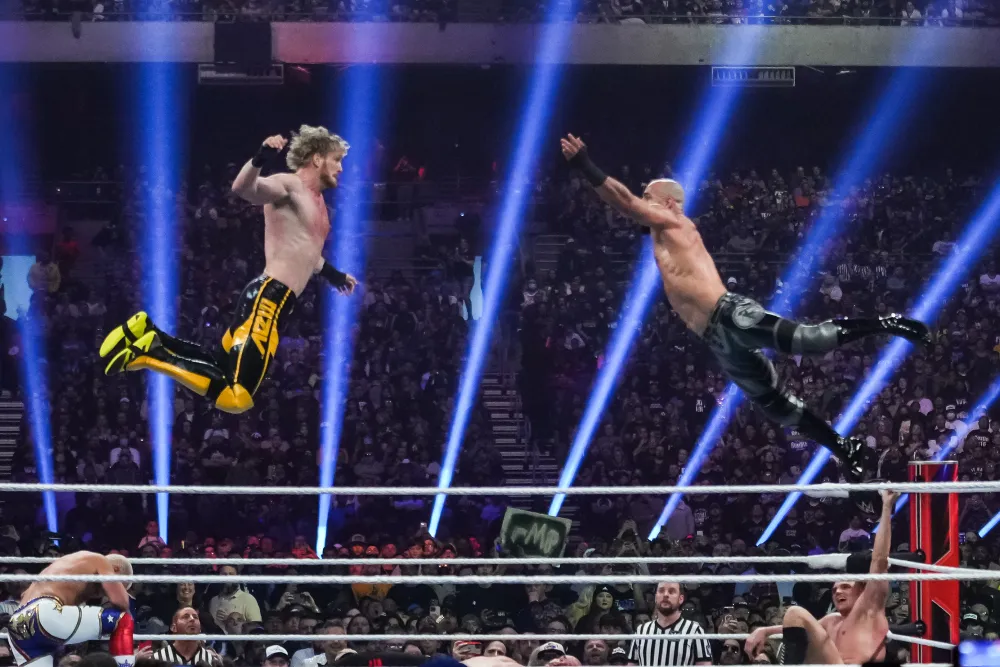
WWE’s history has always been larger than the ring. It lives in memories passed down between generations, in VHS tapes worn thin, in DVD box sets stacked on shelves, and more recently, in clips endlessly recycled across social media. WrestleMania, Royal Rumble, SummerSlam, and Survivor Series are not just events. They are cultural timestamps, marking shifts in entertainment, fandom, and spectacle over more than forty years.
new
WWE’s premium live event library is officially heading to Netflix in the United States. The deal brings decades of major events, including WrestleMania, Royal Rumble, SummerSlam, and Survivor Series, onto the world’s most dominant streaming platform. It’s a move that reshapes how wrestling’s past is accessed, understood, and preserved.
This isn’t simply about convenience. It’s about visibility.
For years, WWE’s archive required intention. You had to know where it lived, subscribe specifically for it, and actively search for what you wanted. Netflix flips that relationship. Wrestling history now sits in the same digital space as prestige television, global documentaries, and nightly comfort viewing. It’s no longer hidden behind fandom. It’s placed directly in front of the mainstream.
change
WWE has always been built on long-form storytelling. Rivalries unfold over months or years. Characters evolve slowly, sometimes painfully. Moments only land because of what came before them. The archive is where those stories make sense in full. By placing it inside Netflix, WWE is turning its own history into a continuous narrative universe, ready to be rediscovered one era at a time.
The timing of the move feels deliberate. Wrestling is enjoying a renewed cultural relevance, especially among younger audiences discovering it through fashion, music, podcasts, and viral clips. Wrestlers are appearing in places they rarely did before, from major films to brand campaigns to high-profile interviews. Yet many of those new fans have never seen the moments that built the mythology.
netflix
Instead of dropping into a live storyline midstream, viewers can move backward. They can experience WrestleMania not as nostalgia, but as introduction. They can understand why certain names still carry weight. They can see how styles changed, how crowds reacted differently, how the product constantly reinvented itself to survive.
That kind of discovery is one of Netflix’s core strengths.
The platform excels at turning archives into fresh conversation. It has already proven that legacy content can feel new when presented correctly. WWE’s library fits naturally into that model. One event leads to another. One era opens the door to the next. The barrier to entry is gone.
There is also significance in how the deal separates WWE’s past from its present. The Netflix library focuses on premium live events prior to September 2025, clearly defining the archive as its own entity. Current programming continues to exist in the live, weekly ecosystem, while the past becomes evergreen.
flow
WrestleMania, in particular, benefits from this framing. Watching past WrestleManias in sequence reveals how WWE sees itself at different moments in time. Early editions feel intimate and experimental. Later ones grow louder, bigger, and more polished. Stadium shows replace arenas. Celebrity involvement increases. Production becomes cinematic.
Royal Rumble offers a different kind of appeal. Its format has barely changed because it never needed to. It thrives on anticipation and surprise. Watching old Rumbles highlights how audience expectations evolve. Some winners feel inevitable in hindsight. Others still shock decades later. The event becomes a study in timing, crowd psychology, and narrative risk.
SummerSlam and Survivor Series fill in the spaces between, capturing WWE in transition years, recalibration phases, and creative experiments that didn’t always land but mattered nonetheless. Together, these events form a living archive of what worked, what didn’t, and what shaped the modern product.
role
Another key part of the deal is the inclusion of WWE documentaries and original programming. These projects provide context that transforms how matches are viewed. Knowing what a performer was dealing with behind the scenes changes how their work reads on screen. Injuries, creative struggles, personal loss, and professional pressure all add layers to moments fans thought they already understood.
strat
Documentaries invite new audiences in by focusing on human stories. Wrestling fans then go back to the matches with fresh perspective. It’s a loop that deepens engagement rather than fragmenting it. WWE has long leaned into this kind of myth-building, and Netflix’s platform amplifies it.
There are practical considerations, too. WWE’s archive is massive, and wrestling fans are detail-oriented. Organization will matter. Chronology will matter. Search functionality will matter. Fans don’t want approximations. They want specifics. The success of this move will depend not just on what is available, but how easily it can be found.
fwd
By moving its library to Netflix, WWE is asserting that its history deserves to sit alongside the most influential entertainment of the modern era. It’s a statement about longevity. About relevance. About confidence in the product’s ability to hold attention decades after it first aired.
This also signals a shift in how wrestling is archived culturally. Netflix has become something close to a digital memory bank. It’s where people expect important content to live. By placing its legacy there, WWE is ensuring that its past remains accessible, discoverable, and contextualized for years to come.
In many ways, this move acknowledges what wrestling fans have always known. WWE isn’t disposable entertainment. It’s serialized storytelling with real emotional investment. It rewards patience. It invites rewatching. It changes depending on when you encounter it.
impression
For longtime fans, the archive becomes easier to revisit. For new fans, it becomes easier to enter. For WWE itself, it becomes easier to preserve its narrative on its own terms, inside a platform built for repetition and rediscovery.
WrestleMania is no longer just something you remember watching live. It’s something you can return to whenever curiosity hits. Royal Rumble becomes more than a yearly tradition. It becomes a timeline of belief, hope, and surprise.
WWE’s library heading to Netflix is not about the past catching up to the present. It’s about the past being positioned to matter again, continuously, without friction.
For a company built on reinvention, that might be the most fitting evolution yet.