stir
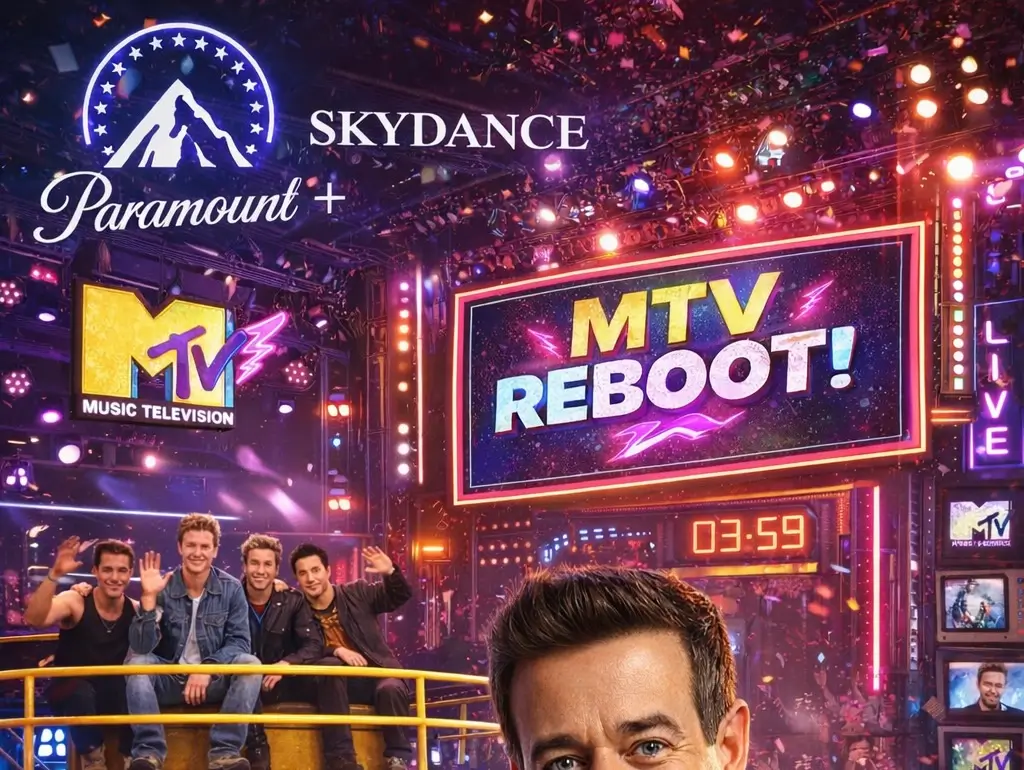
Paramount Skydance is reportedly seeking strategic partners to help reinvent MTV, and while the headline sounds like standard corporate maneuvering, the implications are far more cultural than financial. MTV is not just another legacy cable network in need of a facelift. It is one of the most influential cultural machines of the last fifty years—one that once dictated how music was consumed, how youth dressed, and how pop culture was understood in real time. The question facing Paramount Skydance is not simply how to modernize MTV, but whether a brand built on shared attention can survive in an era defined by fragmentation.
To even attempt an MTV reinvention is to challenge the basic architecture of contemporary media. Today’s audiences do not gather in one place. They scroll, swipe, algorithm-hop, and self-curate. Culture no longer arrives on schedule. It leaks through feeds at different speeds for different people. MTV, however, was built on simultaneity—the idea that millions of viewers could experience the same song, the same video, the same host, at the same moment. Reinventing MTV means figuring out how to make togetherness feel necessary again.
when
In its prime, MTV was not a channel you checked—it was a channel you lived with. From the moment it launched in 1981, it collapsed the distance between music and image, turning artists into visual icons and fans into active participants in pop culture. A music video was not supplementary; it was essential. Artists didn’t simply release songs—they premiered moments.
By the late 1990s and early 2000s, MTV had refined this power into appointment viewing. Total Request Live was not just a countdown show; it was a daily ritual. Fans voted, waited, screamed, debated, and felt like they were shaping culture rather than merely consuming it. Carson Daly wasn’t famous because he was a great interviewer—he was famous because he stood at the crossroads between artists and audience, translating pop stardom into something personal and communal.
MTV didn’t just reflect youth culture. It synchronized it.
flow
MTV’s decline didn’t happen overnight, nor was it caused by a single bad decision. It happened gradually, through a series of compromises that made sense individually but proved corrosive collectively. Reality television filled airtime because it was cheaper. Music videos were pushed to late hours because ratings dipped. Eventually, the network that once defined music television became a place where music itself felt incidental.
By the time YouTube emerged as the default platform for video discovery, MTV had already loosened its grip on its core identity. Social media accelerated the shift. Artists no longer needed MTV to premiere videos; they could drop them directly to fans. Cultural moments stopped being centralized. Algorithms replaced programmers. Popularity became data-driven rather than experiential.
MTV didn’t lose because it was obsolete. It lost because it stopped believing it was essential.
why
Paramount Skydance’s reported search for strategic partners signals an understanding that MTV cannot be fixed internally. The challenge is not production—it’s positioning. MTV needs collaborators who understand platforms, fandoms, technology, and cultural momentum. Reinvention requires more than new shows; it requires new logic.
This is where the conversation becomes interesting. Strategic partners could bring interactive infrastructure, live-event expertise, gaming culture fluency, or social-first storytelling. They could help MTV stop thinking like a cable network and start thinking like a cultural operating system—something that exists across screens, platforms, and physical spaces.
But partnership alone won’t save MTV. Direction will.
nostalgia
The half-serious joke that an MTV reboot might involve bringing back Carson Daly to introduce *NSYNC videos works because it reveals something true. Nostalgia is not weakness; it is emotional capital. The problem is not remembering what MTV was—it’s mistaking memory for momentum.
What Carson Daly represented wasn’t the 1990s. It was trust. He made the audience feel included. *NSYNC didn’t just succeed because they were catchy; they succeeded because MTV turned their rise into a shared narrative. People didn’t just watch—they participated.
A modern MTV cannot simply replay that formula, but it can reinterpret it. Hosts still matter. Human curators still matter. Audiences are exhausted by faceless feeds. The opportunity lies in reintroducing personality—not as celebrity worship, but as cultural guidance.
myth
One of the biggest misconceptions in modern media is that younger audiences reject curation. In reality, they are drowning in it—just outsourced to algorithms. What they lack is trusted, visible human judgment.
TikTok trends don’t emerge randomly; they are shaped by influential nodes. Streaming playlists still rely on editorial framing. Even viral moments feel better when contextualized. MTV once excelled at this—connecting dots, setting tone, explaining why something mattered.
The challenge is translating that role into a world where attention is fragmented and fleeting. A revived MTV doesn’t need to dominate all culture. It needs to matter deeply to a defined one.
what
If MTV is to be reinvented successfully, it must stop competing with YouTube and TikTok on volume and start competing on meaning. That means fewer things done better, louder moments executed with intent, and programming that feels like an event rather than content filler.
Imagine MTV as a live-culture platform—music premieres, artist conversations, fashion crossovers, gaming tie-ins, and real-time audience participation. Not constant broadcasting, but strategic presence. Less channel, more pulse.
Music videos could return—not as passive clips, but as premieres with commentary, reaction, and context. Artists don’t just drop visuals; they introduce them, discuss them, and watch audiences respond in real time. The screen becomes social again.
idea
MTV’s true power was never format—it was timing. It understood when something needed to happen now. Today, media rarely asks audiences to show up at a specific moment. Everything is on-demand, which ironically makes nothing feel urgent.
A reinvented MTV could lean into this scarcity. Limited-time live events. Countdown culture reborn—not daily, but decisively. Moments you can’t rewind because the value is in being there.
This is where Paramount Skydance’s interest in partnerships becomes crucial. The right collaborators could help engineer these moments across platforms, turning MTV from a passive brand into an activator.
impression
Despite everything, MTV remains one of the few media brands that still means something across generations. Its logo alone carries symbolic weight. Few networks can claim that. Even fewer can plausibly reconnect music, youth, and mass culture in a way that feels organic.
The fact that Paramount Skydance is willing to rethink MTV—rather than quietly let it fade—suggests there is still belief in that potential. Reinvention will not come from copying the past, but from remembering what made the past work: shared attention, human connection, and cultural confidence.