Beyond The Horizon as Inheritance: Yu Araki’s Praxis

January 12, 2026
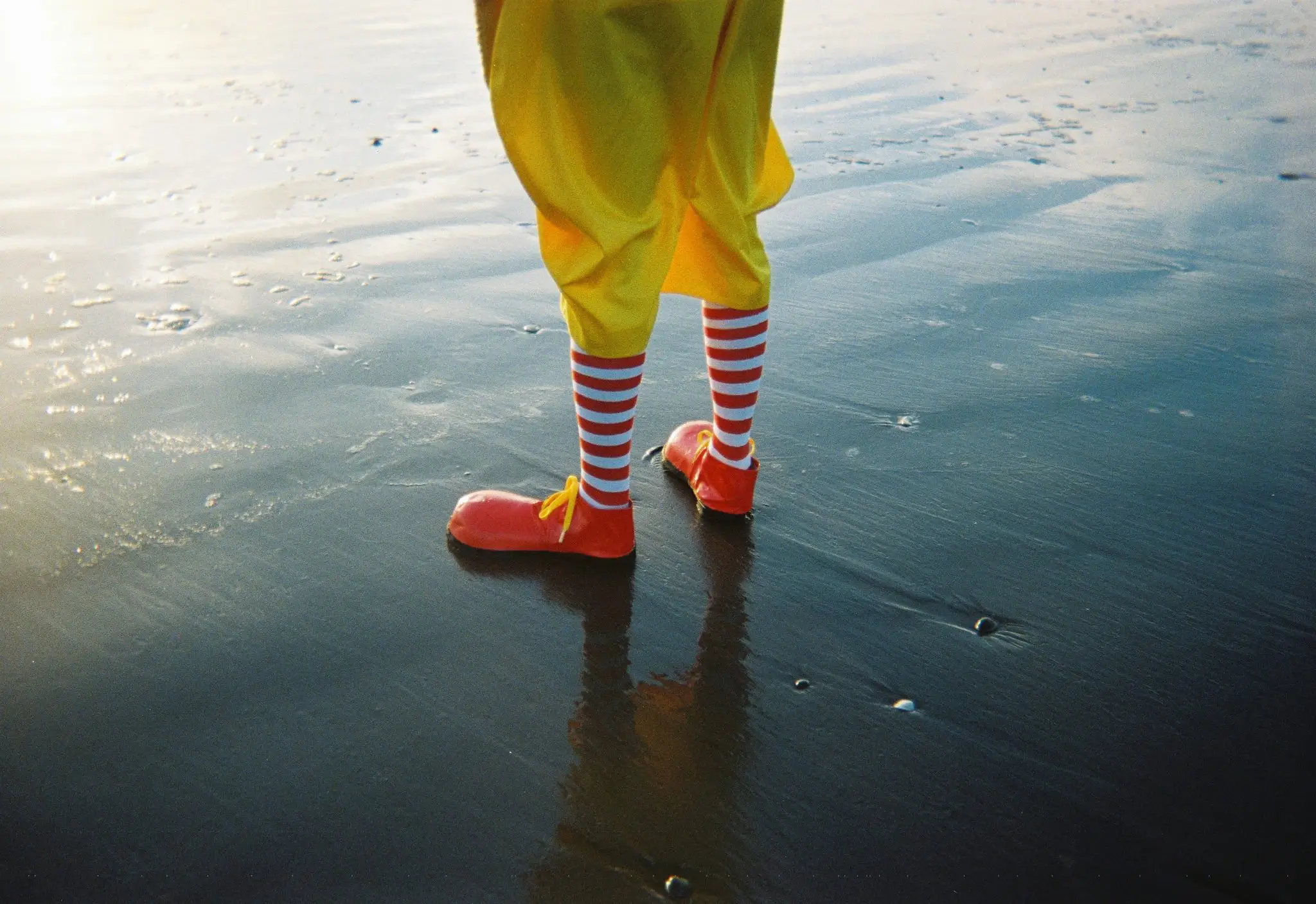
Yu Araki, NEW HORIZON (production still), 2023, HD video, colour, sound, 45 min. Courtesy the artist
The horizon is rarely neutral. It marks not only the limit of sight, but the promise of what lies beyond it: discovery, expansion, arrival. In NEW HORIZON, Yu Araki treats this line not as a romantic destination but as a historical construct—one inherited, imposed, revised, and perpetually deferred. The work unfolds with a quiet insistence, using duration, sound, and carefully staged imagery to question how Japan came to imagine itself as “modern,” and at what cost.
Araki’s practice sits alongside that of Takeda and Fujii, artists who have turned past Japanese entanglements with the West into sustained subjects of inquiry. What unites them is not a shared aesthetic but a shared recognition that contemporary art itself—its categories, institutions, and languages—emerged from these entanglements. Their work does not simply critique history; it examines the conditions under which critique became possible at all.
invent
Fujii’s reminder that the word bijutsu (art) was coined during the 1873 Vienna World’s Fair is more than an anecdote. It is a foundational disruption. Before this moment, Japan did not lack objects of aesthetic refinement, nor systems of craft, ritual, and visual culture. What it lacked—because it had not yet been required—was a category equivalent to Western “fine art,” separated from use, labor, and devotion.
The Vienna World’s Fair forced this separation into being. Japan’s newly established Exposition Bureau was tasked with assembling a collection that could stand alongside European nations on an international stage. Part of this collection traveled abroad; the rest was retained and became the nucleus of the Tokyo National Museum, the country’s first modern museum. The act was not merely logistical but epistemological. Objects were reclassified, reframed, and reassigned meaning under a Western gaze that demanded legibility, comparison, and hierarchy.
Contemporary Japanese art inherits this rupture. To practice bijutsu is already to work within a system born of translation—one that aligned national identity with exhibition, display, and international recognition.
exhibit
The National Industrial Exhibitions that followed, beginning in 1877, extended this logic inward. These events were not only showcases of progress but tools of governance, shaping how Japan imagined itself to itself. They presented industry, technology, and culture as evidence of advancement, aligning national pride with visibility and scale.
Yet these exhibitions were also profoundly selective. Due to protectionist policies, foreign goods were largely excluded until the final iteration in 1903, held in Osaka. When foreignness did appear, it did so under tightly controlled conditions. Difference was not invited as exchange but curated as spectacle.
It is here that the darker undercurrents of exhibition culture surface most clearly.
stir
On the grounds of the 1903 Osaka exhibition—later the site of the Tennōji Zoo—stood the so-called ‘Human Pavilion’. Its premise was chillingly straightforward: to display people as representatives of their “natural” environments, arranged in reconstructed dwellings. Those exhibited included individuals from Malaysia, Zanzibar, Turkey, and Japan’s colonies. Notably absent were Westerners and the Japanese themselves.
The pavilion did not simply reflect imperial attitudes; it actively produced them. By staging certain bodies as ethnographic specimens and others as invisible norms, it reinforced a hierarchy that placed Japan in an aspirational middle position—no longer “primitive,” not yet Western, but aligned with imperial modernity.
The controversy surrounding the pavilion reveals the instability of this arrangement. Before it even opened, Chinese participants were removed at the request of a Qing envoy. During its run, protests succeeded in ending the display of Okinawans and Koreans. These interventions did not dismantle the system of display, but they exposed its fragility. The exhibition space, meant to stabilize difference, instead became a site of negotiation, resistance, and embarrassment.
what
Araki, Takeda, and Fujii do not reenact these histories for shock value. Instead, they examine how the logic of the exhibition persists—often invisibly—within contemporary art itself. Museums, biennials, and video installations may appear radically different from nineteenth-century pavilions, yet they continue to structure who is seen, how, and under what terms.
In NEW HORIZON, Araki does not depict historical scenes directly. Instead, the work unfolds through displacement: bodies partially framed, gestures slowed, costumes that feel theatrical yet unmoored from narrative. The production still—showing a figure standing at the edge of water in striped socks and oversized shoes—captures this ambiguity. The image is playful, even absurd, but it is also unsettling. The horizon line stretches ahead, while the figure’s stance suggests both anticipation and hesitation.
The work resists resolution. It does not offer a corrected history or a reclaimed identity. Instead, it lingers in the afterimage of exhibition culture, where meaning is constantly deferred.
flow
At 45 minutes, NEW HORIZON demands a different mode of attention than the quick consumption encouraged by digital platforms. This duration is not indulgent; it is strategic. Time becomes a material through which Araki unsettles the viewer’s expectations. Scenes unfold slowly, sometimes without clear narrative progression, inviting frustration as much as contemplation.
This temporal strategy echoes the historical processes Araki addresses. Modernity did not arrive all at once; it accumulated through repeated exhibitions, incremental reforms, and gradual internalization of external standards. By stretching time, Araki mirrors this slow sedimentation, allowing the viewer to feel the weight of inherited structures rather than merely understand them intellectually.
style
One of the most striking aspects of NEW HORIZON is its use of play. Costumes verge on the clownish; movements oscillate between deliberate choreography and awkward improvisation. This playfulness is not escapist. Instead, it recalls the performative nature of historical exhibitions, where cultural identity was staged for an audience.
Yet Araki’s performers are not stable representatives. They slip between roles, resisting fixation. The oversized shoes, the striped socks, the bright fabric—all suggest costume without character. The body becomes a site of instability rather than authenticity.
In this sense, NEW HORIZON inverts the logic of the Human Pavilion. Where the pavilion sought to freeze identities in place, Araki allows them to remain unresolved, mobile, and opaque.
view
Western modernity often equates seeing with knowing, and knowing with mastery. Exhibitions—whether industrial fairs or contemporary museums—have historically functioned as technologies of vision, organizing the world into comprehensible displays.
Araki undermines this equation. The camera in NEW HORIZON does not grant authority. It lingers too long, frames too narrowly, or drifts away from what seems important. Sound does not clarify image; image does not resolve sound. The viewer is left without the comfort of comprehension.
This refusal is ethical as much as aesthetic. It acknowledges that certain histories—particularly those shaped by colonial display—cannot be fully “understood” without reproducing the violence of classification.
loc
While Araki’s methods are distinct, his concerns resonate with Takeda and Fujii’s investigations into institutional memory and national narrative. Fujii’s attention to language—specifically the invention of bijutsu—highlights how deeply embedded Western frameworks are in Japan’s cultural self-understanding. Takeda’s work, often archival and analytical, exposes how these frameworks continue to shape contemporary discourse.
Together, their practices suggest that contemporary art in Japan is not simply responding to Western influence, but continuously negotiating with it—sometimes critically, sometimes ambivalently, often both at once.
fwd
What NEW HORIZON ultimately offers is not redemption but awareness. It does not attempt to correct the historical record or imagine a purified cultural space free from Western influence. Such gestures would risk repeating the same logic of mastery they seek to undo.
Instead, Araki asks the viewer to inhabit uncertainty—to stand, like the figure in the production still, at the edge of a reflective surface where sky and ground blur. The horizon remains visible but unreachable. It is no longer a promise of progress, but a reminder of how progress has been framed, sold, and enforced.
sum
The horizon, in Araki’s work, is inherited rather than chosen. It arrives already shaped by exhibitions, museums, and international fairs that defined what could be seen and valued. To confront it is not to move beyond history, but to recognize how deeply history structures perception itself.
In this sense, NEW HORIZON is less about the future than about the present—about how contemporary art continues to operate within systems born of unequal encounters. By slowing down, destabilizing vision, and embracing ambiguity, Araki opens a space where these systems can be felt rather than merely named.
The work does not resolve the tension between Japan and the West, nor does it attempt to. Instead, it insists that this tension is the ground on which contemporary practice stands. The horizon remains, not as a destination, but as a question that refuses to disappear.