Nike’s First Pickleball Signing Signals a New Era for the Sport

January 14, 2026
For years, pickleball’s rise has had a familiar rhythm: new courts appear in public parks, pro tours multiply, prize pools grow, and a steady stream of brands—from paddles to skincare—circle the sport’s most bankable stars. What it hasn’t had, until now, is the endorsement shorthand that instantly signals “this is major” to the broader sports world.
flow
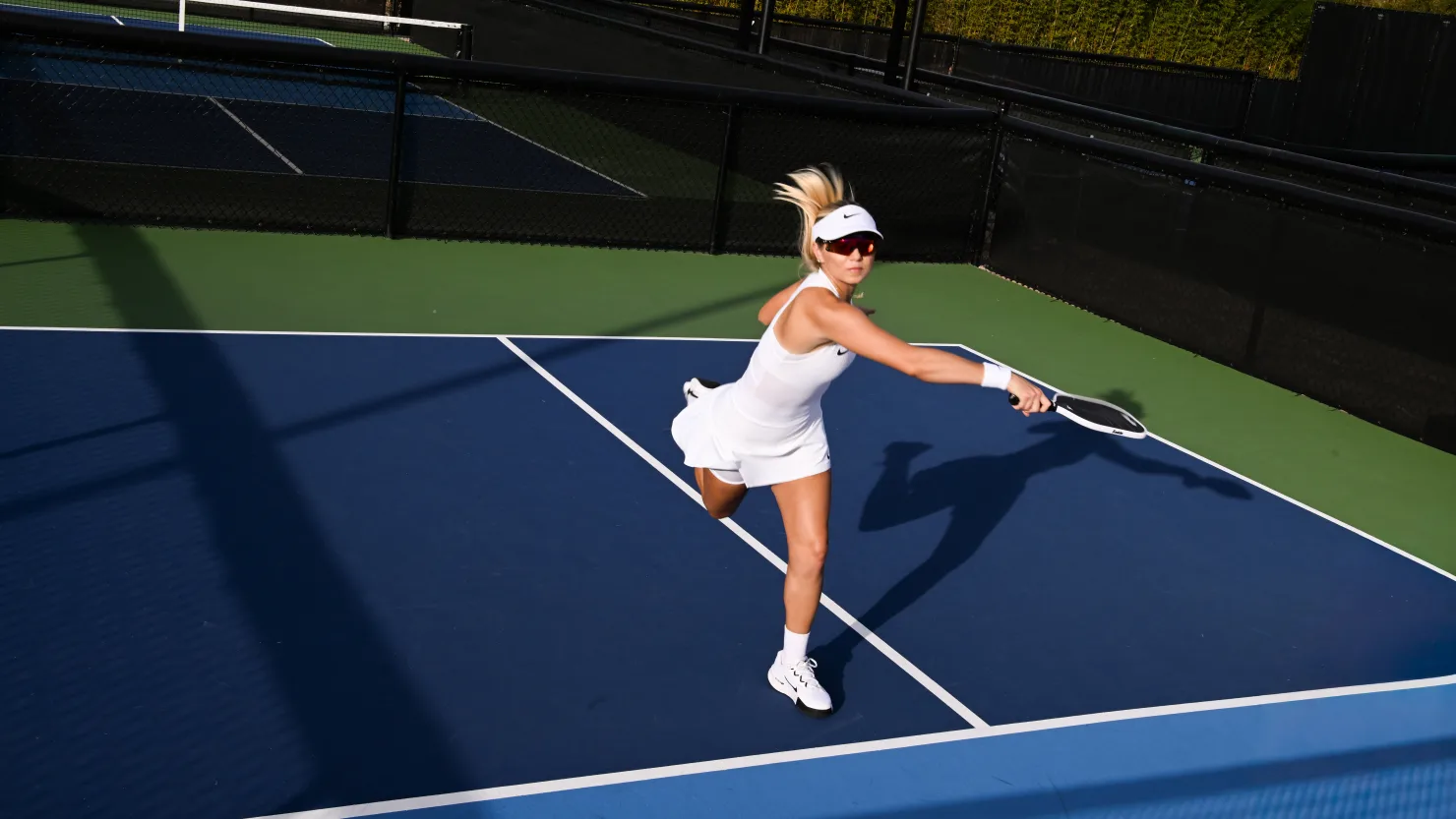
Anna Leigh Waters, widely recognized as the sport’s dominant No. 1, has signed an apparel and footwear partnership with Nike—an agreement that makes her the first pickleball athlete to join the brand’s roster. The move lands as a cultural marker as much as a business one: Nike isn’t just acknowledging pickleball’s momentum; it’s choosing a face for the category, and doing it with the kind of athlete who can carry both performance credibility and mainstream storytelling.
Waters confirmed she’ll be wearing Nike beginning in 2026. On paper, that sounds like a straightforward sponsor swap. In reality, it’s the sport’s loudest signal yet that pickleball is no longer a niche orbiting tennis—it’s a global, growth-stage sport getting claimed by the biggest performance brand in the room.
sign
If Nike was going to make a first pickleball deal, it needed to be clean: a single athlete whose résumé reads like inevitability, not a gamble. Waters fits that profile with room to spare.
She turned pro at 12 and has been positioned as the sport’s standout prodigy as pickleball’s popularity surged. Beyond the origin story, her relevance is current-tense. Reuters noted she arrived at the ESPYs in 2025 as the first pickleball athlete to attend, a milestone that doubled as a visibility test: could a pickleball player occupy the same red-carpet ecosystem as legacy-sport superstars? By all accounts, yes—and Waters has been explicit that she wants pickleball to be seen as young, athletic, and elite, not only recreational.
That positioning matters to Nike. Brands don’t just buy wins; they buy what wins mean. Waters has been making the case that pickleball is “easy to learn, hard to master,” and built for any age—while also insisting it can be “very competitive.” Nike’s entire playbook is turning sport participation into aspiration. Waters is already doing that work for pickleball in the public imagination.
And then there’s the simple reality: she’s the rare athlete whose dominance is legible even to casual fans. When a sport is still converting new viewers, “the best player” is a marketing superpower. Nike didn’t enter pickleball with a committee; it entered with a queen.
angle
The partnership itself is framed around apparel and footwear—core Nike territory and the gateway to making pickleball look like a Nike sport, not merely a sport Nike tolerates.
Waters’ own statement reads like a thesis for why this deal is bigger than a logo swap: she described watching her idols “wear the Swoosh in their biggest moments,” calling the partnership “a dream realized,” and said Nike is “the gold standard in performance.” The subtext is important: pickleball athletes grew up watching Nike moments in basketball arenas, Olympic tracks, and tennis finals. This deal bridges that generational fandom into a new sport.
Crucially, the move also fits a recent pattern in Waters’ brand architecture. The Nike signing follows a paddle sponsorship announcement with Franklin Sports earlier in January. In other words: she’s building a modern pro-athlete portfolio—separating equipment, apparel, footwear, and lifestyle partnerships rather than living under one “all-in-one” sponsor.
That modularity is how athletes in established sports maximize value. Pickleball’s top tier is beginning to look—and negotiate—like the rest of the sports economy.
stir
Pickleball has been called a trend for so long that the word started to feel lazy. But trends don’t usually produce the kind of ecosystem where major brands fight over category-defining talent.
Reuters characterized pickleball’s recent surge as “meteoric” and reported Waters pointing to rapid growth and expanding mainstream sports culture. Whether you measure it by court conversions, tournament attendance, or sponsorship volume, pickleball is now in the stage where the biggest question isn’t “will it last?”—it’s “who will own the category narrative?”
Nike’s answer, at least for now: Anna Leigh Waters.
And Nike doesn’t typically show up for vibes. It shows up when it believes it can build a long runway: product, storytelling, distribution, and—eventually—signature moments that make the category feel inevitable. If you’re a casual observer, this is the endorsement that tells you pickleball isn’t just popular; it’s being professionalized in real time.
what
Nike already knows “court.” It has decades of institutional memory in tennis and basketball—sports where footwear tech, lateral support, traction patterns, and athlete-specific tuning matter. Pickleball sits right in the overlap: quick acceleration, abrupt stops, lateral shuffles, and repeated split-step positioning.
By signing Waters to footwear and apparel, Nike can translate its court credibility into pickleball without having to pretend it’s learning performance from scratch. The brand can scale from “she wears Nike” to “Nike makes pickleball-specific solutions” at its own pace—testing traction compounds, upper durability, and toe-drag reinforcement while using a star athlete’s feedback loop as R&D theater.
That’s the other reason Waters is the right first signing: she’s young enough to be a long-term partner and elite enough to provide performance authority. And she’s visible enough that if Nike chooses to create a pickleball footwear narrative—whether through a tuned court shoe or a dedicated line—she’s the athlete who can make it believable.
(Important note: Nike and Waters’ announcements emphasize the partnership and timeline; any future signature product line would be speculative until Nike confirms it.)
benefit
For Waters, Nike is more than a sponsor. It’s legitimacy that travels.
Pickleball fans already know who she is. Nike helps translate that into recognition from people who don’t follow pickleball—people who recognize the Swoosh as a shorthand for the highest level. That matters for everything: broadcast negotiations, appearance fees, crossover events, and the broader push to frame pickleball as a sport with true professional gravity.
It also expands her personal brand ceiling. Reuters reported Waters speaking about Olympic ambitions and the desire to prove pickleball can be elite and youthful. Nike is the type of partner that can amplify that ambition into a campaign, not just a quote. If pickleball ever earns Olympic inclusion, Waters is building the kind of sponsorship portfolio that makes her a natural global ambassador.
Just as importantly, Nike gives her leverage in the market. Once you’re Nike-aligned, other partners—from tech recovery to nutrition to luxury athleisure—view you differently. The “first pickleball athlete to sign with Nike” headline becomes a credential she can trade on for years.
culture
There’s another layer here that’s easy to miss if you only read it as a sponsorship headline. Nike doesn’t just sell gear; it sells a look—the idea that a sport has silhouettes, rituals, and a uniform that signals belonging.
Pickleball, until recently, has had a soft aesthetic identity: part tennis-adjacent, part country-club casual, part rec center. Waters in Nike has the potential to sharpen that identity into something more modern: performance-led, youth-coded, and camera-friendly.
That matters because pickleball is unusually social. People play in groups, post clips, travel to tournaments, buy paddles like collectibles. It’s the perfect environment for style to become part of the sport’s language. If Nike chooses to treat pickleball as a lifestyle category (not just performance), it can expand the consumer base from “players” to “fans who dress like players,” which is where the real scale lives.
fin
Nike signing Anna Leigh Waters is the kind of headline that changes a sport’s temperature. It’s not just validation; it’s a re-rating.
Waters gets the most recognizable performance brand in the world as her uniform—and the credibility that comes with being first. Nike gets a prodigy who embodies pickleball’s future and can translate “fast-growing sport” into “must-watch culture.”
For everyone else—brands, leagues, athletes, broadcasters—the message is simple: pickleball’s next era isn’t coming. It’s already here.