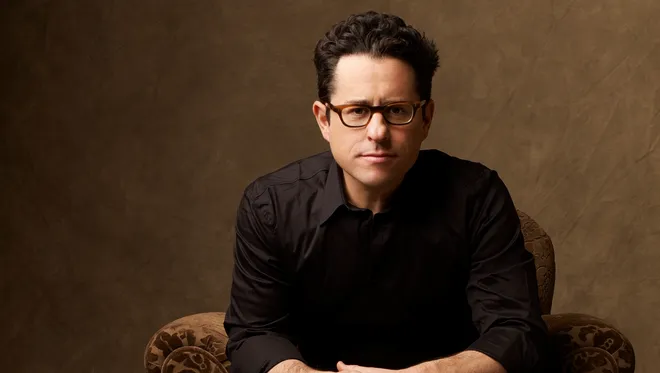
J.J. Abrams Returns From Star Wars Episode IX to Direct With Original Film “The Great Beyond”

January 20, 2026
seven
For the first time in seven years, J.J. Abrams is stepping back into the director’s chair. Warner Bros. has officially announced that Abrams’ next feature film, titled The Great Beyond, will arrive in theaters on November 13, 2026, with an IMAX release underscoring the studio’s confidence in the project’s scale and ambition. The film marks Abrams’ first directorial effort since 2019’s Star Wars Episode IX — The Rise of Skywalker, a chapter that closed one of the most scrutinized trilogies in modern blockbuster history.
Unlike that final Star Wars installment, The Great Beyond represents a return to something more elusive and, perhaps, more personal: an original idea. Written and directed by Abrams, and produced alongside longtime collaborator Tommy Gormley, the project has been quietly gestating for years under a veil of secrecy. At one point rumored to carry the working title Ghost Writer, the film has now emerged with a name that suggests scale, mystery, and thematic ambition. True to Abrams’ long-standing creative instincts, plot details remain tightly guarded.
flow
Abrams’ absence from directing has not been a creative retreat so much as a recalibration. Since 2019, his influence has largely been felt behind the scenes—through producing, development deals, and strategic positioning rather than hands-on filmmaking. His production company, Bad Robot, signed a major overall deal with Warner Bros., signaling a shift away from franchise stewardship toward original storytelling and long-term world-building across film and television.
That context makes The Great Beyond more than just another film on Abrams’ résumé. It is, in many ways, a statement of intent. After navigating the cultural pressure cooker of Star Wars, Abrams appears to be reasserting control over his narrative voice, returning to the kind of speculative, idea-driven filmmaking that defined his earlier work on projects like Super 8, Lost, and Fringe. The seven-year gap lends the film an air of expectation: not only about what the story is, but about what Abrams now wants to say.
stir
In an industry dominated by sequels, reboots, and intellectual property extensions, The Great Beyond stands out simply by being original. Warner Bros.’ decision to position the film as an IMAX release indicates that this is not a small, experimental detour, but a high-concept feature intended for wide audiences. Original ideas at this scale are increasingly rare, and when they do emerge, they often serve as cultural litmus tests for whether audiences still hunger for new cinematic mythologies.
Abrams has historically thrived in this territory. His storytelling style—rooted in mystery, emotional stakes, and the slow unveiling of big ideas—has always leaned toward originality, even when operating within established universes. With The Great Beyond, he is no longer constrained by canon or fan expectation. Instead, he is free to construct a world from the ground up, guided by his instincts rather than inherited mythology.
gen
The film’s cast signals a deliberate blending of eras, sensibilities, and cinematic languages. Glen Powell, whose recent rise has positioned him as one of Hollywood’s most bankable leading men, anchors the project with contemporary star power. Powell’s ability to move between blockbuster spectacle and character-driven drama makes him a fitting choice for an Abrams-led original, where emotional accessibility often serves as the entry point into more abstract concepts.
Jenna Ortega’s inclusion reflects a keen awareness of modern audiences. Ortega has become one of the defining screen presences of her generation, balancing genre work with dramatic credibility. Her presence suggests that The Great Beyondmay engage with younger perspectives or contemporary anxieties, even if its narrative scope stretches far beyond the present moment.
Emma Mackey, known for her sharp intelligence and understated intensity, adds another layer of tonal complexity. Her performances often operate in the space between vulnerability and resolve, a quality that aligns well with Abrams’ interest in characters navigating unknown emotional and physical terrain.
abil
Balancing the newer generation are actors with deep dramatic gravitas. Sophie Okonedo brings a commanding presence shaped by decades of stage and screen work, while Merritt Wever’s subtle emotional precision has made her one of the most respected character actors working today. Their involvement hints at a story that values internal conflict as much as external spectacle.
Samuel L. Jackson’s casting, meanwhile, introduces an element of cinematic weight and familiarity. Jackson’s long history within genre filmmaking—particularly in projects that straddle the line between blockbuster entertainment and thematic ambition—makes him a natural fit for an Abrams project. His presence alone suggests authority, history, and narrative consequence, even before a single plot detail is revealed.
Together, the ensemble suggests a film interested in generational dialogue, differing worldviews, and the friction between experience and discovery. Abrams has often excelled at ensemble storytelling, and The Great Beyond appears positioned to leverage that strength.
strat
True to form, Abrams and Warner Bros. are keeping plot details firmly under wraps. This secrecy is not merely a marketing tactic; it is part of Abrams’ creative DNA. From the early days of Lost to the marketing of Super 8, mystery has always functioned as both narrative engine and audience invitation. By withholding specifics, Abrams creates space for speculation, projection, and anticipation.
The title itself, The Great Beyond, invites interpretation without committing to a single genre. It could suggest science fiction, metaphysical exploration, psychological drama, or some combination of all three. The ambiguity is intentional. Abrams has long been fascinated by liminal spaces—between life and death, childhood and adulthood, the known and the unknown. The title feels like a distillation of those interests.
#bestformatever pic.twitter.com/fs6JcTALmZ
— Bad Robot (@bad_robot) July 8, 2014
arena
Warner Bros.’ decision to release the film in IMAX speaks volumes about its intended scale. IMAX is not simply a premium format; it is a declaration of visual ambition. For Abrams, a filmmaker known for kinetic camera movement, immersive sound design, and a tactile sense of spectacle, the format offers an opportunity to fully realize his cinematic language.
At the same time, Abrams has never been a filmmaker who prioritizes spectacle at the expense of intimacy. His best work often finds emotional resonance within large-scale frameworks, using scale to heighten personal stakes rather than overshadow them. An IMAX release suggests that The Great Beyond will operate on multiple levels: visually expansive, but emotionally grounded.
warner
The Great Beyond also represents a key moment in Warner Bros.’ broader strategy. The studio has increasingly positioned itself as a home for filmmaker-driven projects that balance commercial viability with creative distinctiveness. Abrams’ overall deal with the studio signaled mutual trust, and this film appears to be one of the most significant expressions of that partnership to date.
By backing an original Abrams film with an IMAX release and a high-profile cast, Warner Bros. is making a statement about the value of auteur-led spectacle in a crowded entertainment landscape. It is a bet not just on Abrams as a brand, but on audiences’ willingness to embrace something new.
claim
It is impossible to discuss Abrams’ return to directing without acknowledging the shadow of The Rise of Skywalker. That film, tasked with concluding a decades-spanning saga, placed Abrams at the center of intense fan scrutiny and cultural debate. While commercially successful, it became a flashpoint for broader conversations about authorship, expectation, and creative compromise in franchise filmmaking.
The Great Beyond offers Abrams an opportunity to recalibrate his relationship with audiences on his own terms. Free from legacy constraints, he can once again foreground the elements that initially defined his appeal: curiosity, wonder, and emotional sincerity. In this sense, the film functions as both a creative reset and a reaffirmation.
anticip
As of now, The Great Beyond exists primarily as an idea—a title, a cast, a date on the calendar. Yet that absence of detail is precisely what gives the project its momentum. In an age of exhaustive trailers and early reveals, the restraint feels refreshing. It asks audiences to trust the filmmaker, to lean into uncertainty rather than demand immediate explanation.
That trust is something Abrams has spent his career cultivating, sometimes successfully, sometimes controversially. With The Great Beyond, he has another chance to redefine that relationship, inviting viewers not just into a story, but into the act of discovery itself.
impression
When The Great Beyond arrives in IMAX theaters on November 13, 2026, it will mark more than just J.J. Abrams’ return to directing. It will represent a moment of recalibration—for a filmmaker, for a studio, and perhaps for audiences accustomed to cinematic familiarity. The film’s very existence suggests a renewed belief in originality, scale, and the power of unanswered questions.
For now, what lies beyond remains unknown. And that, fittingly, may be exactly the point.