Zach Rumbaugh’s Air Jordan 17 “Doernbecher Freestyle”

January 20, 2026
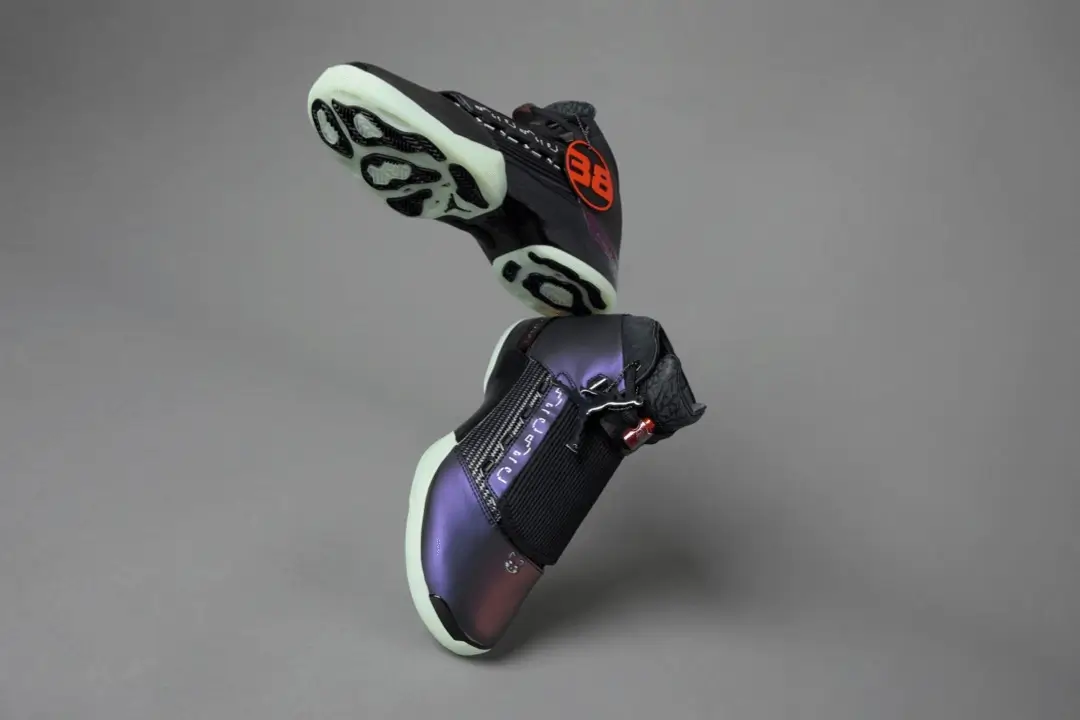
Doernbecher Freestyle shoe succeed when they refuse to behave like conventional “colorways.” They are not trend forecasts, not committee-approved palettes, and not nostalgia exercises built for easy resale captions. They are personal artifacts made wearable—objects that carry the weight of a kid’s lived experience and then, somehow, still manage to look credible on-foot.
Zach Rumbaugh’s Air Jordan 17 “Doernbecher Freestyle” sits squarely in that tradition, but it also does something rarer: it makes a historically underused Jordan silhouette feel inevitable in 2026. It is the first time the Air Jordan 17 has been selected for the Doernbecher project, and the choice matters because the AJ17 is already an “event shoe” by design—formal, technical, and slightly futuristic in the way only early-2000s Jordan Brand could be.
canvas
The Air Jordan 17 has always carried a certain audacity. It arrived during a period when Jordan Brand treated performance footwear like industrial design, pushing premium materials, aggressive shaping, and premium packaging cues. Even in retro form—especially in the low-cut iteration—there’s a sense of ceremony to the silhouette. That baseline personality pairs well with Doernbecher’s mandate: build something bold, narrative-driven, and unmistakably authored.
For Doernbecher, selecting a model is not just a style decision; it’s a storytelling decision. The AJ17’s distinctive upper, its sculpted midsole, and the way it wears like a dress shoe crossed with a hoop shoe all support the kind of layered symbolism Doernbecher designers often embed.
view
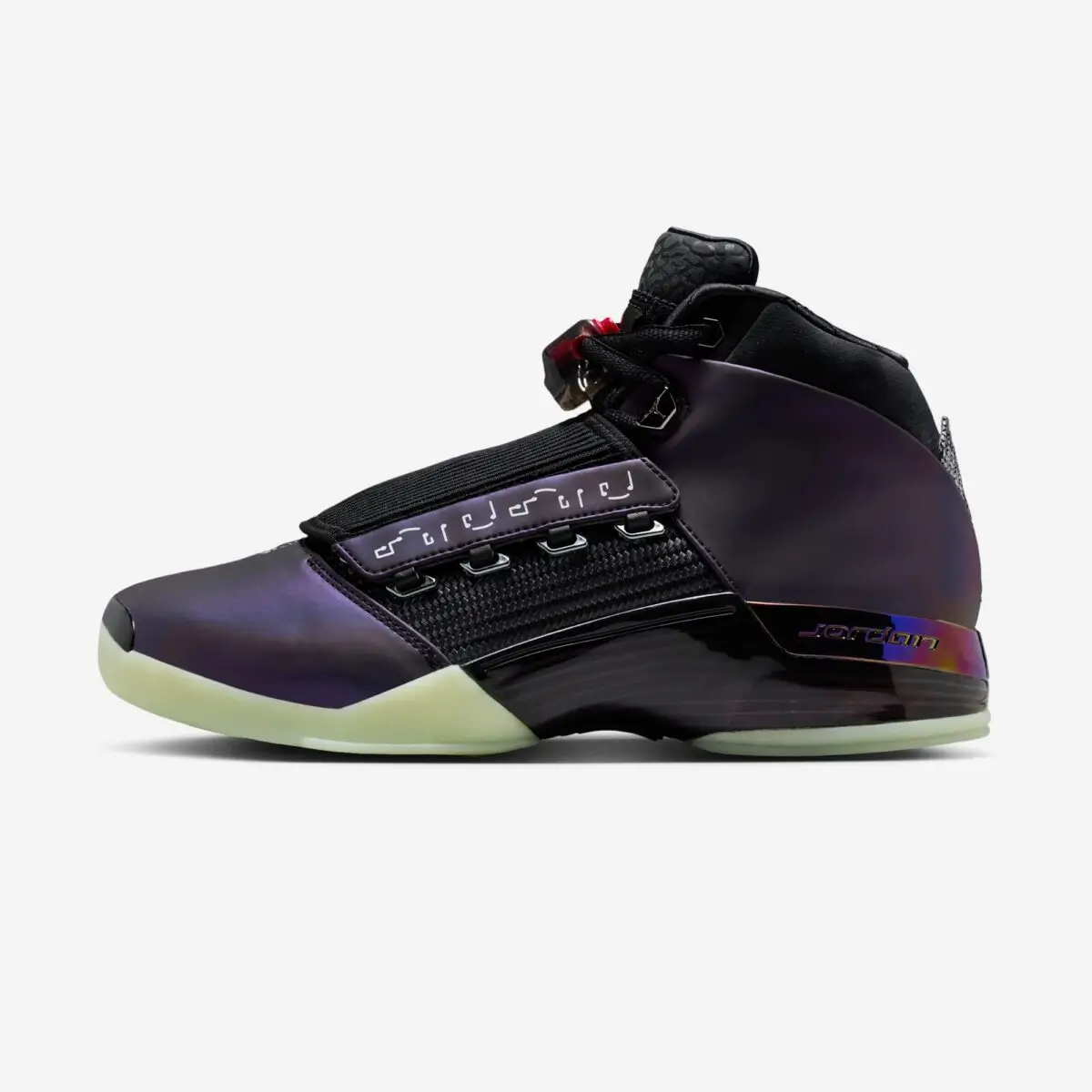
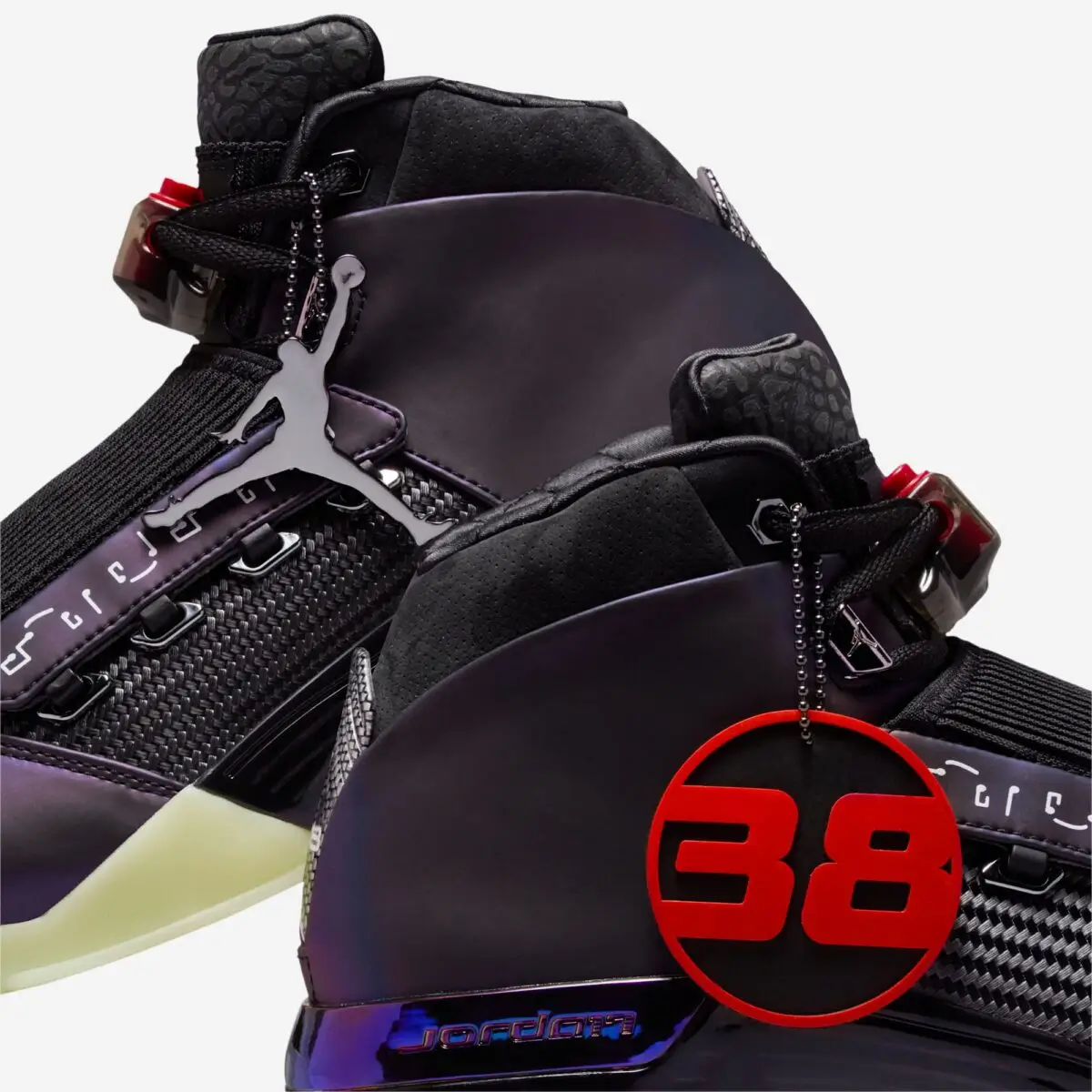
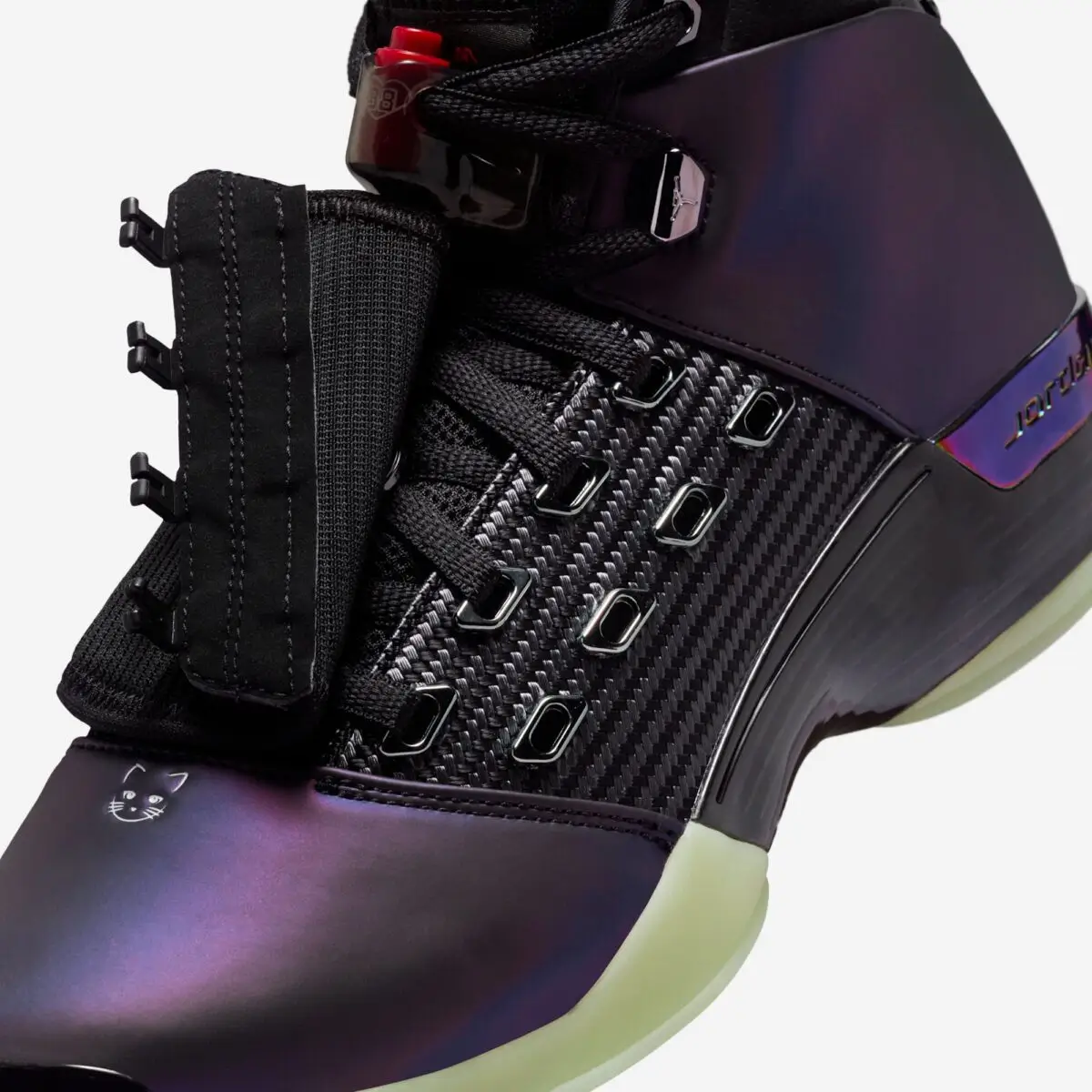
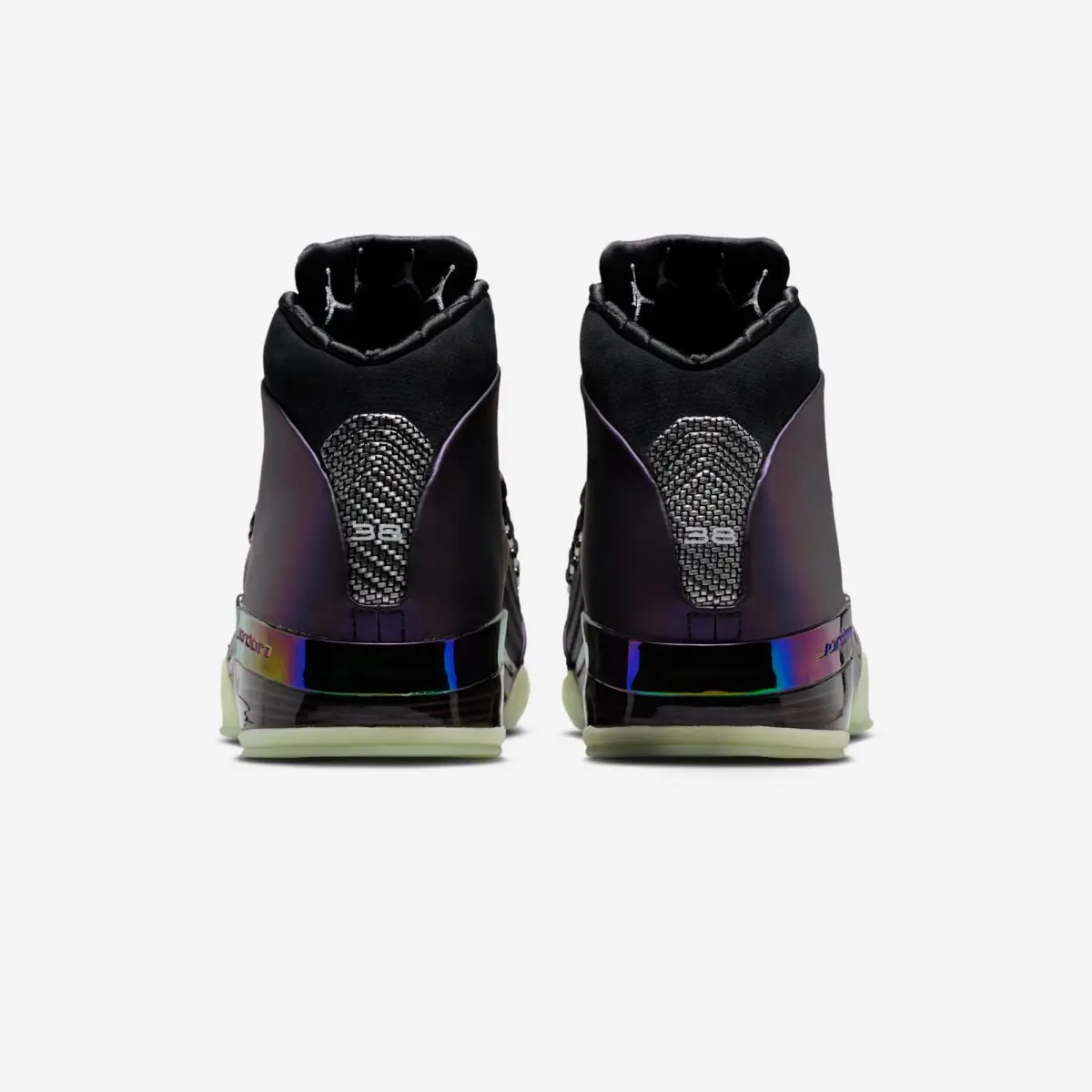
At first glance, the shoe reads as deep purple—immediately eye-catching, but not cartoonish. The more important detail is the finish: multiple outlets describe a color-shifting or matte-chrome effect across the upper, a treatment that makes the shoe feel closer to an automotive wrap than traditional sneaker leather.
That inspiration is explicit. Rumbaugh’s design is tied to his enthusiasm for cars and cats, which is why the pair doesn’t simply use purple as a fashion statement—it uses purple as bodywork, with darker embossed details and a high-contrast base to emphasize contours.
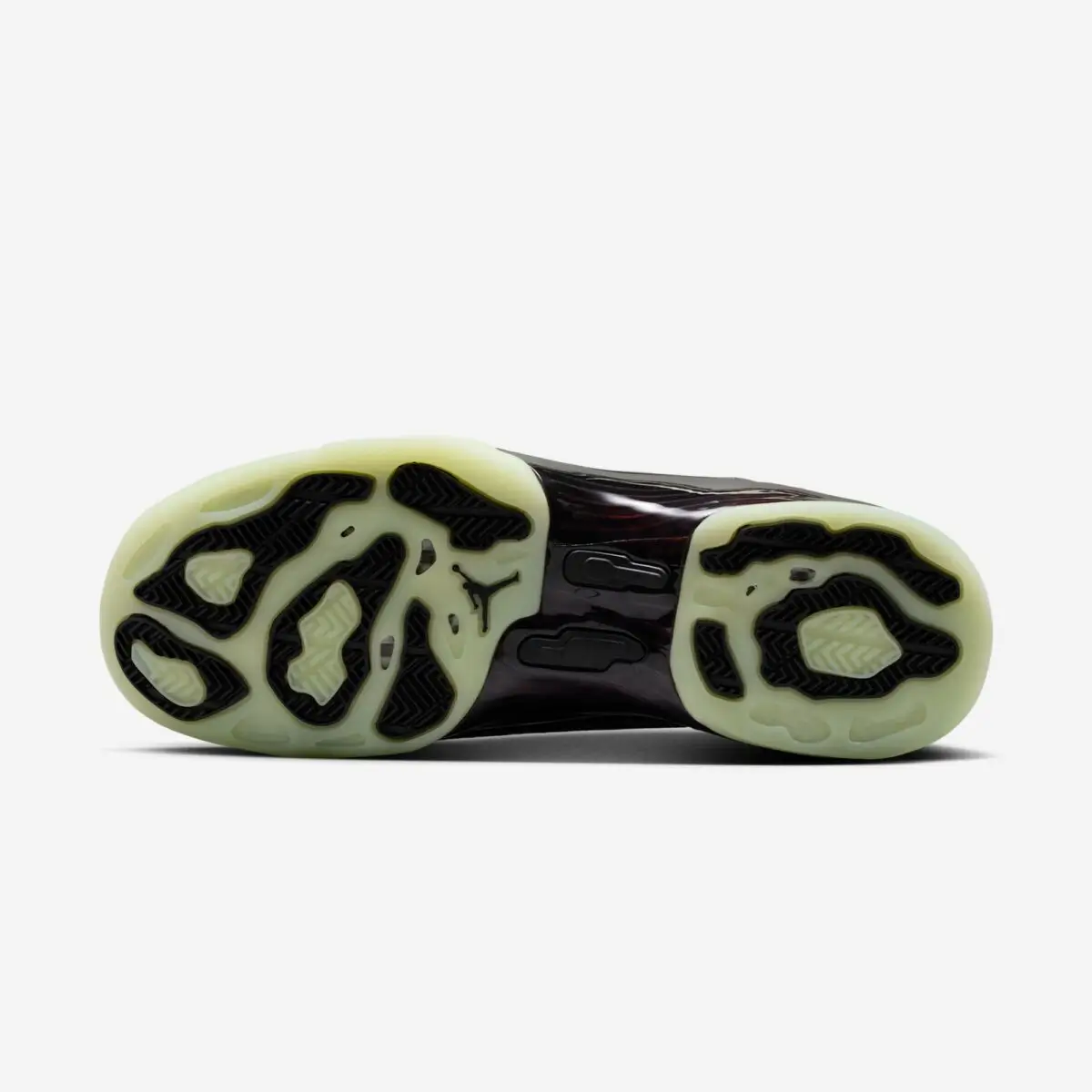
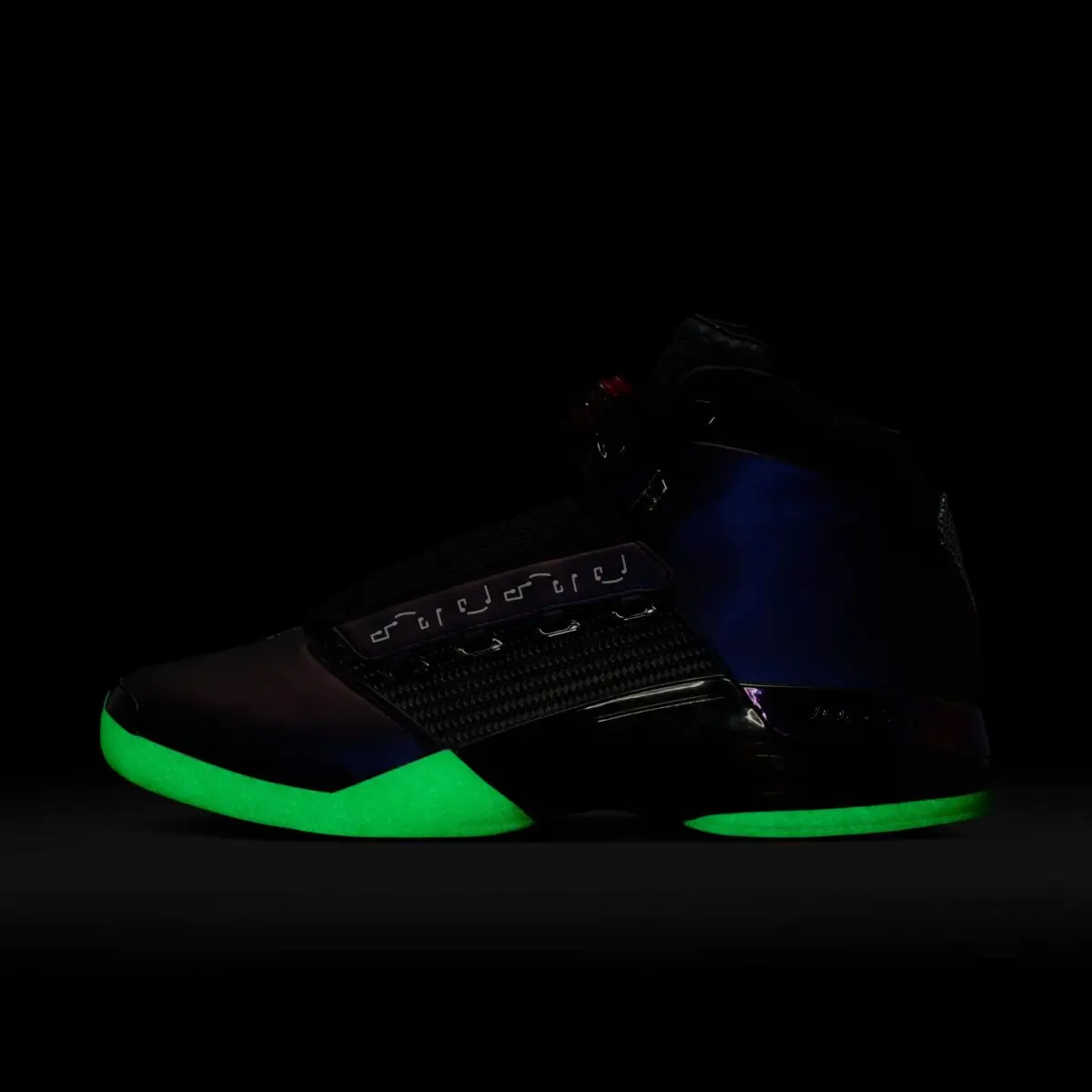
Then there is the outsole: a glow-in-the-dark green that shifts the entire mood of the shoe once lighting changes. In daylight it reads like an aggressive accent; in low light it becomes the headline. That duality is very Doernbecher. The shoe can be appreciated as a product photo, but it is built to surprise in real life.
View this post on Instagram
stir
Doernbecher designs often include numbers, dates, initials, or small repeated marks that look decorative until you understand the backstory. In coverage of this AJ17, “38” is repeatedly referenced as a key motif, tied to Rumbaugh’s recovery and an extended hospital stay—details that reposition the shoe from cool concept to document.
This is where the Doernbecher project remains culturally distinct within sneaker culture. It preserves sincerity. Many collaborations sell a story, while Doernbecher pairs carry a story, and the best ones don’t reduce that story to a slogan. The narrative sits inside the details, where it belongs.
show
If you strip away the release chatter, the shoe reads as a strong example of how to translate a personal interest—cars—into a coherent footwear language. The surface treatment becomes metaphor, mirroring customization culture around paint, chrome, light, and angle-dependent color. The embossed and darker details function like panel lines, reinforcing the AJ17’s architectural shape and helping the upper read as built rather than simply stitched. The glow green outsole operates like underglow, an old-school car mod reference filtered through modern sneaker tech—a detail that feels nostalgic and futuristic at once.
This is why the AJ17 choice works. The model already carries a concept-car sensibility. Rumbaugh didn’t fight the silhouette; he amplified what it already wanted to be.
flow
Every Doernbecher year has a pair that becomes shorthand for the collection because it is the most expressive, the most wearable, or the most narratively complete. Early coverage positioned Rumbaugh’s AJ17 as a standout within the 2026 group, precisely because it blends statement aesthetics with a clear creative thesis.
What matters long-term is not whether it sold out instantly or how it ranked on release-day feeds. What matters is whether the shoe keeps its charge once the noise fades. On that front, the materials and finish do a lot of work. This looks like a sneaker you notice from across a room, but also one you want to inspect up close.
sum
Zach Rumbaugh’s Air Jordan 17 “Doernbecher Freestyle” is not trying to be minimal, safe, or universally flattering. It is trying to be specific—to a person, a recovery, and a set of interests that translate cleanly into form, texture, and light.
That specificity is exactly why it succeeds. It expands what Jordan heritage can look like in 2026 without diluting the Doernbecher mission, and it gives the Air Jordan 17 a contemporary reason to exist beyond retro nostalgia.