Genesis X Skorpio: When a V8 Supercar Goes Off-Road in the World’s Harshest Desert

January 29, 2026
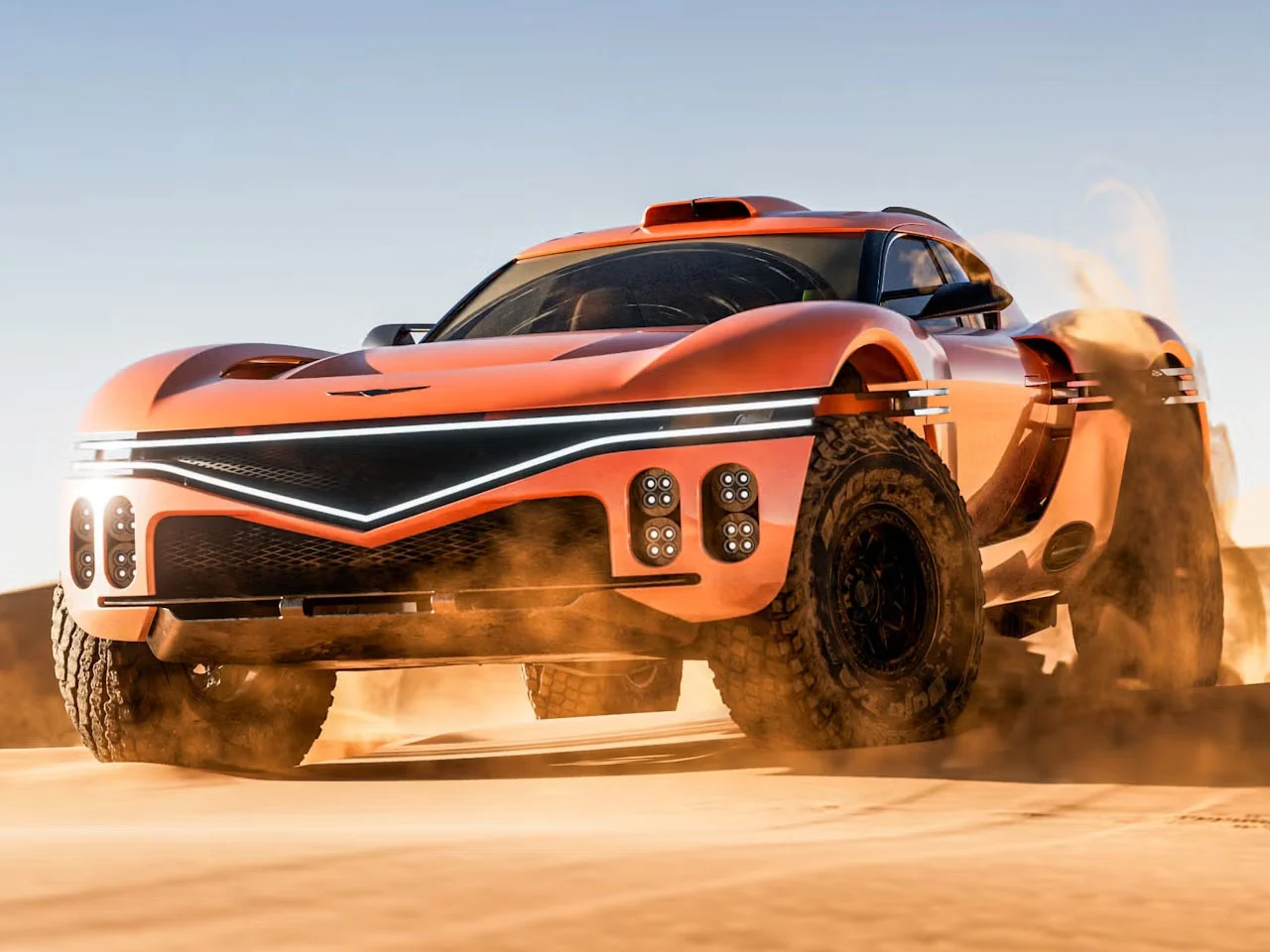
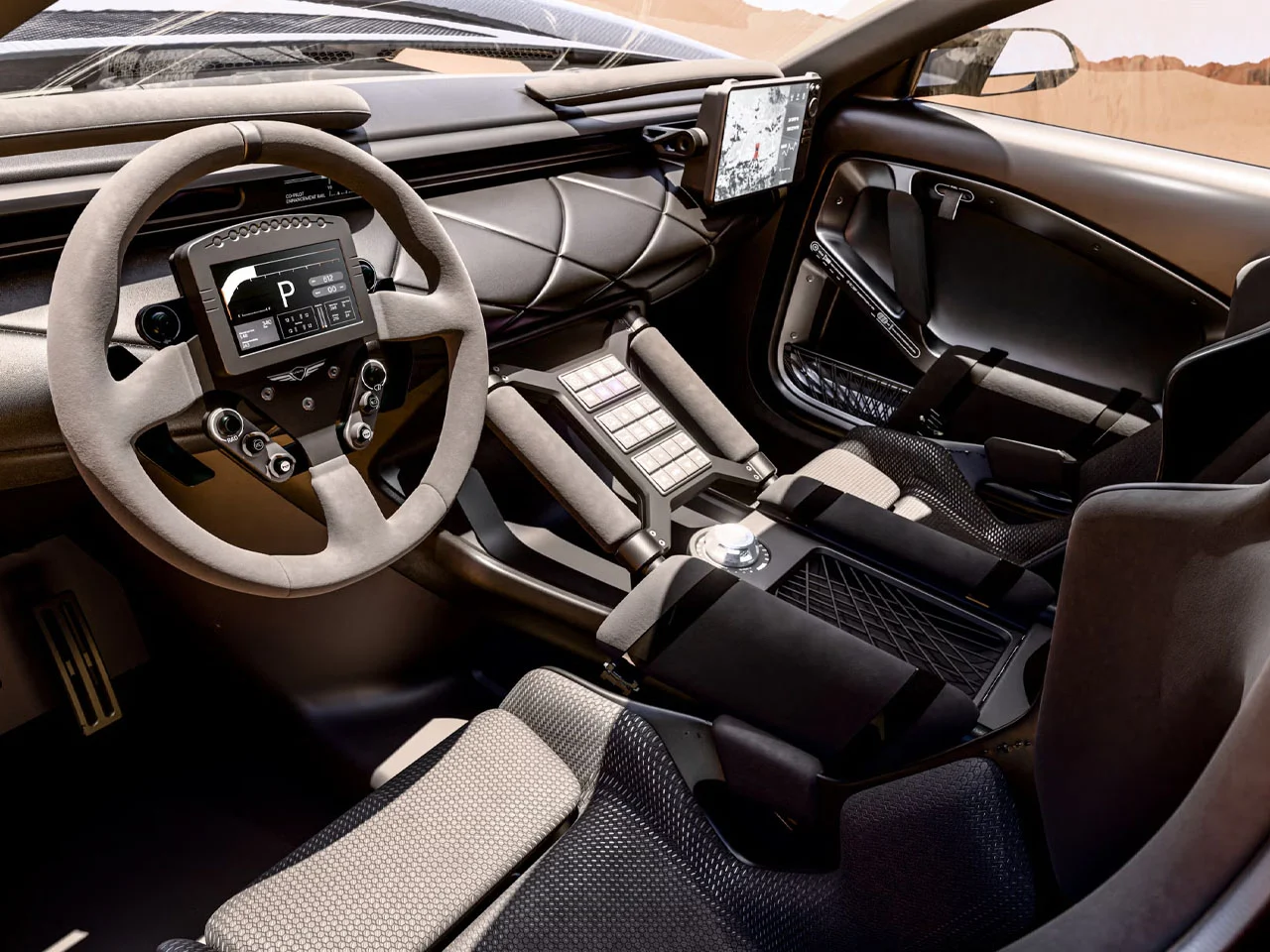
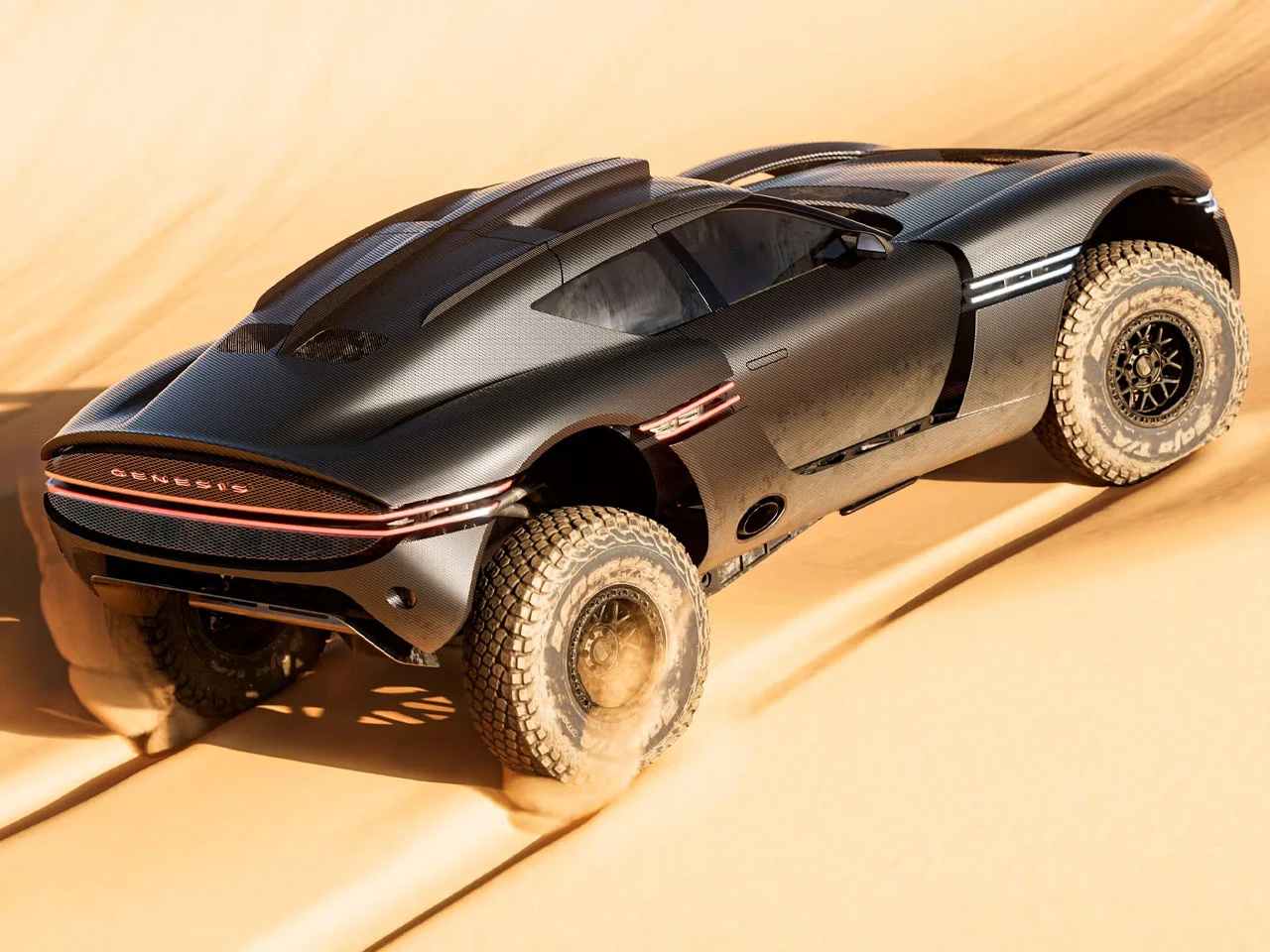
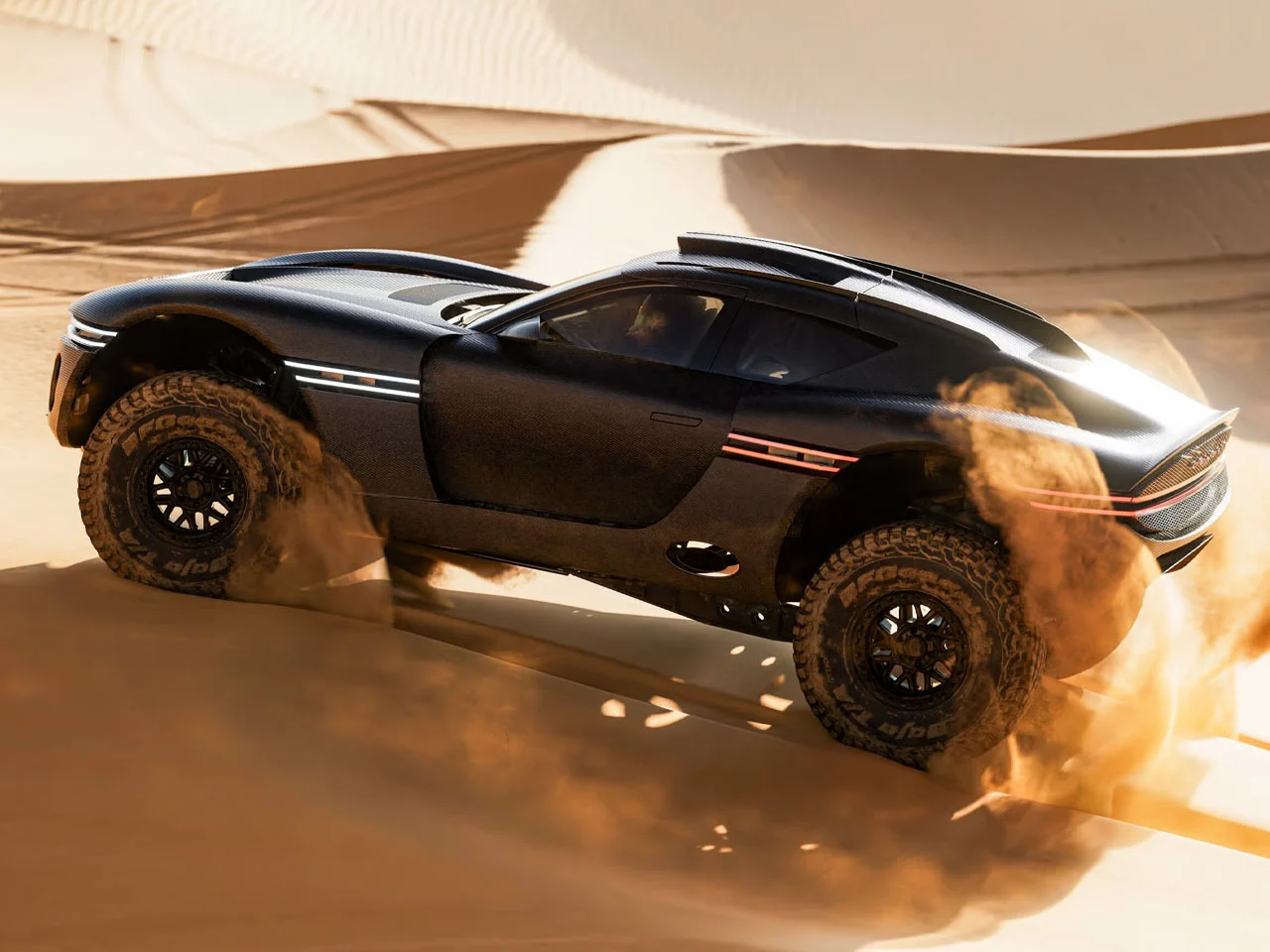
For an industry accelerating headlong toward electrification, Genesis’ latest concept feels almost rebellious. While most luxury marques are unveiling battery-powered flagships, silent performance SUVs, and software-defined grand tourers, Hyundai Motor Group’s premium arm has gone in the opposite direction—at least for now. The Genesis X Skorpio is a howling, sand-shredding, V8-powered off-road supercar concept producing a staggering 1,100 horsepower and 850 lb-ft of torque, engineered to conquer some of the most unforgiving terrain on Earth.
Unveiled amid the endless dunes of the Rub’ al Khali—also known as the Empty Quarter—the X Skorpio isn’t simply another design exercise or styling prototype. It’s a provocative statement about what performance luxury could look like when freed from paved roads and urban charging networks. Genesis is staking a claim in a niche currently occupied by the Porsche 911 Dakar and Lamborghini Huracán Sterrato, and it’s doing so with unapologetic excess.
From its scorpion-inspired anatomy to its carbon-Kevlar construction, from its desert-ready suspension to its hypercar-level power output, the X Skorpio signals one of the boldest directions Genesis has ever explored.
a launch
Genesis could have unveiled the X Skorpio in Geneva, Los Angeles, or Seoul. Instead, the brand chose the Rub’ al Khali desert—a decision that feels both theatrical and symbolic.
Stretching across Saudi Arabia, Oman, the UAE, and Yemen, the Empty Quarter is the largest uninterrupted sand desert on the planet, covering hundreds of thousands of square miles. It’s a landscape of towering dunes, searing heat, and mechanical punishment—home to portions of the legendary Dakar Rally and a proving ground for extreme off-road machinery.
Launching a vehicle here is a declaration: this thing isn’t built for showrooms or valet lines. It’s built to survive.
The images and footage from the reveal depict the X Skorpio tearing across dune crests in dramatic plumes of sand, its wide stance and exaggerated aero surfaces silhouetted against the desert horizon. The sound—deep, violent, unmistakably internal combustion—cuts through the stillness in a way no EV ever could.
For Genesis, which has spent the last decade crafting a reputation for restrained elegance, quilted interiors, and sophisticated sedans, the scene felt almost shocking. And that’s exactly the point.
anatomy
The name “Skorpio” isn’t mere branding flourish. Genesis designers explicitly drew inspiration from the physical structure of a scorpion—an animal built for survival, aggression, and adaptability in extreme environments.
The front fascia is low and predatory, with split LED lighting signatures framing massive cooling apertures. Sculpted fenders swell outward, protecting oversized off-road tires and hinting at the suspension travel beneath. Along the sides, sharply creased bodywork flows rearward into dramatic aero blades and side intakes, feeding air to the monstrous V8 buried behind the cabin.
At the back, the car’s silhouette rises into a tail-like rear structure, integrating a towering wing, diffuser channels, and protective skid elements—visually echoing a scorpion’s raised stinger while serving real aerodynamic and stability functions at speed.
The proportions are pure supercar, but distorted for the desert: higher ride height, thicker body sections, exposed hardware, and purposeful brutality layered on top of Genesis’ signature elegance.
It’s luxury armor.
build
Despite its imposing presence, the X Skorpio’s engineering philosophy centers on weight control. Genesis claims the structure relies on a composite mix of carbon fiber, fiberglass, and Kevlar, materials typically reserved for motorsport and military-grade applications.
Carbon fiber forms the core of the monocoque and body panels, providing stiffness and low mass. Fiberglass is used strategically in outer skins and sacrificial panels for durability and easier replacement after inevitable desert abuse. Kevlar—famous for its ballistic resistance—reinforces underbody sections, wheel arch liners, and critical impact zones, protecting the mechanicals from rocks, debris, and dune strikes.
The result is a chassis capable of absorbing massive impacts while remaining light enough to exploit the V8’s outrageous output.
In an era where electric off-roaders often tip the scales under the burden of battery packs, the X Skorpio’s analog approach feels refreshingly radical.
pithy
Genesis has been coy about specific engine displacement or configuration details, but the headline numbers—1,100 horsepower and 850 lb-ft of torque—place the X Skorpio firmly in hypercar territory.
That output would rival or exceed many track-focused exotics, yet here it’s being deployed to launch a dune-hopper across soft sand at triple-digit speeds.
Feeding that power to the ground would require an advanced all-wheel-drive system with torque vectoring, locking differentials, and terrain-adaptive modes. Expect rally-raid-style driveline hardware, reinforced half-shafts, and gear ratios tuned for instant throttle response rather than top-speed bragging rights.
Cooling systems dominate the bodywork, with roof scoops, side intakes, and rear vents channeling air toward radiators, intercoolers, and oil coolers—essential in desert heat where ambient temperatures can cripple lesser machinery.
In many ways, the X Skorpio feels like Genesis asking a simple, dangerous question: What if we built a Dakar-spec hypercar instead of an electric flagship?
suspen
Power alone doesn’t make an off-road supercar. Suspension does.
Though Genesis hasn’t released technical drawings, the X Skorpio’s stance suggests a long-travel, adaptive system using rally-raid-grade dampers—likely adjustable for compression, rebound, and ride height depending on terrain.
Double-wishbone setups at each corner would be reinforced to handle airborne landings, while electronically controlled anti-roll systems could allow articulation at low speeds and stiffness at high-speed dune runs.
Massive wheels wrapped in chunky all-terrain rubber replace the low-profile tires of road-going exotics, and oversized brake rotors hide behind them—necessary to slow something this powerful after a desert sprint.
Protective skid plates run along the underside, shielding the drivetrain from rocks and hardpack, while quick-release panels hint at motorsport-inspired serviceability.
Everything about the X Skorpio screams function over fashion, even if it looks outrageous doing it.
strat
Genesis isn’t building this concept in a vacuum.
Porsche stunned enthusiasts with the 911 Dakar, a lifted, rally-inspired version of its rear-engine icon. Lamborghini followed with the Huracán Sterrato, turning its V10 supercar into a gravel-throwing spectacle. Rumors continue to swirl around Ford developing an extreme off-road supercar of its own.
The appetite for ultra-luxury, ultra-capable adventure machines is clearly growing—fueled by wealthy buyers who want something more dramatic than an SUV but more usable than a track toy.
Genesis positioning itself in this space is fascinating.
Unlike Porsche or Lamborghini, the Korean marque doesn’t have decades of motorsport mythology behind it. Instead, it has leaned heavily into design excellence, interior craftsmanship, and disruptive pricing. The X Skorpio suggests a new chapter—one where Genesis flexes technical muscle and emotional storytelling as aggressively as its European rivals.
It also builds on previous experimental projects like the X-Trail Mountain Rescue concept and the GMR-001 hypercar, both of which hinted that Genesis is thinking far beyond luxury sedans.
The X Skorpio feels like the loudest expression yet of that ambition.
flow
More than anything, the X Skorpio functions as a manifesto.
It says Genesis is willing to question industry norms—launching a gasoline-powered monster while competitors race toward silent electrification. It says the brand wants to explore new emotional territories, from adrenaline-fueled performance to extreme adventure. And it says luxury doesn’t have to mean restrained or conservative.
There’s also something refreshingly honest about it. The X Skorpio doesn’t pretend to be eco-friendly or practical. It doesn’t talk about range anxiety or autonomous features. It’s a celebration of mechanical excess, sculptural form, and human thrill—filtered through Genesis’ increasingly confident design language.
Whether it ever reaches production in anything close to this form is another question entirely.
Regulations, emissions targets, and market realities make an 1,100-horsepower V8 off-road supercar a tough sell in today’s climate. But concept cars aren’t always about feasibility. Sometimes they exist to shift perception—to show what a brand could do if unconstrained.
On that front, the X Skorpio succeeds spectacularly.
fwd
The X Skorpio lands at an intriguing moment for Genesis. The company is expanding its global footprint, pushing into motorsport through endurance racing programs, and preparing a wave of electrified models across sedans, SUVs, and coupes.
Dropping a thunderous desert hypercar into that narrative complicates things in the best way.
It suggests Genesis isn’t content to be seen solely as a maker of comfortable luxury vehicles. It wants to be aspirational, daring, and unpredictable. It wants to spark the same kind of late-night forum debates and Instagram obsession that surround European exotics.
And perhaps most importantly, it wants to remind the world that passion projects still matter in an era dominated by spreadsheets and sustainability metrics.
impression
The Genesis X Skorpio may never roll into dealerships. It may remain a one-off showpiece, destined for auto-show turntables and design museums.
But as a statement of intent, it lands with venomous force.
A scorpion-inspired, V8-powered, 1,100-horsepower off-road supercar unveiled in the world’s harshest desert isn’t subtle. It isn’t cautious. It isn’t what anyone expected from Genesis.
And that’s precisely why it works.
In a sea of silent EV launches and incremental updates, the X Skorpio howls across the dunes like a reminder of what concept cars are supposed to do: make us stare, argue, dream—and wonder what on earth comes next.