Sebastian Stan Reportedly in Talks for The Batman: Part II — Everything We Know About the Sequel

February 4, 2026
The Batman premiered in 2022 as something rare in modern franchise cinema: a blockbuster that moved like a procedural thriller, obsessed with forensic detail, civic corruption, and the psychology of violence. Reeves positioned Bruce Wayne not as a polished superhero but as a nocturnal investigator, stalking crime scenes with smeared eye makeup and a recorder full of half-formed theories.
The sequel was announced quickly, but its path to cameras has been deliberately slow. Scripts were rewritten. Schedules shifted. Executives stressed patience rather than panic. Over time, that narrative has solidified into something clearer: Reeves was being given room to craft a follow-up that felt earned rather than rushed.
By mid-decade, industry chatter suggested the screenplay had reached a finished form and earned internal praise. The plan that emerged points toward principal photography beginning in 2026, positioning the film for an autumn 2027 theatrical launch — a prime corridor traditionally reserved for prestige-leaning genre fare.
That pacing underscores the philosophy behind this particular corner of DC cinema: fewer entries, heavier atmosphere, and an emphasis on tone and theme over conveyor-belt output.
reeves
Reeves’s interpretation of Gotham City functions less as a comic-book playground and more as a decaying civic organism. In The Batman, corruption wasn’t just an attribute of a villain; it was woven into police departments, renewal funds, political dynasties, and charitable foundations.
The film ended with Bruce confronting an uncomfortable realization: terror alone cannot heal a wounded city. Batman could be vengeance, yes — but Gotham also needed him as something else. A protector. A symbol of rescue rather than retaliation.
That pivot gives the sequel fertile dramatic ground. Instead of escalating solely through bigger explosions or stranger gadgets, Reeves’s saga appears more interested in evolving Batman’s relationship with the city itself. Who controls its institutions? Who benefits from disaster? And what happens when reform becomes just another mask?
These are the questions that make any major new casting development especially intriguing.
stir
While Warner Bros. has yet to unveil a formal ensemble list for The Batman: Part II, the narrative logic of Reeves’s universe strongly suggests several familiar faces remain central.
Gotham’s weary moral compass, Commissioner-in-waiting Jim Gordon, is embodied by Jeffrey Wright, whose partnership with Batman anchors the procedural structure of the films. Alfred Pennyworth, played by Andy Serkis, still represents Bruce’s lone tether to family and consequence — a relationship only partially healed after the first film’s explosive midpoint.
Selina Kyle, portrayed by Zoë Kravitz, departed Gotham at the story’s end, but in noir storytelling absence often carries more narrative weight than presence. Her return, whether temporary or seismic, feels less like a question of if and more a question of when.
Then there is Oswald “Oz” Cobb. Colin Farrell’s transformation into the waddling, rasp-voiced gangster was one of the reboot’s most celebrated elements, and his rise through Gotham’s criminal ranks has since become the spine of a connected television series.
penguin
Reeves’s Gotham isn’t confined to theaters. HBO’s crime-drama spin-off The Penguin explores the power vacuum left behind after the city-wide chaos of The Batman, charting Oz’s ascent through betrayals, alliances, and street-level brutality.
The series functions as both a character study and a piece of connective tissue, illustrating how Gotham reorganizes itself when old hierarchies collapse. Reeves has emphasized that viewers won’t be required to follow every episode to understand the sequel, but the show clearly enriches the ecosystem in which Part II will unfold.
If Oz emerges from the series stronger, richer, and more politically entrenched, the sequel could open with Gotham’s underworld already transformed — less fragmented, more corporate, and infinitely harder to dismantle. That backdrop would demand new antagonists not just in masks, but in boardrooms, courtrooms, and city halls.
stan
Enter the rumor mill.
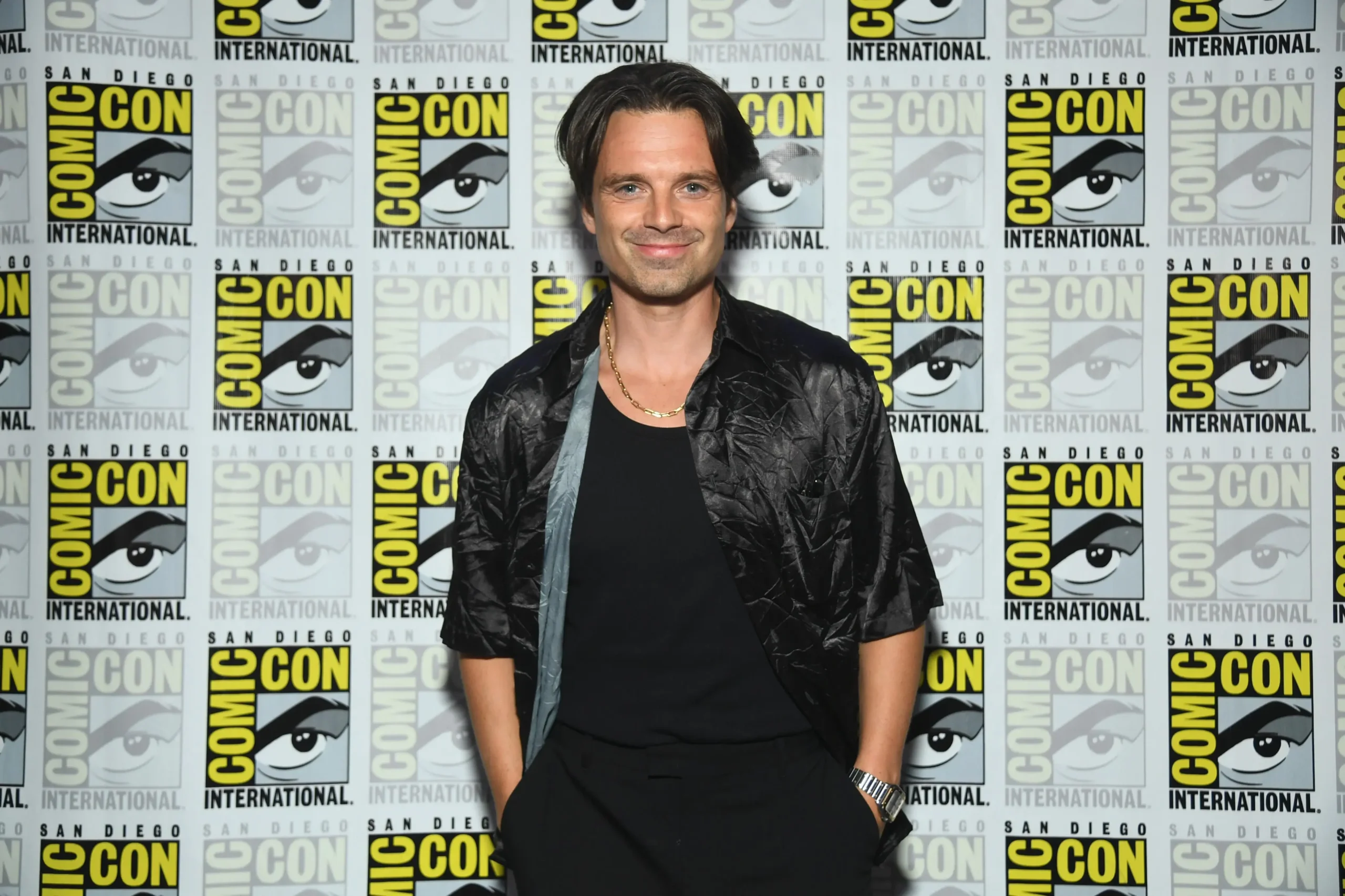
Trade publications reporting that Sebastian Stan is circling a role in The Batman: Part II immediately set fandom calculators whirring. Stan’s career has been defined by characters haunted by compromise: soldiers reshaped by war, charming figures hiding violent streaks, men trying — and sometimes failing — to outrun their pasts.
Reeves’s Gotham thrives on precisely that kind of ambiguity.
Importantly, nothing concrete has been revealed about who Stan might play. No villain name. No civic title. No leaked sides from a casting breakdown. Just interest, conversations, and the suggestion that Reeves is looking to introduce a figure with enough narrative gravity to reshape the saga’s axis.
In franchise filmmaking, that alone is meaningful. Studios don’t court actors of Stan’s profile for disposable roles. If he signs on, it likely means the sequel is adding a new pillar — someone who can rival Penguin’s influence, challenge Batman’s evolving mission, or embody the seductive dangers of Gotham’s “respectable” elite.

flow
Within Reeves’s grounded framework, new arrivals tend to fall into a few broad archetypes.
One possibility is an institutional adversary: a district attorney, reform-minded politician, or internal-affairs crusader whose public virtue masks ruthless pragmatism. In a city rebuilding after catastrophe, figures promising order can accumulate enormous power — sometimes faster than criminals ever could.
Another avenue is criminal consolidation. If Oz is the rising kingpin, he will inevitably face rivals: syndicate leaders, financiers, or strategists capable of turning Gotham’s chaos into a unified empire. Such a role would suit an actor who can project both intelligence and menace.
A third, subtler option is the moral mirror. Reeves frequently frames Batman through the people who reflect distorted versions of his own crusade — vigilantes, zealots, or reformers willing to cross lines Bruce hesitates to approach. A charismatic figure pursuing justice by darker means could force Batman to define what he is not as much as what he is becoming.
Stan’s screen persona comfortably fits all three categories, which explains why speculation has erupted so quickly.
show
After The Batman teased a new incarnation of the Joker in Arkham, many assumed the sequel would immediately elevate Gotham’s most famous psychopath to center stage. Yet Reeves has been careful not to frame his saga as a simple rogues’ gallery parade.
His villains so far operate less as spectacle and more as symptoms — products of civic rot, neglected systems, and public myths curdled into extremism. That suggests Part II may again prioritize antagonists rooted in Gotham’s social fabric rather than costumed iconography alone.
Institutional corruption remains fertile territory. So does organized crime restructuring after disaster. And looming over everything is the psychological arms race between Batman and the people who adopt his tactics for radically different ends.
If Joker appears, he may do so as a destabilizing presence rather than the film’s sole engine, keeping the spotlight on broader networks of power instead of a single madman.
idea
One persistent point of confusion online concerns how Reeves’s films relate to DC’s broader cinematic plans. His Batman cycle exists in its own continuity, separate from the mainline DC Universe overseen creatively by James Gunn.
That parallel track includes another Batman project, The Brave and the Bold, which will introduce a different version of Bruce Wayne unconnected to Pattinson’s portrayal.
In practical terms, that separation gives Reeves unusual freedom. He can craft slow-burn crime epics unconcerned with crossover mandates, multiverse logistics, or tonal alignment with other superhero franchises. If Stan joins The Batman: Part II, it will be as part of this insulated, auteur-driven corner — not a signal of wider DC continuity shifts.
why
In an era defined by compressed release schedules and cinematic universes sprinting to keep audiences fed, Reeves’s methodical approach feels almost old-fashioned. But it’s precisely that patience that allowed The Batman to carve out such a distinct identity.
The extended development window for Part II suggests a sequel designed not merely to escalate, but to deepen: pushing Bruce Wayne into new ethical territory, examining how Gotham rebuilds after trauma, and exploring what happens when a city begins to mythologize its own saviors and villains alike.
Adding a performer like Sebastian Stan — if the talks become a deal — would reinforce that ambition. His presence implies character-driven conflict, ideological clashes, and psychological duels rather than simple hero-versus-monster dynamics.
fwd
For now, the situation remains fluid. The real signals will arrive in stages.
Trade reports upgrading “in talks” to “joins the cast” would mark the first concrete step, likely accompanied by a character description. Production announcements as cameras prepare to roll in 2026 will sketch the scale and scope of the sequel. And additional casting — prosecutors, politicians, mob lieutenants, new detectives — will hint at which corners of Gotham the story plans to interrogate next.
Until then, speculation will continue to bloom in the shadows between studio silence and fan imagination.
impression
Reeves’s Batman saga has never been about saving the world. It’s about saving a city — and questioning whether one man in a mask can ever truly do that alone.
If Sebastian Stan is indeed poised to enter this universe, the most tantalizing question isn’t which villain he might portray. It’s what new moral crisis Gotham is about to face. In these films, the scariest figures often aren’t the ones lurking in alleys.
They’re the ones standing in spotless offices, promising order, while quietly deciding who deserves to be left in the dark.