OMEGA Speedmaster Moonwatch Professional Steel Manual Chronograph Watch 42mm

March 3, 2026
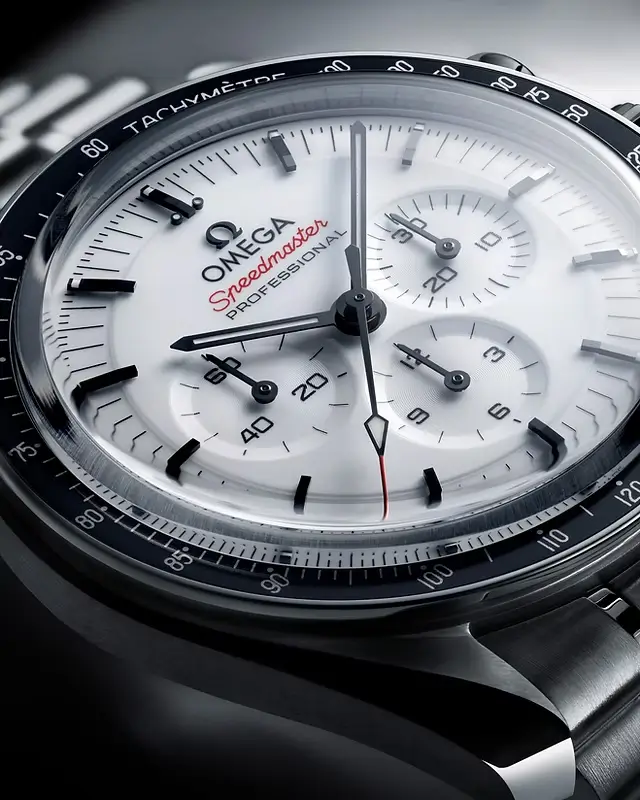


The Omega Speedmaster Moonwatch Professional 42mm is more than a luxury timepiece. It is a mechanical artifact tied directly to one of humanity’s most extraordinary achievements: the first steps on the Moon. Few watches in history have earned such a reputation for both design excellence and technical reliability. From racetracks to spacecraft, the Speedmaster’s journey has turned it into one of the most celebrated chronographs ever produced.
Today the Moonwatch Professional remains a cornerstone of the Omega catalogue. The modern 42 mm steel manual chronograph preserves the visual identity and mechanical spirit of the original model that accompanied astronauts during the Apollo era. Despite decades of technological progress, the watch remains remarkably faithful to its roots, maintaining the same design language that made it famous in the 1960s.
legend
The Speedmaster was first introduced in 1957 as a chronograph designed for motorsport. Racing drivers needed a precise instrument capable of measuring elapsed time and calculating speed. Omega answered with a watch that featured a tachymeter scale placed on the bezel rather than the dial—an innovation that allowed drivers to determine speed quickly and accurately.
The watch’s robust stainless-steel case, clear black dial, and luminous markers made it easy to read under pressure. Its tri-register chronograph layout displayed running seconds, a 30-minute counter, and a 12-hour counter, creating a functional design that remains virtually unchanged today.
The transition from racetrack chronograph to spaceflight instrument happened unexpectedly. Astronauts began purchasing the watch privately because of its durability and legibility. Eventually, the American space agency NASA decided to test commercially available watches to determine which could survive the extreme conditions of space missions.
View this post on Instagram
flow
In 1964 NASA subjected several chronographs to rigorous environmental testing. These tests simulated the brutal stresses of space travel, including intense vibration, extreme temperature fluctuations, high acceleration forces, humidity, and decompression.
Many watches failed these trials. Some stopped running altogether, while others suffered cracked crystals or damaged movements. The Speedmaster, however, survived every test.
Its manually wound movement proved exceptionally resilient under harsh conditions. As a result, in 1965 NASA officially certified the Speedmaster for use during all manned space missions.
This certification transformed the watch from a sporting tool into a professional space instrument.
stir
The Speedmaster achieved global fame during the historic Apollo 11 Moon Landing in 1969. Astronauts wore the watch as part of their mission equipment, making it the first wristwatch used on the lunar surface.
From that moment forward, the watch earned the nickname “Moonwatch.” It became permanently associated with the golden age of space exploration and the pioneering spirit that defined the era.
The Speedmaster’s reliability was also proven during the dramatic Apollo 13 mission in 1970. Astronauts used the chronograph to time a critical engine burn that helped correct their trajectory and return safely to Earth. The watch’s precision under pressure reinforced its reputation as one of the most dependable mechanical chronographs ever made.
lang
One reason the Speedmaster Moonwatch has remained relevant for more than six decades is its remarkable design continuity. While many watches undergo dramatic stylistic changes, the Moonwatch has retained its original character.
The 42-millimeter stainless-steel case features the asymmetrical profile introduced in the 1960s, designed to protect the crown and pushers. This subtle architectural detail gives the watch its distinctive silhouette.
The black dial is arranged in a balanced tri-compax layout with three subdials. White baton hands and luminous hour markers ensure excellent legibility in low-light conditions.
Surrounding the dial is the tachymeter bezel, a hallmark of the Speedmaster design. This scale allows wearers to measure speed over distance, a feature that reflects the watch’s racing heritage.
Despite the passage of time, the Speedmaster’s visual identity remains unmistakable.
move
At the heart of the modern Moonwatch beats the Omega Calibre 3861, a manually wound chronograph movement that represents the latest stage in the watch’s technical evolution.
This movement incorporates Omega’s co-axial escapement, a mechanism designed to reduce friction and improve long-term accuracy. It also provides resistance to magnetic fields up to 15,000 gauss, protecting the watch from everyday electronic interference.
The Calibre 3861 is certified as a Master Chronometer, meaning it has passed rigorous precision and reliability tests. Despite these modern innovations, the movement retains the manual winding system that enthusiasts appreciate.
Each morning, the wearer winds the crown, storing energy within the mainspring and engaging directly with the mechanics of the watch.
craft
The Speedmaster Moonwatch Professional is typically crafted from stainless steel, the material that best reflects the watch’s original tool-watch heritage.
The case combines brushed and polished finishes to create a subtle contrast that highlights the geometry of the lugs and bezel. The steel bracelet features a comfortable multi-link design that balances durability with refined aesthetics.
The dial itself is carefully manufactured with layered finishes and luminous coatings to ensure clarity and depth. Every component is designed to deliver both functionality and visual harmony.
culture
The Speedmaster Moonwatch occupies a unique place in modern watch culture. It is not only a luxury product but also a symbol of human exploration.
Collectors often view the watch as a tangible connection to the era of the space race. Owning a Speedmaster means wearing a piece of history that accompanied astronauts beyond Earth’s atmosphere.
At the same time, the watch remains remarkably versatile. Its understated design pairs equally well with formal clothing, casual outfits, or technical gear. This adaptability has helped the Moonwatch remain relevant across generations of enthusiasts.
leg
The Omega Speedmaster Moonwatch Professional Steel Manual Chronograph Watch 42mm stands among the most iconic watches ever created. Its journey from racetrack instrument to certified space chronograph is unlike any other story in horology.
More than half a century after it first accompanied astronauts to the Moon, the watch continues to represent the spirit of exploration and precision engineering.
Its design has endured because it was never driven by fashion. Instead, it was shaped by function, reliability, and clarity—qualities that remain timeless.
In the world of watchmaking, the Moonwatch occupies a unique orbit. It is not simply a luxury accessory but a symbol of humanity’s reach toward the stars.



No comments yet.