
Magliano x VEJA Panenka Reimagines Vintage Football Boots for the Street

March 4, 2026
football
In the evolving landscape of fashion collaborations, footwear has become a canvas for cultural reinterpretation. When the Italian label Magliano joins forces with the ethically minded French sneaker company VEJA, the result is rarely conventional. Their newest collaboration—a reimagined version of the Panenka sneaker—leans heavily into nostalgia while maintaining a forward-thinking design language suited to modern streetwear.
The collaboration reflects a growing fascination within fashion: the reinterpretation of classic sports gear as everyday objects. Vintage football boots, once designed solely for performance on muddy pitches, now inspire silhouettes intended for urban sidewalks. With the Magliano x VEJA Panenka, that transformation is both literal and poetic. The sneaker borrows distinctive elements from historic football cleats and translates them into a contemporary lifestyle shoe.
At first glance, the sneaker feels familiar yet slightly offbeat, a balance that perfectly mirrors Magliano’s aesthetic philosophy. The design references tradition, but it refuses to remain confined within it.
stir
Football culture has long served as a fertile source of inspiration for fashion designers. The utilitarian simplicity of old-school boots—the stitching, the leather construction, and the distinctive fold-over tongue—embodies a raw authenticity that modern performance footwear sometimes lacks.
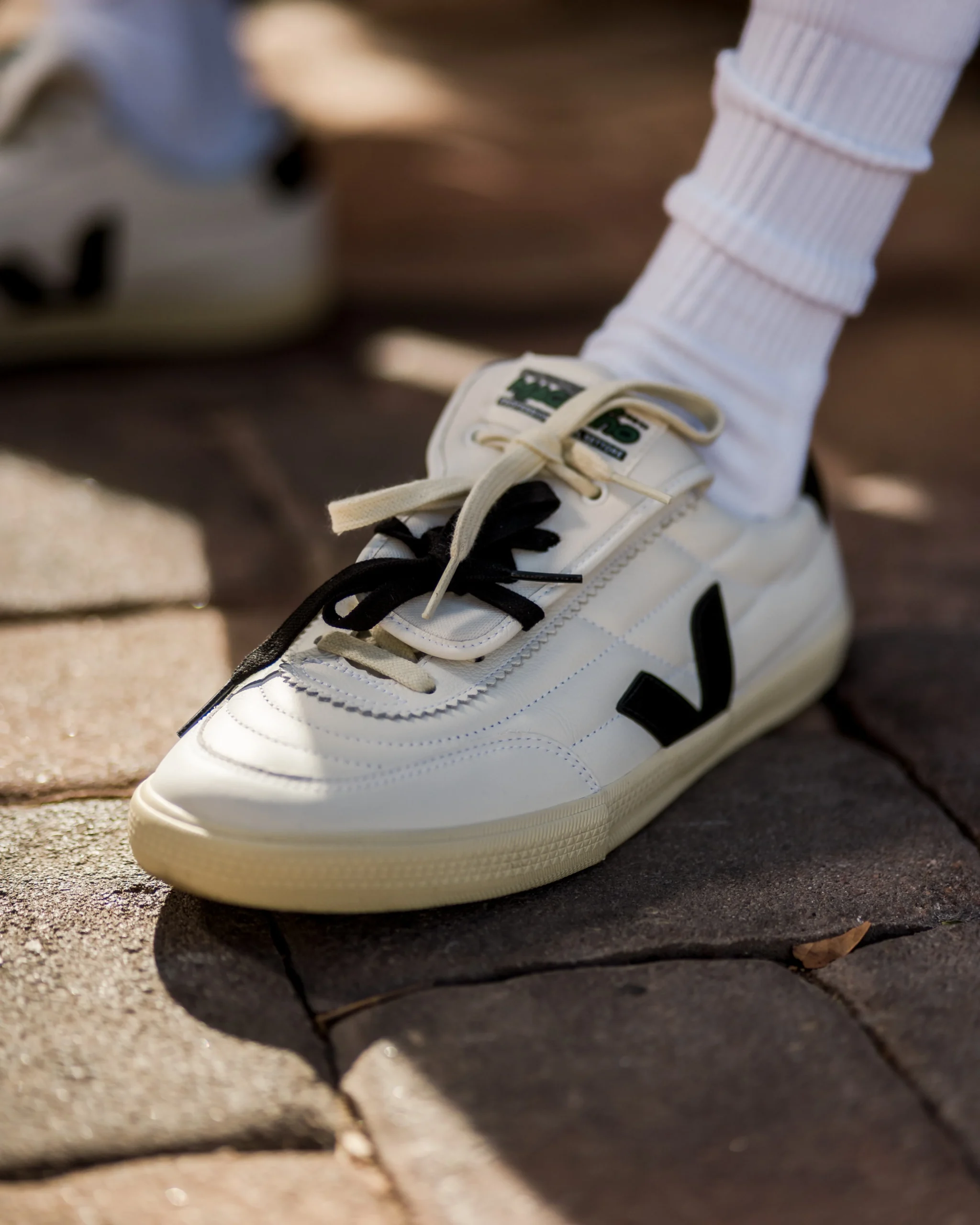
The Magliano x VEJA Panenka leans directly into this heritage. The shoe’s defining feature is its fold-over tongue, a design detail lifted almost directly from vintage football cleats. In earlier decades, this tongue served both functional and symbolic roles. It protected laces from the elements while also creating a smooth striking surface for kicking the ball.
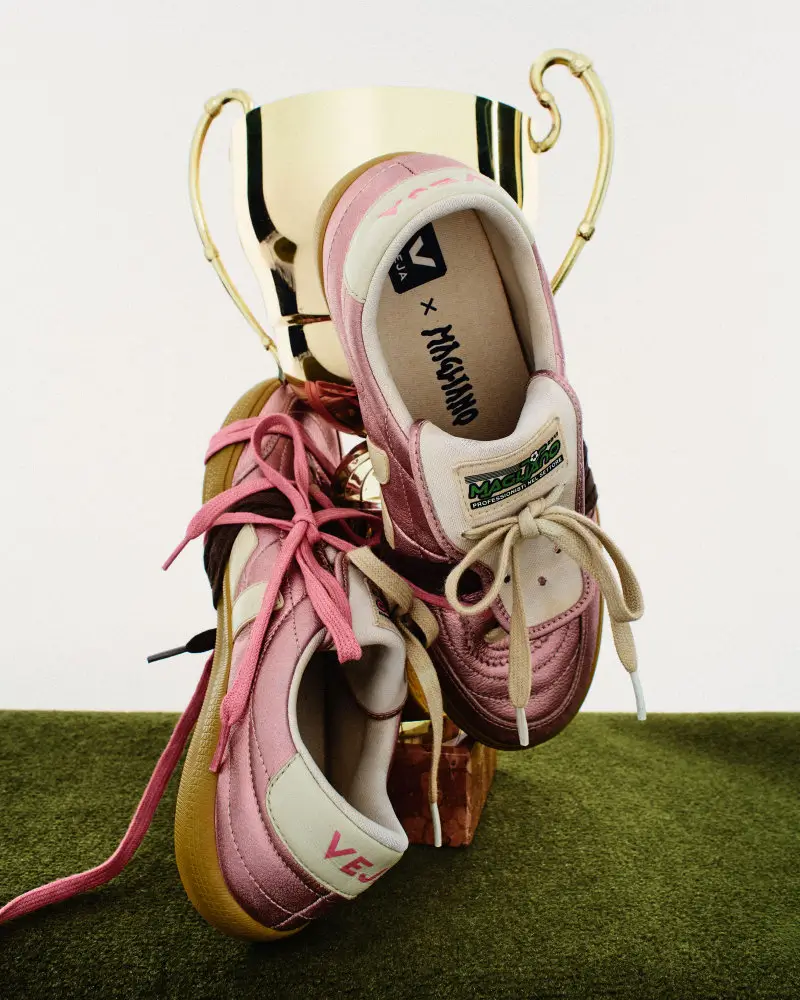
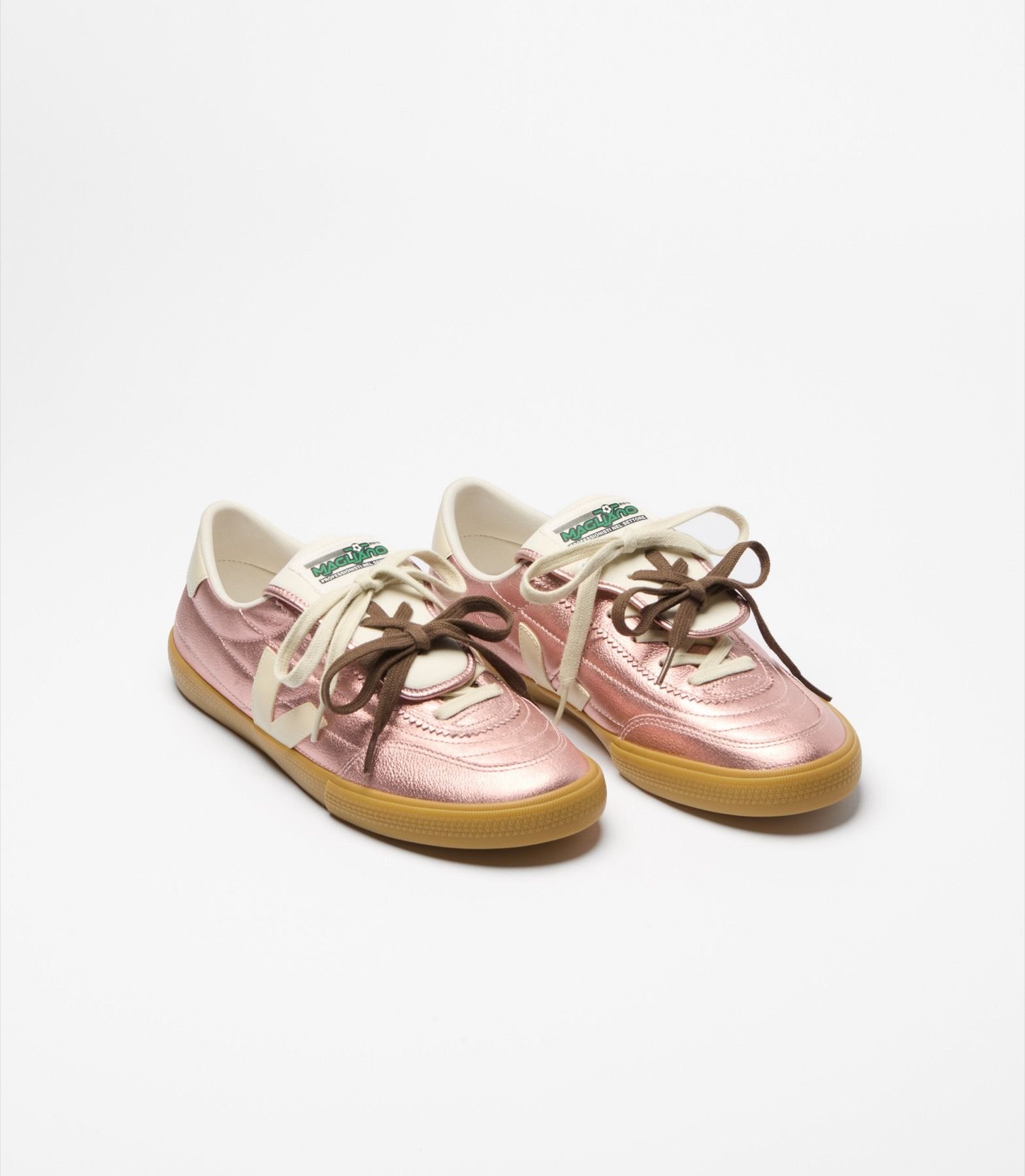
Here, however, the tongue becomes a stylistic centerpiece. Made from a single perforated piece of material, it folds elegantly across the upper portion of the shoe, instantly evoking classic boots worn in European leagues throughout the twentieth century.
But instead of simply replicating history, the designers reframe it. The tongue introduces a distinctive visual rhythm that disrupts the symmetry of the shoe’s upper, setting the tone for the rest of the design.
View this post on Instagram
flow
One of the most interesting design decisions lies in the shoe’s asymmetric lacing system. Traditional sneakers follow a straightforward pattern: evenly spaced eyelets aligned along the centerline of the shoe. The Panenka breaks that expectation.
Because of the folded tongue, the laces sit slightly off-center, producing a subtle diagonal tension across the upper. This asymmetry adds movement to the silhouette, making the shoe feel more dynamic even when standing still.
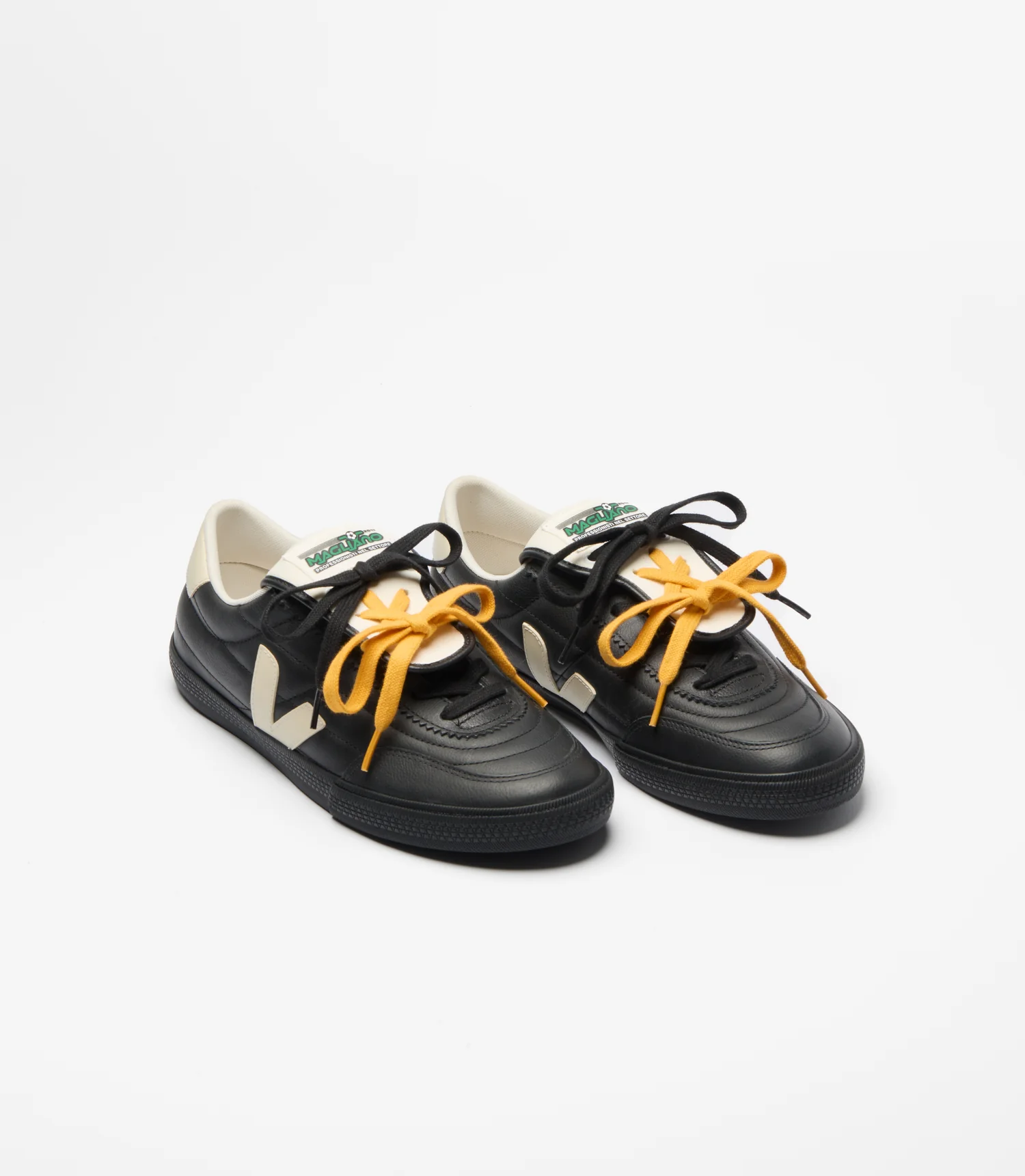
To emphasize this idea, the sneaker arrives with three separate pairs of laces. This encourages wearers to experiment with different color combinations. A monochrome look might highlight the shoe’s sculptural lines, while contrasting laces introduce a playful element of visual disruption.
This approach to customization reflects Magliano’s broader design language. The brand frequently plays with contrast—between elegance and awkwardness, tradition and irreverence. In the Panenka shoe, that philosophy translates into a sneaker that feels intentionally imperfect, slightly skewed in a way that feels refreshingly human.
color
The collaboration launches with three distinct colorways, each offering its own interpretation of the Panenka concept.
The black version with cream accents is arguably the most understated. It emphasizes the sneaker’s structural design, allowing the folded tongue and asymmetric lacing to stand out against a dark base. This pair feels closest to the spirit of vintage football boots, echoing the understated elegance of classic athletic footwear.
The white colorway with black detailing flips the visual balance. Here, the lighter upper emphasizes the textural qualities of the materials. The perforated tongue becomes more prominent, and the contrast between the white leather and dark details sharpens the shoe’s graphic appeal.
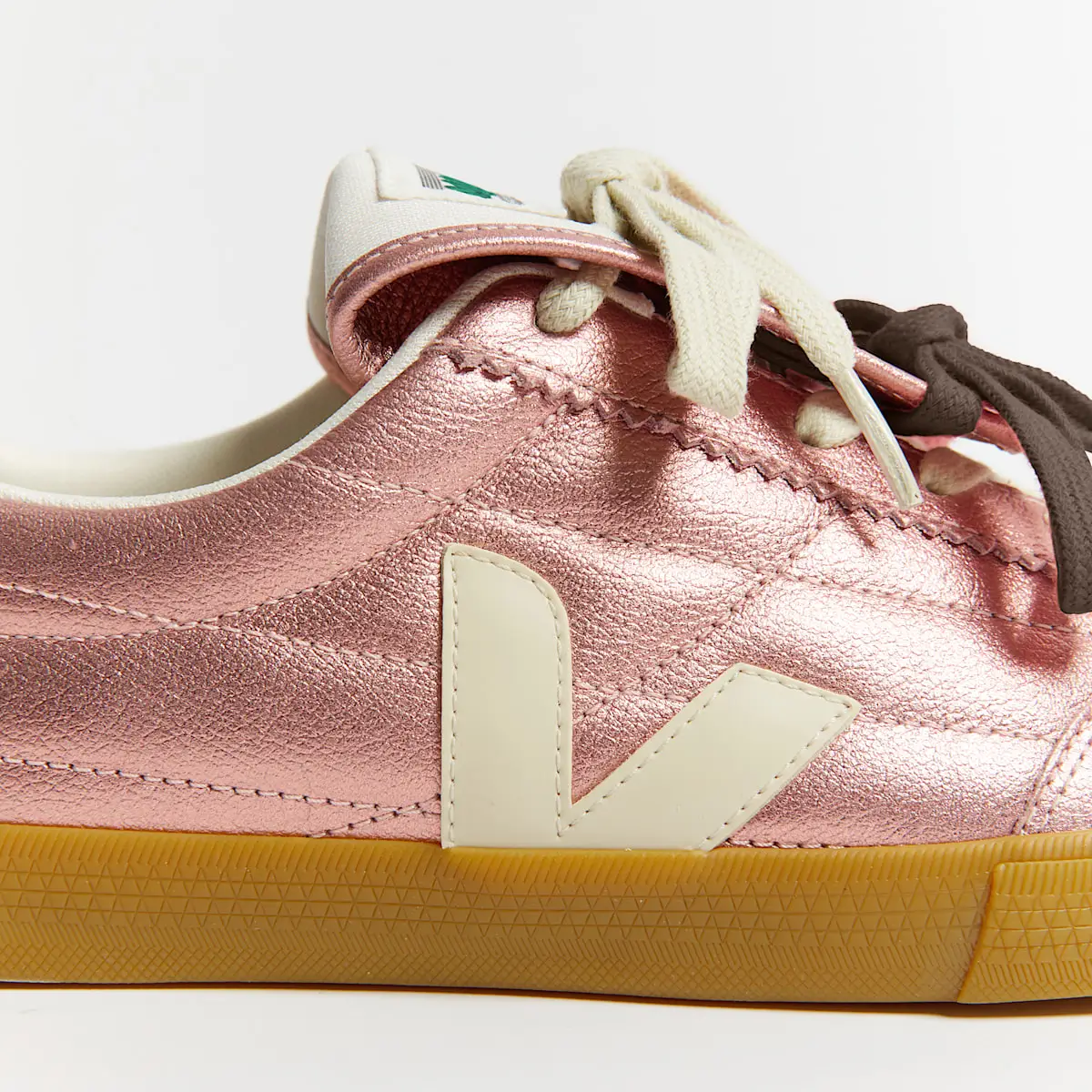
Then there is the pearlescent pink edition, the collaboration’s most expressive variant. With its luminous finish, the pink pair introduces a futuristic sheen that contrasts with the shoe’s vintage inspirations. It transforms what might have been a nostalgic homage into something far more experimental.
This trio of options illustrates how color can shift the entire mood of a design. The silhouette remains consistent, but the emotional tone changes dramatically from pair to pair.
fwd
Another notable element of the collaboration is the way branding has been handled. In most partnerships involving VEJA, the brand’s signature “V” logo is prominently displayed along the side of the shoe. In this case, however, the branding hierarchy shifts.
VEJA intentionally steps back, allowing Magliano’s identity to take center stage. The Magliano logo appears more prominently on the sneaker, subtly altering the balance of visual authority.
This decision reflects the collaborative spirit of the project. Rather than imposing its own visual dominance, VEJA allows the Italian label’s voice to shape the narrative of the shoe. It is a quiet gesture of respect that underscores the authenticity of the partnership.
At the same time, VEJA’s influence is still present in the sneaker’s construction and philosophy. Known for its commitment to ethical production and environmentally conscious materials, the French brand brings its sustainability expertise to the collaboration.
magliano
Founded by designer Luca Magliano in Bologna, the Magliano brand has built a reputation for blending Italian tailoring traditions with an almost subversive sense of humor. The brand often explores themes of awkward elegance, rural nostalgia, and contemporary masculinity.
That sensibility translates surprisingly well into footwear. The Panenka shoe reflects Magliano’s ability to take familiar cultural symbols—like football boots—and reinterpret them in ways that feel both nostalgic and strange.
The result is a sneaker that doesn’t attempt to appear overly polished. Instead, it embraces small irregularities, from the asymmetric lacing to the exaggerated tongue.
In doing so, the design captures something increasingly rare in modern fashion: personality.
inspire
The Magliano x VEJA Panenka also arrives at a moment when football aesthetics are experiencing a broader cultural revival. Jerseys, training jackets, and classic boots have increasingly migrated from stadiums to fashion runways.
This phenomenon reflects a wider shift in how sports culture intersects with everyday style. Football, once defined purely by athletic performance, has become a global visual language.
Shoes inspired by cleats are part of this evolution. By adapting design elements originally created for the pitch, brands create footwear that carries the emotional history of sport into everyday life.
The Panenka shoe embodies this idea perfectly. It is not a performance shoe, but it carries the memory of performance within its design.
fin
In a market saturated with converges, that balance can be difficult to achieve. Many partnerships rely on surface-level branding changes rather than meaningful design exploration. The Panenka shoe, by contrast, demonstrates how two brands with distinct identities can merge their perspectives to create something genuinely new.
For VEJA, the mixture represents a willingness to experiment beyond its usual minimalist formulas. For Magliano, it offers a new medium through which to express its offbeat aesthetic.
Together, they have produced a shoe that feels quietly radical—an everyday shoe that carries the spirit of vintage football into contemporary fashion.
And in the process, the Panenka becomes more than just a sneaker. It becomes a reminder that even the most familiar objects can be reimagined when design looks both backward and forward at the same time.
No comments yet.