KAWS Clean Slate (Grey) 2022 Screenprint: Limited Edition Print Guide

March 4, 2026
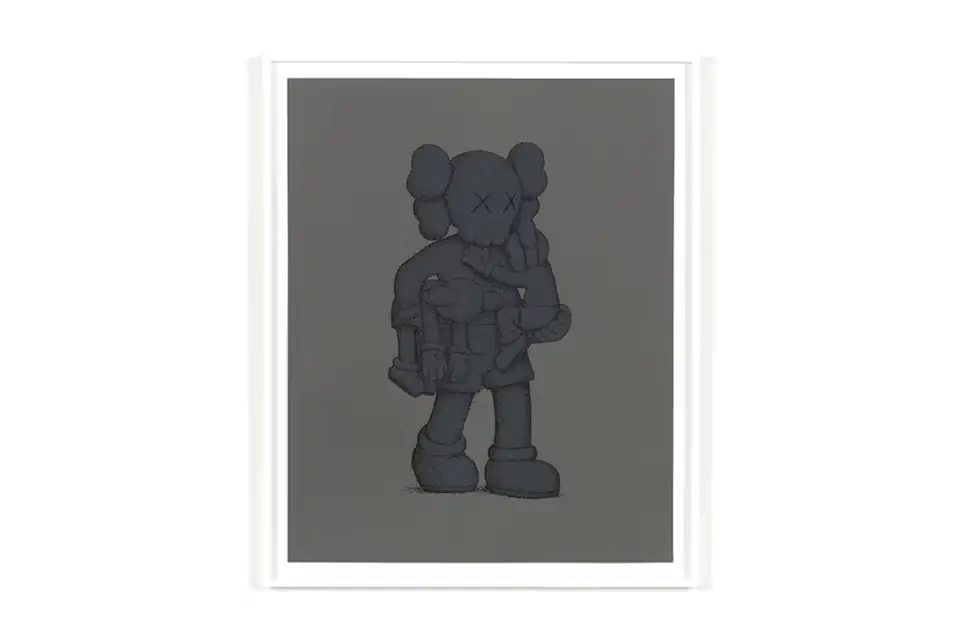
In the contemporary art market, few figures bridge the worlds of street culture, design, and fine art as seamlessly as KAWS. His works exist at a fascinating intersection of collectible toy culture, gallery-driven contemporary art, and mass-appeal iconography. Among the most intriguing entries in his recent print portfolio is Clean Slate (Grey), a 2022 screenprint that distills many of the themes that have made the artist one of the most recognizable creators of the 21st century.
Issued as a limited edition of 100 prints and produced using traditional screenprinting techniques on Somerset paper, Clean Slate (Grey) represents more than just a collectible object. It is a continuation of the visual language that has defined KAWS’ work for decades—melancholy cartoon figures, emotional ambiguity, and the tension between innocence and existential reflection.
The particular example described here—Edition 37/100—comes with notable provenance through Heritage Auctions, one of the world’s leading auction houses for contemporary prints and collectibles. Signed, dated, and numbered by the artist along the lower edge, the work stands as both a desirable collector’s piece and a window into the broader narrative of KAWS’ evolving artistic universe.
the evolution of kaws
Before discussing Clean Slate (Grey) specifically, it is essential to understand the creative trajectory that led to its creation.
Born Brian Donnelly in New Jersey in 1974, KAWS first gained recognition in the 1990s through guerrilla interventions in public advertising spaces. Using bus shelter posters and billboards as canvases, he modified commercial imagery with his now-iconic “XX” eyes and skull-like heads. These early works were rebellious yet strangely playful, establishing a style that blended graffiti aesthetics with cartoon nostalgia.
During the late 1990s and early 2000s, KAWS began translating his characters into collectible vinyl toys, most notably the Companion figure. These sculptures quickly became cult objects within streetwear and design communities. Collaborations with brands such as BAPE and later Uniqlo helped propel his imagery into global popular culture.
Yet despite his strong commercial presence, KAWS steadily built credibility within the contemporary art world. His paintings and prints began appearing in prestigious galleries and museums, blurring the boundaries between mass culture and fine art.
Today, the artist’s works are shown internationally, including exhibitions such as Almost Spring at Whitestone Gallery in 2026 and presentations at Taglialatella Galleries.
Within this context, Clean Slate (Grey) emerges as a key piece within his printmaking practice.
image
At first glance, Clean Slate (Grey) is unmistakably a KAWS composition. The central figure resembles the artist’s iconic Companion character—its rounded ears, gloved hands, and crossed-out eyes immediately recognizable.
But unlike some of the artist’s more vibrant works, the grey colorway introduces a subtle emotional tone. The palette is restrained and contemplative, suggesting themes of reflection, pause, or emotional reset.
The title itself—Clean Slate—is evocative.
It implies renewal, forgiveness, and starting again. Within the visual narrative of the artwork, the Companion figure appears withdrawn, almost introspective. This emotional ambiguity is a recurring motif in KAWS’ work: characters that seem both playful and melancholic, approachable yet distant.
The grey tones soften the imagery, making the piece feel more contemplative than celebratory. It is less about spectacle and more about introspection—an unusual mood for an artist often associated with bright colorways and pop exuberance.
flow
Color variations have always played a major role in KAWS’ artistic output. Many of his sculptures and prints are released in multiple colorways, each altering the emotional tone of the piece.
The grey version of Clean Slate stands apart for several reasons.
First, grey is a color historically associated with neutrality and transition. In art history, it often functions as a psychological midpoint—neither joyful nor sorrowful, but reflective.
Second, grey reinforces the sculpture-like presence of the character. Without bright hues distracting the viewer, the focus shifts to the form itself: the rounded head, the body language, and the quiet posture.
This restrained palette also connects the print to KAWS’ sculptural practice, where monochrome finishes frequently highlight the physicality of his characters.
minutia
Although KAWS is widely known for sculpture and painting, his printmaking practice has become an essential part of his artistic legacy.
Clean Slate (Grey) was produced as a screenprint in colors on Somerset paper, a medium long favored by contemporary artists for its precision and durability.
Screenprinting is a meticulous process that involves layering individual colors through stenciled screens. Each layer must align perfectly, requiring careful planning and technical expertise.
Somerset paper itself is a premium art paper produced in England and widely respected in the printmaking world. Its soft texture and archival quality make it ideal for limited edition prints intended for long-term preservation.
rare
Limited edition prints are a central component of the contemporary art market, allowing artists to distribute their work more widely while maintaining scarcity.
Clean Slate (Grey) was issued in an edition of 100 prints, with each example signed, dated, and numbered by KAWS in pencil along the lower edge.
Edition number 37/100, as referenced in the Heritage Auctions listing, places the work squarely within this limited run.
While 100 may seem like a large number compared to unique paintings, within the print market it represents a relatively tight edition size—especially for an artist of KAWS’ global popularity.
Collectors often seek specific edition numbers, particularly those within the first or final segments of a print run, though the artistic value generally remains consistent across the edition.
show
According to the available listing information, the print shows no apparent condition issues and remains matted and framed under acrylic.
The framed dimensions measure 34 × 28 inches, indicating a professionally presented display format that enhances the work’s presence while protecting the paper.
Framing under acrylic rather than glass is a common choice for contemporary prints. Acrylic provides excellent UV protection while reducing the risk of breakage and glare.
Collectors typically value works that have been well preserved in their original framing, particularly when the condition report indicates minimal exposure to environmental stress.
exhibit
Although primarily known through auction listings and collector circles, Clean Slate (Grey) has also appeared within broader gallery contexts.
Works associated with the series have been connected to exhibitions such as:
-
Almost Spring (2026) at Whitestone Gallery
-
Annual Summer Sale (2025) at Taglialatella Galleries
These exhibitions demonstrate how KAWS’ prints circulate simultaneously through both gallery and auction ecosystems.
Unlike traditional printmakers whose works remain largely within museum collections, KAWS’ prints operate within a dynamic marketplace where collectors, galleries, and auction houses all participate.
fwd
Over the past decade, KAWS has become one of the most commercially successful artists working today.
Auction records for his paintings and sculptures regularly reach seven-figure sums, while limited edition prints continue to command strong demand among collectors.
The popularity of works like Clean Slate (Grey) reflects several broader trends within contemporary collecting.
One is the merging of street culture and fine art. KAWS emerged from a generation that grew up on cartoons, advertising, and sneaker culture. His imagery resonates with audiences who see contemporary art not as an elite discipline but as a natural extension of everyday visual culture.
Another factor is the crossover between art collectors and design enthusiasts. Many KAWS collectors also collect vinyl toys, sneakers, or fashion collaborations, creating a hybrid collecting ecosystem.
lang
Perhaps the most remarkable aspect of KAWS’ work is his ability to convey complex emotional narratives through simplified cartoon forms.
The Companion figure, which appears in Clean Slate (Grey), often embodies themes of vulnerability and quiet introspection. Its crossed-out eyes suggest both anonymity and emotional withdrawal, allowing viewers to project their own feelings onto the character.
This emotional openness is one reason KAWS’ work resonates so strongly with audiences. The imagery feels familiar—almost nostalgic—yet carries a subtle sense of melancholy.
In Clean Slate, that mood becomes even more pronounced.
The muted palette and contemplative posture of the figure create a sense of pause, as if the character is standing at the threshold of change.
culture
Beyond its technical and collectible aspects, Clean Slate (Grey) resonates because of its symbolic message.
The idea of beginning again—of wiping away mistakes or burdens—has universal appeal. In an era defined by rapid change and cultural reinvention, the notion of a “clean slate” feels especially relevant.
KAWS captures that idea through a character that appears both fragile and resilient.
The Companion figure seems to embody a moment of quiet reflection, standing between past and future. It is a pause before motion, a breath before the next chapter begins.
fin
While some of KAWS’ works are bold, colorful spectacles, Clean Slate (Grey) represents a more subdued moment within his artistic output.
Its restrained palette, contemplative tone, and elegant printmaking technique give the piece a distinctive place within his catalog.
For collectors and admirers alike, the work offers a glimpse into the emotional depth that underlies KAWS’ playful visual language.
In the end, Clean Slate (Grey) is not merely a collectible screenprint. It is a reflection on renewal, identity, and the universal desire to start again.
And in the ever-expanding universe of KAWS’ characters and narratives, it stands as a quietly powerful reminder that even the most recognizable icons can still surprise us with moments of vulnerability and grace.

No comments yet.