Xiaomi Presents Vision Gran Turismo Electric Hypercar Concept at Mobile World Congress

March 4, 2026
flow
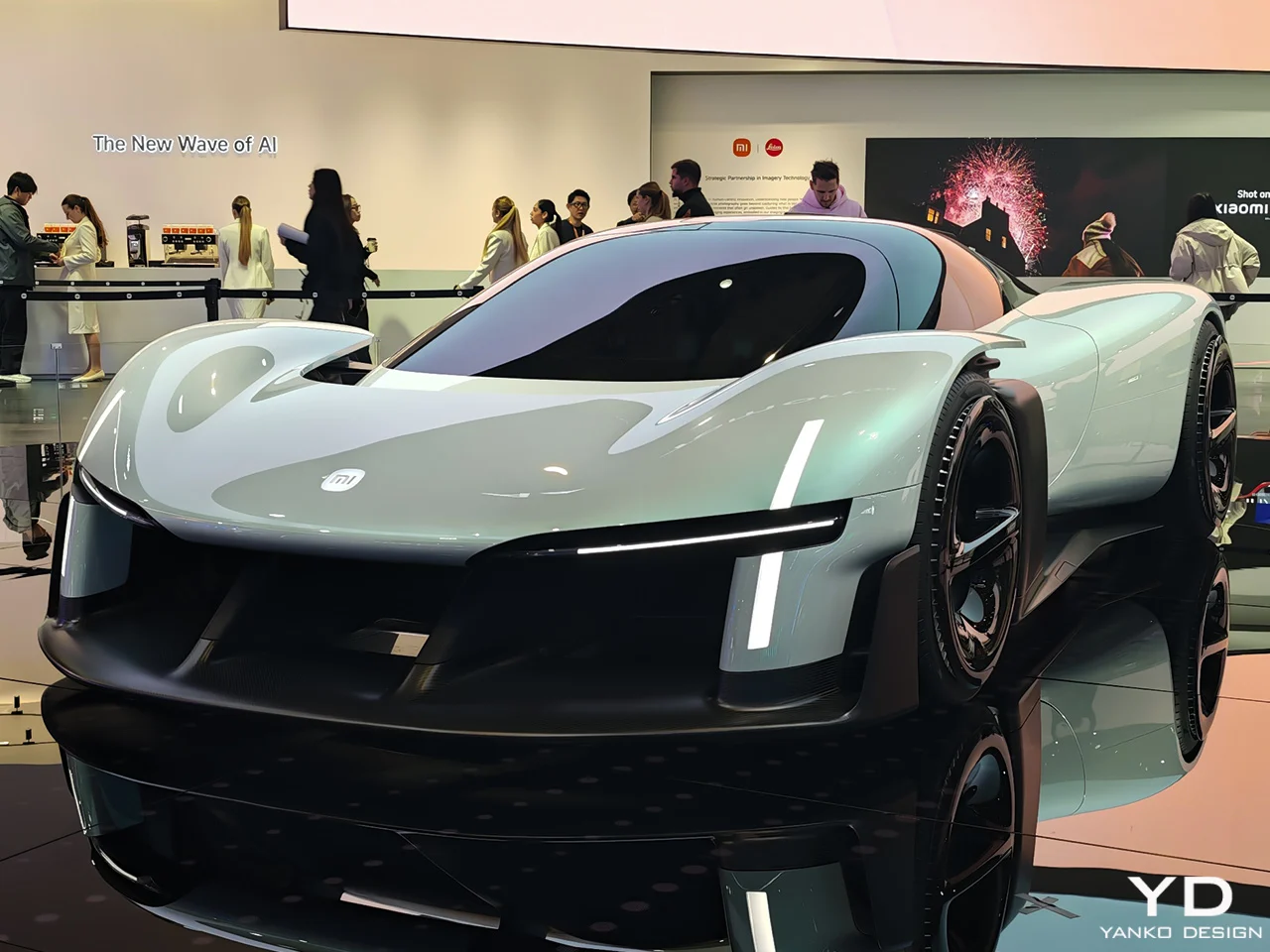
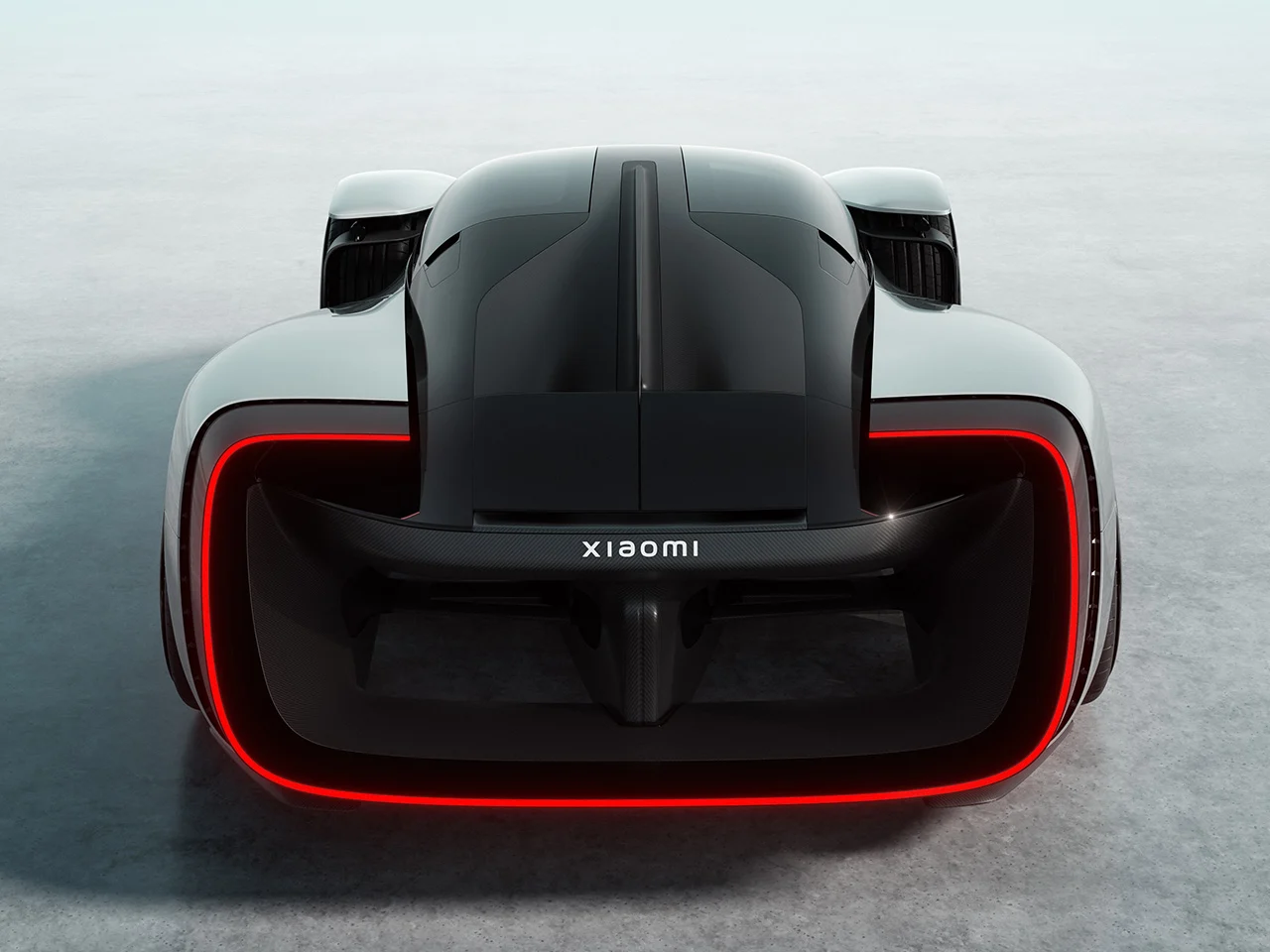
At Mobile World Congress 2026 in Barcelona, Chinese technology giant Xiaomi stunned the tech and automotive industries by unveiling the Vision Gran Turismo (Vision GT) electric hypercar concept—an ambitious design exercise that pushes the company’s ecosystem strategy into the realm of extreme performance mobility. The project marks Xiaomi’s first entry into the celebrated Vision Gran Turismo design initiative, a collaborative program tied to the racing simulator franchise Gran Turismo 7.
The concept signals Xiaomi’s expanding ambitions in electric vehicles and advanced mobility technologies. Having already disrupted consumer electronics with smartphones, smart home ecosystems, and wearable devices, Xiaomi is now leveraging its growing automotive division to imagine the future of performance EVs. The Vision GT, however, is not meant to be sold—at least not yet. Instead, it serves as a technological and design manifesto, exploring what happens when software intelligence, AI systems, and aerodynamic engineering converge in a hyper-focused electric machine.
Unveiled as a full-scale concept model and digital vehicle, the hypercar blends cutting-edge aerodynamics, an AI-driven cockpit, and nearly unbelievable performance figures. For Xiaomi, it represents both a branding milestone and a glimpse into the next era of electric performance engineering.
stir
The Vision Gran Turismo project began as a collaboration between the developers of the Gran Turismo racing series and major automotive manufacturers. Designers from around the world were invited to imagine hypercars unrestricted by production realities.
With its debut at MWC 2026, Xiaomi becomes the first technology company—not a traditional automaker—to participate in the Vision GT program, joining brands such as Mercedes-Benz, Bugatti, and Chevrolet that have previously contributed concept vehicles.
Xiaomi is also now the 36th brand involved in the initiative and the creator of the 51st Vision Gran Turismo concept overall, highlighting how rapidly the project has evolved into a global design laboratory for future performance vehicles.
While the Vision GT will eventually appear as a drivable vehicle inside Gran Turismo, Xiaomi also built a physical full-scale prototype to showcase at MWC—underscoring how seriously the company is approaching its automotive ambitions.
lang
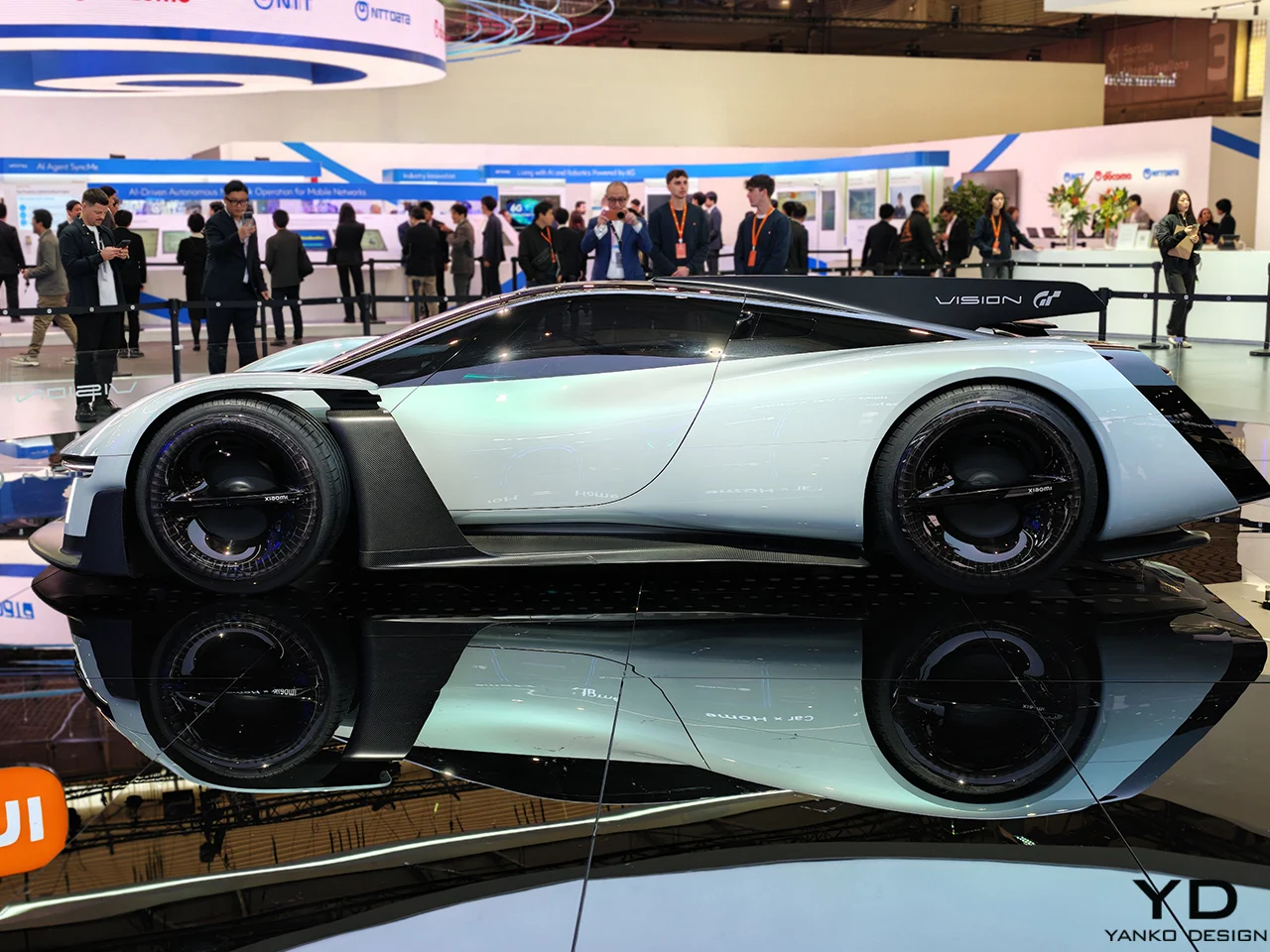
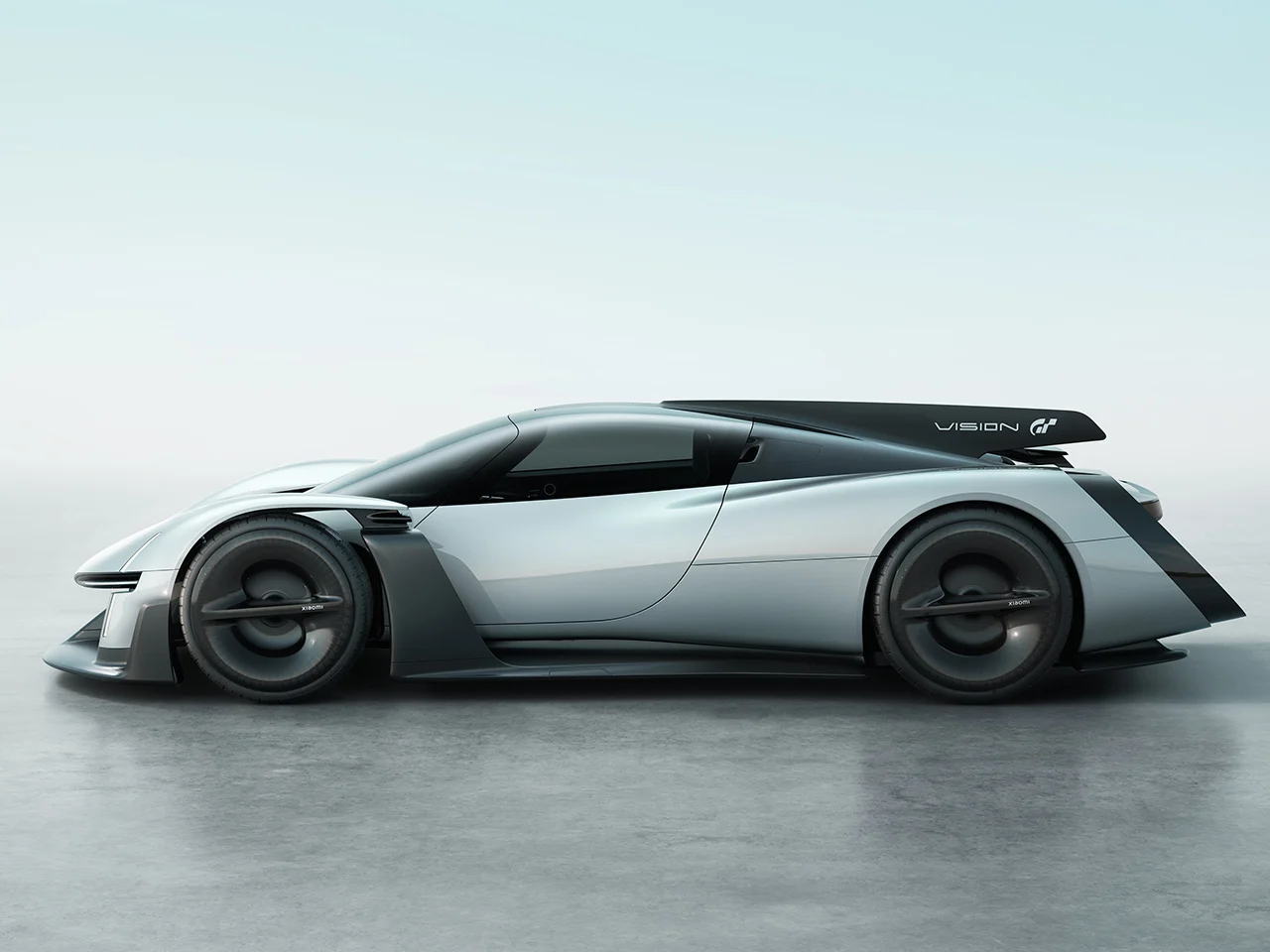
The Xiaomi Vision GT’s exterior design is shaped by a philosophy the company describes as “Sculpted by the Wind.”
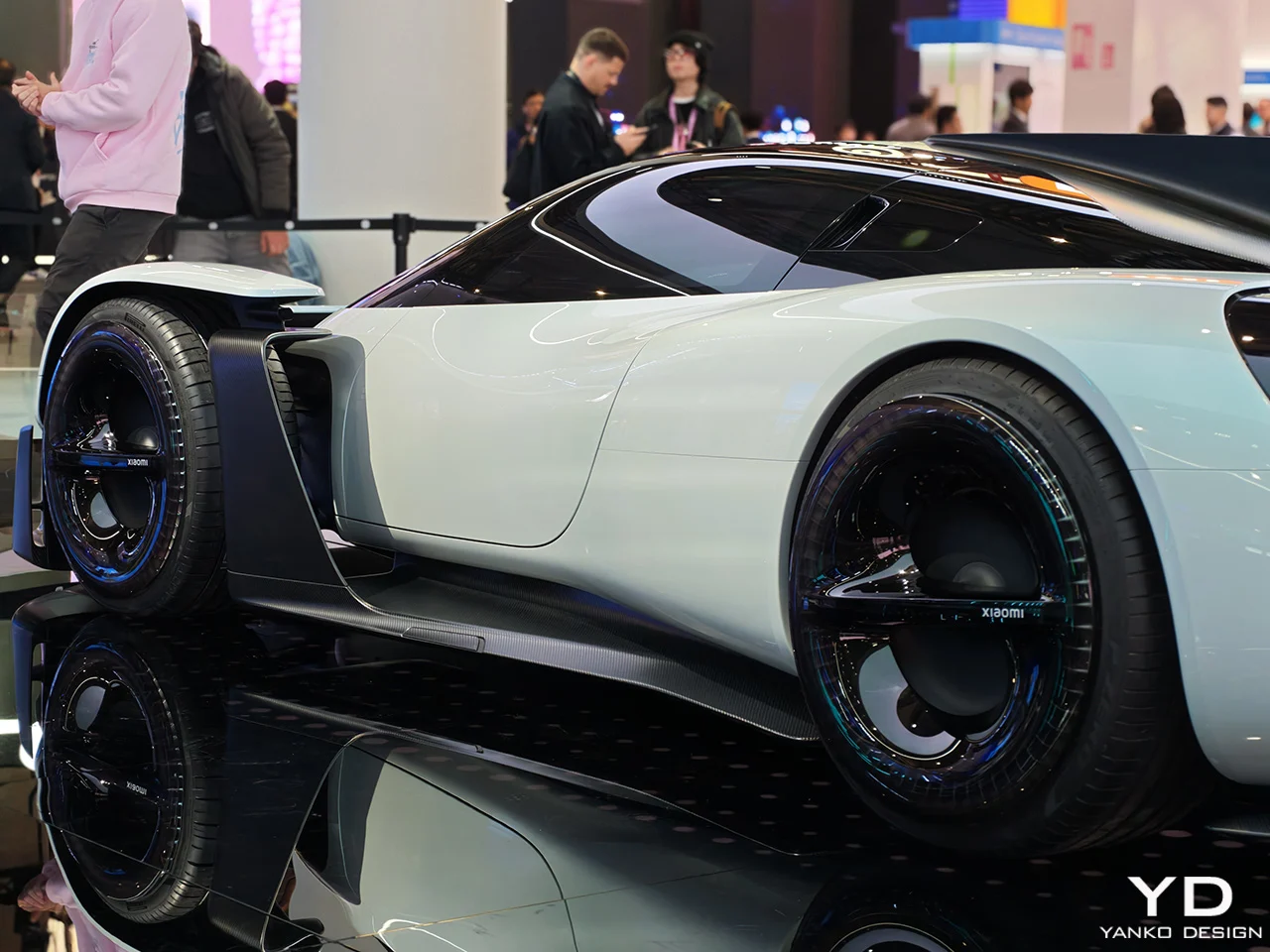
Instead of relying on exaggerated spoilers and winglets, Xiaomi engineers integrated aerodynamic elements directly into the bodywork. The result is a teardrop-like silhouette that channels airflow smoothly from front to rear. Hidden air ducts, airfoil-inspired structural shapes, and carefully carved cutouts guide airflow across the body without the need for visually heavy aerodynamic appendages.
The car’s body proportions emphasize speed even when stationary. Its long nose flows into a low cockpit canopy and muscular rear haunches, evoking the aesthetic language of endurance racers and modern hypercars. The aerodynamic balance is particularly impressive:
-
Drag coefficient of 0.29
-
Downforce figure of -1.2
-
Aerodynamic efficiency rating of 4.1
These figures demonstrate Xiaomi’s attempt to solve a classic engineering dilemma: balancing low drag for high top speeds with high downforce for cornering stability.
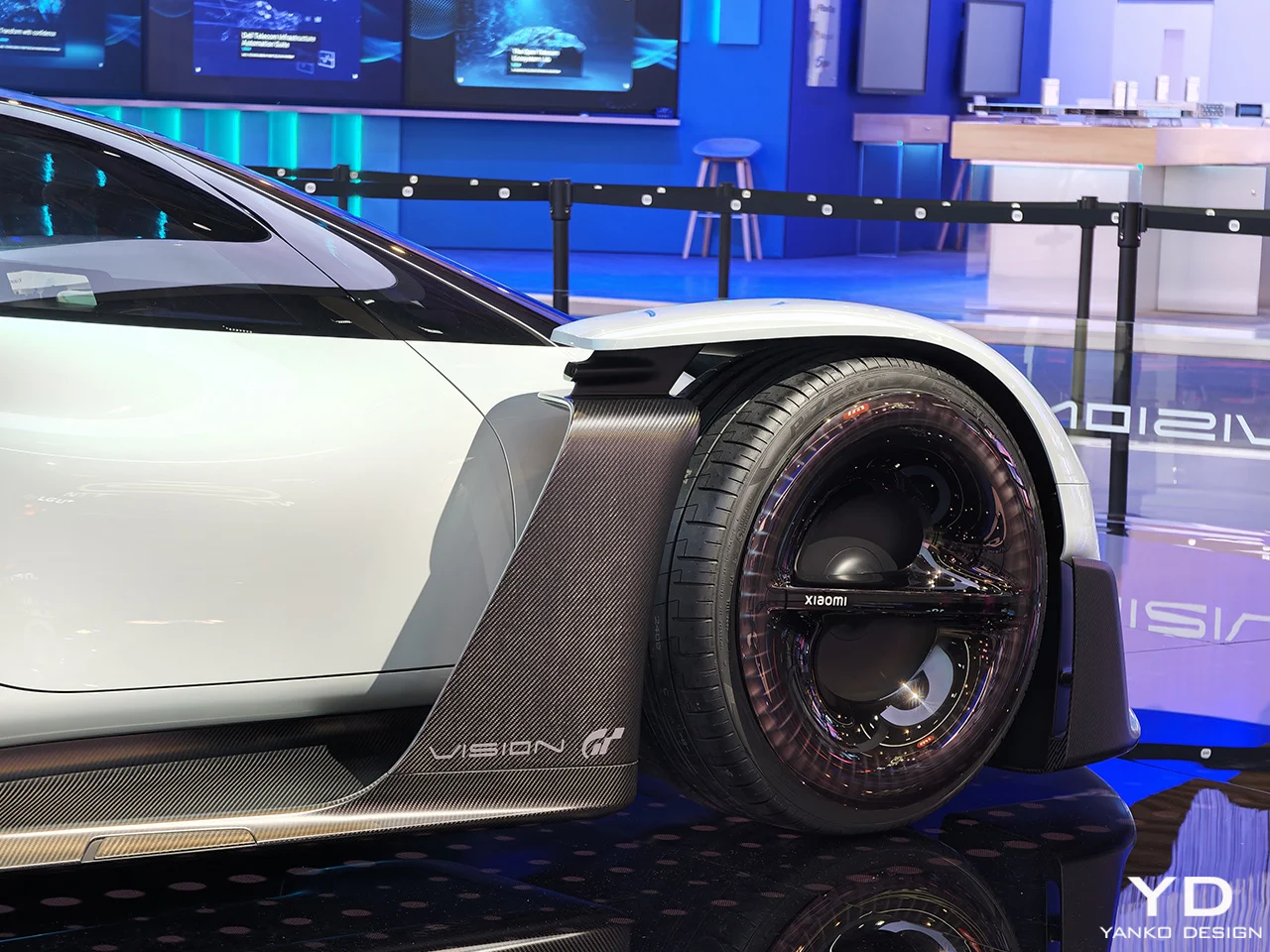
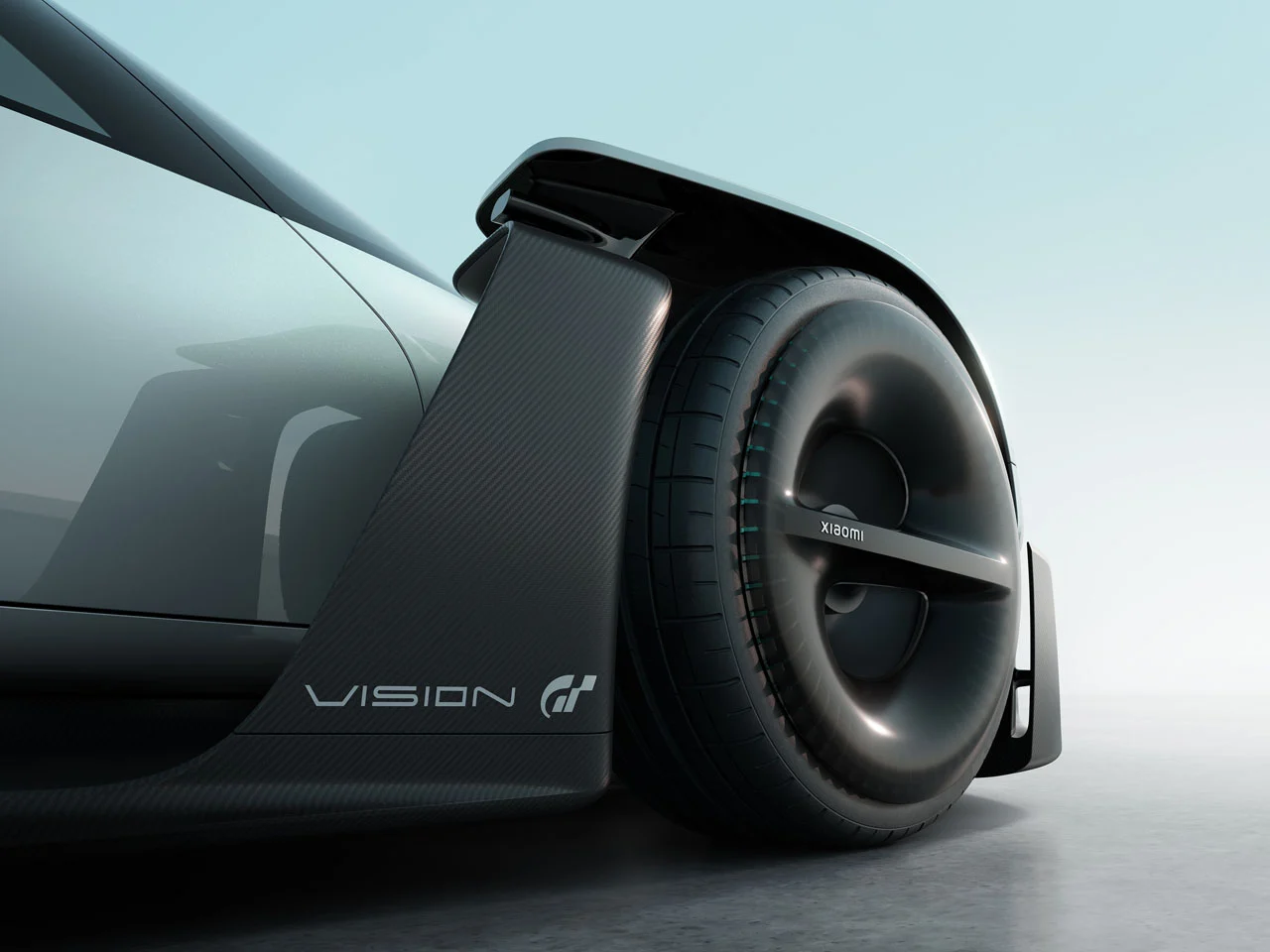
Adding further intrigue is a magnetic wheel system, where the outer wheel covers remain stationary while the wheels rotate beneath them—an unusual visual feature that enhances airflow while giving the car a futuristic “floating” appearance.
show
If the exterior design pushes aerodynamic boundaries, the hypercar’s performance specifications venture into science-fiction territory.
The Vision Gran Turismo concept is powered by an advanced 900-volt silicon-carbide electric platform, capable of producing an estimated 1,900 horsepower.
Such output places the vehicle firmly in the realm of next-generation electric hypercars. The theoretical top speed is estimated around 350 km/h (217 mph), placing it among the fastest EV concepts ever proposed.
Although Xiaomi has not revealed full drivetrain architecture details, the company emphasizes that the platform was designed to deliver both explosive acceleration and sustainable high-speed performance—key characteristics of vehicles engineered for track and simulation racing environments.
Even more important than the raw numbers is the philosophy behind them. Xiaomi engineers reportedly focused on achieving performance harmony, where software-controlled torque distribution, aerodynamic stability, and real-time AI analysis create a more balanced driving experience.
fwd
Unlike traditional hypercars that rely purely on mechanical innovation, Xiaomi’s concept places software intelligence at the center of the driving experience.
The Vision GT integrates an AI-powered system known as Pulse, which analyzes driver behavior and adjusts cabin settings accordingly. Through sensors and biometric monitoring, the system can interpret the driver’s mood and adapt lighting, audio feedback, and even interface behavior.
In many ways, the vehicle functions as a rolling extension of Xiaomi’s smart ecosystem, similar to how the company integrates smartphones, wearables, and home devices.
The interior design also reflects this philosophy. Xiaomi describes the cockpit as a “sofa racer” environment, featuring sculptural seating wrapped in 3D-knitted natural fabrics. The goal is to create a comfortable yet immersive driving position that merges the feel of a gaming simulator with the ergonomics of a luxury lounge.
The cabin’s minimalistic interface emphasizes voice control, digital displays, and adaptive lighting—reinforcing Xiaomi’s identity as a software-first technology brand.
idea
Unlike most concept cars shown at technology exhibitions, Xiaomi’s Vision GT is primarily intended for the virtual racing world.
The vehicle is scheduled to appear in Gran Turismo 7 on the PlayStation platform, where players will be able to drive it in digital racing environments.
To complement this digital focus, Xiaomi also presented a home racing simulator concept inspired by the hypercar. Designed as a piece of furniture rather than a typical gaming rig, the simulator allows users to experience the Vision GT from their living room.
This dual-world approach—physical design paired with digital performance—reflects how automotive innovation is increasingly intertwined with gaming culture, simulation technology, and virtual prototyping.
think
One of the most striking aspects of Xiaomi’s hypercar is its cross-disciplinary design process.
Unlike legacy automakers with decades of automotive engineering tradition, Xiaomi approaches mobility through the lens of consumer technology design. This perspective allows the company to rethink elements that conventional carmakers might treat as fixed constraints.
For example:
-
The cockpit prioritizes digital interaction over mechanical controls.
-
The aerodynamic form integrates airflow solutions directly into the body structure.
-
The interior experience draws inspiration from gaming environments and digital ecosystems.
This design philosophy reflects a broader shift in the automotive world, where software-defined vehicles increasingly shape how cars are built and experienced.
what
The unveiling of Xiaomi’s Vision Gran Turismo concept highlights several major trends shaping the future of performance vehicles.
First, the boundaries between technology companies and car manufacturers are dissolving. Firms with expertise in software, artificial intelligence, and consumer electronics are now entering the automotive space.
Second, the relationship between gaming and automotive design is becoming increasingly important. Virtual environments allow manufacturers to experiment with radical concepts that would be impossible—or prohibitively expensive—to build in the real world.
Finally, the project underscores how electric powertrains are redefining hypercar performance. With electric motors capable of producing enormous torque instantly, the limits of acceleration and speed continue to expand.
fin
For now, the Xiaomi Vision Gran Turismo hypercar will remain a concept—one that exists partly in the real world and partly in digital space.
Xiaomi has confirmed that the vehicle is not planned for mass production, though its technologies could influence future electric models from the company’s automotive division.
In the meantime, racing fans will eventually experience it where it was truly designed to shine: the circuits of Gran Turismo.
Yet the significance of the Vision GT extends far beyond a video game. It represents the arrival of a new kind of automotive player—one born not in traditional car factories but in the laboratories of software innovation and consumer electronics.
As Xiaomi continues expanding its electric vehicle ambitions, the Vision Gran Turismo concept stands as a striking declaration of intent: the future of hypercars may not only be electric—it may also be digital, intelligent, and ecosystem-driven.



No comments yet.