Inside Nike’s Unlimited Air: Danielle Kayembe on the Inflatable Milano Jacket

March 6, 2026





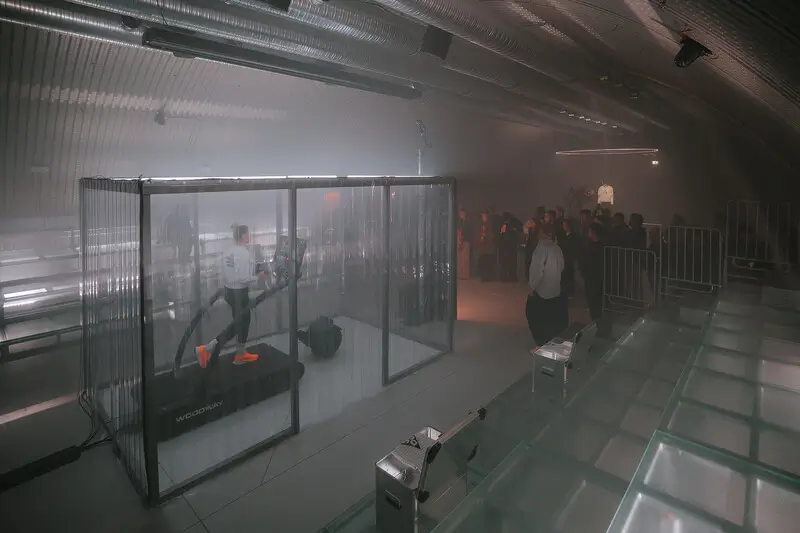

intro
Innovation has always lived at the heart of Nike. From the earliest experiments with cushioning systems to today’s advanced material engineering, the brand’s approach to design has consistently blurred the lines between sports performance, technological research, and cultural storytelling.
Few concepts capture this philosophy more clearly than Nike Air.
Originally introduced in the late 1970s, Nike Air transformed the way athletes experienced footwear. By embedding pressurized air inside a flexible membrane, the technology provided lightweight cushioning that absorbed impact while returning energy to the wearer.
Over time, the system evolved into one of the most recognizable design signatures in modern sportswear.
But Nike Air has never been static. The technology has expanded beyond footwear, entering new territories where performance innovation meets creative experimentation.
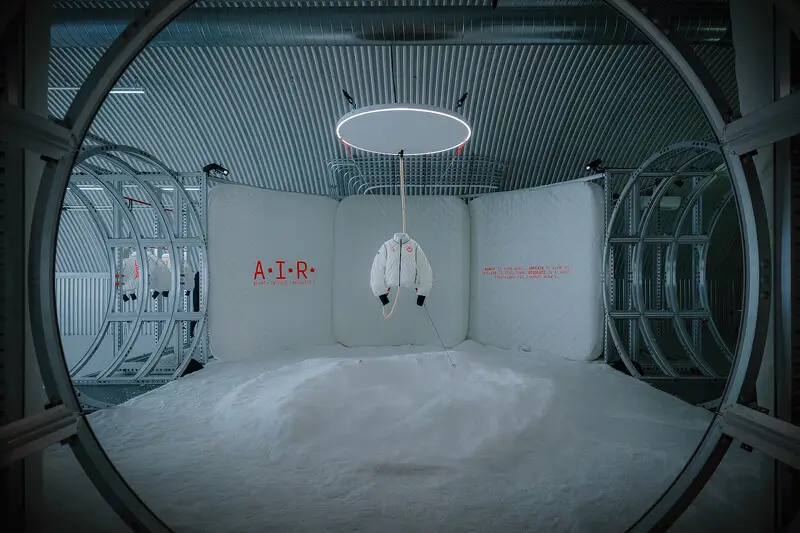
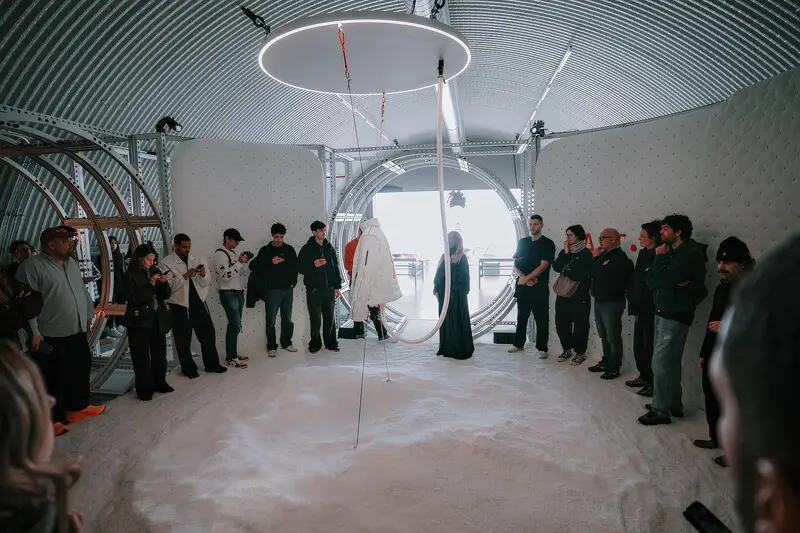
One of the most striking explorations of this evolution is the Nike Air Milano Jacket, an inflatable garment developed through Nike’s Unlimited Air initiative. At the center of the project stands designer Danielle Kayembe, whose work bridges the worlds of industrial design, fashion experimentation, and athlete-driven innovation.
The jacket represents more than a concept garment. It reflects a broader conversation about how Nike Air might extend beyond sneakers to shape the future of apparel itself.
the leg
To understand the significance of the Milano Jacket, one must first understand the legacy of Nike Air.
The technology debuted in 1978 with the groundbreaking Nike Air Tailwind, marking the first time visible air cushioning entered athletic footwear design.
Created by aerospace engineer Frank Rudy, the innovation relied on pressurized gas encapsulated within polyurethane bags. The concept allowed runners to experience improved shock absorption without increasing the weight of the shoe.
For athletes, the benefits were immediate.
For designers, the possibilities seemed limitless.
Over the following decades, Nike Air evolved through a series of iconic silhouettes. The introduction of visible air windows in models like the Nike Air Max 1 made the technology not only functional but visually expressive.
Air became both a performance tool and a design language.
The Unlimited Air initiative builds on this history by asking a provocative question:
What if air itself could become the structure of an entire garment?
milano jacket
For designer Danielle Kayembe, the Milano Jacket began with curiosity.
Working closely with Nike’s innovation teams, Kayembe explored how inflatable chambers could operate within the structure of apparel. Rather than simply adding air pockets as insulation, the goal was to treat air as a dynamic design material.
The result was a jacket constructed around inflatable air chambers, echoing the engineering principles found in Nike footwear.
But the garment’s purpose extended beyond aesthetics.
The concept was designed to respond to movement, performance conditions, and environmental demands. Inflatable chambers could potentially provide adaptive insulation, structural support, or protective cushioning.
In other words, the jacket imagined a future where clothing could behave almost like equipment.
Kayembe describes the concept as an exploration of “wearable architecture built from air.”
flow
The Milano Jacket takes its name from Milan, one of the world’s most influential fashion capitals.
The project debuted during a design exploration tied to Milan’s creative ecosystem, bringing together the worlds of performance innovation and high fashion.
For Nike, the city represents a unique environment where experimental design thrives.
By presenting the jacket in Milan, Nike positioned the concept not simply as sportswear, but as part of a broader dialogue between fashion, technology, and cultural experimentation.
The setting also emphasized Nike’s expanding presence within the fashion conversation.
While the brand’s identity remains rooted in sport, its design laboratories increasingly explore intersections with architecture, sustainability, and speculative design.
style
Traditional apparel design begins with fabric.
The Milano Jacket began with air chambers.
Kayembe’s team experimented with ways to construct inflatable structures that could integrate seamlessly with flexible textiles. The chambers needed to maintain pressure while remaining comfortable and wearable.
Balancing those requirements presented significant challenges.
The materials had to be lightweight yet durable. The construction had to allow for inflation without compromising movement. And the aesthetic needed to remain visually compelling.
Instead of hiding the air structure, the design celebrates it.
The jacket’s inflated segments form sculptural shapes that wrap around the body. These structures create a futuristic silhouette while revealing the garment’s technological core.
In this way, the Milano Jacket echoes the visual philosophy that once defined the Air Max line: technology should be visible, not concealed.
idea
Nike’s most influential ideas rarely emerge in isolation.
They are often shaped by conversations with athletes — individuals who experience equipment under intense physical demands.
The Unlimited Air project followed this same approach.
Kayembe and her team studied how athletes move through different environments. They examined how garments respond to shifting temperatures, physical exertion, and impact.
These insights helped shape the jacket’s design.
Inflatable chambers could theoretically provide adjustable insulation, allowing athletes to regulate warmth depending on conditions.
They could also provide impact protection, absorbing pressure during high-contact sports or training.
The result is a concept that merges design speculation with practical athletic considerations.
the lang
Nike’s innovation culture has long embraced experimentation.
Many of the brand’s most influential technologies began as radical prototypes — ideas that seemed unconventional at the time.
The Milano Jacket follows that tradition.
Its inflatable architecture might not yet exist in mass-market form, but it represents an important research step in the ongoing exploration of wearable technology.
Nike’s design teams frequently use concept garments to test ideas that may influence future products.
Sometimes these experiments lead directly to new innovations. Other times they reshape how designers think about materials and construction.
Either way, experimentation remains central to Nike’s creative process.
aesthetic
Beyond its technical ambitions, the Milano Jacket introduces a compelling visual language.
The inflated forms create bold geometric shapes that contrast with traditional outerwear silhouettes.
This sculptural approach aligns with broader trends in experimental fashion, where garments increasingly resemble architectural objects rather than conventional clothing.
Designers across the fashion world have explored inflatable forms in recent years.
Nike’s interpretation stands apart because it merges this aesthetic exploration with performance engineering.
The jacket’s visual identity emerges directly from its technological function.
Air chambers are not decorative features — they are structural components.
sustainable
Another intriguing dimension of the Unlimited Air project involves sustainability.
Inflatable structures require less material mass than traditional padded insulation.
By relying on air as the primary structural element, garments like the Milano Jacket could potentially reduce resource consumption while maintaining performance capabilities.
Nike’s broader sustainability initiatives increasingly focus on reducing material waste and improving product lifecycles.
While the Milano Jacket remains an experimental concept, it raises important questions about how future garments might combine performance innovation with environmental responsibility.
show
The Milano Jacket occupies a fascinating intersection.
It belongs simultaneously to sportswear design, conceptual fashion, and speculative technology research.
For Kayembe, this interdisciplinary approach is essential.
Innovation rarely happens within strict boundaries. Instead, it emerges when designers draw inspiration from multiple fields.
The Milano Jacket reflects influences from architecture, engineering, athletic gear, and experimental fashion.
This blending of disciplines mirrors Nike’s own creative ecosystem, where designers, scientists, and athletes collaborate to imagine new possibilities.
nike
Projects like the Milano Jacket are part of a larger innovation framework within Nike.
The company’s research laboratories explore advanced materials, digital manufacturing, and adaptive design systems.
Many of these ideas eventually find their way into commercial products.
Technologies once considered radical — such as visible air units or knit-based footwear — have become defining features of modern sportswear.
The Unlimited Air initiative suggests that air-based structures may one day extend into apparel in similarly transformative ways.
fwd
While the Milano Jacket remains a conceptual project, its influence may extend far beyond a single garment.
It represents a shift in how designers think about clothing.
Instead of viewing garments as static objects, the project imagines apparel as responsive systems — structures capable of adapting to movement, environment, and performance needs.
Air becomes not just cushioning, but architecture.
This idea could inspire future outerwear designs that dynamically adjust insulation, support, or protection.
For Nike, the Milano Jacket is less about immediate commercialization and more about exploring the edges of possibility.
phil
At the center of the project is Danielle Kayembe’s design philosophy.
Her work emphasizes curiosity, experimentation, and the pursuit of unexpected solutions.
Rather than treating technology as a constraint, Kayembe views it as a creative collaborator.
The Milano Jacket reflects this mindset.
It demonstrates how engineering challenges can inspire new aesthetic directions — and how fashion can serve as a platform for technological storytelling.
Through this project, Kayembe invites designers and athletes alike to rethink what apparel might become.
perform
Ultimately, Nike’s Unlimited Air initiative functions as a kind of creative manifesto.
It encourages designers to explore ideas that extend beyond conventional product development.
The Milano Jacket embodies this spirit.
It challenges assumptions about how garments are constructed, how materials behave, and how technology can shape the future of sportswear.
By pushing Nike Air beyond footwear and into apparel, the project reimagines one of the brand’s most iconic innovations.
sum
Nike Air began as a hidden cushioning system.
It later became a visible symbol of performance technology.
Now, through experimental projects like the Milano Jacket, air itself is becoming a design material.
Whether or not inflatable garments enter mainstream production, the concept signals an exciting shift in how designers approach performance apparel.
Nike Air continues to evolve.
And as designers like Danielle Kayembe explore new possibilities, the technology that once revolutionized running shoes may soon reshape the future of clothing itself.


No comments yet.