
Judge Stone: The Bold New Novel by Viola Davis and James Patterson

March 9, 2026
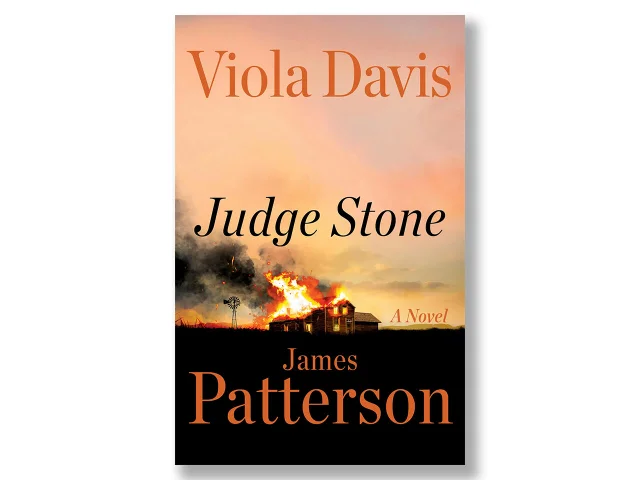
Today marks the release of Judge Stone, the highly anticipated novel co-written by Viola Davis and James Patterson. Published by Little, Brown and Company on March 9, 2026, the book brings together two creative forces from very different worlds: an EGOT-winning actor known for emotionally powerful performances and one of the most prolific thriller writers in publishing history.
The result is a gripping legal drama set in the contemporary American South, built around questions of justice, morality, and the personal courage required to make decisions when every option comes with consequences. With a fierce central character and a story that mirrors many of the debates shaping modern America, Judge Stone arrives as both a page-turning thriller and a conversation starter.
stir
At first glance, the partnership between Viola Davis and James Patterson might seem unexpected. Patterson has built a literary empire through fast-paced crime fiction and bestselling series such as Alex Cross and the Women’s Murder Club. Davis, meanwhile, is best known for her career on stage and screen, including Academy Award-winning performances and her bestselling memoir Finding Me.
Yet both creators share a commitment to storytelling that centers human struggle and moral complexity. When they decided to collaborate on Judge Stone, the goal was to merge Patterson’s mastery of suspense with Davis’s deep understanding of character and emotional stakes.
The collaboration had been in development for several years before the book’s release. Publishing executives described the project as a unique blend of “eloquent voice and masterful story-building,” combining Davis’s perspective with Patterson’s thriller instincts.
The novel ultimately became a courtroom drama with the pace of a thriller—one designed to appeal both to readers of legal fiction and to fans of socially conscious storytelling.
intro
At the center of the novel is Judge Mary Stone, a respected figure in the small town of Union Springs, Alabama. Known for her intelligence and independence, Stone balances two responsibilities that define her life: presiding over the local courthouse and running her family farm.
Within her community, she is widely regarded as the most trusted citizen in town. Her reputation rests on years of careful decisions, moral clarity, and an unwavering belief in the rule of law.
But that reputation is soon put to the test.
Judge Stone finds herself presiding over what quickly becomes the most controversial case in the region’s history—a case that divides neighbors, attracts national media attention, and threatens her career.
The trial forces her to navigate the dangerous intersection of politics, religion, race, and the law. As the pressure builds, Stone realizes that the decision she makes in her courtroom could reshape not only her community but potentially the national conversation around justice.
pithy
The legal battle that drives Judge Stone centers on a doctor accused of performing an abortion on a young rape victim—an act considered a serious felony under strict state laws.
The details are both heartbreaking and politically explosive. The patient is a thirteen-year-old girl who became pregnant after being assaulted. The doctor who helped her now faces the possibility of decades in prison.
In strictly legal terms, the case appears straightforward. The law prohibits the procedure, leaving little room for interpretation. Yet ethically and morally, the situation is far more complicated.
Judge Stone must determine how to apply the law when doing so could destroy the life of someone who acted out of compassion.
This conflict lies at the emotional core of the novel: the tension between the letter of the law and the demands of conscience.
small
Although the trial takes place in a rural Alabama courthouse, the story quickly grows beyond the town’s borders.
Media crews descend on Union Springs. Political leaders weigh in on the case. Religious groups and activists gather outside the courthouse.
Meanwhile, the judge herself becomes the focus of intense scrutiny. Her decisions are dissected by politicians, pundits, and protesters alike.
This expanding spotlight reflects the book’s broader themes about modern America. In a deeply polarized society, even local legal cases can become national flashpoints.
Through this setting, Davis and Patterson explore how public opinion, political pressure, and personal belief can collide within the justice system.
flow
One of the most compelling aspects of Judge Stone is the ethical dilemma that runs through the narrative.
From the moment the trial begins, Judge Stone faces a series of questions that cannot be answered easily:
Should the law be applied strictly, even if it produces a result many consider unjust?
Should personal morality play a role in judicial decisions?
And how much pressure should a judge endure before compromise becomes unavoidable?
These questions push Stone into increasingly difficult territory.
She faces threats from extremists. Political leaders attempt to influence the outcome. Even members of her own community begin to question her integrity.
Yet throughout the novel, Stone remains committed to the principle that justice must be pursued—even when the path is uncertain.
retro
Many reviewers have compared Judge Stone to classic courtroom stories such as To Kill a Mockingbird, particularly in its portrayal of a Southern town confronting its own moral contradictions.
But the book also reflects contemporary debates about reproductive rights, systemic inequality, and the role of judges in shaping social change.
The result is a legal thriller that blends familiar genre elements—courtroom tension, surprising twists, and dramatic testimony—with modern political and cultural themes.
Critics have noted that the collaboration succeeds in balancing emotional depth with page-turning suspense. Some reviews describe it as the kind of story that combines the urgency of a thriller with the gravity of a social drama.
influ
For Viola Davis, Judge Stone represents an important expansion of her creative career.
Although she has long been celebrated as an actor, she has also demonstrated a powerful voice as a writer. Her memoir Finding Me became a bestseller and earned widespread praise for its honesty and emotional depth.
In interviews about the novel, Davis has emphasized that the story reflects themes she has long explored in her work: the resilience of women, the struggle for dignity, and the complicated ways power operates in society.
These elements are clearly visible in the character of Judge Mary Stone. Like many roles Davis has portrayed on screen, Stone is strong, intelligent, and deeply human—a figure navigating immense pressure while refusing to surrender her principles.
patterson
While Davis brings emotional authenticity and character insight, Patterson contributes the storytelling architecture that has made him one of the most successful authors in the world.
Known for his rapid pacing and tightly structured plots, Patterson ensures that Judge Stone never loses its sense of urgency. Each chapter advances the story toward the trial’s climactic decision, with new revelations and shifting alliances keeping readers engaged.
This balance between emotional drama and narrative momentum is one of the book’s defining qualities.
The courtroom scenes, in particular, demonstrate Patterson’s skill in constructing tension. Witness testimony, legal arguments, and unexpected developments all combine to create a sense of escalating stakes.
why
The timing of the novel’s release feels particularly relevant. Across the United States, debates about the legal system, reproductive rights, and the authority of judges continue to shape public discourse.
By placing these issues within the framework of a dramatic trial, Judge Stone invites readers to consider how legal decisions affect real lives.
At the same time, the book avoids presenting simple answers. Instead, it highlights the complexity of justice in a society where values, beliefs, and laws often collide.
This willingness to explore difficult questions may be the novel’s most powerful element.
the huh
With the publication of Judge Stone, Viola Davis joins the growing number of actors who have successfully transitioned into literary storytelling.
Yet this project stands out because it is not merely a celebrity novel. It is the result of a genuine collaboration between two storytellers working at the top of their respective crafts.
Davis brings emotional authenticity and a commitment to social truth. Patterson contributes narrative precision and thriller pacing.
Together, they have created a novel that aims to entertain, provoke thought, and spark conversation.
fin
As readers open Judge Stone for the first time today, they are stepping into a courtroom where the stakes could not be higher.
A small town watches. A nation listens. And one judge must decide how justice will be served.
For Viola Davis and James Patterson, the book represents more than a literary experiment. It is a story about courage, responsibility, and the heavy weight of decisions that shape lives.
In the end, Judge Stone reminds us that the law may be written in statutes and codes—but justice is ultimately carried out by people, each with their own fears, beliefs, and hopes for the world they serve.


No comments yet.