Hillel Slovak and the Early Brotherhood Behind the Red Hot Chili Peppers

March 11, 2026
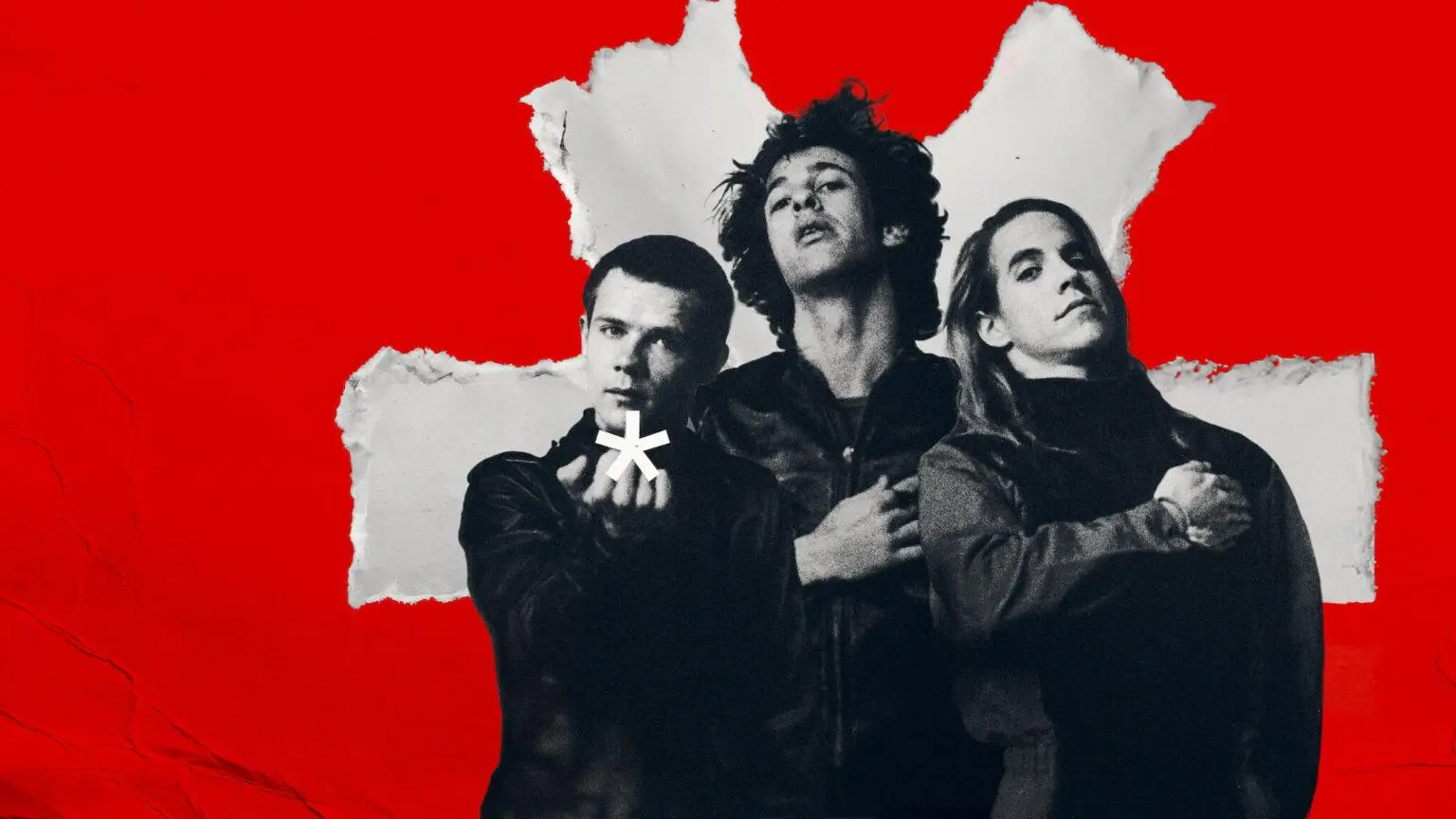
Few rock bands embody the idea of friendship quite like the Red Hot Chili Peppers. For more than four decades, the Los Angeles group has blended funk, punk, and alternative rock into a sound that reshaped modern music. Yet behind the platinum records and global tours lies a deeper story—one rooted in brotherhood, loss, and loyalty. That story centers on the life of guitarist Hillel Slovak and the emotional legacy captured in the documentary Our Brother, Hillel.
The film is not simply a look back at a fallen bandmate. Instead, it is a meditation on lifelong friendships—how they form, how they fracture, and how they endure. Through memories shared by vocalist Anthony Kiedis, bassist Flea(Michael Balzary), and former drummer Jack Irons, Our Brother, Hillel reveals how the earliest bonds between the Chili Peppers shaped not only their music but their identities.
The story begins long before fame—inside the chaotic, sun-bleached neighborhoods of Los Angeles in the late 1970s.
stir
The core friendships behind the Chili Peppers formed in the hallways of Fairfax High School in Los Angeles. It was there that Anthony Kiedis, Flea, Hillel Slovak, and Jack Irons first crossed paths.
At the time, they were teenagers drawn together by a mixture of rebellion and curiosity. Los Angeles was a city buzzing with cultural collisions: punk rock erupting in underground clubs, funk blasting from car stereos, and the lingering spirit of 1960s counterculture drifting through Venice Beach.
Hillel Slovak stood out almost immediately. Born in Israel and raised partly in California, he possessed a natural musical instinct that was both fluid and explosive. His guitar playing drew from the rhythmic soul of funk legends while maintaining the urgency of punk rock. Friends often described him as a musician who played with pure emotion—every riff sounding like a conversation with the instrument.
For Anthony Kiedis and Flea, music became a shared language. Kiedis had a talent for performance and poetry, while Flea brought a chaotic, high-energy bass style influenced by jazz and funk. Together with Slovak and Irons, the four friends began experimenting with music as a form of expression.
They weren’t trying to create a career. They were trying to capture a feeling.
That feeling would soon explode into something bigger than any of them imagined.
flow
The band that would eventually become the Red Hot Chili Peppers began almost by accident.
In 1983, the four friends performed together at a small Los Angeles club as a one-off act called Tony Flow and the Miraculously Majestic Masters of Mayhem. The performance was chaotic, comedic, and wildly energetic. Flea’s slap bass collided with Slovak’s gritty funk guitar while Kiedis rapped improvised lyrics over the noise.
The crowd loved it.
What started as a spontaneous performance quickly evolved into a serious project. The group shortened their name and officially became the Red Hot Chili Peppers.
Their early sound defied categorization. Funk grooves collided with punk aggression, rap-style vocals, and psychedelic guitar lines. At a time when rock music often followed rigid formulas, the Chili Peppers sounded completely unpredictable.
At the center of that sound was Hillel Slovak.
His guitar style was loose yet precise, inspired by artists like Jimi Hendrix and George Clinton. Rather than dominating the music, Slovak’s playing danced around Flea’s bass lines, creating a rhythmic interplay that would become the band’s signature.
For Kiedis and Flea, Slovak was more than a bandmate. He was family.
hillel
In interviews and recollections, band members often describe Slovak as the emotional pulse of the early Chili Peppers.
His personality blended warmth, humor, and quiet intensity. On stage he could unleash raw guitar energy; offstage he was known for his kindness and curiosity. Friends recall long nights spent listening to records, discussing music theory, and exploring new creative ideas.
Slovak approached guitar not as a technical exercise but as a living dialogue. His riffs often felt spontaneous, shaped by rhythm rather than traditional rock structures.
This approach pushed the band into unexplored territory. Songs from the Chili Peppers’ early records—such as their self-titled 1984 debut and later albums—reflected this experimentation.
But as the band gained attention, the pressures of touring and the darker side of the music industry began creeping into their lives.
View this post on Instagram
friend
The 1980s Los Angeles music scene was as dangerous as it was exciting. Clubs were packed with rising bands, but the environment also carried a heavy presence of drugs and excess.
For many musicians of the era, addiction became tragically intertwined with creativity.
Hillel Slovak struggled with heroin addiction during the band’s early years. While the group continued recording and touring, the issue increasingly affected relationships within the band.
For Anthony Kiedis and Flea, watching their friend struggle created emotional tension. They wanted to support him, yet they were navigating their own challenges.
The documentary Our Brother, Hillel does not sensationalize this period. Instead, it frames addiction as part of a larger story about vulnerability, youth, and the complicated bonds between friends.
The band members speak not with judgment but with compassion—remembering Slovak as a person, not a tragedy.
grief
On June 25, 1988, Hillel Slovak died of a heroin overdose at the age of 26.
The news shattered the band.
For Anthony Kiedis and Flea, the loss felt like losing a brother. Jack Irons, devastated by the death, left the band shortly afterward. The future of the Red Hot Chili Peppers suddenly seemed uncertain.
Yet grief also brought clarity.
The surviving members realized that the friendships formed in their youth were too important to abandon. Rather than ending the band, they chose to continue—carrying Slovak’s spirit forward through music.
This decision would ultimately shape the band’s next chapter.
stamina
Following Slovak’s death, the Chili Peppers entered a period of reinvention.
They recruited drummer Chad Smith and guitarist John Frusciante, both of whom brought new creative energy to the group. Frusciante, in particular, had been deeply influenced by Slovak’s playing.
Rather than replacing him, Frusciante saw himself as continuing the musical path Slovak had opened.
This new lineup recorded Mother’s Milk in 1989, marking a turning point for the band. The album introduced a broader audience to the Chili Peppers’ unique sound and laid the foundation for their breakthrough.
That breakthrough arrived in 1991 with Blood Sugar Sex Magik, produced by Rick Rubin.
The album became a cultural milestone.
Songs like “Give It Away” and “Under the Bridge” transformed the band from underground icons into global superstars.
Yet even at the height of success, the memory of Hillel Slovak remained central to the band’s identity.
love
The documentary Our Brother, Hillel captures this legacy through personal reflections rather than traditional rock-star storytelling.
Instead of focusing on fame or chart success, the film highlights moments of friendship:
• late-night jam sessions
• teenage mischief around Los Angeles
• the excitement of early performances
• the quiet moments that reveal who Slovak truly was
By presenting these memories, the documentary reframes the narrative of the band’s rise. It suggests that the Chili Peppers were never just a musical project—they were a group of friends navigating life together.
This emphasis on human connection resonates with audiences because it reveals a universal truth: the most meaningful relationships often begin long before success enters the picture.
trib
In many ways, the continued success of the Red Hot Chili Peppers functions as a tribute to Slovak.
His influence can still be heard in the band’s sound decades later. The interplay between guitar and bass, the fusion of funk and rock, and the sense of musical spontaneity all trace back to his early ideas.
Even newer generations of fans who discover the band through later albums are indirectly experiencing Slovak’s creative DNA.
For the band members themselves, performing these songs keeps the memory alive.
Each riff and groove becomes a quiet acknowledgment of the friend who helped start it all.
the endure
The story of the Red Hot Chili Peppers ultimately demonstrates that longevity in music is rarely just about talent. It is about relationships.
Bands form through shared experiences—school days, rehearsals, road trips, and late-night conversations. These moments build trust and understanding that cannot easily be replicated.
In the case of the Chili Peppers, that bond was forged in adolescence and tested by both success and tragedy.
Despite internal conflicts and lineup changes over the decades, the core friendship between Anthony Kiedis and Flea has remained intact.
That friendship continues to drive the band forward.
leg
Today, the Red Hot Chili Peppers stand as one of the most influential alternative rock bands in history. Their catalog spans generations, and their live performances remain legendary.
But beyond awards and record sales, their story offers something more meaningful.
It is a reminder that music often begins with simple human connections—friends discovering creativity together.
The documentary Our Brother, Hillel highlights this idea by shifting the focus away from celebrity and toward friendship. In doing so, it reveals how the band’s rise was not just about artistic ambition but about loyalty to one another.
fin
The rise of the Red Hot Chili Peppers is often told as a story of genre-blending innovation and global success. Yet beneath the accolades lies a quieter narrative.
It is the story of four teenagers in Los Angeles who bonded over music, curiosity, and the thrill of creating something new.
Hillel Slovak may not have lived to see the band’s greatest achievements, but his influence remains woven into every chapter of their history.
Through Our Brother, Hillel, fans are reminded that the foundation of the Chili Peppers was never fame—it was friendship.



No comments yet.