Grunge Returns While Kurt Cobain’s “Smells Like Teen Spirit” Guitar Heads to Auction Alongside Icons of Rock

March 15, 2026
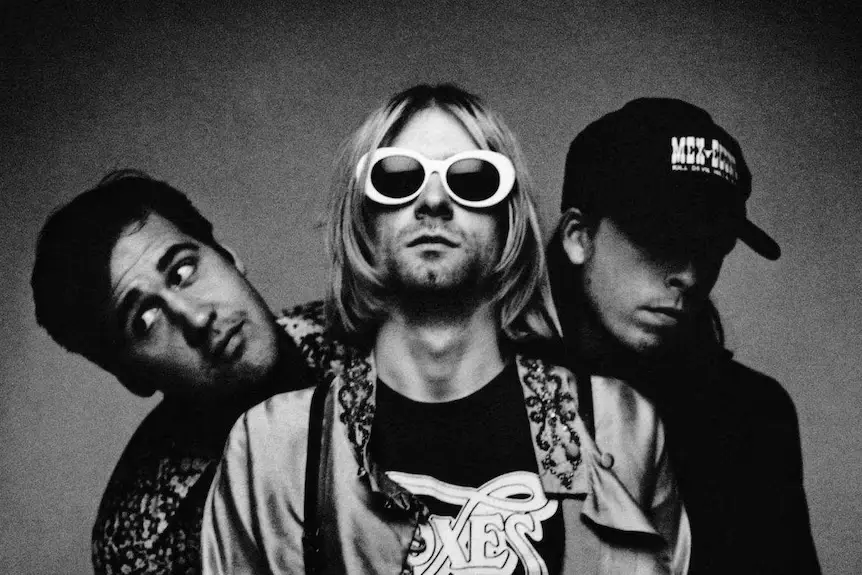
Few instruments in rock history carry the symbolic weight of the guitar associated with Kurt Cobain and the breakthrough moment of Nirvana. More than three decades after the release of the song that reshaped alternative music, the guitar tied to the cultural explosion of Smells Like Teen Spirit is once again drawing global attention.
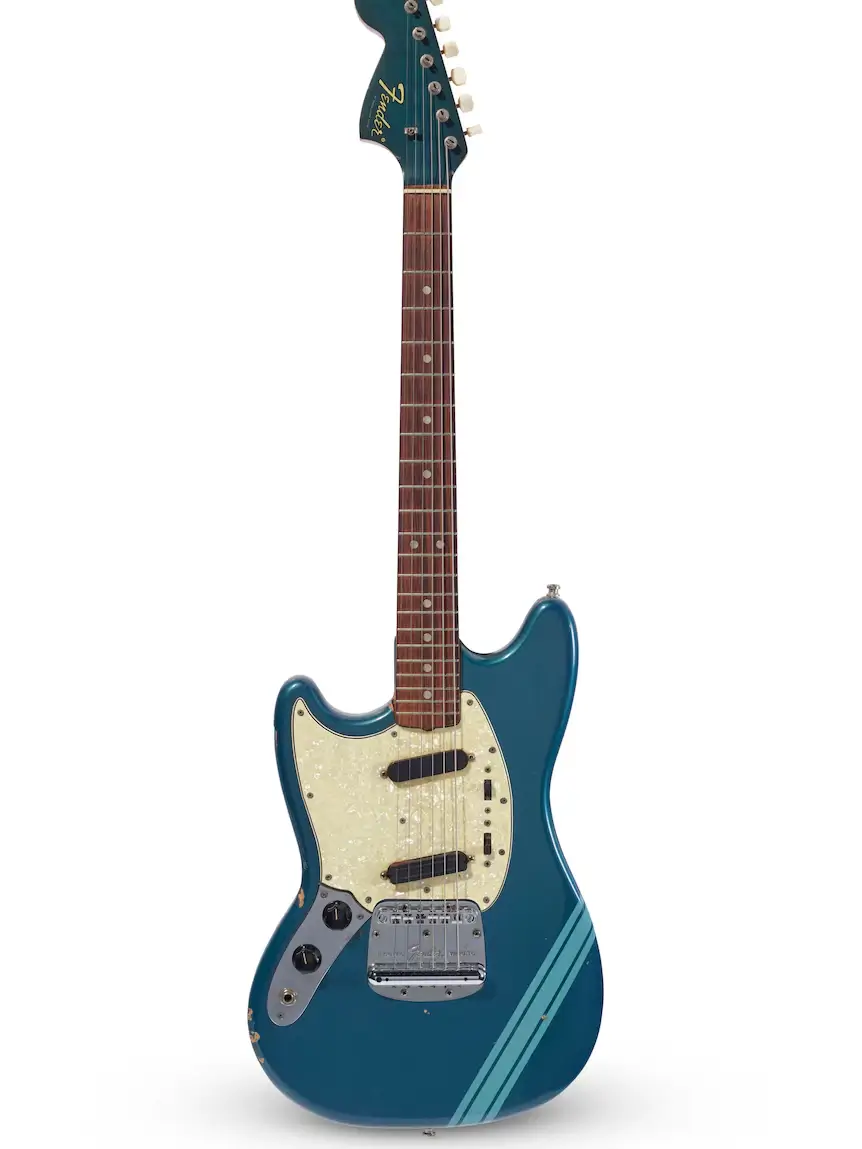
The instrument—Cobain’s 1969 Fender Mustang—has surfaced in the auction world, where it is expected to command between $5 million and $7 million USD, placing it among the most valuable rock instruments ever offered to collectors. The upcoming sale is part of a wider music memorabilia auction that will also feature artifacts tied to the careers of The Beatles, Prince, and Elton John, creating a rare convergence of objects associated with multiple eras of musical revolution.
For collectors, historians, and fans alike, the Mustang is not simply a guitar. It represents a turning point in popular culture—the moment when grunge music moved from underground clubs in the Pacific Northwest to dominate global radio, television, and youth identity.
flow
When Nirvana released Nevermind in September 1991, few expected the album to disrupt the entire structure of mainstream rock. The band had built a modest following through independent labels and the alternative music circuit, but the explosive success of “Smells Like Teen Spirit” transformed them overnight.
The track’s opening riff became one of the most recognizable guitar introductions in modern music. Built on a quiet-loud dynamic that erupted into distorted intensity, the song captured the emotional tension of an entire generation.
Cobain’s guitar tone—raw, aggressive, and unapologetically imperfect—played a central role in that transformation. The instrument he favored during the period, the Fender Mustang, helped shape the sonic identity of Nirvana’s music.
The Mustang itself had originally been designed in the 1960s as a student model. By the late 1980s it was often overlooked by professional musicians in favor of larger, more expensive guitars.
Cobain, however, gravitated toward instruments that felt unconventional and slightly flawed. He preferred guitars that were inexpensive enough to modify and powerful enough to deliver distorted, explosive sound.
In many ways, the Mustang embodied the ethos of grunge: raw, unpolished, and resistant to the expectations of mainstream rock culture.
stir
The guitar heading to auction today is a 1969 Fender Mustang, finished in a distinctive blue tone with racing-style stripes. The offset body shape, dual single-coil pickups, and short-scale neck were hallmarks of the model.
Cobain frequently favored Mustangs because their compact design made them comfortable to play during energetic performances. The instrument also allowed him to achieve the gritty distortion that defined Nirvana’s sound.
Over time, the guitar became visually inseparable from the image of Cobain himself. Whether appearing in live performances, promotional photographs, or recordings associated with the Nevermind era, the Mustang formed a central element of the band’s aesthetic.
The instrument’s worn finish, scratches, and subtle marks tell the story of years spent on stage and in the studio. For collectors, these imperfections add authenticity and historical value.
They represent the physical traces of a cultural moment when music and youth identity shifted dramatically.
gen
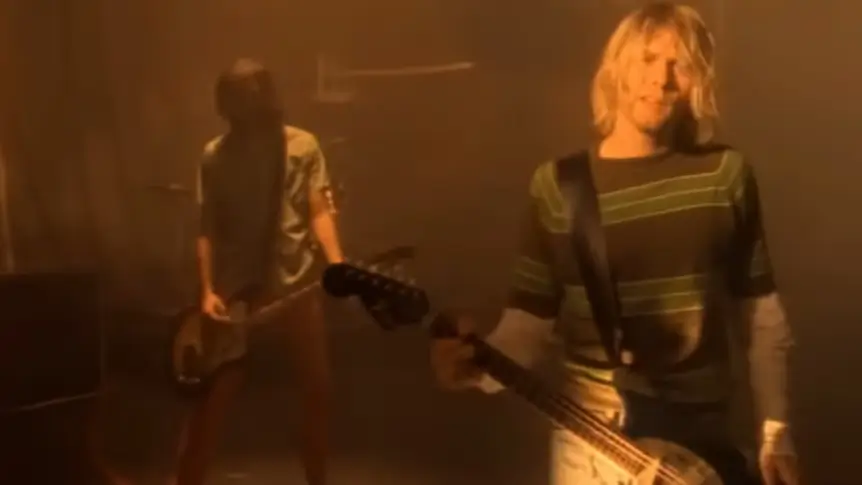
The guitar’s importance is closely linked to the music video for “Smells Like Teen Spirit.” Directed by Samuel Bayer, the video was filmed inside a gymnasium filled with rebellious students, anarchist cheerleaders, and chaotic energy.
Cobain stands at the center of the performance, strumming his guitar while the crowd gradually erupts into a frenzy. The imagery—dark lighting, smoky air, and explosive movement—captured the mood of the early 1990s with startling clarity.
MTV placed the video in heavy rotation, introducing Nirvana to millions of viewers who had never encountered the emerging grunge movement.
Almost overnight, the band became global icons.
The guitar seen in the performance quickly became part of that mythology. For fans around the world, it symbolized the sound and attitude of the era.
idea
Before Nirvana’s arrival, mainstream rock had largely been dominated by the excess of the late 1980s. Hair metal bands ruled the charts, performing with elaborate costumes, dramatic lighting, and polished production.
Grunge represented a radical departure from that world.
Instead of leather pants and flamboyant stage outfits, Cobain appeared wearing thrift-store cardigans, striped sweaters, and worn jeans.
Instead of virtuosic guitar solos, Nirvana relied on emotional intensity and explosive simplicity.
The Fender Mustang itself mirrored this rejection of glamour. It was not a luxurious instrument. It looked slightly awkward compared to the sleek guitars favored by arena rock stars.
Yet that modest appearance helped reinforce the authenticity of the grunge movement.
The Mustang was a guitar for musicians who valued expression over perfection.
hx
The upcoming sale of Cobain’s guitar will take place within a broader auction event dedicated to music history. Several other extraordinary artifacts are expected to appear alongside the instrument.
Collectors may encounter guitars connected to members of The Beatles, whose innovations in songwriting and recording transformed popular music during the 1960s.
Instruments associated with Prince will also appear, reflecting the Minneapolis artist’s extraordinary ability to merge funk, rock, and pop into a single genre-defying sound.
Meanwhile, artifacts linked to Elton John celebrate one of the most prolific and enduring careers in modern music.
Within this constellation of legendary performers, Cobain’s guitar represents the era of the early 1990s—the moment when alternative rock disrupted the dominance of mainstream pop and glam metal.
The juxtaposition of these artifacts highlights the evolution of modern music across multiple generations.
show
The estimated auction price of $5–7 million USD places Cobain’s Mustang among the most valuable guitars ever offered to collectors.
Music memorabilia has become an increasingly significant market in recent years, with instruments tied to pivotal cultural moments commanding extraordinary prices.
Collectors view such artifacts not only as investments but as pieces of history.
Owning the guitar means owning a physical connection to one of the most influential moments in rock music.
Few songs have had the impact of “Smells Like Teen Spirit,” and the instrument associated with its sound carries enormous cultural weight.
leg
More than thirty years after Nirvana’s rise, the band’s influence remains visible across contemporary music.
Countless artists cite Cobain’s songwriting and guitar tone as formative inspirations.
The quiet-loud dynamic pioneered by Nirvana continues to appear in modern alternative rock, indie music, and even pop production.
Cobain’s emotional approach to songwriting—combining vulnerability with explosive intensity—redefined how rock music could express personal experience.
The Mustang guitar stands as a reminder of that creative breakthrough.
return
Interestingly, the renewed attention surrounding Cobain’s guitar arrives at a moment when grunge aesthetics are experiencing a broader cultural revival.
Across fashion, art, and music, elements of the early 1990s are resurfacing.
Oversized sweaters, thrift-store cardigans, worn denim, and vintage sneakers—hallmarks of Cobain’s wardrobe—have reappeared in contemporary street style.
Young audiences are rediscovering Nirvana through streaming platforms and archival footage, encountering the band’s music and visual identity simultaneously.
The revival reflects a broader desire for authenticity in an era dominated by digital polish.
Grunge, with its imperfect textures and emotional honesty, feels surprisingly modern again.
culture
Objects associated with transformative moments in art often take on symbolic meaning over time.
Cobain’s Mustang is one of those objects.
It is not merely a tool used to produce sound. It represents the moment when alternative music reshaped global culture.
The instrument embodies the raw energy of the early 1990s grunge movement.
Within museums and private collections, such artifacts help tell the story of how music evolves and how cultural revolutions unfold.
fin
When the auction hammer finally falls, the buyer will acquire more than a vintage guitar.
They will acquire a fragment of history.
Cobain’s Mustang carries the sound of distorted chords, the memory of a chaotic gymnasium performance, and the emotional resonance of a generation searching for authenticity.
Placed alongside artifacts connected to The Beatles, Prince, and Elton John, the guitar reminds us that the story of modern music is told through both sound and objects.
And among those objects, few resonate as powerfully as the guitar that helped introduce the world to the explosive opening riff of “Smells Like Teen Spirit.”

No comments yet.