Italjet Roadster 400: The Neo-Retro Machine Changing Urban Mobility

March 15, 2026
review
In many cities around the world, scooters have become the quiet background of everyday transportation. They glide through traffic, wait patiently at red lights, and disappear into parking spaces too small for cars. Practicality defines the category: efficient engines, enclosed bodywork, comfortable seats, and predictable handling. Yet somewhere along the way, many scooters lost the mechanical drama that once made two-wheeled machines thrilling objects of design.
The Italjet Roadster 400 arrives as a challenge to that quiet normalcy.
Rather than presenting another anonymous commuter machine, Italjet has imagined something far more expressive—a scooter that looks like it escaped from a concept-vehicle studio, a machine that celebrates exposed engineering, sculptural aluminum forms, and futuristic detailing. The Roadster 400 is not only transportation; it is a narrative about design, heritage, and the possibility that urban mobility can still feel dramatic.
To understand why the Roadster 400 feels so different, it helps to look at the brand behind it.
rebel
The story begins in Italy, where motorcycle culture has long existed somewhere between engineering discipline and artistic expression. From Milan to Bologna, designers have historically treated motorcycles as objects of visual identity rather than purely mechanical tools.
The company responsible for the Roadster carries this philosophy in its DNA. Italjet was founded in 1959 by Leopoldo Tartarini, a former racer whose approach to motorcycles often leaned toward experimentation.
Throughout the decades Italjet built machines that rarely followed industry conventions. The brand’s scooters and motorcycles frequently featured unusual chassis designs, distinctive bodywork, and unconventional suspension systems. Even during periods when the scooter market shifted toward utilitarian design, Italjet continued to explore radical visual ideas.
One of the company’s most recognizable creations was the Italjet Dragster, first introduced in the late 1990s. The Dragster’s exposed frame and hub-center steering immediately distinguished it from traditional scooters. Riders either loved it or were confused by it—but nobody ignored it.
The Roadster 400 continues that rebellious spirit, bringing Italjet’s experimental design language into a new era.
stir
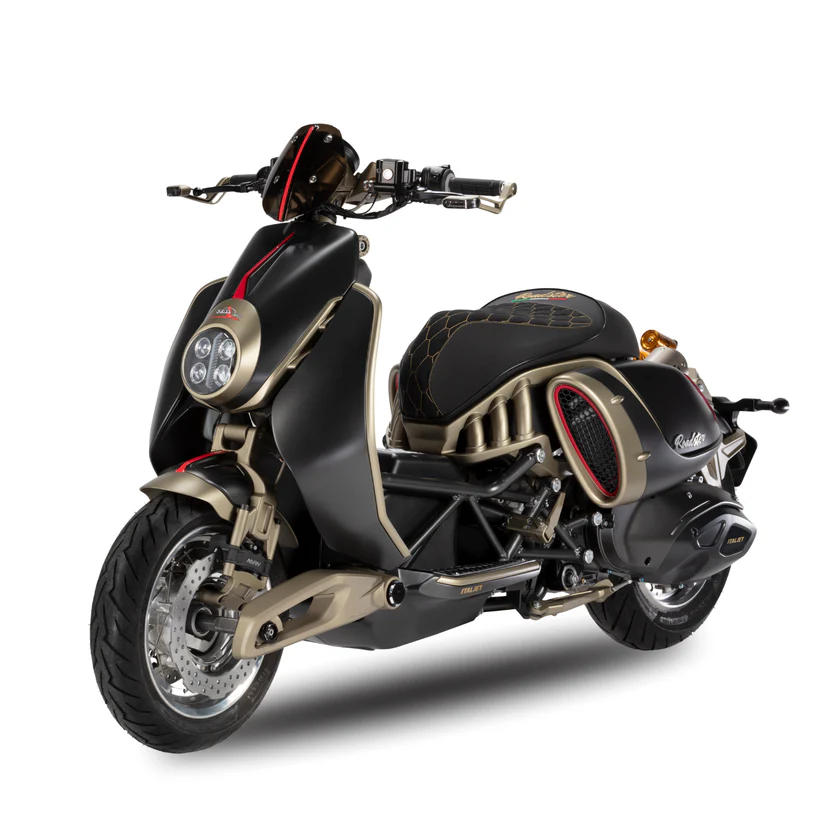
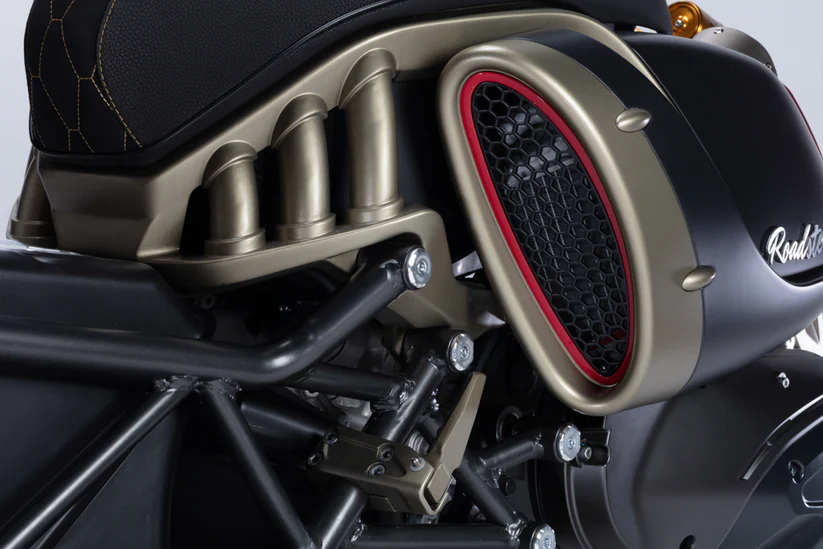
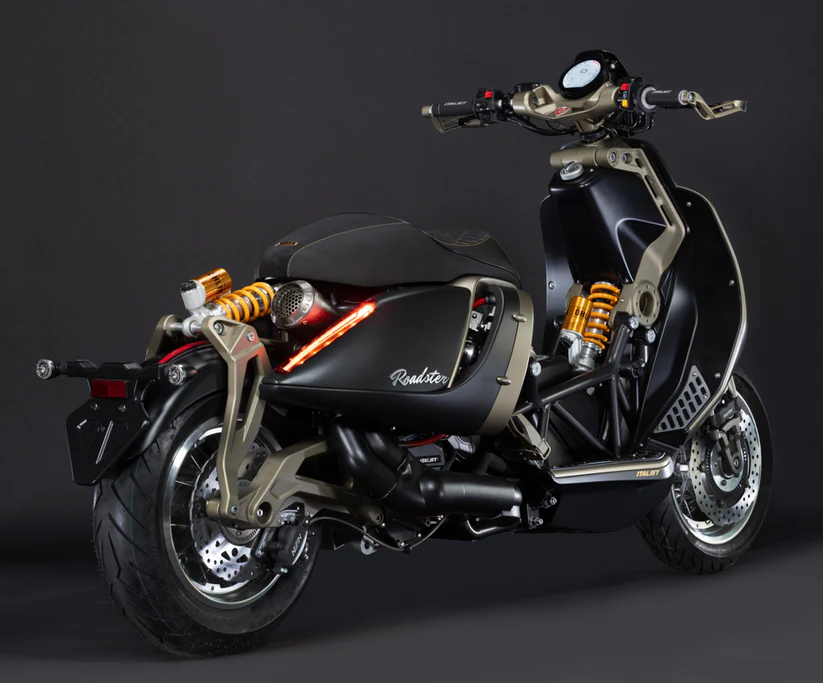
The first encounter with the Roadster 400 feels less like seeing a scooter and more like encountering a piece of industrial sculpture. Most scooters hide their mechanical parts beneath layers of molded plastic panels. Italjet does the opposite.
The Roadster exposes its bones.
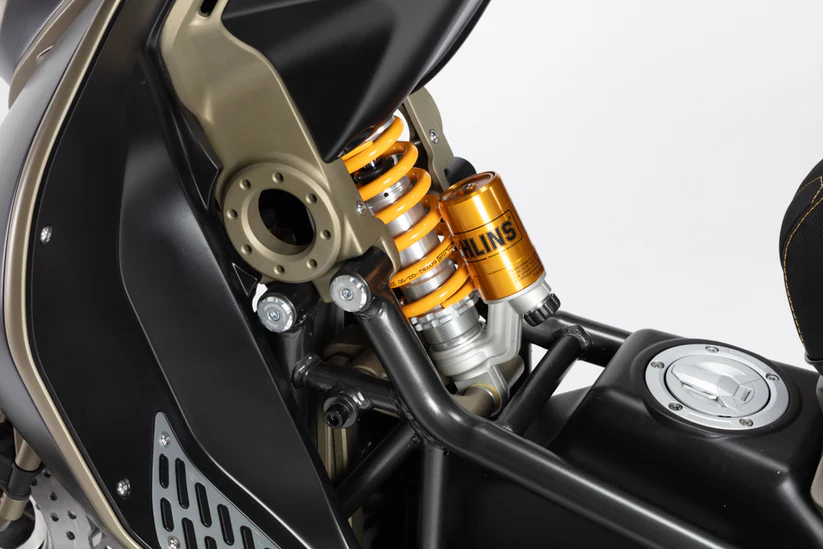
An aluminum trellis frame stretches across the center of the vehicle, visible beneath the seat and bodywork. The frame becomes part of the design language rather than something concealed. Around it, carefully sculpted metal panels form a dynamic structure that looks closer to a performance motorcycle than a commuter scooter.
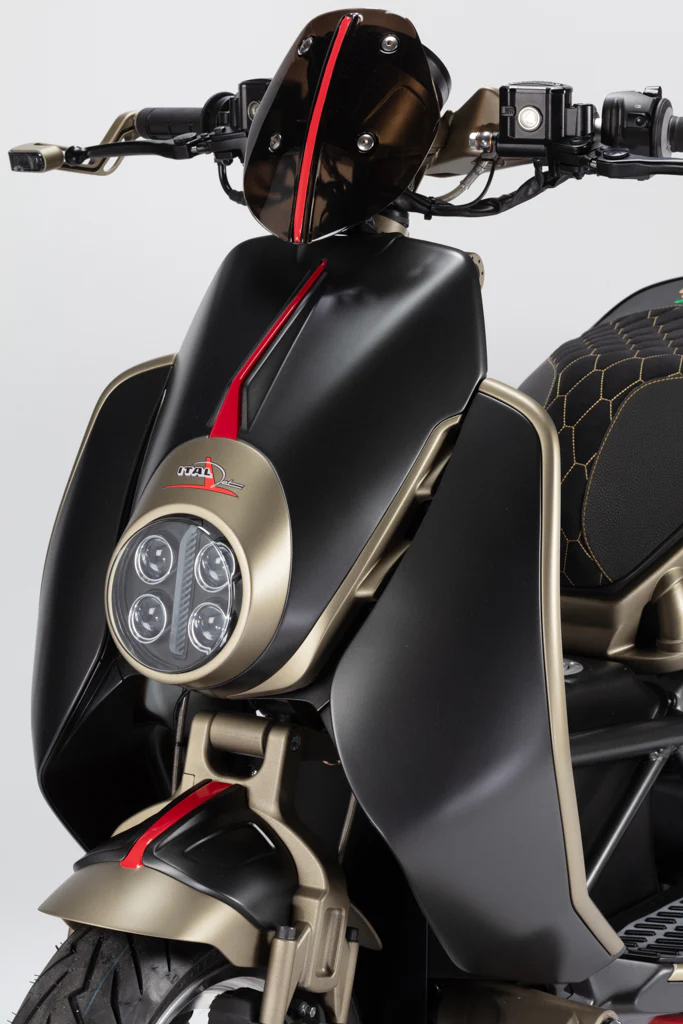
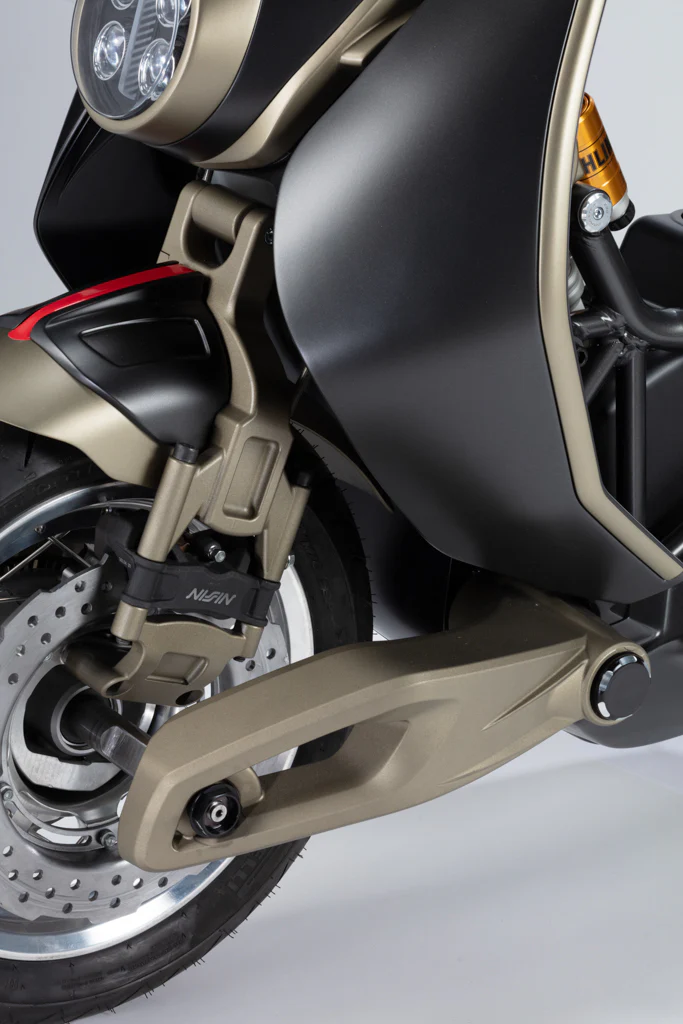
The front end introduces one of the most dramatic visual elements: a complex articulated suspension system. Instead of standard telescopic forks, the Roadster uses a mechanical linkage assembly that resembles the exposed front suspension of high-performance racing machines.
The effect is striking. Every component appears deliberate, every joint purposeful. Even when parked, the Roadster looks like it is in motion.
From certain angles the scooter feels futuristic. From others it evokes retro racing machines. That ambiguity is intentional. Italjet calls the style neo-retro, but the term only partially captures the design philosophy.
The Roadster looks like a machine from a future imagined in the 1970s.
flow
One of the most important technical elements of the Roadster 400 is its front suspension architecture, known as Dynamic Linkage Articulated Steering.
Traditional scooters rely on simple telescopic forks, similar to those used on motorcycles for decades. The design works well and keeps manufacturing costs low. But it also limits the potential for advanced handling characteristics.
Italjet’s linkage-based system separates steering input from suspension movement. In practice, this configuration provides several advantages.
First, braking forces no longer compress the front suspension in the same way. Riders experience less dive when slowing down aggressively, allowing the chassis to remain more stable.
Second, steering precision improves. Because the suspension geometry can be optimized independently from steering mechanics, the front wheel tracks more accurately through corners.
Finally, the suspension absorbs bumps more effectively, maintaining traction and control even on uneven urban roads.
Beyond its functional advantages, the DLAS system contributes something equally valuable: visual drama. Watching the suspension articulate as the scooter moves gives the Roadster an almost mechanical choreography.
The machine does not merely ride—it performs.
engine
Design alone would not be enough to justify the Roadster’s presence in a market filled with practical scooters. Italjet pairs its dramatic styling with a genuinely capable engine.
At the heart of the machine sits a 394-cc single-cylinder powerplant producing roughly forty horsepower. For a scooter, this places the Roadster squarely in the high-performance category.
The engine sends power through a continuously variable transmission, a system widely used in scooters for its smooth and intuitive acceleration. Riders twist the throttle, and the transmission automatically adjusts gear ratios to deliver power efficiently.
In everyday riding conditions this setup offers a balance of responsiveness and convenience. Acceleration feels immediate, yet the machine remains easy to control in dense traffic.
For urban environments where sudden bursts of speed can help riders move ahead of congested lanes, the Roadster’s power output becomes a practical advantage.
At the same time, the scooter retains the relaxed riding posture and ease of use that have made scooters popular for decades.
xp
The Roadster 400 is filled with small details that reinforce its premium identity.
The braking system includes large disc brakes paired with modern safety technology such as anti-lock braking and traction control. These systems ensure the scooter remains manageable even when riders explore its performance potential.
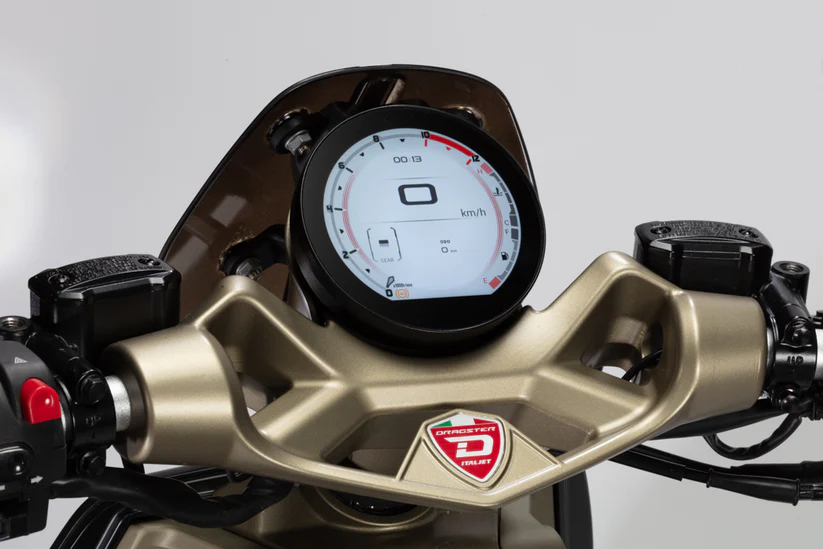
Lighting across the vehicle is entirely LED, including the compact headlamp and angular tail light. The digital instrument display adopts a circular shape reminiscent of classic speedometers but presents information through a modern TFT screen.
Perhaps the most visually striking element sits at the rear: twin exhaust outlets positioned on either side of the suspension. These symmetrical pipes give the scooter a performance-bike aesthetic rarely seen in urban machines.
Together these components transform the Roadster into something more than a simple scooter. The machine feels engineered with the same attention to detail found in sport motorcycles.
compare
One of the most fascinating aspects of the Roadster 400 is how it blurs traditional categories.
Scooters historically emphasize comfort and accessibility. Motorcycles often focus on performance and emotional engagement. The Roadster attempts to combine both worlds.
Its step-through design retains the ergonomic convenience that defines scooters. Riders can mount the machine easily, maintain an upright posture, and navigate crowded streets without physical strain.
Yet the exposed chassis, sophisticated suspension, and powerful engine create a riding experience closer to that of a lightweight motorcycle.
The Roadster becomes something hybrid—a new interpretation of what a scooter can be.
indie
Modern mobility is increasingly influenced by efficiency and standardization. Electric scooters, ride-sharing vehicles, and autonomous technologies are gradually reshaping urban transportation.
Within this landscape, machines like the Roadster 400 represent a different philosophy.
They remind riders that vehicles can still possess individuality.
The Roadster is not designed to blend into the background of city life. It exists to stand out. It invites conversation, curiosity, and admiration from passersby.
In many ways it reflects a broader cultural movement in design, where consumers seek objects that express identity rather than simply fulfilling functional needs.
For riders who value design as much as transportation, the Roadster becomes a symbol of that philosophy.
show
There is something deeply human about the way people respond to well-designed machines.
A beautifully engineered motorcycle can evoke the same emotional reaction as architecture or sculpture. The combination of form, motion, and mechanical precision creates a kind of industrial poetry.
The Roadster 400 taps into that emotional response.
Watching the articulated suspension move, hearing the engine accelerate through city streets, and seeing the interplay of light across the exposed frame—all of these details contribute to an experience that goes beyond transportation.
It is not simply about getting somewhere faster.
It is about enjoying the journey.
fwd
For Italjet, the Roadster 400 represents both continuity and evolution.
The company has always pursued unconventional designs, but the Roadster refines that philosophy for a new generation of riders. It blends heritage with contemporary engineering and introduces a design language that feels both nostalgic and futuristic.
When the scooter reaches production roads, it will likely remain a niche machine. Its bold styling and premium construction ensure it will never be as common as everyday commuter scooters.
Yet that rarity may become part of its appeal.
The Roadster 400 is not built to dominate sales charts. It is built to demonstrate what scooters can become when designers refuse to follow predictable formulas.
sum
In the world of urban mobility, practicality often wins over passion. Scooters are typically designed to solve problems rather than inspire emotion.
The Italjet Roadster 400 turns that logic upside down.
Through exposed engineering, experimental suspension, and dramatic Italian styling, the machine transforms the humble scooter into something closer to mechanical art. It invites riders to see city streets differently—to experience commuting not as routine but as a kind of daily adventure.
As cities continue to evolve and transportation becomes increasingly automated, machines like the Roadster remind us that mobility can still be expressive.
Sometimes the journey should feel extraordinary.
And sometimes a scooter can become a sculpture in motion.

No comments yet.