CC Sabathia: Yankee’s Career Veteran Settled Into Monument Park

March 16, 2026
52
The decision by the New York Yankees to retire No. 52 in honor of CC Sabathia marks more than another ceremonial milestone in baseball’s most decorated franchise. It is the recognition of a player who helped stabilize the Yankees during a moment of transition and then led them to their most recent championship triumph.
Sabathia’s number retirement situates him among the legends whose jerseys now hang in perpetuity at Yankee Stadium. For a franchise defined by towering figures—Ruth, DiMaggio, Mantle, Rivera, and Jeter—earning a place in that pantheon requires not only elite performance but cultural resonance.
Sabathia delivered both.
Across eleven seasons in New York, the left-handed ace became the embodiment of leadership, durability, and postseason reliability. His No. 52 jersey came to symbolize the modern Yankees’ pursuit of excellence during the late 2000s and 2010s, a period that demanded reinvention without sacrificing tradition.
Retiring that number is the organization’s final punctuation mark on a career that reshaped the team’s trajectory.
JUST IN: The @Yankees will retire Hall of Famer CC Sabathia’s No. 52 and honor him with a plaque in Monument Park on Sept. 26. pic.twitter.com/shjApwIO5Y
— MLB (@MLB) February 26, 2026
flow
When Sabathia signed with the Yankees ahead of the 2009 season, baseball understood the magnitude immediately.
Fresh off a historic run with the Milwaukee Brewers, Sabathia had established himself as one of the most dominant pitchers of his generation. The Yankees, meanwhile, were entering a new chapter. They were preparing to open the new Yankee Stadium while trying to rebound from the disappointment of missing the postseason in 2008.
Signing Sabathia was both a baseball move and a symbolic one.
At the time, his contract represented the largest ever given to a pitcher. But the investment was not simply about numbers on a ledger. The Yankees needed an anchor—a pitcher capable of absorbing innings, commanding October moments, and restoring the aura that had defined the franchise’s championship era.
Sabathia fit that role perfectly.
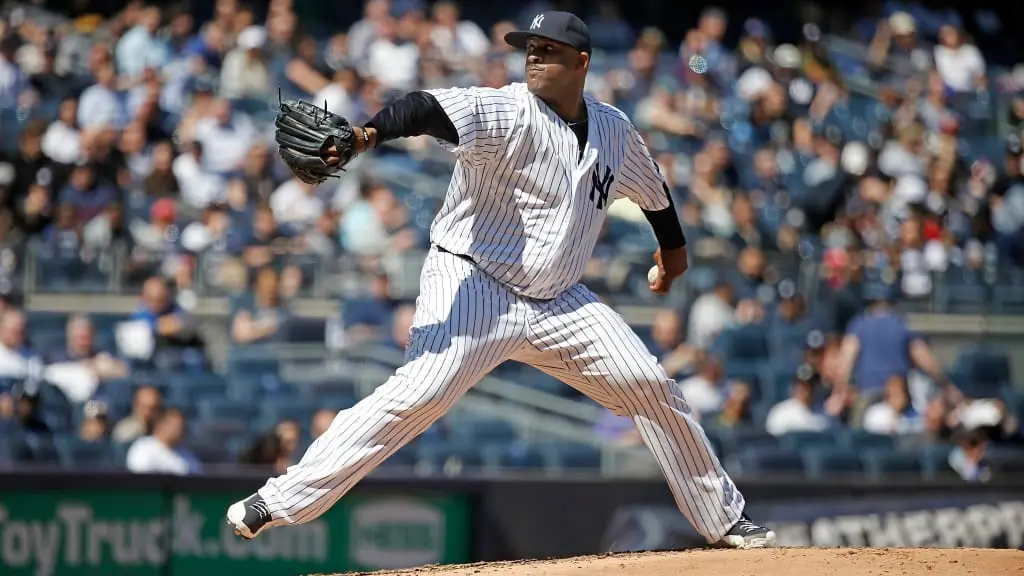
Standing six-foot-seven with a power fastball and devastating slider, he brought a rare combination of intimidation and finesse. Yet what set him apart most was his composure. Sabathia pitched with a calm authority that quickly earned the respect of teammates and fans alike.
From the moment he took the mound in pinstripes, No. 52 became synonymous with reliability.
definition
Sabathia’s first season in New York delivered exactly what the Yankees hoped for—and perhaps more.
In 2009 he led the American League in wins and innings pitched, finishing with a 19-8 record and a commanding presence atop the rotation. His performance earned him the American League Championship Series MVP award during the 2009 American League Championship Series.
That postseason run culminated in victory over the Philadelphia Phillies in the 2009 World Series, securing the Yankees’ 27th championship.
For Yankees fans, the image of Sabathia on the mound that October remains etched into memory. He pitched deep into games, neutralized opposing lineups, and provided the stability required for a championship push.
His leadership was equally important.
In a clubhouse that included icons like Derek Jeter and Mariano Rivera, Sabathia seamlessly integrated himself into the leadership structure. He was respected not only for his pitching but for his willingness to shoulder responsibility during high-pressure moments.
That 2009 title remains the Yankees’ most recent championship, making Sabathia’s role in it even more significant.
sustain
Sabathia’s greatness in New York was not confined to a single season.
Across more than a decade with the Yankees, he consistently delivered the innings and performance expected from a staff ace. During his prime years, he regularly surpassed 200 innings, serving as the workhorse of the pitching staff.
His career achievements include:
• Over 3,000 strikeouts
• More than 250 career wins
• Multiple All-Star selections
• A Cy Young Award earlier in his career with the Cleveland Guardians (then known as the Cleveland Indians)
Those statistics place Sabathia among the most accomplished pitchers of his era.
But statistics alone cannot fully capture his value to the Yankees. Sabathia’s influence extended beyond the mound. Younger pitchers frequently cited his mentorship as instrumental in their development.
He became the veteran voice guiding new generations of Yankees players through the pressures of playing in New York.
defy
What truly elevated Sabathia’s legacy was his ability to reinvent himself.
As his career progressed, injuries and diminished velocity forced him to evolve. The overpowering fastball that once defined his arsenal gave way to precision pitching, movement, and strategic sequencing.
Sabathia adapted by mastering a cutter and sinker combination that allowed him to remain effective even as his physical tools changed.
This transformation demonstrated a deeper level of baseball intelligence. Rather than fade as many power pitchers do, Sabathia extended his career by embracing a new style of pitching.
Fans and analysts admired this evolution because it revealed a player committed not only to excellence but to longevity.
It also showed resilience.
Sabathia battled knee issues, weight fluctuations, and other challenges while continuing to contribute meaningfully to the team. His perseverance became an inspiration to teammates and fans alike.
culture
Sabathia’s legacy extends beyond wins and strikeouts.
In the Yankees clubhouse, he became known as one of the most approachable and respected figures in the game. His presence created a sense of stability during seasons of transition, particularly as the franchise moved beyond the core players who defined the late-1990s dynasty.
Off the field, Sabathia used his platform to advocate for mental health awareness and support community initiatives.
His openness about personal challenges resonated with many across the baseball world. By discussing issues rarely addressed publicly by professional athletes, Sabathia helped broaden conversations about well-being and accountability in sports.
This authenticity strengthened his connection with fans.
To Yankees supporters, Sabathia was not simply a dominant pitcher; he was a relatable figure who embraced responsibility both on and off the field.
legend
The Yankees’ tradition of retiring numbers is one of the most revered rituals in baseball.
Numbers like 3, 4, 5, and 7 represent icons such as Babe Ruth, Lou Gehrig, Joe DiMaggio, and Mickey Mantle. More recent additions include figures like Derek Jeter and Mariano Rivera.
Joining that group is a rare honor.
For Sabathia, the retirement of No. 52 confirms his place within the franchise’s enduring narrative. It acknowledges not only his performance but his role in preserving the Yankees’ competitive identity during an evolving era of baseball.
When fans look up at the retired numbers display in Yankee Stadium, they see more than jerseys.
They see chapters of the franchise’s story.
Sabathia’s number now represents the chapter that brought the Yankees their 27th championship and sustained the team’s relevance in the years that followed.
show
Number retirement ceremonies at Yankee Stadium are among the most emotional events in baseball.
The day typically includes tributes from former teammates, highlights projected across the stadium screens, and speeches reflecting on the honoree’s impact.
For Sabathia, the ceremony will likely bring together figures from the 2009 championship roster alongside members of the Yankees organization who witnessed his leadership firsthand.
Fans will fill the stadium wearing No. 52 jerseys—a sea of pinstripes celebrating the pitcher who carried the team through some of its most important moments.
For Sabathia himself, the moment will represent a culmination.
After years of dedication to the game and the franchise, seeing his number permanently retired will confirm that his contributions are etched into Yankees history forever.
endure
Beyond the Yankees, Sabathia’s influence on baseball remains significant.
As one of the few pitchers to surpass 3,000 strikeouts in the modern era, he stands among the elite. His career demonstrates the value of adaptability, leadership, and perseverance in a sport that demands constant adjustment.
Many young pitchers look to Sabathia’s career as a blueprint for longevity.
His ability to transition from power pitcher to strategic veteran illustrates how intelligence and discipline can extend a career even as physical attributes change.
It also reinforces the importance of mentorship.
Sabathia often took younger players under his wing, guiding them through the pressures of professional baseball. His impact on the next generation ensures that his legacy will continue beyond his playing days.
fwd
When the Yankees retire No. 52, it becomes more than a tribute.
It becomes a symbol.
For fans who watched Sabathia dominate October games in 2009, the number recalls moments of triumph and celebration. For younger fans, it represents a figure who embodied the values of resilience and leadership.
For the Yankees organization, retiring Sabathia’s number confirms that greatness is not defined solely by championships or statistics.
It is defined by influence.
Sabathia influenced teammates, inspired fans, and preserved the Yankees’ tradition of excellence during a new era of baseball.
sum
Baseball is a sport built on memory.
Every retired number represents a story that shaped the game’s history. For the Yankees, those stories form a tapestry that stretches across generations.
The retirement of CC Sabathia’s No. 52 adds another powerful chapter to that tapestry.
It honors the towering left-hander who arrived in New York at a pivotal moment, delivered a championship, and became one of the franchise’s most respected leaders.
Long after his final pitch, Sabathia’s legacy will remain visible every time fans glance toward the outfield façade at Yankee Stadium.
There, among the legends of baseball, No. 52 will hang forever—reminding the world that greatness in pinstripes is measured not only by victories but by the character behind them.



No comments yet.