
Review: Red Bull GamePop GP-1 as a New Standard for Experimental Publishing

March 16, 2026
There are moments when an object quietly rearranges expectations. Not through spectacle alone, but through a careful redefinition of what it is supposed to be. The Red Bull GamePop GP-1 playable magazine cover exists in that space. It does not announce itself as a revolution in print. It simply behaves differently, and in doing so, invites a reconsideration of the medium itself.
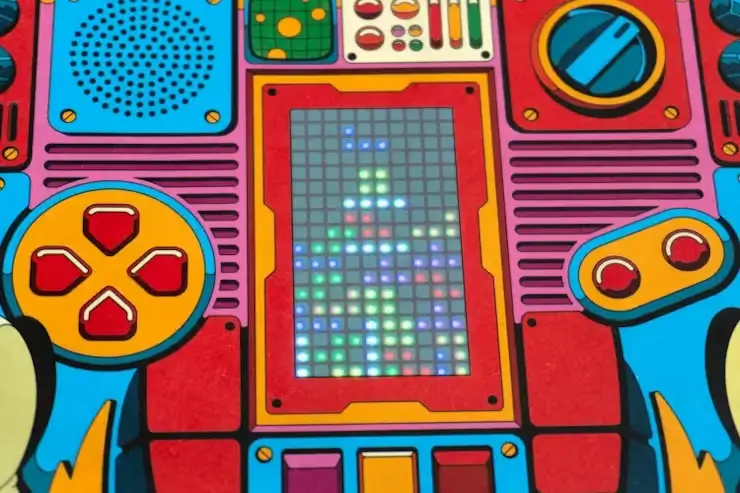
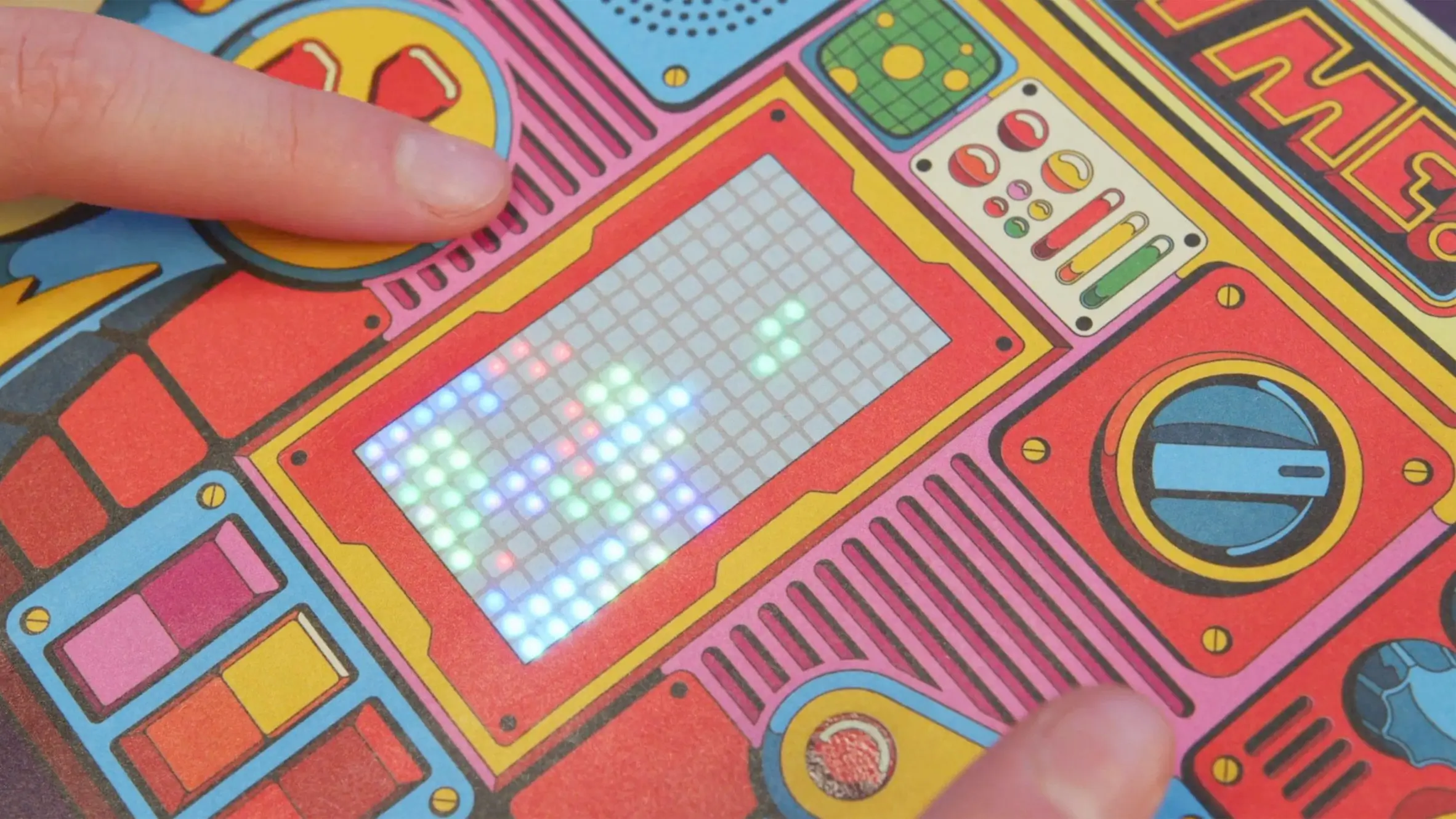
At first glance, the object appears familiar enough: a magazine, a cover, a recognizable grid of colored blocks arranged in a configuration that recalls decades of handheld conjure. But the moment a finger hovers and taps, the illusion of familiarity dissolves. The surface responds. Pieces fall. The page, long assumed inert, begins to act.
This is where the GP-1 finds its quiet significance. Not in the novelty of embedding a game into paper, but in the way it reframes interaction. Print has historically been an endpoint—something to be read, collected, archived. Here, it becomes a starting point again. A surface that invites participation rather than passive observation.
The first Red Bull gaming magazine is here!
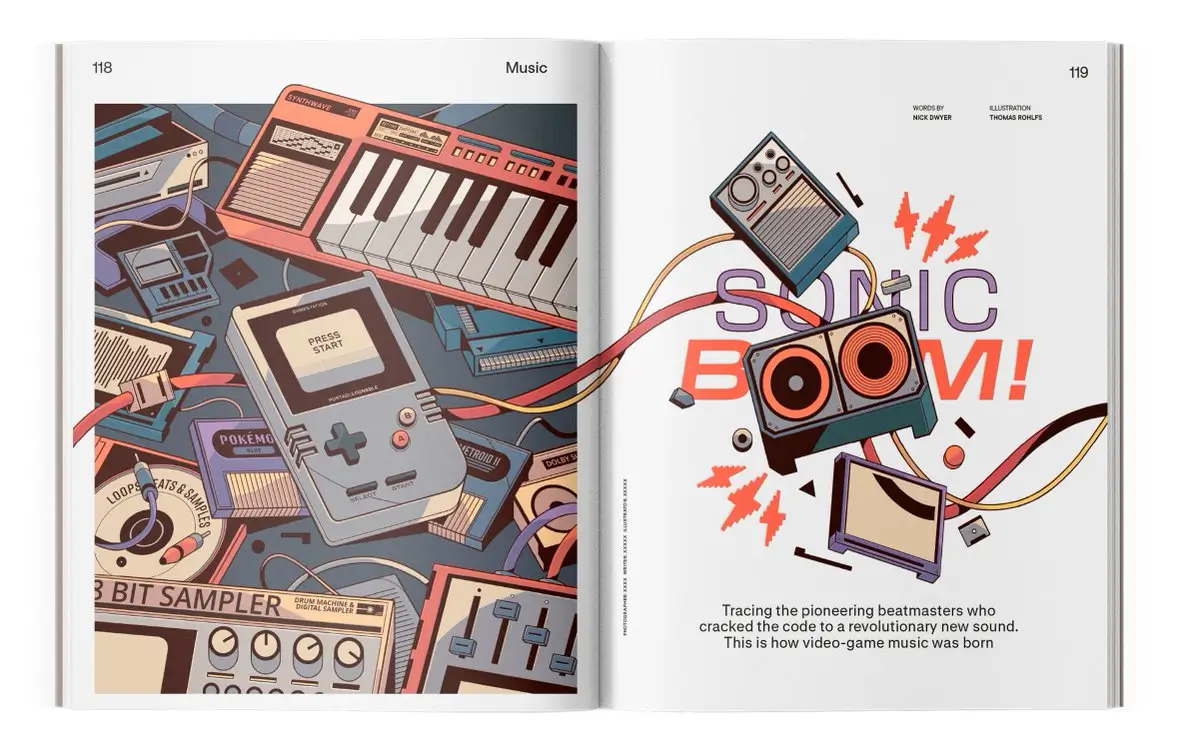
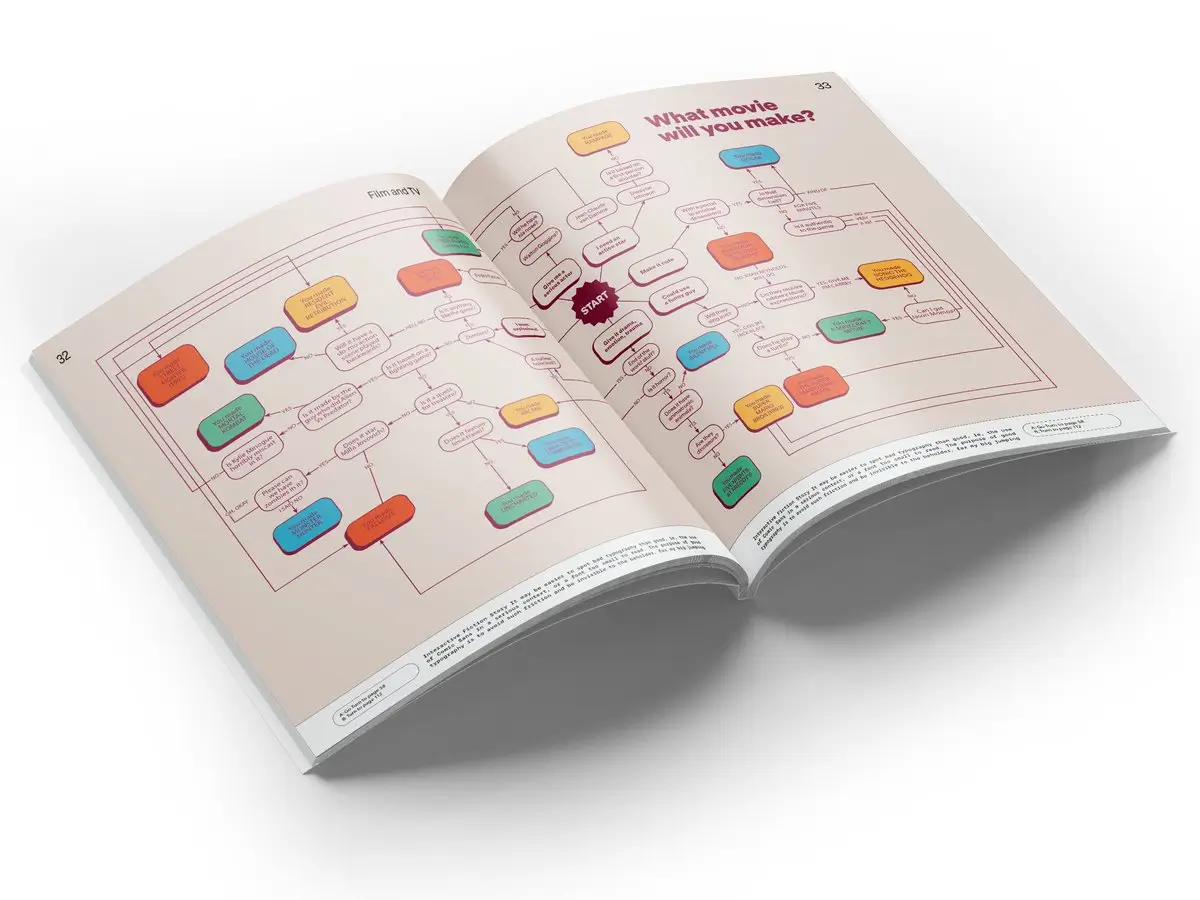
Welcome to GAMEPOP, the place where gaming and pop culture collide. Packed with your favorite stories, creators, and gamers!
And believe it or not… some pages you read, others you play👀 pic.twitter.com/0d6JW36jSW
— Red Bull Gaming (@redbullgaming) December 4, 2025
observe
The technical achievement behind the GP-1 is precise but intentionally understated. A flexible LED matrix, thin circuitry, capacitive touch zones—these components are not presented as exposed engineering, but as something integrated, almost concealed within the logic of the page. The effect is less like holding a gadget and more like discovering that paper itself has developed a new property.
Tetris, as the chosen game, is not incidental. Its geometry, its clarity, its near-universal recognizability make it ideal for translation into a limited, embedded display. More importantly, it carries with it a kind of cultural neutrality. It belongs to no single era. It is equally at home in early handheld consoles and in contemporary digital ecosystems.
In the GP-1, Tetris functions as both content and language. The falling blocks are immediately legible, requiring no onboarding, no instruction manual. The user understands instinctively what to do. That familiarity allows the object to focus attention elsewhere—on the experience of interacting with a magazine in a way that feels unexpectedly natural.
engineer
One of the more compelling aspects of the GP-1 is its physical restraint. The technology does not bulk the object into something unrecognizable. Instead, it adheres to the expectations of a magazine cover—thin, flexible, portable.
This is achieved through a carefully layered construction: a flexible printed circuit board, a compact microcontroller, a distributed LED array, and a power source discreetly embedded within the structure. The inclusion of a charging port—hidden along the edge—further reinforces the idea that this is not a disposable novelty, but an object designed to persist.
There is a certain discipline in this approach. The temptation, in projects of this nature, is often to exaggerate the technology, to make it visible and central. Here, it is allowed to recede. The focus remains on the experience, not the mechanism.
That restraint aligns with a broader shift in design thinking, where the most advanced systems are often those that feel the least intrusive. The GP-1 does not ask to be admired for its circuitry. It asks to be used.
flow
For decades, predictions about the future of print have oscillated between nostalgia and obsolescence. Digital media, with its infinite adaptability, seemed to render paper increasingly static by comparison. Yet the persistence of print suggests that its value was never solely tied to information delivery.
Print carries with it a sense of presence. It occupies space. It can be held, revisited, displayed. The GP-1 does not attempt to replace these qualities. Instead, it adds a new dimension to them.
By introducing interactivity, the magazine becomes less of a fixed artifact and more of a living object. It changes over time—not in content, but in state. A high score achieved on the cover is a trace of engagement, a mark that did not exist before the interaction.
This subtle shift transforms the relationship between reader and object. The magazine is no longer complete upon purchase. It becomes complete through use.
rare
The decision to produce the GP-1 in extremely limited quantities—approximately 150 units—shapes its meaning as much as its design. It is not positioned as a mass-market innovation. It is closer to a prototype, or perhaps a statement.
Distributed primarily to creators, players, and members of the media, the GP-1 operates within a controlled ecosystem. It circulates not through retail channels, but through networks of influence and documentation. Its visibility is amplified not by volume, but by attention.
This approach aligns with a broader cultural pattern in which objects gain significance through scarcity and context. The GP-1 is not meant to be ubiquitous. Its rarity reinforces its role as an experiment—something to be observed, discussed, and interpreted.
There is also a practical dimension to this limitation. The integration of electronics into a traditionally low-cost, high-volume medium introduces complexities that are not easily scaled. By keeping production small, the project maintains a level of precision and quality that might otherwise be difficult to achieve.
stir
What the GP-1 ultimately represents is a convergence of categories. It is a magazine, but also a device. It is a piece of media, but also a platform for interaction. It exists somewhere between object and experience, refusing to settle fully into either.
This ambiguity is part of its appeal. It resists easy classification, which in turn invites deeper engagement. Is it meant to be read, conjured, collected, or all three simultaneously? The answer is not prescribed.
In this sense, the GP-1 reflects a broader cultural shift toward hybrid forms. Boundaries between disciplines—design, technology, publishing, gaming—are increasingly porous. Projects like this do not emerge from a single domain, but from the intersections between them.
View this post on Instagram
experim
While the GP-1 is described as a first of its kind, it also sits within a longer lineage of experimental print. There have been magazines with embedded audio modules, covers that respond to light, pages that incorporate augmented reality markers. Each of these attempts has explored the edges of what print can do.
What distinguishes the GP-1 is the coherence of its integration. The technology is not an add-on. It is central to the concept. The playable surface is not a feature layered onto a conventional cover; it is the cover.
This distinction matters. It suggests a level of intentionality that goes beyond novelty. The object is designed from the ground up to support interaction, rather than retrofitted to accommodate it.
idea
There is a subtle balance at work in the GP-1 between innovation and familiarity. The presence of Tetris anchors the experience in something known, even comforting. The format of the magazine provides a recognizable frame.
Within that frame, however, the behavior is new. This combination elicits the object to feel approachable while still offering something unexpected. It does not alienate the user with complexity. Instead, it invites exploration through recognition.
This approach reflects a broader principle in design: that the most effective innovations often build upon existing mental models rather than replacing them entirely. By leveraging the familiarity of both print and Tetris, the GP-1 lowers the barrier to engagement.
culture
The involvement of Red Bull is not incidental. As a brand, it has long positioned itself at the intersection of media, sport, and culture. Its ventures into publishing, film, and gaming are extensions of a broader strategy centered on storytelling and experience.
The GamePop initiative fits within this framework. It is less about producing a magazine in the traditional sense and more about creating a platform that reflects the culture of gaming. The GP-1 serves as a tangible expression of that platform—an object that embodies the convergence of media forms.
There is also an alignment between the ethos of gaming and the brand’s identity. Both emphasize performance, engagement, and a certain kind of kinetic energy. The playable cover becomes a literal manifestation of these ideas.
distance
One of the more interesting questions surrounding the GP-1 is how it will age. Traditional magazines are often archived as records of a particular moment—snapshots of culture, design, and thought. Their value can increase over time as artifacts.
The GP-1 complicates this notion. Its electronic components introduce a temporal dimension that is not typically associated with print. Batteries degrade. Circuits have lifespans. The ability to play the game may not be permanent.
This raises questions about preservation. Does the value of the object lie in its functionality, or in the idea it represents? If the game eventually ceases to operate, does the magazine lose its essence, or does it gain a different kind of significance?
These are not questions with immediate answers, but they point to the evolving nature of collectible media. As objects become more complex, their relationship to time becomes more nuanced.
new
Perhaps the most compelling aspect of the GP-1 is what it suggests about the future of materials. Paper, traditionally seen as static, is here reimagined as a substrate for interaction. The boundaries between soft and hard, analog and digital, begin to blur.
This points toward a broader exploration of hybrid materials—surfaces that can display, respond, and compute while retaining the tactile qualities of traditional media. The GP-1 is not a definitive statement on this future, but it offers a glimpse.
In that sense, it functions less as a product and more as a question. What happens when the surfaces we take for granted begin to behave differently? How does that change the way we design, interact, and think?
sum
The Red Bull GamePop GP-1 does not attempt to replace the magazine. It does not declare the end of print or the beginning of something entirely new. Instead, it introduces a subtle shift—a redefinition that operates within the existing framework.
It suggests that print can evolve without abandoning its core qualities. That interaction can be layered onto tradition without erasing it. That the page, long considered a passive surface, can become active without losing its identity.
In doing so, it opens a space for further exploration. Not necessarily for mass adoption, but for continued experimentation. The GP-1 may remain a limited edition, a rare object circulating among a small group of recipients. But its implications extend beyond its distribution.
It leaves behind an idea: that even the most familiar forms can still change. Quietly, precisely, and with just enough difference to make us look again.