A.P.C. Lou Tote Bag Pale Blue Striped Poplin

March 16, 2026
min
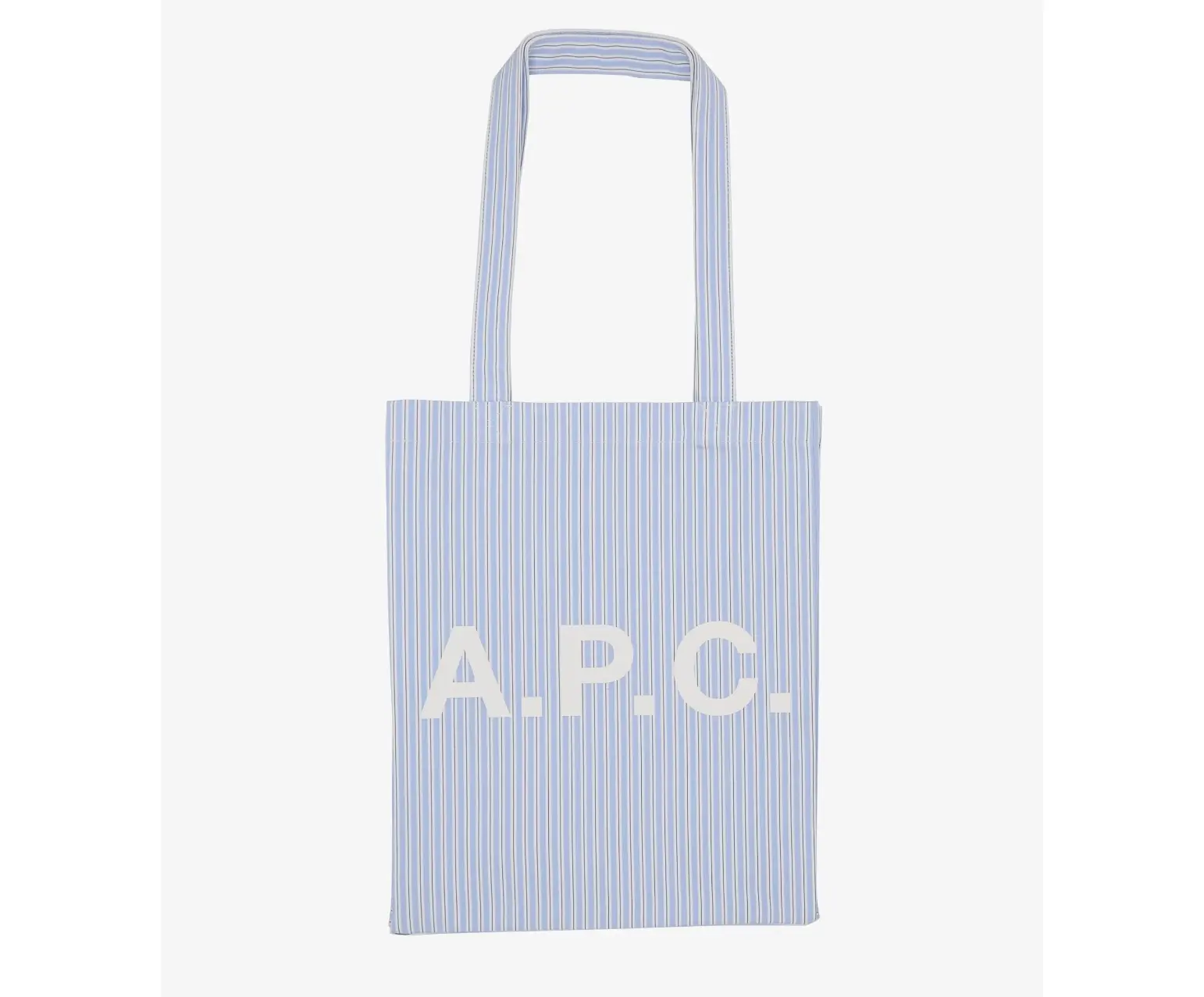
The Lou Tote Bag in striped satin poplin—rendered in pale blue—extends A.P.C.’s ongoing dialogue between restraint and material nuance. Where earlier versions of the Lou Tote often leaned into leather’s durability or canvas’s neutrality, this iteration shifts the emphasis toward lightness. It is not a reinvention of the silhouette, but a recalibration of its tone.
The pale blue palette introduces a sense of openness. It carries a seasonal inflection—suggestive of spring mornings or coastal air—without becoming overly thematic. The stripe, subtle and rhythmic, adds movement to an otherwise composed surface. Together, they soften the tote’s presence while preserving its underlying structure.
idea
Material defines the character of this version. Satin poplin, with its smooth yet breathable weave, offers a tactile contrast to more utilitarian fabrics. It reflects light differently—less matte than canvas, less rigid than leather—creating a surface that feels both refined and relaxed.
The striped pattern is not merely decorative. It functions as a structural accent, guiding the eye across the bag’s proportions. The vertical alignment elongates the form, reinforcing its upright geometry. At the same time, the softness of the fabric allows for a gentle collapse when carried, introducing a natural drape.
This interplay between structure and fluidity is central to the bag’s identity. It maintains enough integrity to hold its shape, yet remains responsive to use.
flow
The Lou Tote’s proportions remain consistent, but the change in material subtly alters how those proportions are perceived. The pale blue stripes create a visual rhythm that makes the bag feel lighter, more dynamic.
Handles are integrated with the same precision seen across A.P.C.’s accessories—long enough for shoulder carry, short enough for hand use. Their construction mirrors the body of the bag, ensuring continuity in both color and texture.
There is no excess hardware to interrupt the surface. The design relies instead on alignment and finish. Edges are clean, seams are measured, and the overall composition remains coherent from every angle.
base
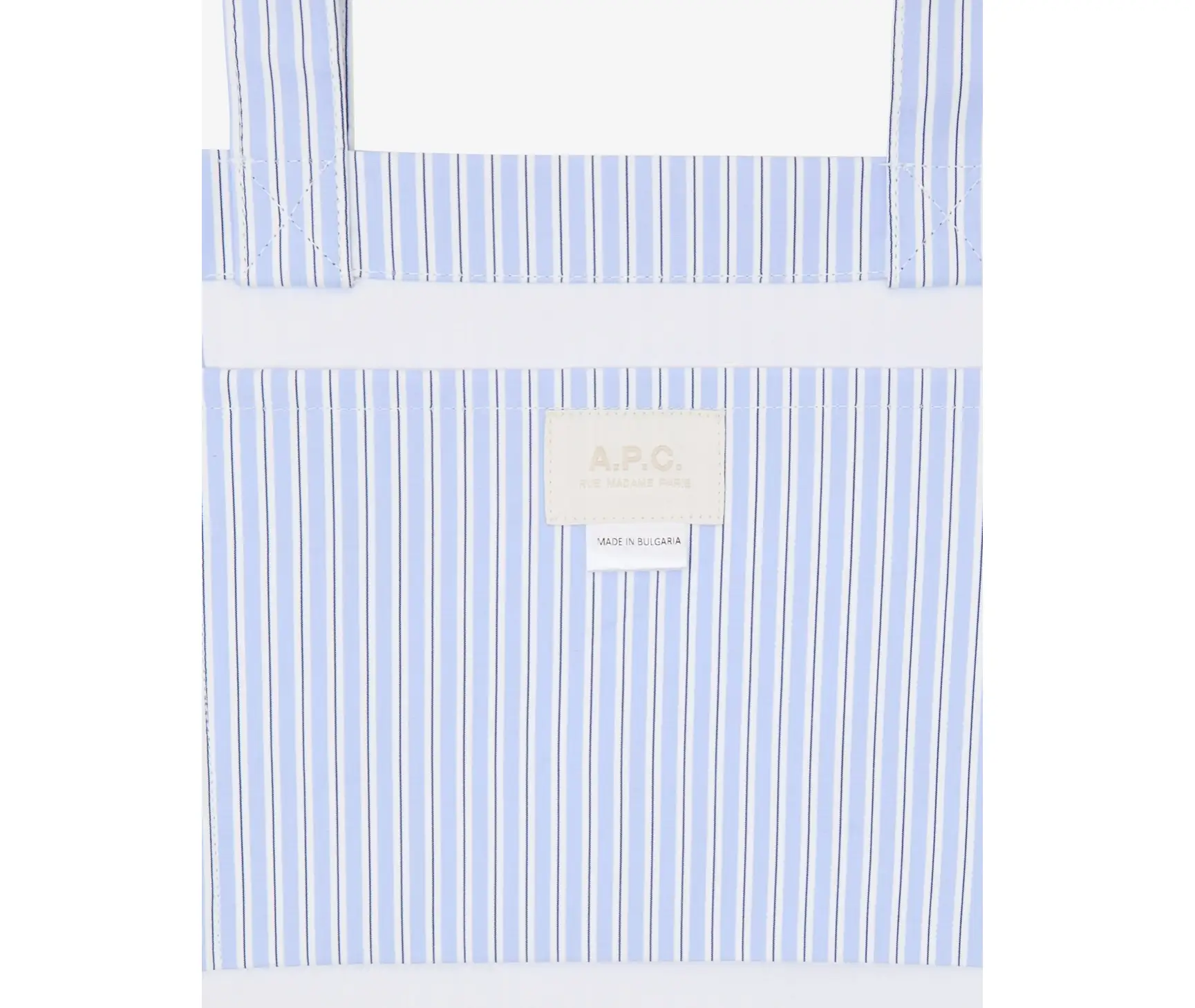
Inside, the tote retains its characteristic clarity. The interior is open, with a single pocket offering minimal organization. This restraint allows the material to remain the focus, even within the bag’s interior space.
The striped poplin often continues inside, creating a unified visual experience. There is no abrupt transition between exterior and interior—only a continuation of the same language.
This approach reinforces the idea that the Lou Tote is not compartmentalized. It is designed to accommodate rather than dictate, to adapt rather than instruct.
stir
The pale blue striped version carries a distinctly seasonal sensibility, yet it avoids overt signaling. It does not rely on bold color or graphic intervention. Instead, it introduces variation through subtle shifts—tone, texture, pattern.
This makes it particularly versatile. It can complement lighter wardrobes—linen, cotton, relaxed tailoring—while still maintaining enough neutrality to pair with darker, more structured pieces.
The stripe adds just enough visual interest to distinguish it from monochrome versions, without overwhelming the composition. It remains within the vocabulary of A.P.C.: measured, deliberate, and quietly expressive.
carry
In practice, the Lou Tote in satin poplin behaves differently from its leather counterpart. It is lighter, more flexible, easier to fold or carry over longer periods. This changes the experience of use.
The bag becomes less of a fixed object and more of a companion—something that adapts to movement, to shifting contents, to the rhythm of daily routines. It is equally suited to carrying books, clothing, or small essentials, without imposing a specific function.
This adaptability is part of its appeal. The bag does not require adjustment. It integrates.
subtle
Branding remains understated. The “A.P.C.” mark appears discreetly, often printed or embroidered in a way that aligns with the bag’s overall tone. It does not interrupt the striped pattern, but sits within it.
This restraint reflects a broader philosophy. The value of the object is not communicated through overt branding, but through consistency—of material, of proportion, of finish.
The Lou Tote does not need to assert itself. It is recognized through its coherence.
cont
What distinguishes this version of the Lou Tote is not its departure from the original, but its continuity. The silhouette remains unchanged. The function remains intact. Only the expression shifts.
This is characteristic of A.P.C.’s approach. Variation is introduced incrementally, allowing each iteration to exist within a larger framework rather than as a standalone statement.
The striped satin poplin version feels like a natural extension—an alternative rather than an update. It offers a different experience without altering the core identity of the bag.
quiet
In a market where differentiation often relies on visibility, the Lou Tote in pale blue striped poplin takes a different path. Its distinction lies in its subtlety. It does not compete for attention, but rewards closer observation.
The interplay of stripe, texture, and proportion creates a layered effect—one that becomes more apparent over time. It is not immediately striking, but gradually revealing.
This quality aligns with a more considered approach to design—one that values longevity over immediacy.
fwd
A Lou Tote Bag in striped satin poplin is defined by its relationship to use. It is designed to be carried, to be integrated into daily life, to evolve through repetition.
The pale blue tone may fade slightly, the fabric may soften, the structure may adapt. These changes are not flaws, but indications of use—evidence of the bag’s participation in routine.
In this sense, the Lou Tote is less an object to be preserved than one to be lived with.
sum
The striped satin poplin Lou Tote by A.P.C. does not seek to redefine the category. It refines it. Through material, tone, and proportion, it offers a version of the tote that feels lighter—both physically and visually.
It remains grounded in the principles that define the brand: clarity, restraint, and continuity. Yet within that framework, it introduces a new texture, a new rhythm, a new way of carrying.

No comments yet.