BTS — (ARIRANG) Animation Trailer: What Is Your Love Song? — Korean Artistry in Merch

March 17, 2026

“What is your love song?”
It is a deceptively simple question, but in the context of BTS’s (ARIRANG) animation trailer, it becomes something far more expansive. It is not posed as a lyrical prompt, nor as a marketing slogan. It reads instead as an invocation—one that reaches backward into centuries of Korean cultural memory and forward into a global, digitally mediated future.
The (ARIRANG) animation trailer does not operate like a conventional teaser. There is no straightforward beat drop, no rapid montage of choreography, no immediate reveal of sonic direction. Instead, it unfolds with restraint, favoring visual symbolism, pacing, and atmosphere. It asks the audience to sit within it, to interpret, to feel.
In doing so, BTS are not merely announcing a comeback—they are staging a return. Not just to music, but to meaning.
flow
Animation, here, is not used for spectacle. It is used as translation.
The trailer draws heavily from traditional Korean visual languages—echoes of minhwa folk painting, ink wash landscapes, and hanji paper textures appear throughout. Colors are subdued yet intentional: muted reds, deep indigos, aged creams. The palette feels archival, as though lifted from a scroll rather than a screen.
Movement is slow, deliberate. A crane crosses a pale sky. A mountain breathes through drifting fog. A figure—ambiguous, almost spectral—moves across a threshold that feels both architectural and emotional. Each frame lingers long enough to invite contemplation, resisting the hyper-speed editing typical of contemporary pop visuals.
This is not animation as embellishment. It is animation as memory.
The decision to render (ARIRANG) in this medium speaks to a deeper strategy: animation allows for a temporal collapse. It can hold the past and present simultaneously, without privileging one over the other. It can render myth without irony. It can make heritage feel alive without making it feel staged.
idea
To comprehend the weight of this project, one must understand Arirang itself—not as a single composition, but as a living archive.
Arirang is often described as Korea’s unofficial national anthem, but that framing is insufficient. It is less a fixed song than a framework of feeling—a melody that has been adapted, rewritten, and reinterpreted across regions, generations, and historical moments.
Themes of longing, separation, resilience, and quiet endurance run through its many variations. It is a song that has accompanied migration, war, labor, and love. It is both deeply personal and collectively shared.
By titling their project (ARIRANG), BTS are not borrowing a symbol—they are entering into a dialogue with it. The animation trailer reflects this by avoiding literal representation. There are no direct references to specific historical events, no overt narrativization. Instead, the imagery remains open, allowing the emotional architecture of Arirang to surface without being confined.
The question—“What is your love song?”—thus becomes a reframing of Arirang itself. It suggests that the folk song is not static; it is something that can be inhabited, rewritten, made personal again.
stir
The (ARIRANG) era arrives at a particular moment in BTS’s trajectory. Following a period shaped by individual pursuits and mandatory service obligations, the group’s re-emergence carries a different kind of weight.
This is not the urgency of ascent. It is the gravity of return.
The animation trailer acknowledges this without stating it explicitly. There is a sense of distance in its visuals—figures separated by space, landscapes that feel vast and unoccupied, transitions that imply movement across thresholds rather than within them. Time is not compressed; it is stretched.
In this way, the trailer becomes a meditation on absence as part of presence. It recognizes that what has been paused is not lost, but transformed. The use of traditional motifs reinforces this idea: heritage persists not because it remains unchanged, but because it adapts.
BTS position themselves within this continuum—not as disruptors of tradition, but as participants in its ongoing evolution.
crossover
If the animation trailer establishes the conceptual framework, the (ARIRANG) merch translates it into material form.
This is where the project expands beyond visual storytelling into tactile experience.
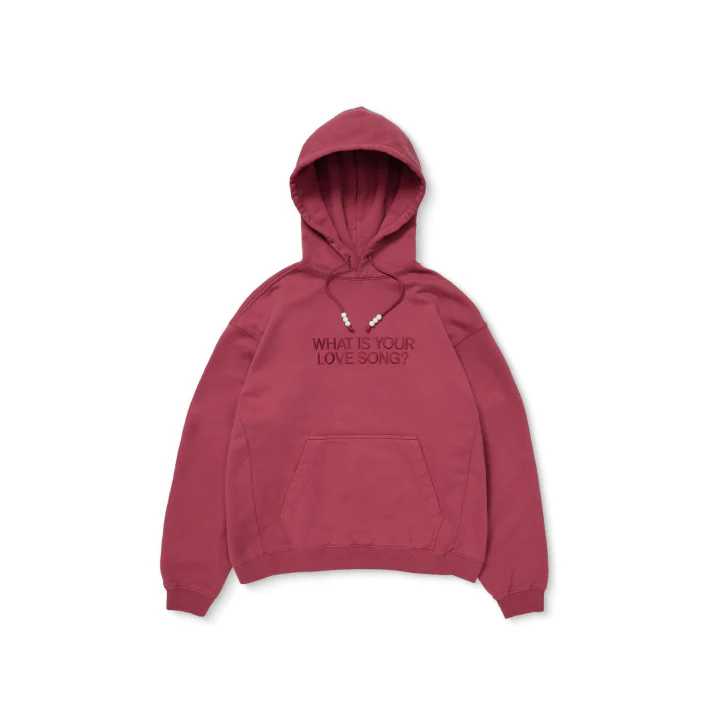
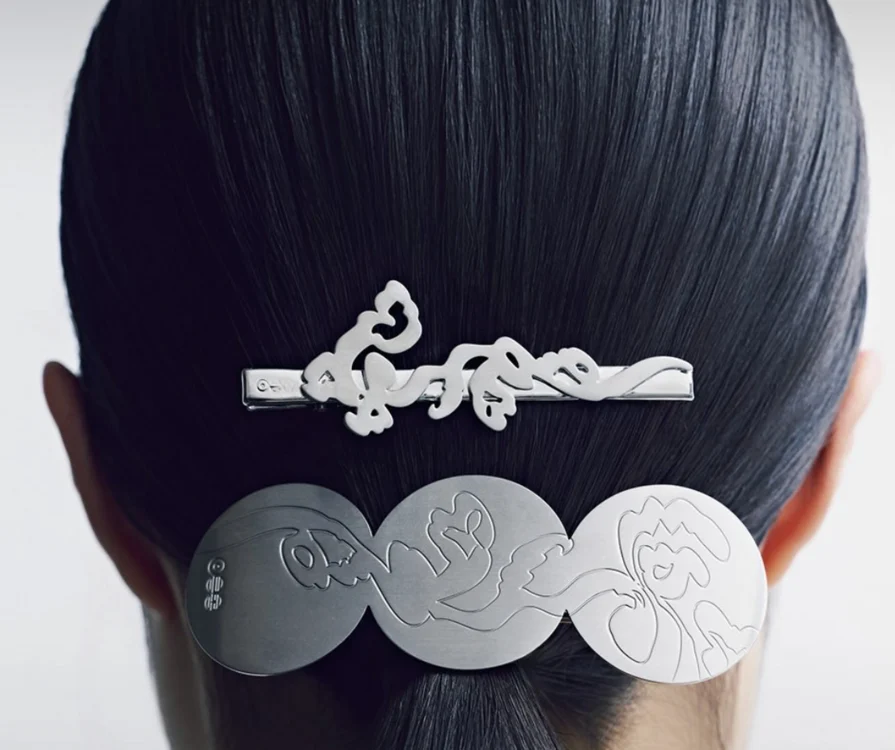
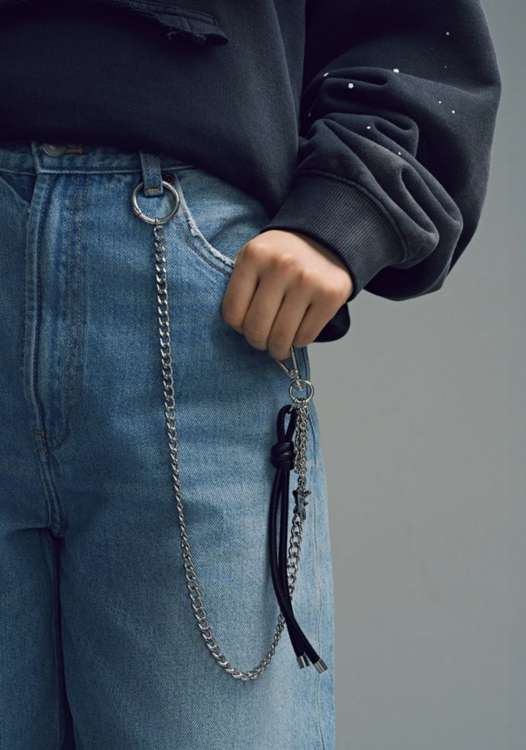
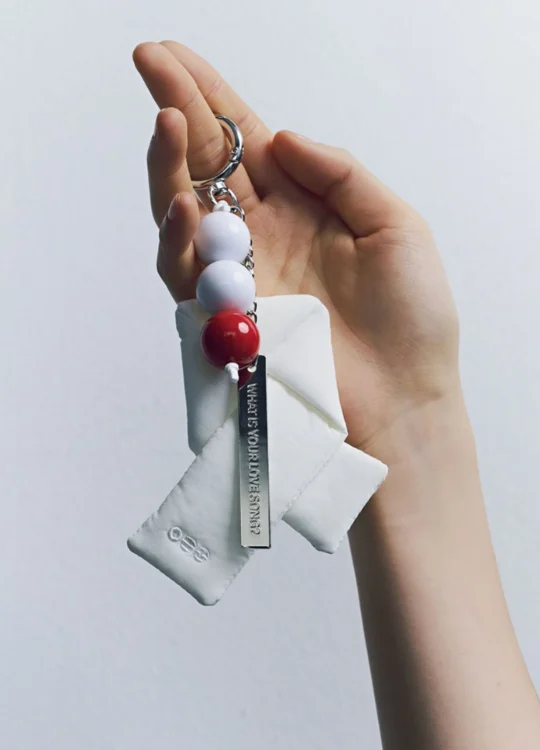
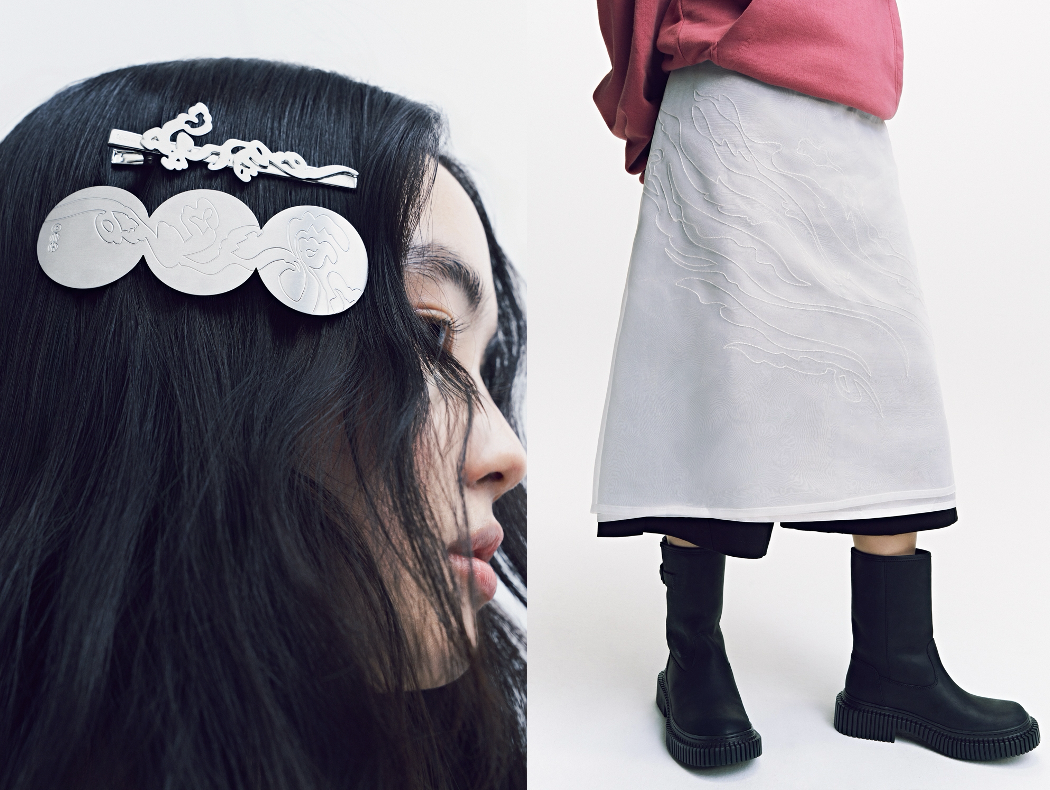
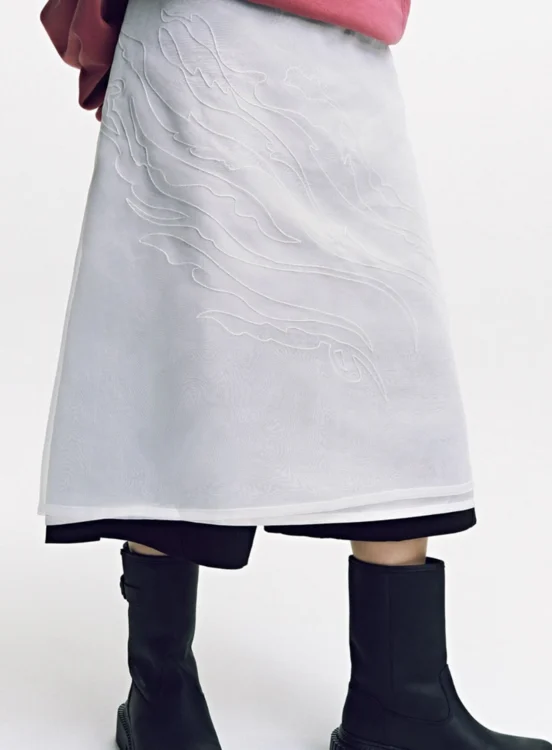
The collection—released through official channels and tied to institutional unions—draws directly from traditional Korean artistry. Motifs echo those seen in the trailer: stylized clouds, geometric borders, calligraphic elements. Colorways remain disciplined, favoring deep reds, blacks, and neutral tones that feel both ceremonial and wearable.
What distinguishes this merch from typical K-pop releases is its curatorial intent. The involvement of organizations such as the National Museum Foundation of Korea signals a shift in how merchandise is positioned. These are not simply branded goods; they are artifacts of a broader cultural narrative.
Pop-up installations at heritage sites—such as Gyeongbokgung Palace—further reinforce this. The act of purchasing or viewing the merch becomes contextualized within spaces that carry historical significance. Consumption is reframed as participation.
In this sense, the merch operates as a physical extension of the animation. Where the trailer invites contemplation, the apparel invites embodiment.
📢#BTS The 5th Album ‘ARIRANG’ Official Merch
Make every day special with the ‘ARIRANG’ official merch!
Check out the wearable hoodies and ball caps capturing the iconic BTS vibe, now on Weverse Shop.1️⃣[Early Release]
– Thu, Mar 12, 11:00 AM (KST) – until sold out
– Global… pic.twitter.com/PAtPHQhpvo— Weverse Shop (@weverseshop) March 12, 2026
lang
The viewable coherence between the trailer and the merch is not incidental. It reflects a deliberate design language that operates across mediums.
Key elements include:
A restrained palette that references natural dyes and historical pigments
Pattern systems derived from architectural and textile traditions
Typography that balances calligraphic influence with modern clarity
Material choices that emphasize texture and tactility
This approach situates (ARIRANG) within a broader movement in global fashion and design: the recontextualization of heritage within contemporary frameworks. However, BTS’s execution is distinct in its scale and integration. The project is not a capsule or a collaboration in isolation; it is a multi-layered rollout that aligns music, visuals, merchandise, and institutional partnerships.
For audiences, this creates a sense of immersion. The (ARIRANG) world is not confined to a single format—it is encountered across screens, spaces, and surfaces.
show
One of the most compelling aspects of the (ARIRANG) project is its ability to maintain cultural specificity while achieving global resonance.
The animation trailer does not dilute its references to accommodate international audiences. It does not explain itself overtly. Instead, it trusts in the universality of its emotional core.
This is a significant shift from earlier phases of global pop expansion, which often relied on translation, adaptation, or simplification. BTS, having already established a worldwide audience, operate from a position of confidence. They can present Korean cultural forms on their own terms, knowing that engagement will follow.
The question—“What is your love song?”—functions as a bridge. It invites viewers from different cultural contexts to locate their own points of connection. In doing so, it transforms Arirang from a national symbol into a shared emotional framework.
culture
The partnership with cultural institutions is not merely symbolic. It reflects a broader shift in how pop culture engages with heritage sectors.
By working with entities like the National Museum Foundation of Korea, BTS are contributing to a model in which cultural preservation and contemporary expression are not treated as separate domains. Instead, they are seen as mutually reinforcing.
This has practical implications as well:
Increased view for traditional art forms
New revenue streams for cultural institutions
Expanded educational opportunities for global audiences
For BTS, it also reinforces their role as cultural intermediaries—artists who can navigate both the commercial and the curatorial.
emotive
At its core, the (ARIRANG) project is concerned with emotion. Not in the immediate, declarative sense often associated with pop music, but in a more diffuse, sustained way.
The animation trailer’s pacing, imagery, and sound design (even in its minimalism) create a space for reflection. The absence of explicit narrative allows viewers to project their own experiences onto it.
Love, in this context, is not framed as romance alone. It encompasses:
Attachment to place
Connection to history
Relationships shaped by distance and time
The act of remembering and being remembered
This aligns with the thematic range of Arirang itself, which has always operated at the intersection of the personal and the collective.
what
While the animation trailer and merch provide significant insight, they are ultimately components of a larger rollout. The full (ARIRANG) album and accompanying projects are expected to expand on these themes, potentially integrating:
Live performances that incorporate traditional instrumentation or staging
Further visual content that builds on the animation’s aesthetic
Expanded merchandise lines and collaborations
What is already clear, however, is that (ARIRANG) represents a redefinition of scale. It is not simply a comeback; it is a repositioning.
BTS are not returning to where they left off. They are returning with a different set of priorities, one that foregrounds cultural depth alongside global reach.
fin
“What is your love song?”
By the end of the (ARIRANG) animation trailer, the question lingers. It is not answered, nor is it meant to be. Instead, it becomes an open field—one that extends beyond BTS, beyond Korea, beyond any single interpretation.
In aligning animation, heritage, and material design, BTS have constructed a project that resists reduction. It cannot be fully understood through a single viewing, a single purchase, or a single listening experience. It asks for engagement, for reflection, for participation.
The (ARIRANG) merch, in turn, offers a way to carry that engagement into the everyday. To wear it, to inhabit it, is to become part of the project’s ongoing narrative.
Together, the trailer and the merch articulate a vision of pop culture that is expansive, grounded, and interconnected. They suggest that the future of global music may not lie in constant reinvention, but in thoughtful return—to roots, to stories, to songs that have always been there, waiting to be heard again.