RZA and the Architecture of Forever: Why Wu-Tang Clan Refuses to Rest Until Its Legacy Is Secured
 developer
March 18, 2026
4
0
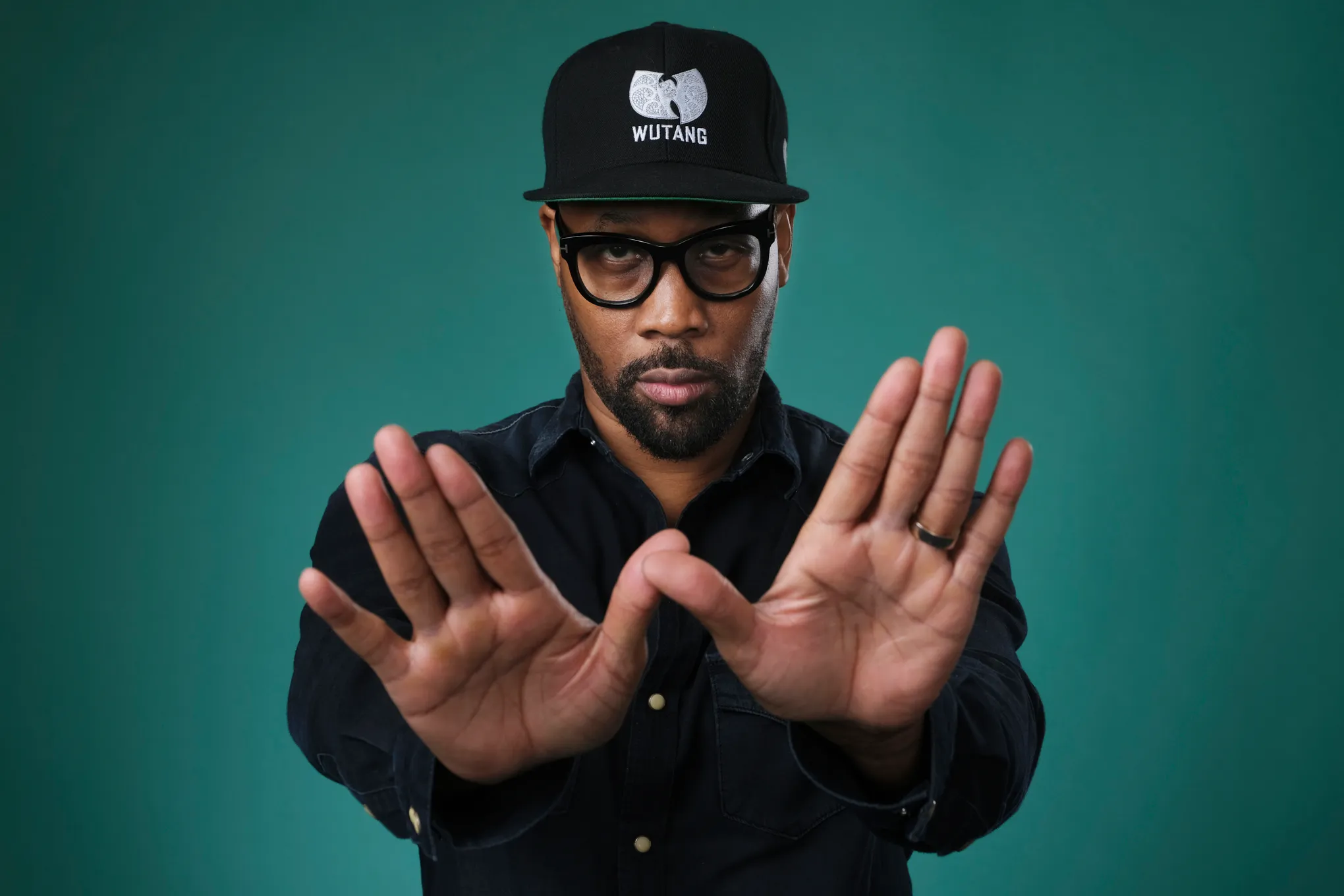
In 2026, the conversation around RZA feels less like a retrospective and more like a live transmission from a group actively shaping its own mythology. For decades, the Wu-Tang Clan has existed in a rare space—simultaneously foundational and elusive, mainstream yet deeply coded, accessible yet philosophical. But what distinguishes this current moment is not simply nostalgia or anniversary-driven attention. It is intent. It is structure. It is design.
RZA, long regarded as the spiritual architect of Wu-Tang Clan, is not allowing the group’s legacy to settle into passive reverence. Instead, he is actively engineering how that legacy will be understood, consumed, and preserved for generations that may never have experienced the original 1990s explosion firsthand. The prevailing hype surrounding him now is rooted in a realization: Wu-Tang is not fading into history. It is entering its most deliberate phase.
The phrase “Wu-Tang is forever” has always carried a dual meaning. On one level, it functioned as a rallying cry—a declaration of dominance and unity during hip-hop’s competitive golden era. On another, it hinted at something more abstract: a belief in permanence, in cultural imprint, in the idea that certain works transcend their time.
RZA has always treated that phrase less like branding and more like doctrine.
From the beginning, Wu-Tang was conceived not merely as a group but as a system. Each member functioned as an independent entity while contributing to a larger whole. This decentralized model allowed for expansion—solo albums, side ventures, production credits—without diluting the collective identity. It was, in many ways, an early blueprint for modern creative ecosystems.
Now, decades later, RZA is revisiting that original philosophy with renewed urgency. His recent messaging makes it clear: legacy is not self-sustaining. It must be maintained, curated, and, when necessary, reinterpreted. The idea of “forever” requires active participation.
flow
The ongoing farewell tour—framed as the “Final Chamber”—has become a focal point of current discourse. But to interpret it as a simple goodbye would be to misunderstand its purpose.
This is not a farewell in the traditional sense. It is a transition ritual.
For RZA, the live performance era of Wu-Tang represents one phase of the group’s existence. By bringing that phase to a deliberate close, he creates space for what comes next: archival projects, cinematic storytelling, curated releases, and institutional recognition. The tour is both a celebration and a boundary marker.
There is also an element of control embedded in this decision. Too often, legendary acts fade gradually, their narratives fragmented by inconsistent appearances, uneven releases, or external reinterpretations. By declaring an endpoint, Wu-Tang reclaims authorship over its timeline.
The message is subtle but powerful: we decide how this chapter ends.
stir
One of the most significant challenges facing legacy artists today is the flattening effect of digital culture. Streaming platforms, social media feeds, and algorithm-driven discovery systems tend to compress history. A track released in 1993 can appear alongside one from 2025 with little contextual distinction. For new listeners, the past becomes a playlist rather than a narrative.
RZA understands this shift deeply.
If Wu-Tang were to rely solely on its existing catalog, its story could easily be reduced to a handful of recognizable songs or aesthetic markers. The philosophical underpinnings, the cultural context, the internal dynamics—these risk being lost in translation.
To counter this, Wu-Tang has expanded into multi-platform storytelling. Documentaries, scripted series, interviews, and curated releases serve as narrative anchors. They provide context where algorithms cannot. They ensure that discovery is accompanied by understanding.
In this sense, legacy becomes an active defense against simplification.
shaolin
No discussion of RZA’s legacy strategy would be complete without addressing Once Upon a Time in Shaolin. Released as a single-copy album, it challenged conventional notions of music distribution and ownership.
At the time, the project was widely debated—celebrated by some as visionary, criticized by others as exclusionary. But in hindsight, it reads as a manifesto.
RZA was making a statement about value.
In an era where music had become infinitely reproducible and often undervalued, he proposed an alternative: scarcity as significance. By treating the album as a unique artifact, he aligned it more closely with fine art than commercial product.
Today, as conversations around digital ownership, collectibles, and experiential value continue to evolve, the project feels less like an anomaly and more like a precursor. It anticipated a shift in how audiences might engage with art in a post-streaming landscape.
More importantly, it reinforced a core principle of RZA’s thinking: legacy is tied not just to what is created, but to how it is framed.
culture
What sets Wu-Tang apart from many of its contemporaries is the breadth of its influence. The group’s impression extends beyond music into fashion, film, language, and philosophy. It has inspired generations of artists, entrepreneurs, and thinkers.
RZA has always encouraged this expansion.
From early on, Wu-Tang members pursued individual ventures—clothing lines, acting roles, business partnerships—while maintaining a shared identity. This approach allowed the brand to permeate multiple cultural spheres without losing cohesion.
In today’s terms, Wu-Tang functions as a cultural system.
It is not confined to a single medium or format. It exists as a network of ideas, aesthetics, and narratives that can be accessed from different entry points. For some, it begins with music. For others, with television, fashion, or even philosophical writings.
RZA’s current focus is on strengthening that system—ensuring that each component reinforces the others, creating a unified yet expansive legacy.
define
There is also a more human dimension to the urgency surrounding Wu-Tang’s current phase. Time, inevitably, changes perspective.
As members age and the broader cultural landscape evolves, the importance of preservation becomes more pronounced. The loss of affiliates and contemporaries serves as a reminder that history is not static. It can be forgotten, misremembered, or overlooked.
RZA’s approach acknowledges this reality without succumbing to it.
Rather than allowing time to erode the group’s narrative, he is using it as a catalyst for action. The farewell tour, the archival projects, the renewed storytelling efforts—all reflect an awareness that the present moment is an opportunity to define the future.
Legacy, in this context, becomes a form of resistance against disappearance.
grad
The broader cultural environment also plays a role in the current hype. Hip-hop, now over half a century old, is entering what might be described as its heritage era.
Genres like rock and jazz have long established mechanisms for preserving and celebrating their histories—hall of fame inductions, museum exhibitions, academic studies. Hip-hop is now beginning to develop similar structures.
Wu-Tang is uniquely positioned within this transition.
As one of the most influential groups in the genre’s history, it serves as both subject and architect of this heritage movement. RZA’s efforts to document, curate, and contextualize the group’s legacy align with a larger shift toward recognizing hip-hop as a cultural institution.
This is not merely about honoring the past. It is about integrating that past into a sustainable future.
move
Another factor fueling the current moment is the continued discovery of Wu-Tang by younger audiences. Through streaming platforms, social media, and television adaptations, the group’s work reaches listeners who were not alive during its initial rise.
This creates a unique dynamic.
For older fans, Wu-Tang represents a lived experience—a soundtrack to a specific time and place. For newer listeners, it is a discovery, a piece of cultural history encountered in fragments and reassembled through personal exploration.
RZA’s challenge is to bridge these perspectives.
By providing structured narratives and curated experiences, he ensures that new audiences encounter Wu-Tang not as a disconnected set of references, but as a coherent story. This approach transforms discovery into engagement, and engagement into long-term appreciation.
compare
One of the most compelling aspects of RZA’s current strategy is his emphasis on control. In an era where content is constantly remixed, repurposed, and reinterpreted, maintaining authorship over one’s narrative is increasingly difficult.
Wu-Tang’s approach stands in contrast to this trend.
Rather than allowing its story to be shaped solely by external voices—critics, platforms, or algorithms—the group is actively participating in its own documentation. This includes not only official releases but also interviews, collaborations, and public appearances that reinforce its core identity.
This does not mean resisting reinterpretation entirely. Instead, it involves guiding it.
RZA understands that cultural works inevitably take on new meanings over time. His goal is not to prevent this process, but to ensure that it remains connected to the group’s original vision.
eco
There is also a practical dimension to legacy-building that cannot be ignored: economics.
In today’s entertainment landscape, intellectual property is one of the most valuable assets an artist can possess. Catalogs, branding, and storytelling rights can generate revenue long after the initial creative output.
RZA’s strategy reflects an awareness of this reality.
By consolidating control over Wu-Tang’s narrative and assets, he positions the group not only as a cultural force but also as a sustainable enterprise. This includes everything from licensing deals and reissues to potential future projects that extend the brand into new territories.
Importantly, this economic perspective does not diminish the artistic integrity of the work. Instead, it supports it—providing the resources necessary to preserve and present the legacy in meaningful ways.
fwd
Ultimately, what defines the current hype around RZA is not a single project or announcement. It is a pattern of behavior—a sustained commitment to shaping how Wu-Tang will be remembered.
This commitment manifests in multiple forms:
the deliberate framing of the farewell tour
the continued exploration of alternative distribution models
the expansion into film and television
the emphasis on narrative control and contextual storytelling
Each of these elements contributes to a larger objective: permanence.
But permanence, as RZA understands it, is not a static state. It is a practice. It requires ongoing effort, adaptation, and reflection. It involves balancing respect for the past with openness to the future.
sum
What makes this moment particularly compelling is the awareness that it is unfolding in real time. Audiences are not simply looking back on Wu-Tang’s legacy; they are witnessing its construction.
RZA’s refusal to “rest” is not driven by insecurity or a desire for relevance. It is rooted in a deeper understanding of cultural memory. He recognizes that without intentional stewardship, even the most influential works can fade or be misunderstood.
By taking an active role in shaping Wu-Tang’s narrative, he ensures that the group’s legacy remains aligned with its original spirit while evolving to meet new contexts.
In doing so, he transforms legacy from a passive inheritance into a deliberate creation.
Wu-Tang was never just a moment. It was a method.
And under RZA’s guidance, that method continues—refined, expanded, and secured—so that “forever” is not just a promise, but a reality being built, piece by piece, in the present.