Review: Project Helix — Inside Microsoft’s Next-Gen Vision With AMD

March 18, 2026
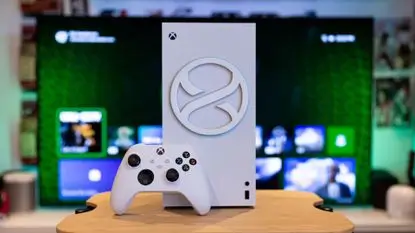
When Microsoft quietly confirmed that its next-generation Xbox—internally known as Project Helix—would be powered by a custom chip from Advanced Micro Devices and feature a new rendering technology dubbed FSR Diamond, the announcement did not read like a traditional console reveal. There was no theatrical unveiling, no industrial design teaser, no controller silhouette bathed in green light.
Instead, what emerged was something far more consequential: a signal that the definition of a console is dissolving.
Project Helix is not simply a successor to the Xbox Series X. It is an architectural shift—one that reframes Xbox as a platform layer spanning hardware, operating systems, cloud infrastructure, and AI-assisted gameplay. And at the center of this transformation sits a simple but radical idea: the next Xbox may not be a single box at all.
View this post on Instagram
stir
A continued partnership with AMD is expected—but what matters is how far that relationship is now being pushed.
The custom system-on-chip (SoC) at the heart of Project Helix is rumored to represent a generational leap beyond RDNA 3, potentially integrating:
-
next-gen GPU architecture with advanced ray tracing pipelines
-
AI-dedicated cores for real-time inference
-
dramatically improved memory bandwidth and latency management
-
deeper hardware-level integration with software ecosystems
Unlike previous console cycles—where gains were often measured in teraflops—this new architecture signals a shift toward heterogeneous computing. That means the chip is not just optimized for rendering frames, but for handling multiple workloads simultaneously: graphics, physics, AI, and system-level processes.
In essence, the SoC becomes less of a graphics engine and more of a real-time orchestration hub.
This matters because modern games are no longer static experiences. They are dynamic systems—procedurally generated, AI-assisted, and increasingly responsive to player behavior. The hardware must evolve accordingly.
flow
Perhaps the most intriguing element of Project Helix is FSR Diamond, an evolution of AMD’s FidelityFX Super Resolution technology.
Where previous iterations of FSR focused on performance-driven upscaling—rendering at lower resolutions and reconstructing higher-resolution images—FSR Diamond appears to move into a new domain: perceptual rendering.
This suggests several key advancements:
-
AI-enhanced reconstruction that predicts visual detail beyond raw data
-
dynamic frame generation integrated at the hardware level
-
adaptive rendering that prioritizes what the player is actually looking at
-
tighter synchronization with ray tracing and lighting systems
The implication is profound. Instead of chasing brute-force native resolution, Project Helix leans into intelligent rendering—producing visuals that feel more real, even if they are computationally more efficient.
In other words, realism becomes a perception problem, not just a pixel problem.
Download, play, and enjoy the games you love with the Xbox app, now available on Arm-based Windows 11 PCs! https://t.co/4DGncs9hni https://t.co/Ns9EPUPY3K
— Windows (@Windows) January 21, 2026
cpu
If Project Helix’s hardware represents evolution, Xbox Mode on Windows 11 represents revolution.
For years, Microsoft has positioned Windows as a gaming platform—but always as something adjacent to Xbox. With Xbox Mode, that separation begins to disappear.
Xbox Mode is expected to:
-
transform Windows 11 into a console-like interface
-
optimize system resources specifically for gaming
-
unify Game Pass, cloud gaming, and local installs into one environment
-
enable seamless transitions between PC and console ecosystems
The ambition is clear: any compatible device could effectively become an Xbox.
A gaming PC. A handheld device. A living room mini-PC. Even cloud-connected screens.
This is not just software convenience—it is a strategic redefinition of what Xbox means. No longer tied to a single piece of hardware, Xbox becomes a universal access layer.
eco
At a macro level, Project Helix reflects a broader industry convergence.
Traditional console cycles—defined by fixed hardware generations—are giving way to something more fluid:
-
hardware that behaves like a PC
-
PCs that behave like consoles
-
cloud systems that supplement both
Microsoft is uniquely positioned to lead this convergence because it controls all three pillars:
-
hardware (Xbox)
-
operating system (Windows)
-
cloud infrastructure (Azure)
Project Helix appears to unify these into a single continuum of play.
Imagine starting a game on a dedicated console, continuing on a Windows device in Xbox Mode, and finishing on a cloud stream while traveling. The experience becomes device-agnostic, anchored not by hardware, but by your account, your data, and your preferences.
struct
Beyond graphics and hardware, the next Xbox generation is being shaped by AI—not as a gimmick, but as infrastructure.
Microsoft has already begun introducing AI-driven tools into gaming ecosystems, and Project Helix is expected to deepen this integration:
-
real-time gameplay assistance (co-pilot systems)
-
adaptive difficulty and world generation
-
AI-enhanced NPC behavior and narrative systems
-
performance optimization at the system level
This aligns with Microsoft’s broader push into AI across its entire ecosystem. Gaming becomes another node in that network—one where AI enhances not just visuals, but interaction, storytelling, and accessibility.
phil
Interestingly, very little has been revealed about the physical design of Project Helix—and that absence is telling.
In previous generations, the console itself was a centerpiece. A sculptural object. A symbol of technological progress.
With Project Helix, the emphasis shifts away from the object and toward the experience layer.
The hardware may still exist as a premium flagship device—but it is no longer the sole gateway. Instead, it becomes one expression of a broader system.
This mirrors trends in other industries, where the value of a product is increasingly defined not by its form, but by its ecosystem integration.
the diverge
Project Helix also highlights how differently the major platform holders are approaching the future.
Sony continues to emphasize high-performance hardware and exclusive content ecosystems, building on the success of PlayStation.
Nintendo focuses on hybrid innovation and first-party creativity, as seen in its evolving hardware philosophy.
Microsoft, by contrast, is pursuing platform ubiquity.
Rather than competing solely on hardware specs or exclusives, it is attempting to make Xbox inescapable—present across devices, contexts, and use cases.
This divergence suggests that the next generation will not be defined by a single winner, but by different interpretations of what gaming should be.
anticip
While Project Helix is confirmed, its release window is widely expected to fall around 2027.
That timeline allows Microsoft to:
-
mature its AI integrations
-
refine Xbox Mode on Windows 11
-
scale cloud infrastructure
-
ensure developer readiness for new hardware capabilities
In the meantime, the current generation—anchored by devices like the Xbox Series S—continues to serve as a bridge.
fwd
Project Helix represents something more significant than a hardware upgrade.
It is the culmination of a decade-long strategy to transform Xbox from a product into a platform ecosystem.
-
hardware becomes modular
-
software becomes universal
-
AI becomes foundational
-
cloud becomes seamless
In this context, the next Xbox is not just something you buy—it is something you access.
fin
If previous console generations were defined by competition—PlayStation vs Xbox, power vs exclusives—Project Helix suggests a different future.
A future where:
-
devices matter less than experiences
-
ecosystems matter more than hardware
-
intelligence (AI) matters as much as performance
Microsoft’s next-gen Xbox is not simply preparing for the next cycle. It is preparing for a world where the cycle itself may no longer exist.
And in that world, Project Helix is not just the next Xbox.
It is the blueprint for what comes after consoles.