Lil Uzi Vert Co-Signs 2Slimey, Signals a New Album — Momentum Without Announcement Cycles

March 18, 2026
a co-sign
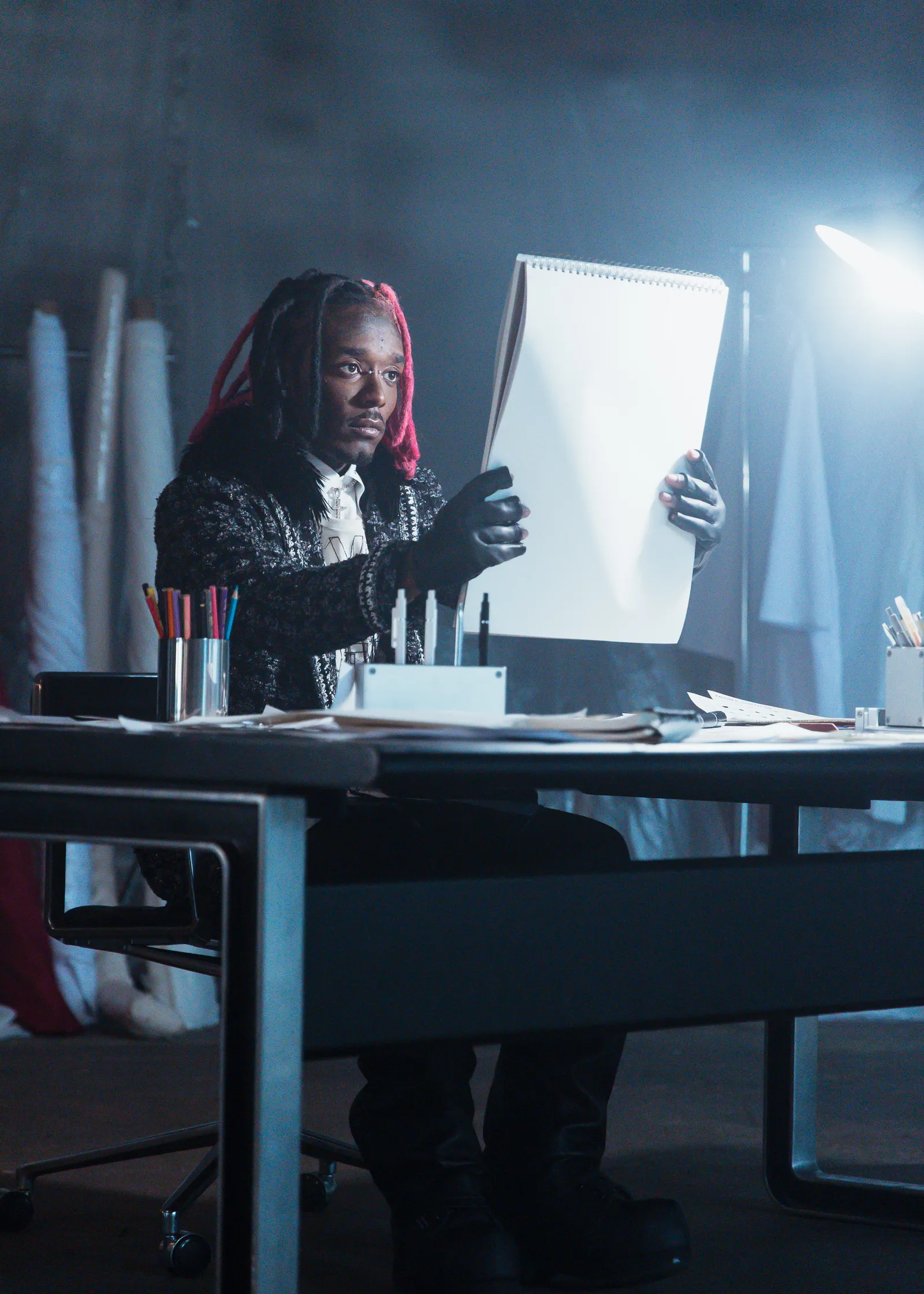
When Lil Uzi Vert publicly acknowledges an emerging artist like 2Slimey, the gesture operates beyond simple endorsement. In the current landscape, where virality can exist without structure and visibility often precedes infrastructure, a co-sign becomes a form of cultural placement. It signals alignment rather than approval, positioning an artist within a broader lineage of sound, energy, and intent.
For 2Slimey, whose rise has been defined by distortion-heavy production, fragmented vocal delivery, and a hyper-digital aesthetic, the recognition lands at a moment where perception is still forming. There is no confirmed major label deal, no fixed industry framing. Instead, there is movement—rapid, uncontained, and largely independent. Uzi’s acknowledgment does not formalize that movement, but it amplifies it, bringing it into clearer focus for a wider audience.
What prevails here is not the idea of discovery, but of continuation. Uzi is not introducing something entirely new; they are identifying a frequency that already exists and extending its reach.
idea
The relationship between emerging artists and established figures has shifted significantly. Where co-signs once followed label backing, they now often precede it. This inversion reflects a broader restructuring of the industry, where attention is built first and formal agreements come later, if at all.
Uzi’s engagement with artists like 2Slimey reinforces this model. It suggests a form of mentorship or recognition that is less transactional and more observational. The artist is not being absorbed into a system, but acknowledged within a space that remains fluid.
This dynamic benefits both sides. For the emerging artist, it accelerates visibility without sacrificing independence. For Uzi, it reinforces a position not just as a performer, but as a cultural signaler—someone attuned to where the sound is moving before it stabilizes.
stir
Alongside the co-sign, Uzi indicating that a new album is expected this year introduces another layer to the conversation. Yet even this announcement resists conventional framing. There is no rigid rollout, no clearly defined campaign structure, no immediate alignment with industry timelines.
This ambiguity is not accidental. It reflects how Uzi has gradually moved away from the traditional album cycle. Releases no longer function as singular peaks in visibility. Instead, they operate as punctuation within an ongoing presence.
A new album, in this context, is less about reintroducing the artist and more about extending a continuum. It adds to an already active cultural footprint rather than resetting it. The anticipation surrounding it is not driven by absence, but by accumulation—of sounds, influences, and moments that have been building over time.
influ
Uzi’s position in 2026 is defined less by chart performance and more by sustained influence. This influence manifests in ways that are not always immediately quantifiable. It appears in the tonal choices of younger artists, in the emotional elasticity that defines contemporary rap, and in the willingness to blur genre boundaries without hesitation.
The co-sign of 2Slimey illustrates this clearly. It highlights a throughline between Uzi’s earlier experimentation and the current wave of artists pushing distortion, chaos, and vulnerability into new configurations. The connection is not direct imitation, but shared sensibility.
This is what prevails: a form of authorship that exists at the level of atmosphere rather than structure. Uzi’s impact is not confined to specific songs or projects. It permeates the broader soundscape.
flow
The relationship between Uzi and the underground is not one-directional. While Uzi influences emerging artists, those same artists contribute to the evolution of the sound that Uzi engages with. It is a feedback loop, where ideas circulate, mutate, and return in altered forms.
By co-signing 2Slimey, Uzi acknowledges this loop. It is not about elevating from above, but about recognizing what is already resonating below. The underground, in this sense, functions as both source and mirror—a space where new textures are developed and where established artists can recalibrate their own direction.
This dynamic keeps Uzi’s output from becoming static. It allows for continuous adaptation without the need for overt reinvention.
subtle
One of the more distinctive aspects of Uzi’s current positioning is the ability to generate anticipation without relying on constant output. The mention of a new album is enough to activate attention, even in the absence of detailed information.
This reflects a shift in how engagement is maintained. Rather than saturating audiences with content, Uzi operates through selective visibility. Appearances, statements, and co-signs function as signals, each contributing to a larger sense of momentum without exhausting it.
The result is a form of presence that feels both immediate and controlled. It allows space for speculation, for interpretation, and for the audience to participate in constructing the narrative.
position
Looking ahead, Uzi’s trajectory appears less concerned with traditional milestones and more focused on maintaining a dynamic relationship with culture. The upcoming album will likely serve as an extension of this approach rather than a departure from it.
It may incorporate elements drawn from the current underground, reflecting the same sensibilities that informed the co-sign of 2Slimey. It may also continue to blur the boundaries between genres, resisting categorization in favor of fluidity.
What seems consistent is the refusal to adhere to fixed expectations. Uzi’s movement is defined by responsiveness—an ability to engage with shifting sounds and scenes without becoming anchored to any single one.
fin
The co-sign of 2Slimey and the indication of a new album are not isolated events. They are interconnected signals within a broader pattern that defines Lil Uzi Vert’s current phase.
What prevails is a model of artistry that:
exists continuously rather than cyclically
influences atmospheres rather than just outputs
engages with emerging scenes without absorbing them
Uzi’s role has expanded from artist to cultural conduit, bridging established presence with emerging energy. The acknowledgment of 2Slimey underscores this position, while the promise of new music suggests that the next phase will continue to evolve within that framework.
In a landscape where structure is increasingly fluid, Uzi’s approach feels less like adaptation and more like alignment. Not chasing where culture is going, but existing within it as it moves.