AirPods Pro 3 Recast — Spigen’s Retro Case Channels Inspired by Macintosh Form

March 18, 2026
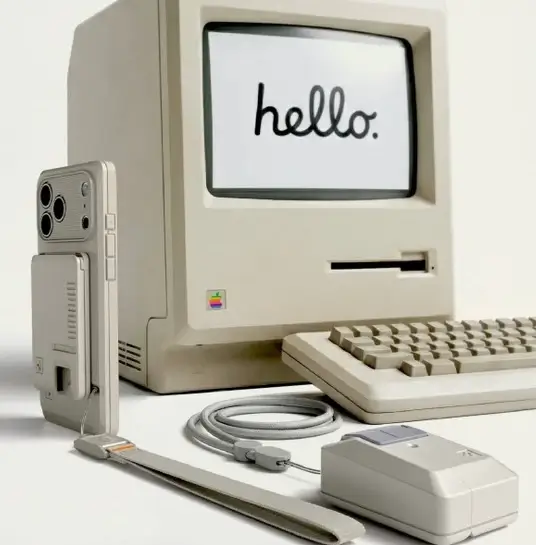
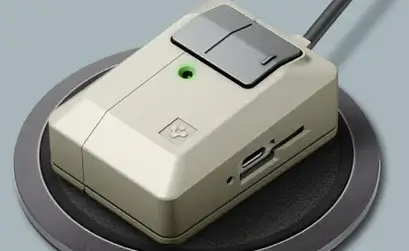
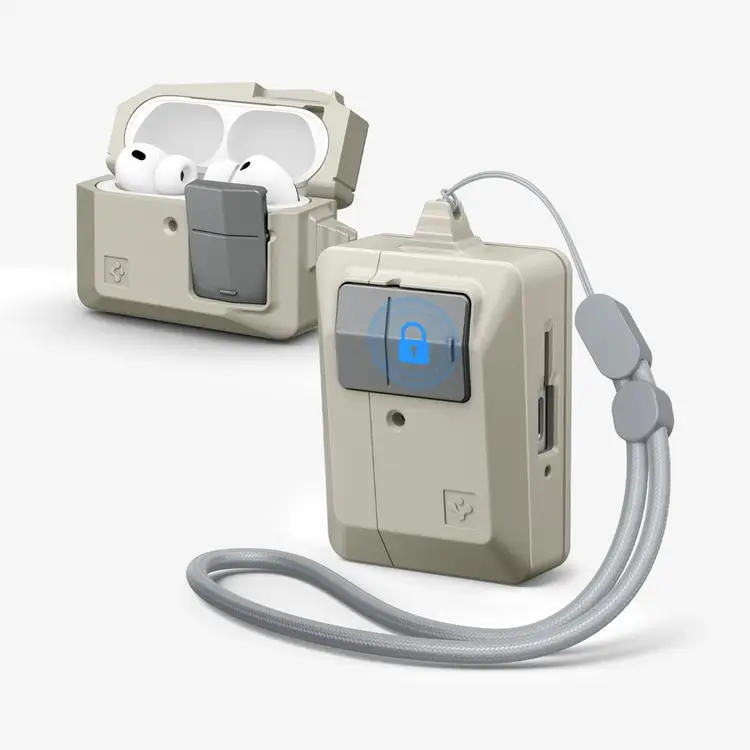
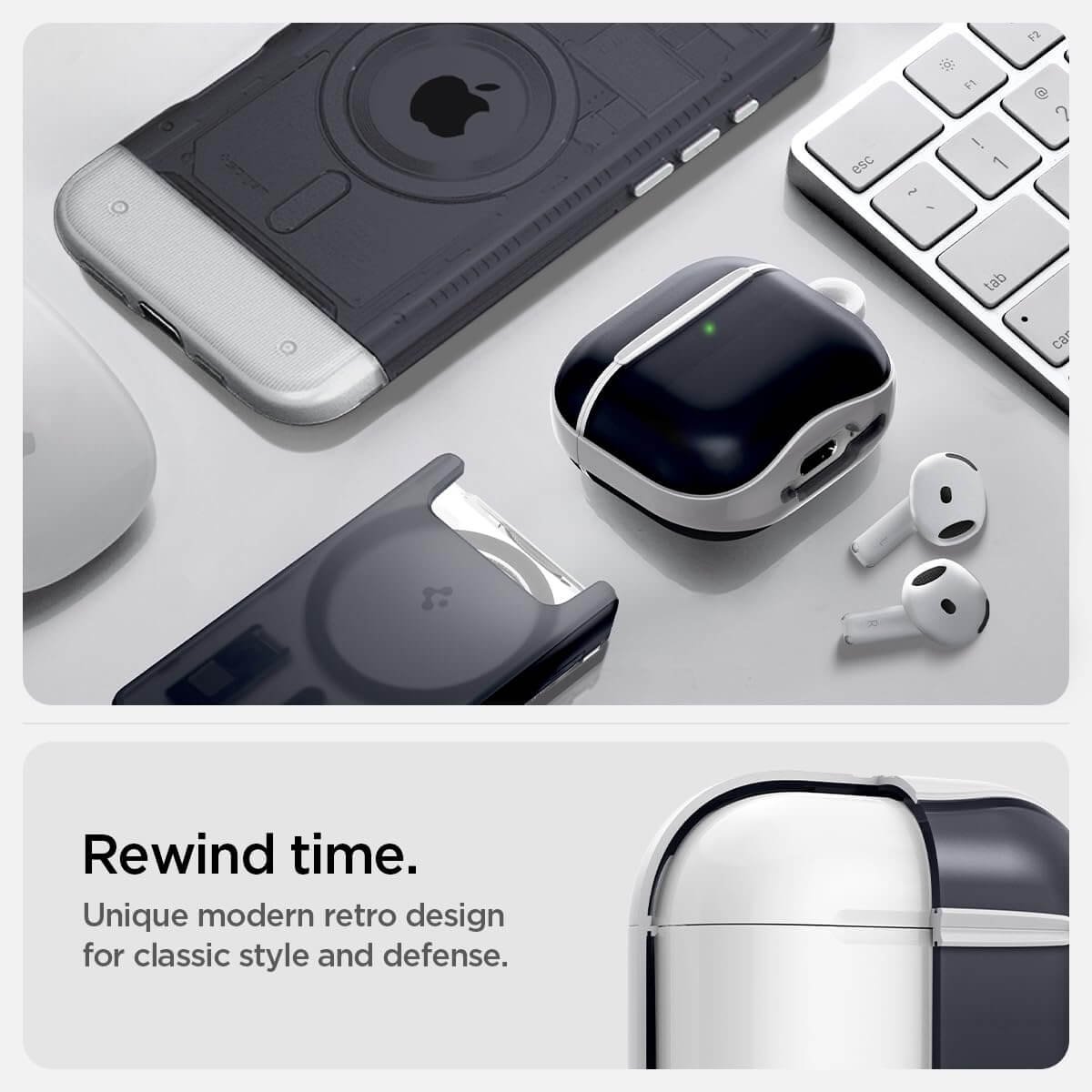
There are moments in consumer technology when design stops being purely functional and becomes archival—when an object is not only used but remembered. The emergence of a retro-inspired case for the upcoming AirPods Pro 3, designed by Spigen, signals precisely that kind of shift. It is not just an accessory. It is a deliberate callback to an era when computing was tactile, monochrome, and quietly revolutionary.
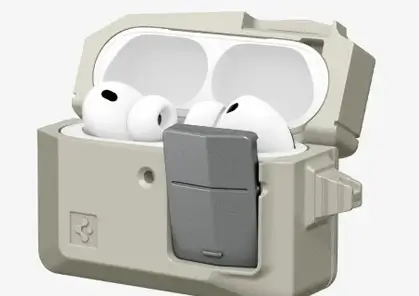
The case in question transforms the visual identity of Apple AirPods Pro into something unmistakably familiar: the iconic silhouette of the original Macintosh mouse. That soft rectangular form, the muted beige tone, the subtle curvature that once sat beside early desktop machines—it returns here, miniaturized and recontextualized for a generation that moves through wireless ecosystems rather than wired desktops.
This is not accidental nostalgia. It is engineered memory.
flow
To understand why this accessory resonates, one has to return to the design language introduced by Apple in the 1980s. The original Macintosh mouse was not just a peripheral; it was a radical simplification of human-computer interaction. A single button. A compact form. A material palette that leaned into neutrality rather than spectacle.
That ethos—clarity through reduction—has persisted across decades of Apple design, even as materials evolved from beige plastics to aluminum, glass, and polished white composites. The AirPods themselves are arguably descendants of that same philosophy: minimal, seamless, almost invisible in use.
What Spigen does with this retro case is collapse that timeline. It brings the past into direct physical contact with the present, allowing the user to hold a piece of design history while engaging with contemporary audio technology.
The result feels less like parody and more like continuity.
stir
Accessories have evolved far beyond their original purpose of protection. In today’s ecosystem, they function as cultural translators—objects that reinterpret primary devices through different aesthetic, emotional, or even ideological lenses.
The AirPods Pro 3, expected to refine active noise cancellation, spatial audio, and adaptive listening features, represent the cutting edge of personal sound. Yet, when placed inside Spigen’s retro shell, they take on an entirely different narrative. They become part of a dialogue about time, design lineage, and the cyclical nature of taste.
This is where the accessory becomes more powerful than the device itself. It reframes the user’s relationship to technology. Instead of chasing the next iteration, it invites reflection on where these objects came from—and how their forms continue to echo across decades.
illusion
One of the most compelling aspects of the Spigen retro case lies in its material simulation. While constructed from modern polymers designed for durability and shock absorption, the surface treatment deliberately mimics the slightly textured, matte finish of early Apple plastics.
This is not a perfect replication—and it does not need to be. The goal is not authenticity in a museum sense, but recognition. The user does not need to have owned an original Macintosh to feel the reference. The shape, the color, the proportions—they trigger a collective visual memory embedded in technology culture.
There is also a subtle tension at play. The original Macintosh mouse was wired, tethered, dependent on a physical connection to function. The AirPods Pro 3, by contrast, exist in a fully wireless paradigm. Encasing one within the aesthetic of the other creates a kind of conceptual friction—a reminder of how far the technology has moved, even as its visual language remains anchored in the past.
pace
Nostalgia in consumer technology is often misunderstood as regression. In reality, it functions as a forward-facing strategy—one that leverages familiarity to create emotional resonance in an increasingly saturated market.
The success of retro-inspired accessories, from cassette tape AirPods cases to handheld console motifs, points to a broader shift in consumer behavior. Users are no longer satisfied with pure functionality. They seek narrative, identity, and a sense of connection to something larger than the device itself.
Spigen’s approach stands out because it avoids excess. Where some retro accessories lean into exaggerated references or playful caricature, this case maintains a level of restraint that aligns with Apple’s own design philosophy. It feels plausible—almost as if it could have existed as an official product in an alternate timeline.
That plausibility is what gives it weight.
style
While the case draws attention, it is ultimately built around the anticipated release of AirPods Pro 3—a product expected to push Apple’s audio ecosystem further into adaptive intelligence.
Rumors and industry expectations suggest improvements in health tracking, potentially integrating biometric sensors alongside refined noise control algorithms. Spatial audio is likely to become more dynamic, adjusting in real time to user movement and environmental acoustics. Battery efficiency, always a critical factor, is expected to see incremental gains.
Within this context, the retro case introduces an interesting contrast. It wraps a forward-looking device—one that may incorporate machine learning and real-time environmental analysis—in a shell that evokes a time before such capabilities were imaginable.
This juxtaposition is not contradictory. It is complementary. It grounds innovation in a recognizable visual framework, making it more approachable, more human.
theme
Industrial design has always been a form of storytelling, even when it presents itself as neutral. The curvature of an object, the choice of material, the weight distribution—all of these elements communicate values and intentions.
The original Macintosh mouse told a story of accessibility. It simplified interaction, making computing less intimidating. The AirPods Pro tell a story of invisibility—technology that disappears into the background, enhancing experience without demanding attention.
Spigen’s retro case merges these narratives. It takes the accessibility of the past and overlays it onto the seamlessness of the present. The result is an object that feels both familiar and new, grounded yet progressive.
This is where the accessory transcends novelty. It becomes a bridge between design eras.
role
Apple has long maintained a tightly controlled ecosystem, but it is within the third-party accessory space that much of the experimentation occurs. Brands like Spigen operate in a unique position—they can reinterpret Apple’s products without the constraints of maintaining a singular brand identity.
This freedom allows for a diversity of expression that would be difficult within Apple’s own product lineup. Retro cases, bold colorways, hybrid materials—these become avenues for users to personalize devices that are otherwise intentionally uniform.
In this sense, the Spigen retro case is not just a product. It is part of a broader ecosystem of reinterpretation, where the meaning of a device is continuously reshaped by the objects that surround it.
View this post on Instagram
user
The rise of AirPods cases as a category reflects a deeper shift toward micro-customization. Unlike smartphones, which often require significant investment and long-term commitment, accessories offer a low-barrier way to express identity.
A case can be swapped, replaced, or collected. It becomes part of a rotating system of self-presentation, similar to clothing or jewelry. The Spigen retro case fits seamlessly into this paradigm, offering a distinct aesthetic that signals both technological awareness and cultural literacy.
It is not simply about liking old Apple design. It is about recognizing its significance—and choosing to carry that recognition into everyday use.
emotive
There is something inherently intimate about objects that fit in the palm of the hand. AirPods cases are handled dozens of times a day, opened and closed in moments of transition—commutes, workouts, brief pauses between tasks.
By transforming this small, frequently used object into a reference point for design history, Spigen amplifies its emotional weight. Each interaction becomes a subtle reminder of the lineage behind the technology.
This is where the case achieves something rare. It elevates a routine gesture into a moment of reflection, without disrupting the flow of use.
idea
Design does not move in a straight line. It cycles, revisits, reinterprets. The resurgence of beige tones, rounded edges, and tactile finishes across various product categories suggests a broader return to earlier design sensibilities.
This is not about rejecting modernity, but about balancing it. As devices become more abstract—driven by software, invisible processes, and cloud-based interactions—there is a growing desire for physical anchors. Objects that feel grounded, that carry a sense of permanence.
The Spigen retro case taps into this desire. It offers a tangible connection to a time when technology was more visibly mechanical, more physically present.
fwd
It would be easy to dismiss a retro AirPods case as a novelty item—a playful accessory with limited longevity. But that perspective overlooks the deeper currents at play.
The continued relevance of early Apple design, the persistence of minimalist aesthetics, the cyclical nature of consumer taste—all of these factors suggest that such objects have a longer lifespan than expected.
The Spigen case is not trying to redefine the AirPods experience. It is subtly reshaping how that experience is perceived. It adds a layer of meaning without altering the core functionality.
And in doing so, it achieves a kind of quiet permanence.
fin
The transformation of AirPods Pro 3 into a classic Macintosh mouse, through Spigen’s retro case, is a small gesture with significant implications. It demonstrates how design can transcend time, how objects can carry meaning beyond their immediate function.
It also highlights the evolving role of accessories—not as secondary add-ons, but as active participants in the narrative of technology.
In a landscape defined by constant updates and rapid iteration, there is something grounding about holding a piece of design that acknowledges where it all began. Not as a static reference, but as a living, usable object.
A case, yes. But also a conversation between past and present—one that fits, quite literally, in the palm of your hand.