Simone Rocha at Pitti Uomo 106 — A Measured Sensical into Menswear

March 18, 2026
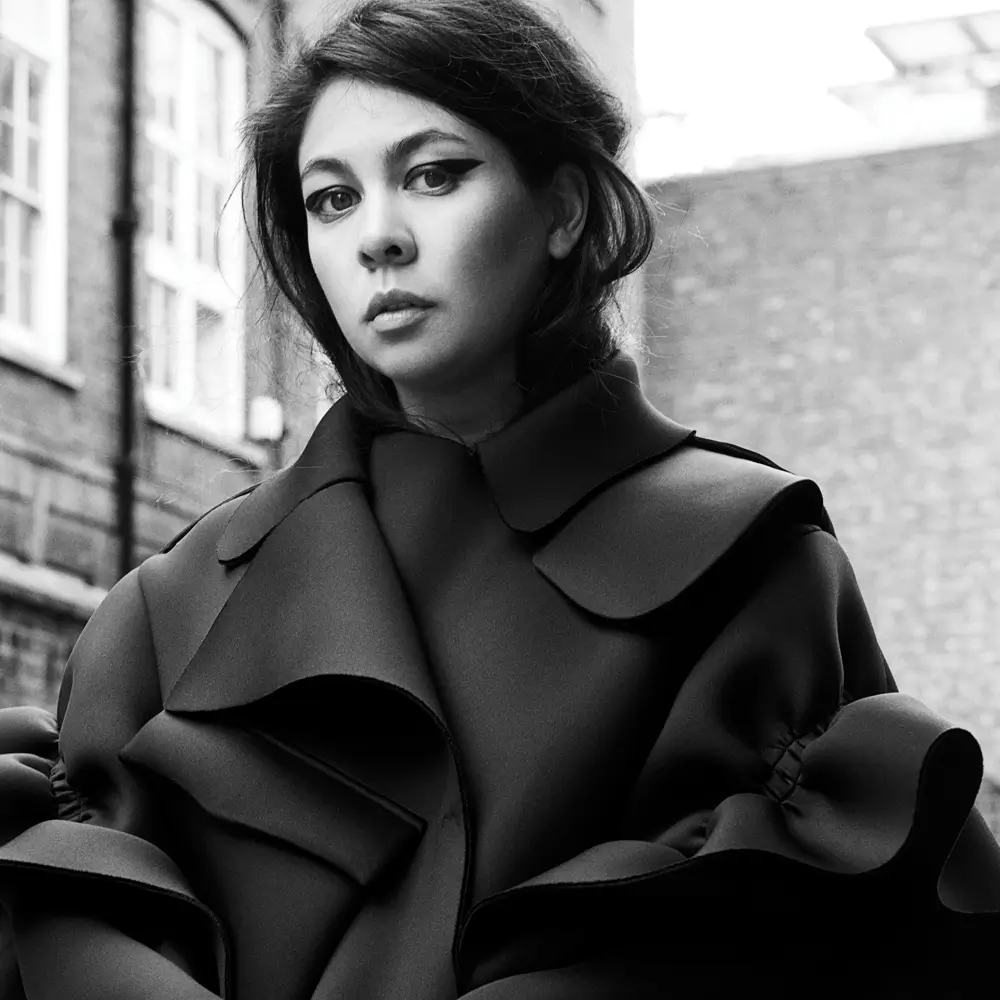
The schedule is set. From 16 to 19 June 2026, Pitti Uomo returns to Florence, once again opening the sequence that leads into Milan Men’s Fashion Week. The structure remains familiar—buyers, editors, presentations, a rhythm that has defined menswear’s seasonal cadence for decades. Yet within that structure, certain moments carry a different kind of weight.
This year, one of those moments arrives quietly. Simone Rocha will present a special show—her first independent menswear presentation on the official men’s calendar. It is a development that reads less like a debut in the conventional sense and more like a continuation placed in a new context.
There is no sense of rupture. Instead, there is a gradual shift, one that brings her work into closer proximity with a system that has historically operated on different terms.
View this post on Instagram
the setting
Florence has always held a particular position within fashion. It is not defined by immediacy. Its pace is slower, its references longer, its surfaces marked by time. Within Pitti Uomo, this setting creates a contrast—between the urgency of contemporary fashion cycles and the steadiness of place.
For Rocha, this context matters. Her work has consistently drawn from layered histories—personal, cultural, and material. Presenting in Florence does not impose something new onto that language. It frames it differently.
The city offers a kind of resistance to acceleration. Garments are not just seen; they are held within an environment that encourages attention. In this sense, the show becomes less about spectacle and more about presence.
flow
Rocha’s work has never been confined to strict categories. From the beginning, her collections have moved across boundaries—between menswear and womenswear, between softness and structure, between decoration and restraint.
Her approach to menswear has existed within this broader practice rather than as a separate line of inquiry. Pieces have appeared gradually:
-
tailored jackets softened with unexpected detailing
-
shirting reworked through proportion and texture
-
garments that resist fixed definitions of gender or use
This upcoming presentation does not introduce menswear as a new direction. It gathers what has already been there and allows it to take shape within a dedicated space.
prudential
In reflecting on the invitation, Rocha’s own words remain measured. She speaks of gratitude, of the opportunity to present her first independent menswear show, of sharing the full scope of her proposition. There is no emphasis on arrival, no attempt to define the moment as definitive.
Instead, she frames it as a continuation—an exploration that moves forward while remaining connected to what has come before. The language she uses—authenticity, vulnerability, seriousness, playfulness—does not describe a shift in identity. It describes a way of working.
That distinction matters. It suggests that the presentation will not be shaped by expectation alone, but by an internal logic that has been consistent throughout her practice.
industry
To step onto the official menswear calendar carries a particular kind of pressure, even when it is not explicitly stated. The system has its own expectations:
-
clarity of category
-
consistency of silhouette
-
alignment with market rhythms
For designers whose work already fits within these structures, the transition is often seamless. For someone like Rocha, whose work resists easy classification, the pressure is more subtle.
It does not demand conformity outright. Instead, it introduces a tension—between maintaining a singular vision and engaging with a framework that tends to favor definition.
This is where the significance of the moment begins to emerge. The presentation is not simply about showing menswear. It is about how that menswear will exist within a system that has historically drawn firmer boundaries.
pitti
From the side of Pitti Immagine, the invitation reflects a deliberate choice. Francesca Tacconi, Special Events Coordinator, speaks to Rocha’s ability to create garments that move beyond surface, that engage emotionally and imaginatively.
Her description positions Rocha’s work as something that resists alignment with cautious trends. At a time when parts of menswear appear to be settling into safer territory, Rocha’s approach offers an alternative—one that remains grounded in personal references and layered narratives.
There is an emphasis on intimacy. On the way her work draws from Ireland, Hong Kong, art, and family. These are not abstract references; they are lived ones. They shape the garments in ways that are not always immediately visible, but consistently present.
bal
One of the defining qualities of Rocha’s work is its ability to move across structures without erasing them entirely. Gender distinctions, historical references, stylistic codes—these are not dismissed. They are reworked.
In her collections, it is not uncommon to see:
-
delicate materials paired with structured tailoring
-
decorative elements introduced into otherwise restrained silhouettes
-
proportions that shift subtly, altering the way a garment is read
This approach creates a kind of tension. The garments do not resolve into a single identity. They hold multiple references at once, allowing the wearer to navigate them rather than being defined by them.
Within the context of menswear, this becomes particularly relevant. The category itself has long been shaped by conventions—of fit, of function, of presentation. Rocha’s work does not reject these conventions outright. It moves alongside them, adjusting their edges.
lang
Tacconi’s description of Rocha’s work points toward a series of dualities: poetry and freedom, passion and discipline, fairy tale and transgression. These are not opposing forces in her collections. They are coexisting ones.
There is often a sense of softness that carries strength. A delicacy that does not diminish structure. An attention to detail that does not overwhelm the overall form.
This balance is part of what makes her work difficult to categorize, but also what allows it to resonate across different contexts. It does not rely on a single narrative. It holds several at once.
stir
The timing of Rocha’s presentation aligns with a wider movement in menswear. There is a growing interest in approaches that move beyond surface-level trends—toward work that carries a deeper sense of identity.
This does not mean abandoning the system entirely. It means expanding it. Allowing for different kinds of expression to exist within it.
Rocha’s inclusion at Pitti Uomo can be read within this context. It reflects a recognition that menswear is not fixed. That it can accommodate perspectives that challenge its established norms without dissolving them completely.
role
Anticipation around the show has begun to build, though it remains measured. There is no singular expectation to point toward. Instead, there is a sense of curiosity.
What will it look like when Rocha’s language is given full space within the menswear calendar? How will her approach translate when it is not positioned alongside womenswear, but within a framework that carries its own history and expectations?
These questions do not demand immediate answers. They allow for uncertainty, which is part of what gives the moment its significance.
loc
It is worth returning to Florence, not simply as a backdrop, but as an active participant in the presentation. The city’s relationship to craft, to history, to materiality, aligns in subtle ways with Rocha’s own approach.
There is a shared attention to detail. A respect for process. A sense that garments can carry meaning beyond their immediate function.
In this environment, the show is likely to unfold at a different pace. Not slower in a literal sense, but more considered. The setting encourages observation, allowing the nuances of the work to come forward.
mission
What follows the presentation may be just as important as the show itself. Entering the menswear calendar opens new pathways:
-
expanded visibility
-
new forms of engagement with buyers and audiences
-
the possibility of further development within the category
At the same time, it introduces new pressures—of continuity, of expectation, of alignment with seasonal cycles.
How Rocha navigates this space will shape what comes next. Whether the work continues to evolve within this framework, or moves between it and other contexts, remains open.
fwd
It would be easy to frame this moment as a milestone, a point of arrival. In some ways, it is. But it also feels incomplete in a productive way.
The presentation does not close a chapter. It opens one. It places Rocha’s work in a new setting, allowing it to interact with different structures and audiences.
What emerges from that interaction is not predetermined. It will depend on how the work is received, how it develops, and how it continues to hold onto its core.
sum
Simone Rocha’s upcoming presentation at Pitti Uomo does not rely on declaration. It carries its significance more quietly, through context and timing.
It brings a body of work that has always existed slightly outside of strict definitions into closer alignment with a system that often depends on them. In doing so, it introduces a subtle pressure—one that does not force change, but invites negotiation.
Between structure and fluidity. Between expectation and independence. Between the present moment and the histories that inform it.
The outcome is not yet visible. But the conditions are set.
And that, for now, is enough.