Aimé Leon Dore x Technics: The Art of Refinement in Sound

March 18, 2026
flow
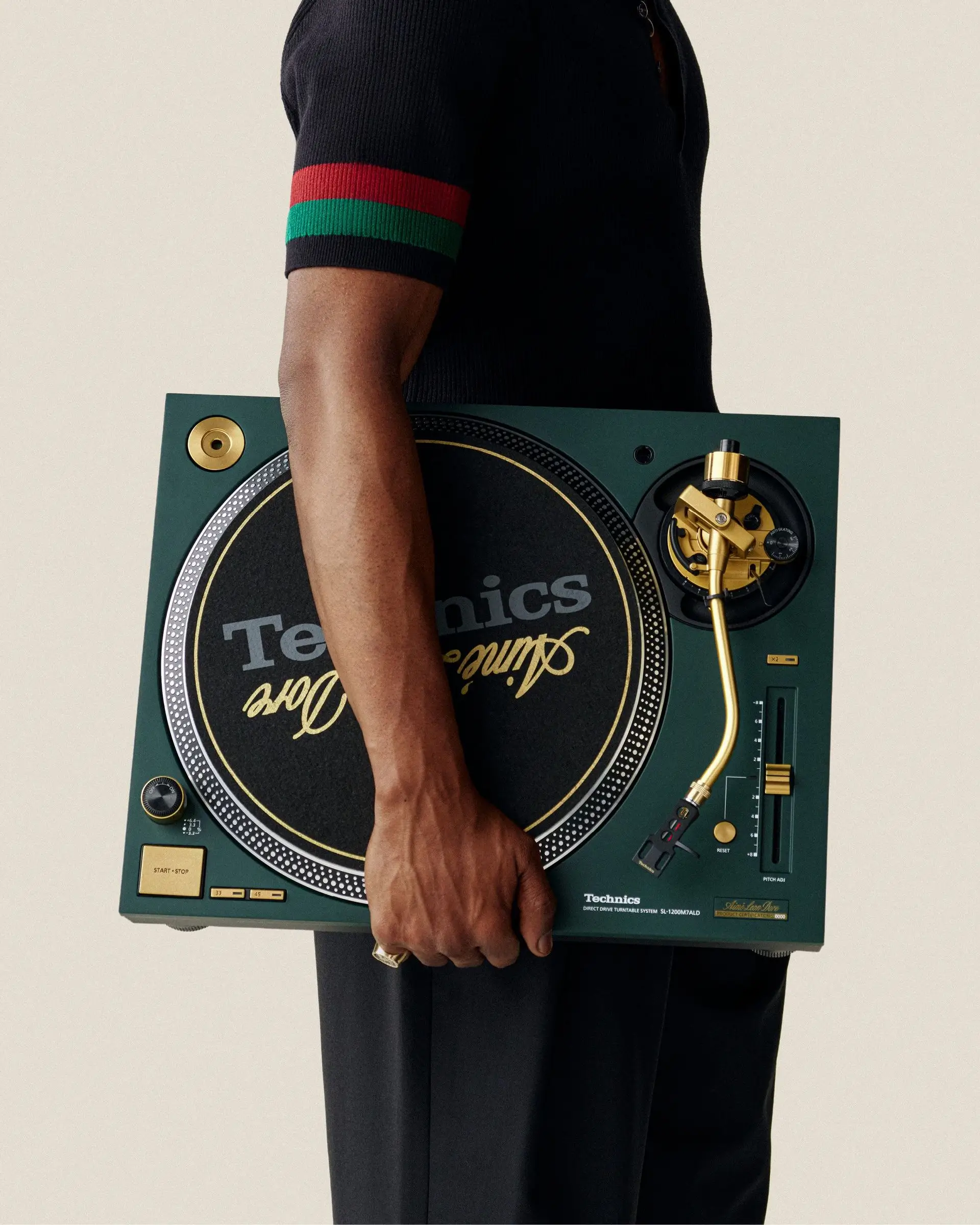
There is a difference between referencing culture and constructing it. The former borrows; the latter builds. The collaboration between Aimé Leon Dore and Technics sits firmly in the second category—a convergence not of trend, but of discipline.
To approach this partnership critically is to move beyond product speculation and toward a more cohesive understanding of intent. This is not merely a fashion label collaborating with an audio manufacturer. It is a dialogue between two systems of thinking—one rooted in visual identity, the other in sonic precision—each governed by a shared mantra: culture must be constructed with care, or it collapses into noise.
View this post on Instagram
aime leon
Since its founding by Teddy Santis, Aimé Leon Dore has operated with a rare consistency. The brand’s output—season after season—has resisted the volatility that defines much of contemporary fashion. Instead, it has built an architecture of restraint.
This restraint is not minimalism in the reductive sense. It is a method. A refusal to overstate, to oversaturate, to overproduce. ALD’s garments, spaces, and campaigns are unified by a controlled vocabulary: muted palettes, tailored silhouettes, references that feel personal rather than performative.
Music has always been embedded within this structure. Not as branding, but as atmosphere. A constant presence that informs tempo, tone, and rhythm.
The collaboration with Technics, then, is not an expansion. It is an articulation of an existing principle.
phil
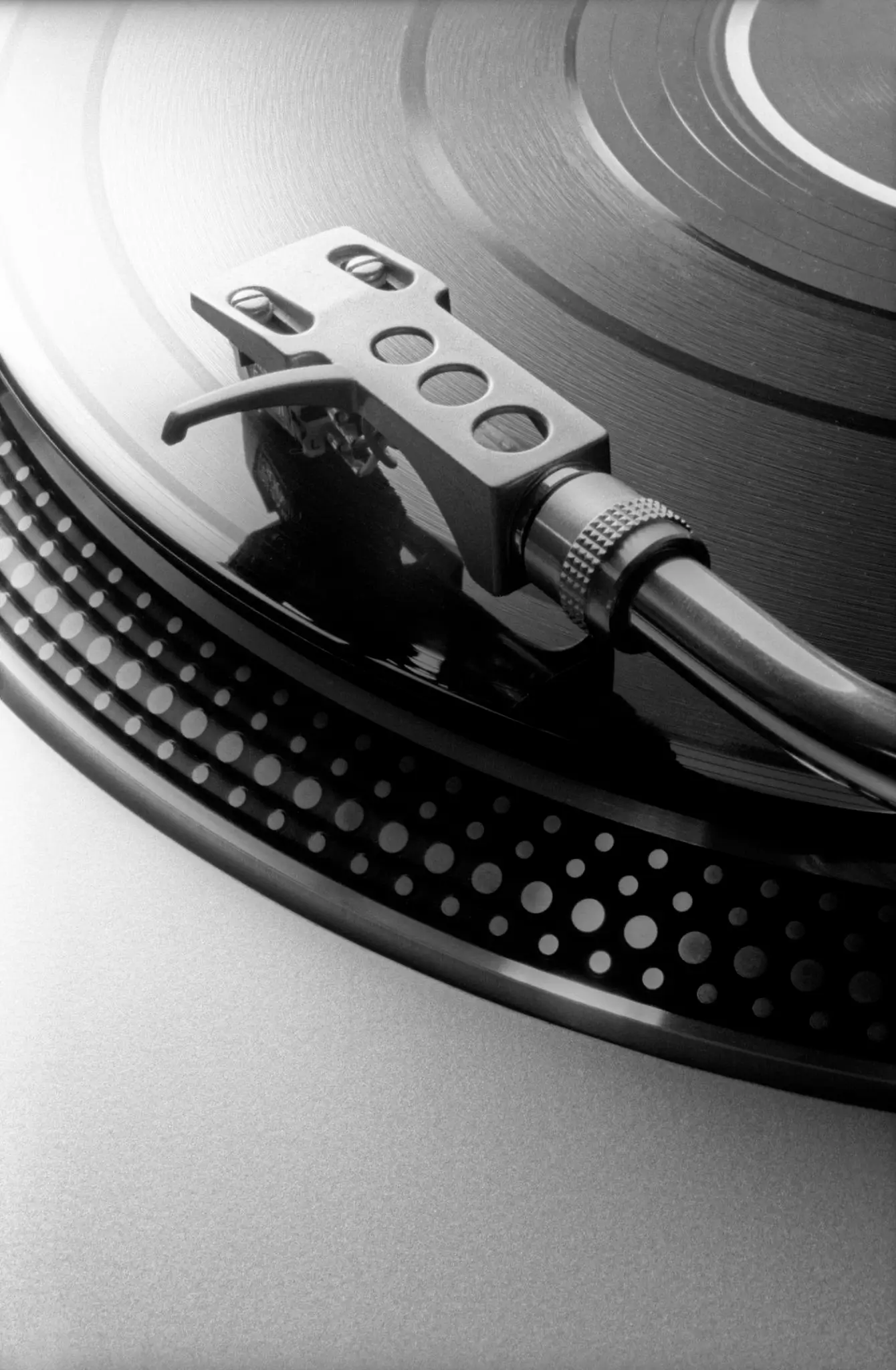
To comprehend Technics is to acknowledge precision—not as feature, but as philosophy. Since the introduction of the SL-1200, Technics has defined what it means for sound to be handled with integrity. The direct-drive motor, the calibrated pitch control, the tactile feedback of the platter—these are not aesthetic choices; they are commitments.
Technics emerged in a context where sound was physical. Records were objects, playback was mechanical, and listening required attention. In that environment, precision became cultural. It shaped how DJs performed, how listeners engaged, how spaces were organized.
In recent years, Technics has reasserted itself within the high-fidelity market, emphasizing material quality, engineering rigor, and a return to intentional listening. This repositioning aligns seamlessly with Aimé Leon Dore’s own evolution toward a more considered, lifestyle-oriented identity.
share
The significance of Aimé Leon Dore x Technics lies not in the novelty of the pairing, but in the coherence of their shared discipline. Both brands operate within frameworks that prioritize attention—attention to detail, to process, to the environments in which their products exist.
In fashion, attention manifests through cut, fabric, and proportion. In audio, it manifests through frequency response, signal integrity, and mechanical stability. These are different languages describing the same principle: nothing is incidental.
This convergence produces a collaboration that is less about merging categories and more about reinforcing a methodology. It is not fashion entering audio, or audio entering fashion. It is a shared insistence that objects—whether garments or machines—must be resolved fully.
idea
Speculation around the product itself inevitably centers on the Technics SL-1200—a platform that carries both historical weight and technical authority. Yet to reduce the collaboration to a redesigned turntable would be to miss its broader implications.
The object, whatever form it takes, will likely resist superficial alteration. Technics’ engineering does not invite reinvention; it demands respect. Aimé Leon Dore’s role, therefore, is not to transform the function, but to refine the context.
This refinement may occur through material selection—finishes that soften industrial surfaces, tones that align with ALD’s visual language. It may extend to packaging, documentation, or the rituals surrounding use.
The goal is not to create a new object, but to reveal the existing one more clearly.
flow
If the object is one component, the space in which it exists is another. Aimé Leon Dore has consistently treated retail as environment rather than display. Its flagship in New York City functions as café, gallery, and social hub—a place where clothing is only one element of a larger composition.
A Technics collaboration introduces the possibility of extending this philosophy into sound. Listening rooms, in-store installations, or dedicated environments where audio is experienced as deliberately as clothing is worn.
In these spaces, sound becomes spatial. It interacts with materials, with light, with movement. The act of listening shifts from passive consumption to active engagement.
This is where the collaboration’s deeper potential lies—not in the product alone, but in the environments it enables.
theme
Both Aimé Leon Dore and Technics engage with nostalgia, but neither is governed by it. Instead, they practice a disciplined form of recall—selecting elements of the past that retain relevance, discarding those that do not.
For ALD, this might mean referencing mid-century tailoring or 1990s street culture without replicating them directly. For Technics, it means preserving the functional DNA of its turntables while refining their execution for contemporary contexts.
The collaboration, therefore, becomes a study in controlled nostalgia. Memory is present, but it is filtered, edited, and resolved.
stir
The cultural context of 2026 is defined by a paradox. On one hand, access to music has never been easier. Streaming platforms provide infinite libraries, accessible instantly. On the other hand, this abundance has diluted the act of listening.
In response, there has been a renewed interest in intentional listening—vinyl records, high-fidelity systems, spaces designed for sound rather than convenience. This shift is not merely technological; it is behavioral.
The Aimé Leon Dore x Technics collaboration emerges within this context as both reflection and reinforcement. It acknowledges that listening, like dressing, can be an act of care. That objects can mediate experience in ways that digital interfaces cannot.
commune
Technics’ history is inseparable from musical subcultures—DJ communities, club scenes, studios. Aimé Leon Dore, while rooted in fashion, has cultivated its own cultural network—one that intersects with music, sport, and urban life.
The collaboration creates a point of overlap between these communities. It invites cross-engagement without forcing it. Those who arrive through fashion may deepen their relationship with sound; those who arrive through audio may encounter a new visual language.
This exchange is not transactional. It is cumulative.
roll
In an era defined by constant visibility, the restraint surrounding this collaboration is notable. There is no saturation campaign, no fragmented teaser strategy. Information is limited, controlled, and intentional.
This approach reflects the collaboration’s underlying discipline. If the product is about clarity, the communication must mirror it. Excess noise would undermine the very principles the partnership represents.
Updates will likely emerge through @aimeleondore and @technics_global, but in a manner consistent with both brands’ measured cadence.
fwd
To maintain coherence across disciplines is not without risk. The more tightly aligned a collaboration becomes, the greater the expectation that every element will resolve cleanly.
Any misalignment—whether in product execution, spatial design, or narrative—will be amplified precisely because the standard has been set so high.
Yet this risk is inherent to any serious undertaking. To aim for coherence is to accept the possibility of failure. It is also the only way to achieve something meaningful.
clue
The emerge between Aimé Leon Dore and Technics should not be understood as a moment. It is a method—an expression of how culture can be constructed through attention, discipline, and restraint.
It proposes that objects matter, not as commodities, but as mediators of experience. That sound, like clothing, can shape identity. That spaces can be designed to support not just function, but feeling.
In this sense, the partnership is less about what is released and more about what it affirms:
That culture is not accidental.
That it must be built.
And that when built with care, it resonates—clearly, precisely, and without excess.