TOGA and Umbro Rewire Football Heritage Through Avant-Garde Precision

March 19, 2026
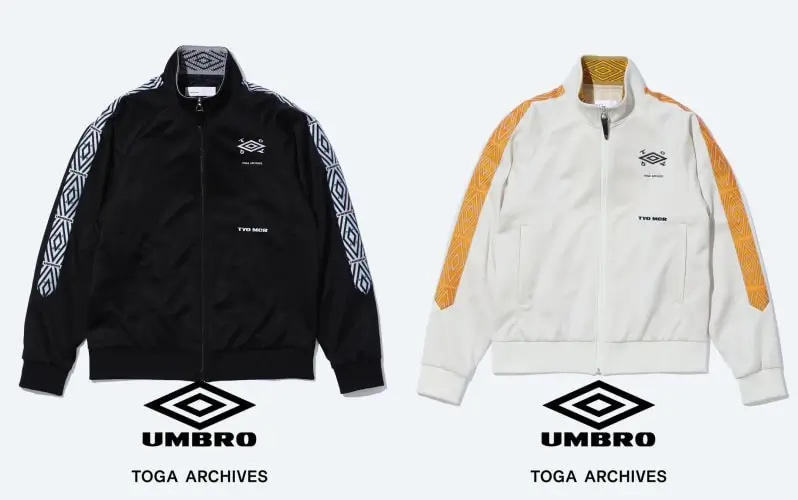
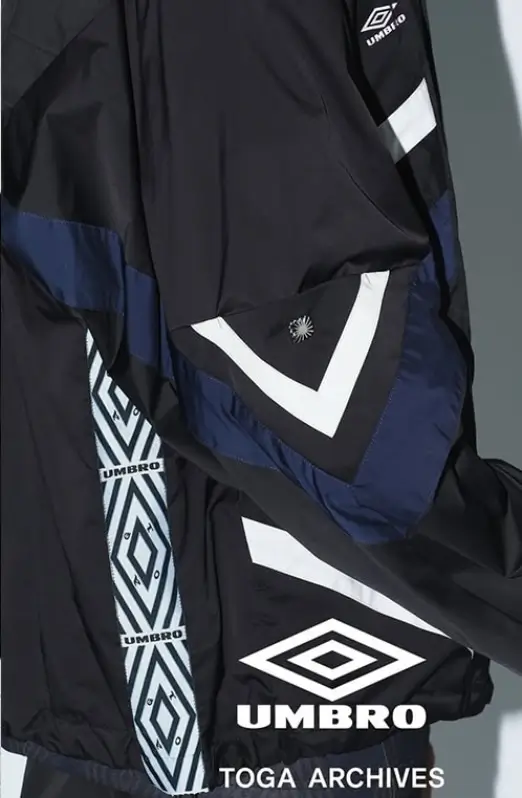
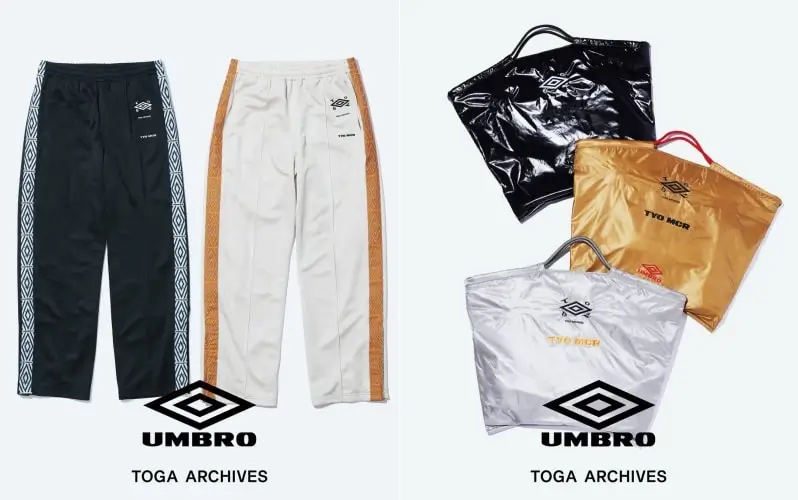
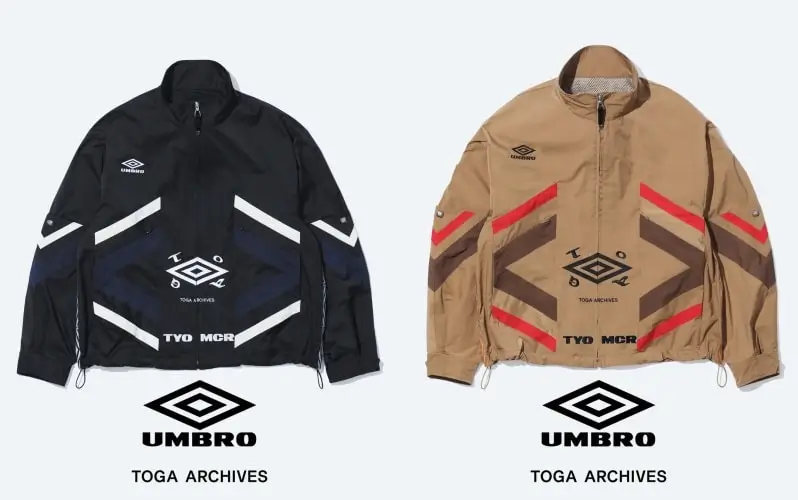
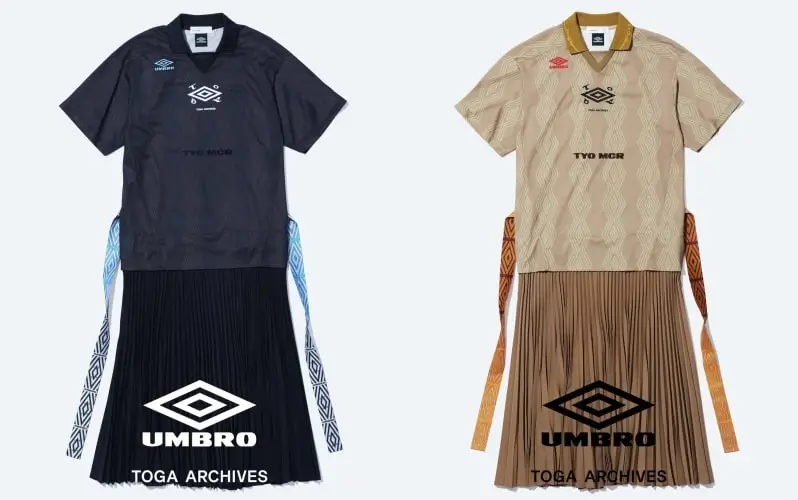
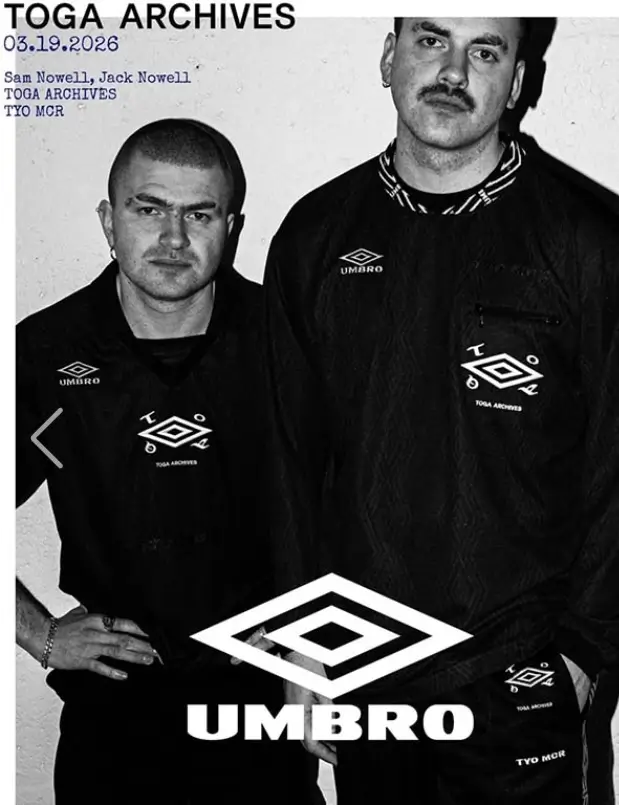
There are converges that feel inevitable, and then there are those that arrive as a cultural recalibration. The meeting of TOGA and Umbro belongs firmly to the latter. On paper, the pairing reads as a collision: Tokyo’s cerebral, avant-garde sensibility intersecting with a century-old English sportswear institution. In execution, however, the result is not a clash but a recalibration of how football heritage can be reinterpreted through high fashion.
This first-ever clip between the two labels materializes as a tightly edited seven-piece capsule, one that doesn’t simply remix archival references but interrogates them. It is a study in tension—between sport and ornament, function and disruption, nostalgia and forward motion. At its core, the collection proposes a new language: one where football codes are not just preserved but destabilized, reframed, and elevated.
View this post on Instagram
idea
To understand the significance of this merge, one must first locate the DNA of TOGA under the direction of Yasuko Furuta. Since founding the label in 1997, Furuta has consistently challenged the conventions of silhouette and surface. Her work often integrates unexpected materials—metal hardware, Western-inspired motifs, and hybridized garments that blur categories.
TOGA’s garments are rarely straightforward. Sleeves are interrupted by chains or panels, tailoring is punctuated with decorative hardware, and traditional references are refracted through a distinctly modern lens. There is always a sense of controlled disruption—an insistence that clothing can function as both object and artifact.
In this context, football apparel becomes fertile ground. Its rigid codes—team colors, sponsor placements, performance fabrics—offer a structured framework for Furuta to dismantle and rebuild. The collaboration with Umbro becomes less about borrowing from sport and more about interrogating its visual and cultural language.
umbro
On the opposite side of the collaboration stands Umbro, a brand whose identity is inseparable from football’s global narrative. Founded in 1924 in Manchester, Umbro has outfitted some of the most iconic teams and players in the sport’s history. Its “Double Diamond” logo is not just a mark of authenticity but a symbol embedded in decades of athletic memory.
Umbro’s design language is rooted in performance and tradition. Jerseys are engineered for movement, tracksuits for training, and outerwear for endurance. The brand’s archives are rich with references—from vintage kits to technical innovations—that speak to football’s evolution as both sport and spectacle.
In recent years, Umbro has increasingly opened its archive to reinterpretation, collaborating with fashion labels to explore new contexts. Yet the partnership with TOGA marks a distinct shift. Rather than simply stylizing football apparel, it allows for a deeper transformation—one that redefines the boundaries of what sportswear can be.
stir
The TOGA x Umbro collection is deliberately concise. Seven pieces—blousons, tracksuits, football jerseys, and bags—form a cohesive narrative rather than an exhaustive offering. This restraint is crucial. It allows each piece to function as a statement, a focused exploration of the collaboration’s central themes.
At the heart of the capsule lies the hybrid blouson, arguably the collection’s most emblematic piece. Here, Umbro’s Double Diamond logo is juxtaposed against TOGA’s signature metal hardware, which runs along the sleeves like industrial jewelry. The effect is immediate and striking. The familiar codes of sportswear are interrupted by elements that feel almost architectural, transforming the garment into something closer to wearable sculpture.
Tracksuits, often relegated to utilitarian status, are similarly elevated. Panels are reconfigured, silhouettes sharpened, and details amplified. The result is a set of garments that retain their athletic lineage while existing comfortably within a high-fashion context.
Football jerseys, perhaps the most iconic category within Umbro’s repertoire, are treated with particular care. Rather than overwhelming them with embellishment, TOGA introduces subtle interventions—unexpected textures, refined cuts, and strategic hardware placements. The jerseys remain recognizable, yet they carry an unmistakable sense of transformation.
Accessories, including bags, complete the narrative. These pieces extend the collection’s language beyond apparel, reinforcing the idea that football heritage can permeate everyday objects in unexpected ways.
contrast
One of the defining characteristics of the TOGA x Umbro collection is its use of contrast. Metal hardware—cold, rigid, and industrial—is set against the fluidity of sports fabrics. This juxtaposition is not merely aesthetic; it is conceptual.
Football apparel is designed for motion. It is lightweight, breathable, and engineered to move with the body. By introducing metal elements, TOGA disrupts this logic, adding weight and structure to garments that are traditionally defined by their lightness. The result is a tension that feels deliberate and provocative.
This interplay between metal and fabric also speaks to a broader cultural shift. As sportswear continues to dominate contemporary fashion, the boundaries between performance and lifestyle are increasingly blurred. TOGA’s intervention suggests that this evolution is not linear but layered—that the future of sportswear lies in its ability to absorb and reflect multiple influences.
show
The influence of football on fashion is not new. From terrace culture in the UK to the global proliferation of jerseys as streetwear staples, the sport has long shaped how people dress. What has changed, however, is the way these references are interpreted.
In the past, football-inspired fashion often leaned heavily on nostalgia. Vintage kits, retro logos, and archival colorways were reissued as symbols of authenticity. While these elements remain relevant, contemporary designers are increasingly interested in pushing beyond mere reproduction.
The TOGA x Umbro collaboration exemplifies this shift. It does not simply revisit the past; it reimagines it. By introducing avant-garde elements into traditional sportswear, the collection challenges the notion that football aesthetics must remain static.
This approach aligns with a broader trend within fashion, where the boundaries between categories—sportswear, luxury, streetwear—are becoming increasingly fluid. Collaborations like this one are not just about merging brands; they are about redefining entire visual languages.
View this post on Instagram
new
If the collection has a centerpiece, it is undoubtedly the hybrid blouson. This garment encapsulates everything the collaboration stands for. It is at once familiar and alien, rooted in sportswear yet unmistakably avant-garde.
The integration of Umbro’s Double Diamond logo grounds the piece in football heritage. It serves as a reminder of the brand’s history and its enduring relevance. At the same time, TOGA’s metal hardware disrupts this narrative, introducing an element of unpredictability.
The sleeves, adorned with metallic details, become the focal point. They draw the eye, transforming what would otherwise be a functional garment into a statement piece. The blouson becomes less about utility and more about expression—a wearable manifesto that encapsulates the collaboration’s ethos.
bal
Beyond surface details, the TOGA x Umbro collection also engages with proportion and silhouette. This is where Furuta’s design sensibility becomes particularly evident.
Traditional football apparel is often designed with performance in mind, resulting in streamlined, ergonomic silhouettes. TOGA, however, approaches these forms with a different perspective. Volumes are adjusted, lengths reconsidered, and structures subtly altered.
The result is a series of garments that feel both familiar and new. Tracksuits, for example, may feature slightly exaggerated proportions, creating a sense of movement even when static. Jerseys may be cut in ways that emphasize their graphic elements, turning them into canvases rather than mere uniforms.
This attention to silhouette underscores the collection’s broader ambition. It is not content to simply decorate existing forms; it seeks to transform them from within.
culture
The timing of the TOGA x Umbro collaboration is significant. As football continues to expand its cultural footprint—particularly in the lead-up to global events like the FIFA World Cup 2026—its influence on fashion is only set to grow.
At the same time, the fashion industry is increasingly looking to sportswear for inspiration. The rise of athleisure, the dominance of sneaker culture, and the ongoing blurring of formal and casual dress codes have all contributed to this shift.
In this context, the collaboration between TOGA and Umbro feels particularly timely. It captures a moment where sport and fashion are not just intersecting but actively reshaping one another. It suggests that the future of both industries lies in their ability to collaborate, to exchange ideas, and to push beyond traditional boundaries.
fwd
Ultimately, the TOGA x Umbro collection is more than a collaboration. It is a proposition—a vision of what sportswear can become when approached with a high-fashion mindset.
By combining Umbro’s heritage with TOGA’s avant-garde sensibility, the collection creates something that feels both rooted and radical. It honors the past while simultaneously challenging it, offering a glimpse into a future where the lines between categories are increasingly blurred.
This approach has implications beyond the collection itself. It suggests a new design paradigm, one where collaboration is not just about combining aesthetics but about generating new ideas. It points to a future where fashion is less about rigid definitions and more about fluidity, experimentation, and dialogue.
sum
The TOGA x Umbro capsule stands as a testament to the power of thoughtful collaboration. It demonstrates that when two brands with distinct identities come together, the result can be more than the sum of its parts.
In reimagining football heritage through an avant-garde lens, the collection challenges preconceived notions of both sport and fashion. It invites us to see familiar objects in new ways, to question established codes, and to embrace the unexpected.
As the boundaries between industries continue to dissolve, collaborations like this will become increasingly important. They will shape not only what we wear but how we think about clothing itself.
In the end, the TOGA x Umbro collection does not just reinterpret football heritage—it rewrites it.