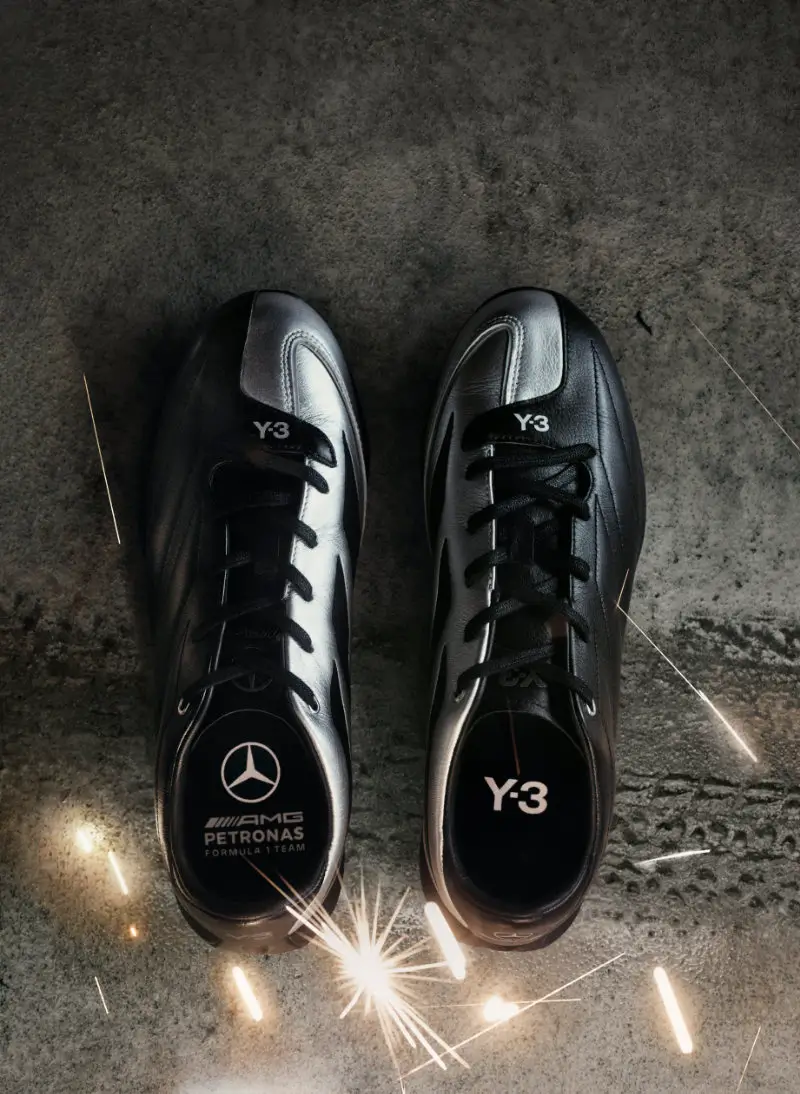
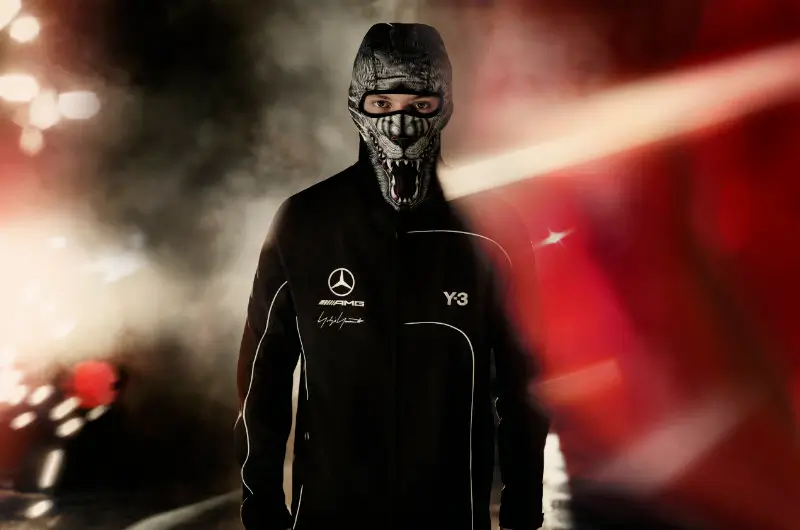
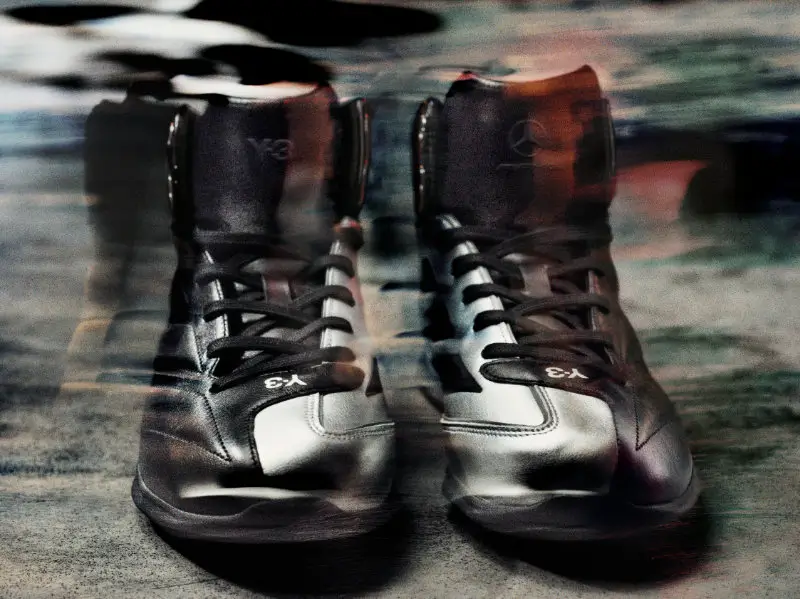
Derived from the visual language of race cars under stress—brake sparks, tire smoke, heat distortion—the print transforms ephemeral moments into textile permanence. It is not a literal depiction, but an abstraction. Motion stretched into stillness. Chaos refined into pattern.
This is where Y-3’s design philosophy asserts itself most clearly. Rather than celebrating speed through obvious cues, it dissects its byproducts. What does velocity look like when paused? What remains after acceleration dissipates?
The garments answer with layered textures, tonal gradients, and prints that feel almost cinematic. The sensation is less about movement itself and more about the memory of it—a lingering energy embedded into fabric.
idea
The collection’s debut on the track at the Japanese Grand Prix elevates the collaboration into a performative moment. The Japanese Grand Prix, held at the legendary Suzuka Circuit, is not just another race. It is one of Formula One’s most technically demanding circuits—defined by its figure-eight layout, high-speed corners, and unforgiving rhythm.
To introduce the collection here is deliberate.
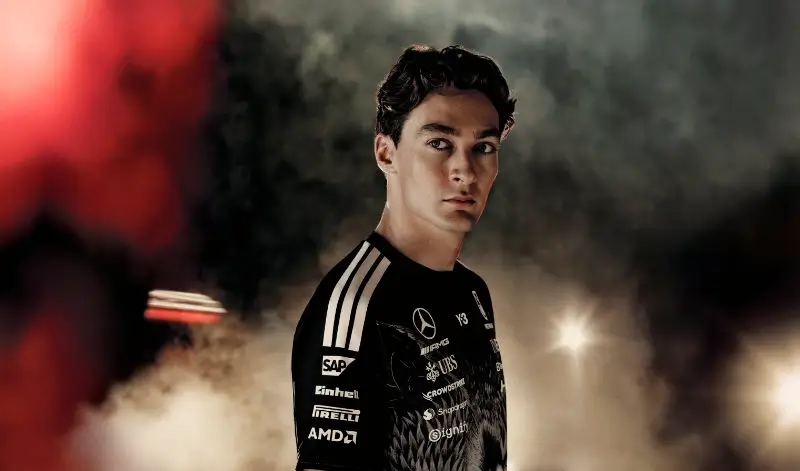
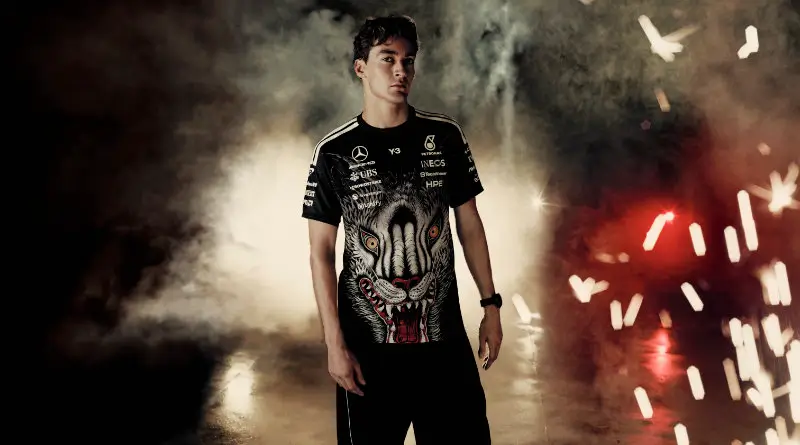
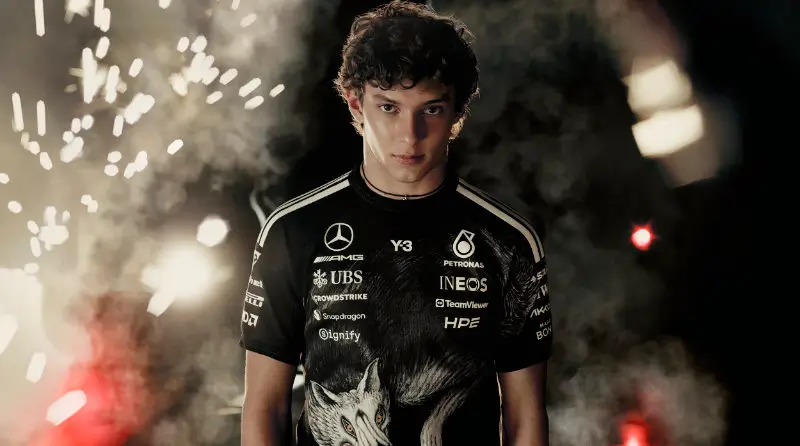
Suzuka represents precision. It demands balance between aggression and control, mirroring the philosophical tension embedded within the garments. The drivers—George Russell and Kimi Antonelli—become not just competitors, but living extensions of the design narrative. Alongside them, Toto Wolff embodies the strategic dimension—the mind that governs motion.
For the first time, the entire team will wear Y-3 during a race weekend. This is not a symbolic partnership confined to lookbooks. It is integrated into the operational reality of Formula One, where every detail is scrutinized, optimized, and tested under pressure.
show
The campaign imagery captures a transitional moment—sunset dissolving into night. It is within this liminal space that the collection finds its visual language.
Warm tones fade into artificial illumination. Natural light gives way to engineered brightness. Sparks from braking systems punctuate the darkness like fleeting constellations. The track becomes less a physical surface and more an abstract field of energy.
There is a cinematic restraint to the visuals. Motion is implied rather than shown. The subjects—Russell, Antonelli, Wolff—exist in states of poised intensity. Not mid-action, but just before or just after. It is the psychology of racing rather than the spectacle.
This approach aligns with Y-3’s long-standing ethos. Yohji Yamamoto has always resisted overt narrative, favoring suggestion over declaration. Here, that philosophy is applied to one of the most visually aggressive sports in the world, resulting in a tension that feels both unexpected and inevitable.
phil
At its core, the collaboration interrogates what performance means in 2026.
In Formula One, performance is measured in milliseconds. Marginal gains define outcomes. In fashion, performance is more ambiguous—linked to identity, perception, and cultural relevance. Y-3 bridges these interpretations.
The garments are engineered for function—lightweight materials, ergonomic cuts, and adaptability for both trackside and everyday contexts. Yet they are equally concerned with narrative. Each piece carries symbolic weight, whether through the wolf motif, the smoke graphics, or the restrained color palette that echoes the Mercedes-AMG PETRONAS visual identity.
This duality is what elevates the collection. It is not merely apparel designed for a team. It is a framework for understanding speed as both physical and conceptual.
culture
The collaboration arrives at a time when Formula One’s influence extends far beyond motorsport. The sport has become a global cultural force, intersecting with fashion, music, and digital media.
Y-3’s involvement signals a maturation of that relationship. This is not a superficial alignment driven by visibility. It is a deep integration of design philosophy into the fabric of the sport.
By anchoring the collection in Japanese mythology and historical adidas references, Y-3 avoids the trap of trend-driven design. Instead, it constructs a narrative that feels timeless, even as it engages with one of the most technologically advanced arenas in the world.
fwd
What ultimately defines the Y-3 x Mercedes-AMG PETRONAS F1 Team collection is its focus on clarity.
Speed, in its rawest form, is chaotic. It distorts perception. It compresses time. Yet the best drivers—and the best designers—find clarity within that chaos. They reduce complexity to instinct. They act without hesitation.
This is the philosophy embedded within the collection. The wolf does not overthink. It reacts. The driver does not second-guess. They commit.
The garments become extensions of this mindset. They are not distractions, but tools—designed to support, to enhance, to disappear into the rhythm of performance.
clue
To describe this release as a collaboration feels insufficient. It is a synthesis.
Y-3 brings a language of restraint, symbolism, and philosophical depth. Mercedes-AMG PETRONAS brings precision, speed, and technological rigor. Together, they create something that exists between disciplines—neither purely fashion nor purely sport.
As the collection debuts at Suzuka, it does more than mark a partnership. It reframes how we understand the relationship between clothing and performance, between mythology and machinery, between stillness and motion.
In the fading light of sunset, as the track transitions into night, the narrative becomes clear: speed is not just about how fast you move. It is about how precisely you understand the moment you are in—and how instinctively you respond to it.