GEHOcab EDGE Explorer Trail: Brutalism Imagined for the Overlanding Frontier

March 19, 2026
new
Brutalism was never meant to be polite. Born from post-war necessity and shaped by raw materials, it rejected ornament in favor of honesty—structure laid bare, geometry uncompromised. Decades later, that same philosophy has found an unlikely second life far from city grids and concrete skylines. It now lives in motion, embedded in the design language of the GEHOcab EDGE Explorer Trail.
What GEHOcab has created is not simply a camper. It is a mobile structure that behaves like architecture. It occupies space with intention. It communicates permanence even while designed to move. And in doing so, it disrupts one of the most visually stagnant categories in design: the recreational vehicle.
idea
The RV world has long been defined by curves. Soft edges, swooping lines, and glossy finishes dominate the landscape, creating products that feel more like scaled-up appliances than considered design objects. GEHOcab’s EDGE Explorer Trail stands in direct opposition to that tradition.
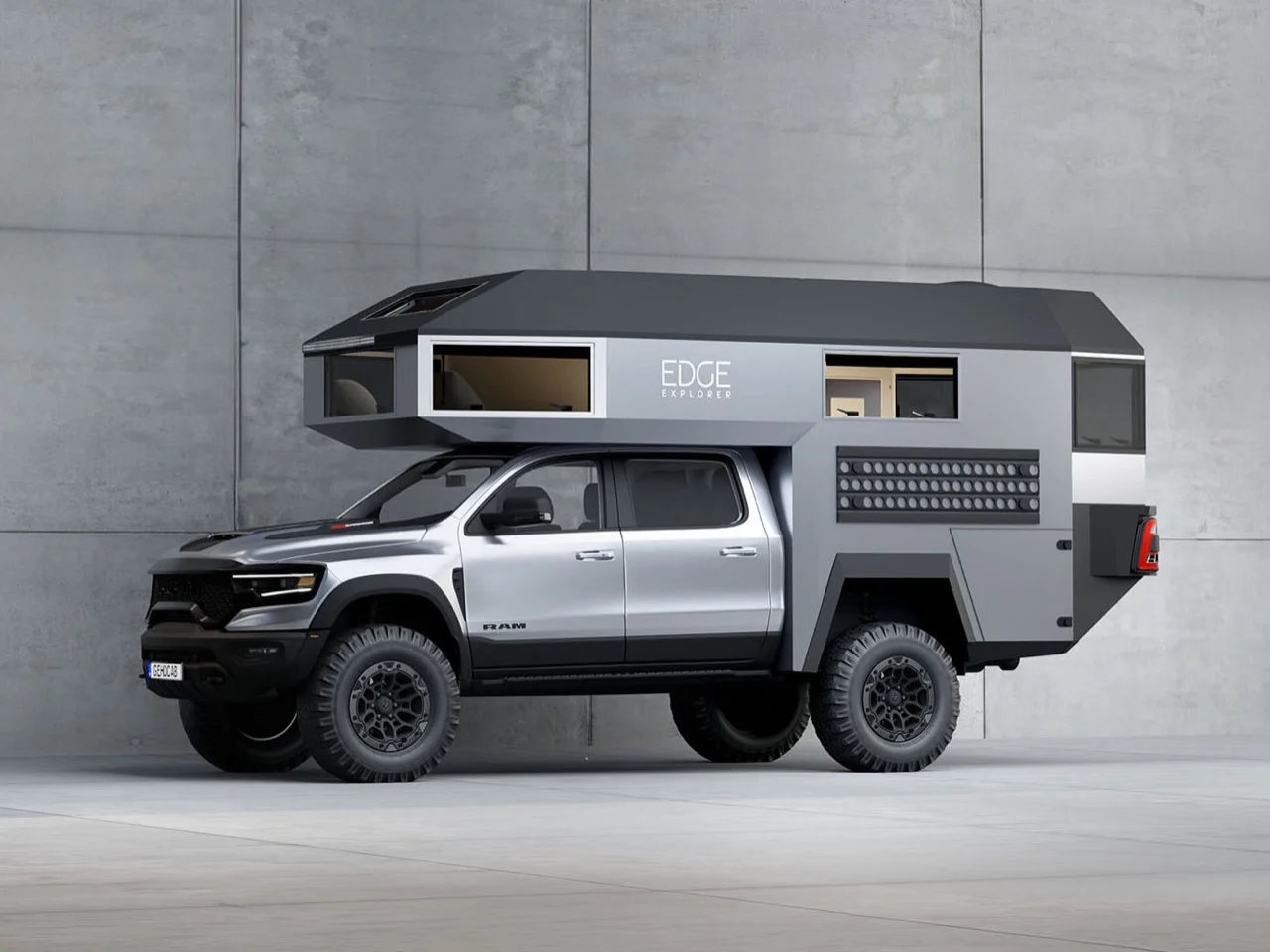
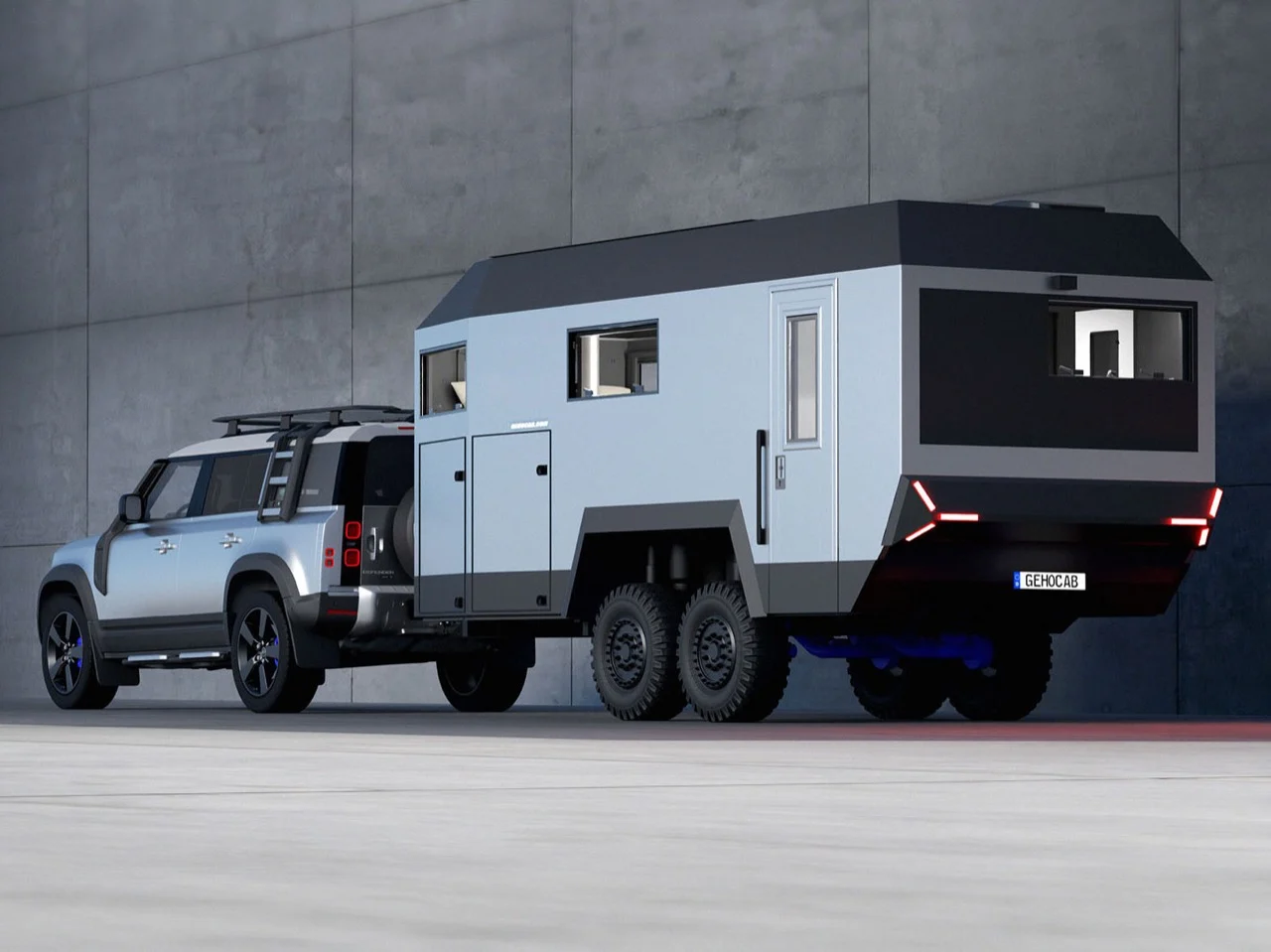
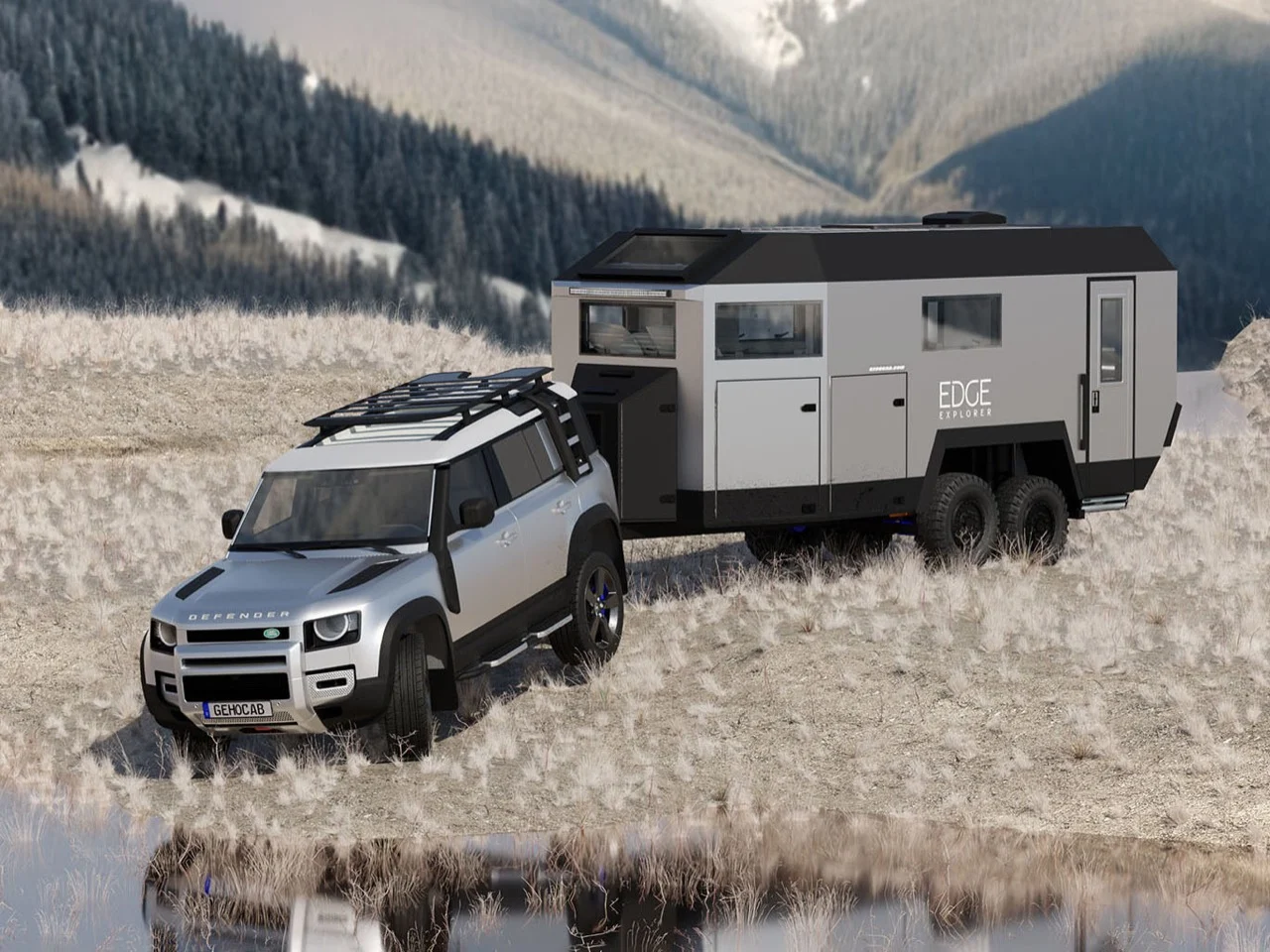
Every surface is deliberate. Flat planes intersect at sharp angles. The body reads as a composition of facets rather than a single molded shell. The two-tone silver and black finish reinforces this geometry, emphasizing edges instead of hiding them. It is not trying to blend in with nature. It is asserting its presence within it.
Parked beside a RAM TRX or a Ford F-150, the transformation is immediate. The truck becomes secondary, almost utilitarian. The camper dominates, turning the entire setup into something closer to a mobile command unit than a recreational vehicle.
phil
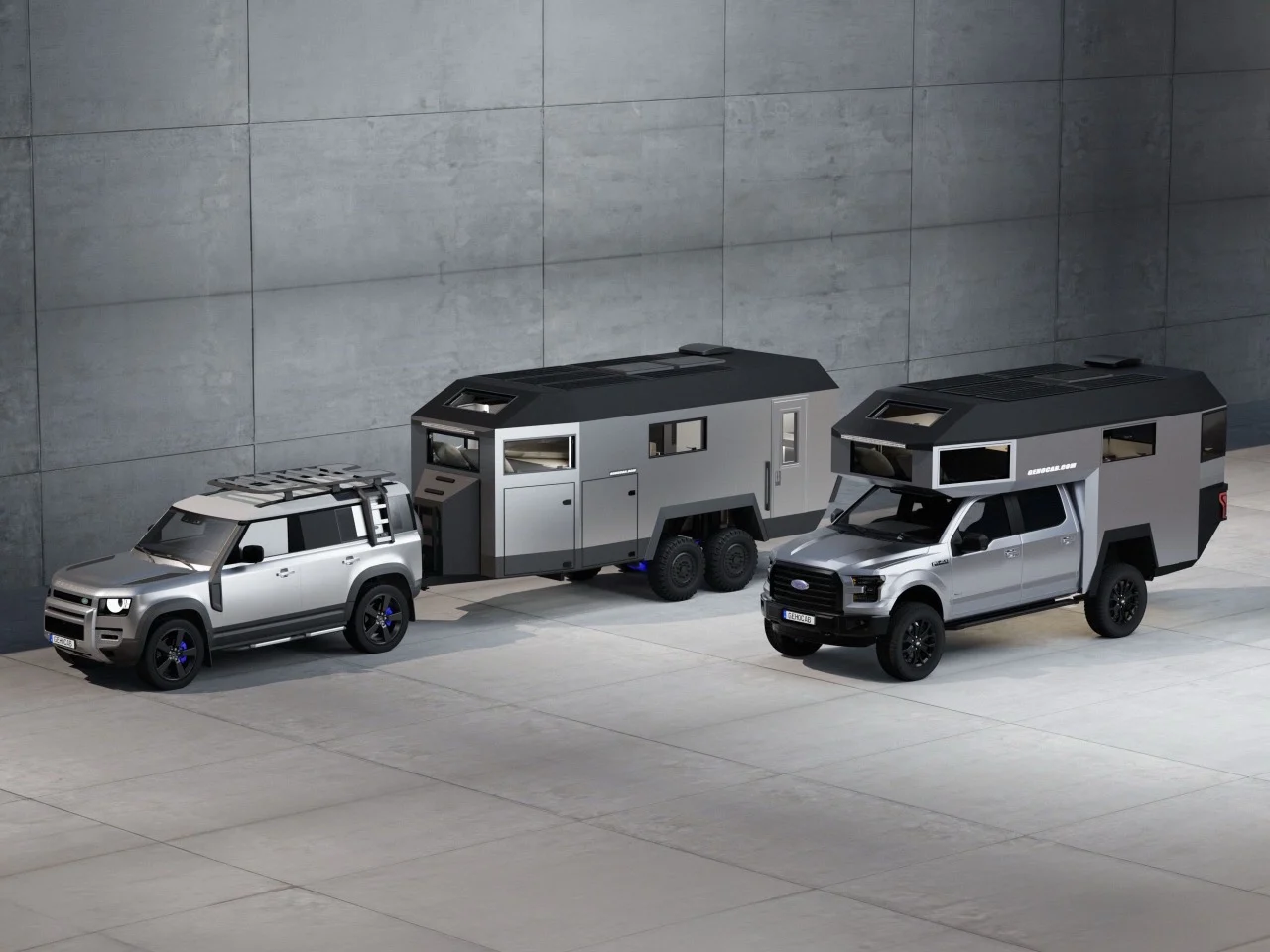
The EDGE Explorer Trail exists in two distinct configurations, each designed for a different mode of exploration but unified by the same architectural language.
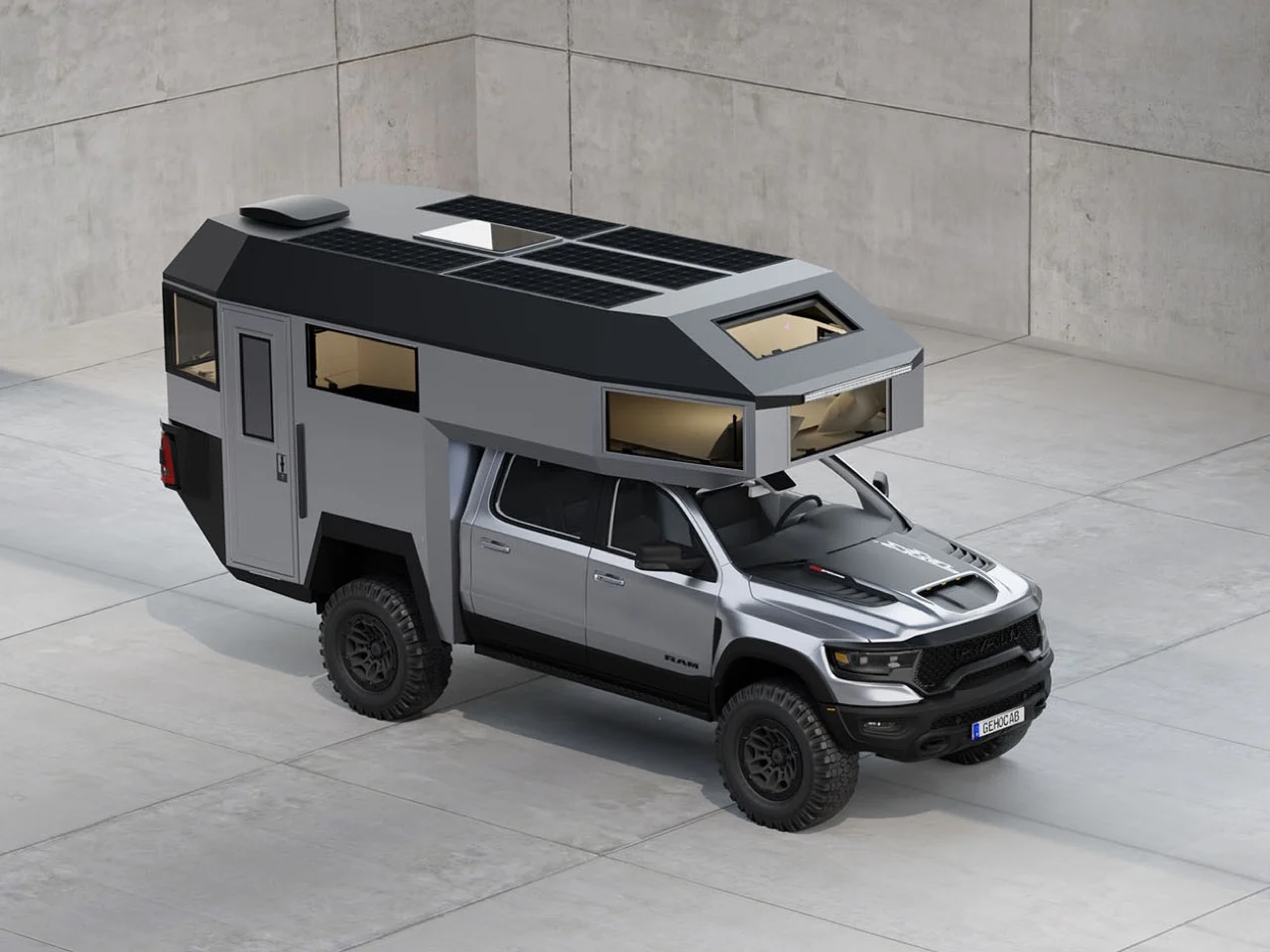
The first is the truck-mounted cabin. Sitting directly in the bed of a full-size pickup, it integrates with the vehicle in a way that feels both seamless and intentional. Unlike traditional slide-in campers, which often appear as add-ons, the EDGE cabin reads as an extension of the truck itself. Its proportions are carefully calibrated, its geometry echoing the mechanical precision of the vehicle beneath it.
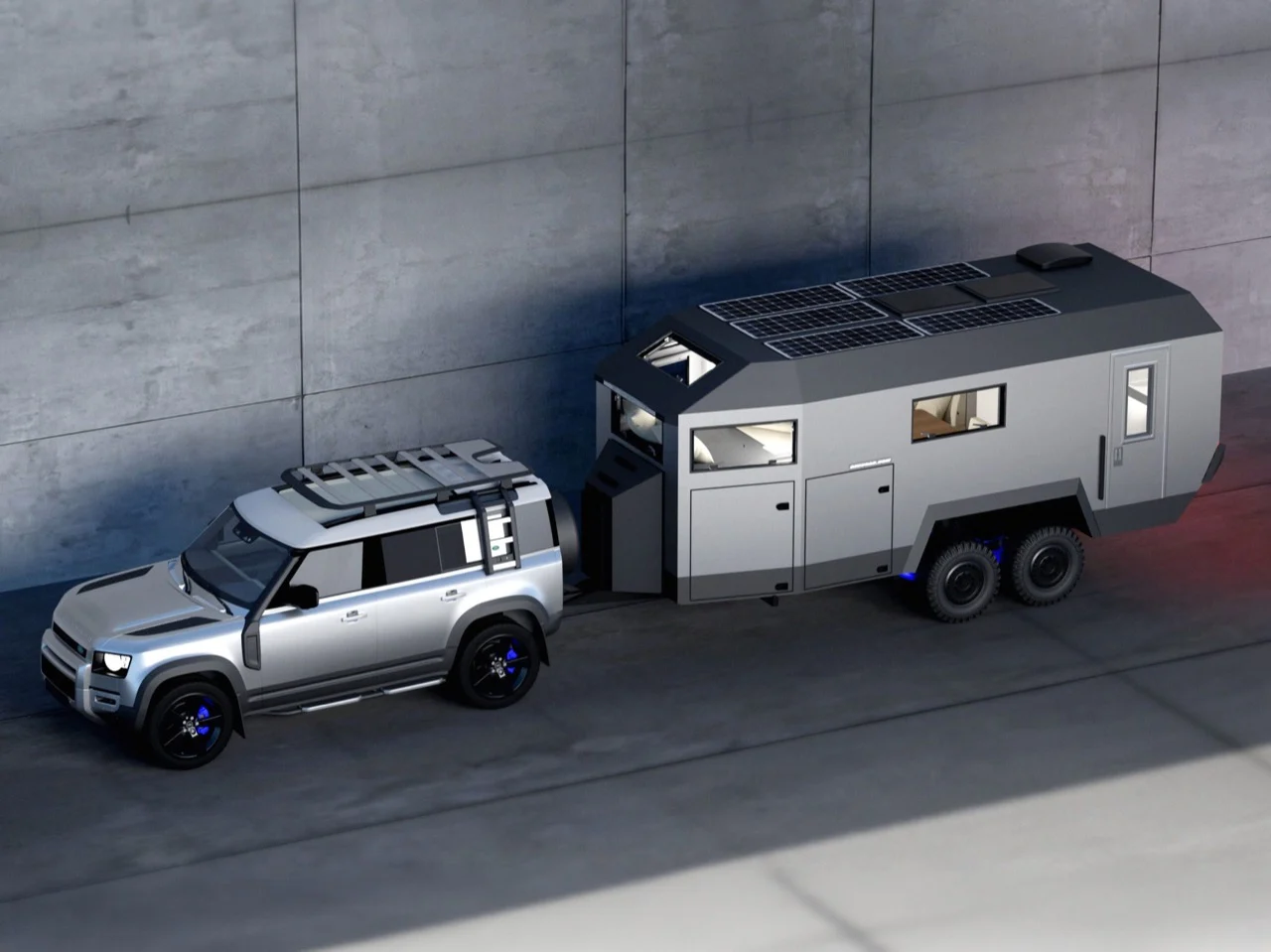
The second is the standalone expedition trailer. Here, the concept expands. Mounted on a four-wheel tandem axle system, the trailer signals a different level of ambition. This is not weekend camping. This is long-range, off-grid exploration. The additional axle configuration speaks to load capacity, durability, and stability across unpredictable terrain.
Despite their differences, both formats share identical DNA. The same faceted exterior. The same flat roof designed for solar integration. The same sharply cut windows that feel more like apertures in a bunker than traditional RV glazing. Together, they form a cohesive system—modular in application, singular in identity.
geo
Brutalism in architecture is often misunderstood as purely aesthetic. In reality, it is deeply functional. Every form exists for a reason. Every angle serves a purpose. The EDGE Explorer Trail translates this philosophy into the language of overlanding.
The flat roof is not simply a design choice. It is a platform—optimized for solar panels, storage systems, and potential expansion. The angular surfaces are not arbitrary. They improve structural rigidity, reduce unnecessary material, and create a visual rhythm that communicates strength.
Even the windows are reconsidered. Instead of large, panoramic openings, GEHOcab opts for precise placements. Each window is positioned to frame specific views while maintaining insulation and structural integrity. The result is an interior experience that feels curated rather than exposed.
This is design that resists excess. It strips away anything that does not serve a purpose, leaving behind a form that feels both minimal and monumental.
mat
A key tenet of Brutalist architecture is material honesty—the idea that materials should be expressed rather than concealed. The EDGE Explorer Trail embodies this principle through its construction.
The exterior surfaces carry a matte, almost industrial finish. They do not attempt to mimic luxury. Instead, they emphasize durability. Scratches, dust, and wear become part of the narrative rather than flaws to be hidden.
This approach aligns perfectly with the realities of overlanding. Vehicles designed for remote environments must endure extremes—temperature fluctuations, rough terrain, and prolonged exposure to the elements. By embracing a material language that welcomes wear, GEHOcab creates a product that ages with integrity.
flow
If the exterior is about presence, the interior is about retreat.
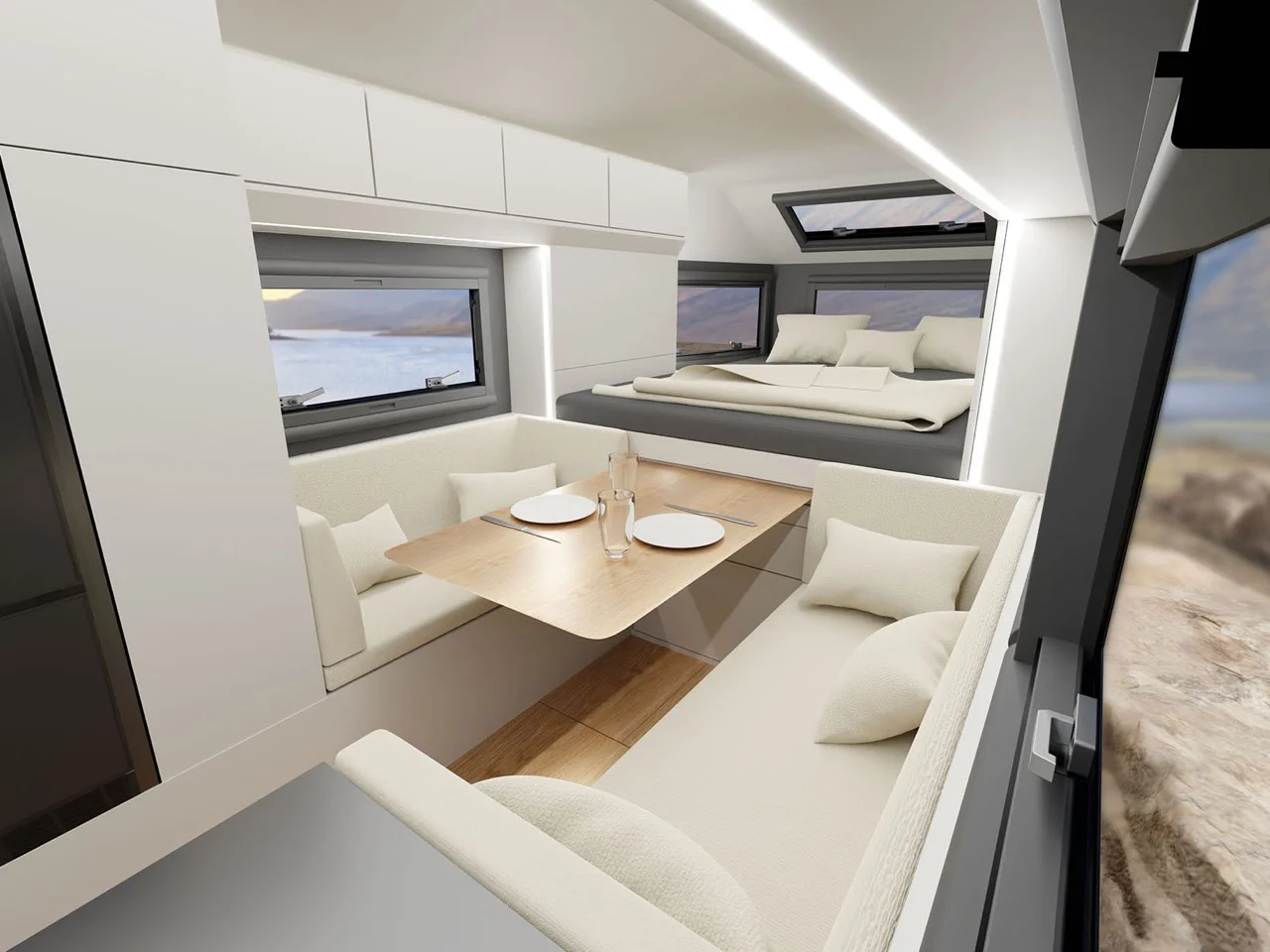
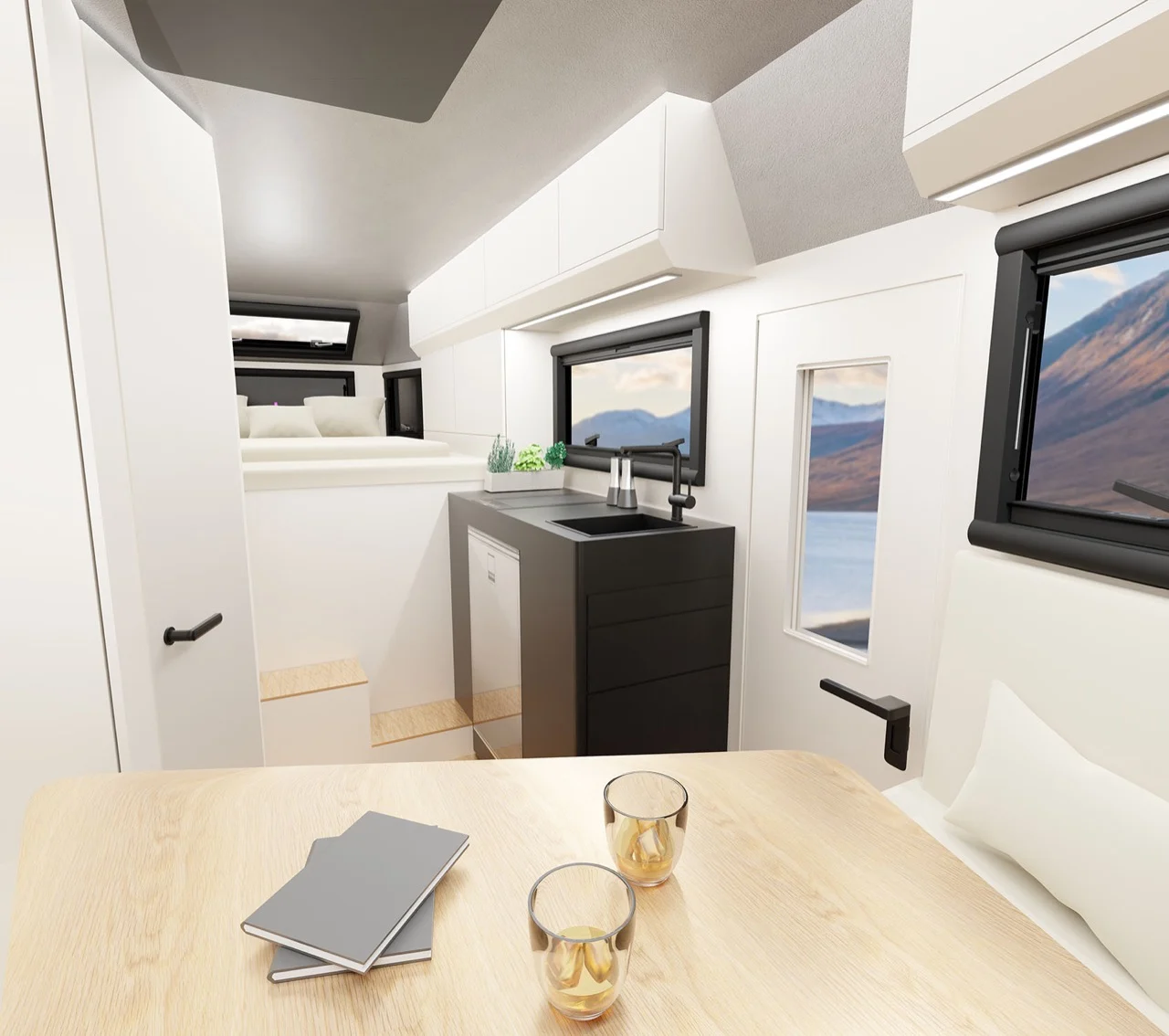
Inside the EDGE Explorer Trail, the Brutalist language softens without losing its core identity. Materials become warmer. Textures introduce contrast. The sharp geometry of the exterior gives way to a more human-centered environment, designed for long-term habitation rather than visual impact alone.
Space is used efficiently. Storage is integrated seamlessly into the structure. Surfaces are clean, uncluttered, and purposeful. The absence of unnecessary decoration creates a sense of calm, allowing the occupant to focus on the experience of the journey rather than the distractions of the space.
Natural light enters through the carefully positioned windows, creating moments of connection with the surrounding environment. At night, the interior transforms into a controlled, insulated refuge—protected from the elements yet still connected to them.
indie
The flat-roof design is more than an architectural statement. It is a commitment to autonomy.
Solar integration allows the EDGE Explorer Trail to operate independently of traditional power sources. Combined with advanced battery systems, this enables extended stays in remote locations without reliance on external infrastructure.
Water storage, waste management, and climate control systems are similarly designed with independence in mind. Every component contributes to a self-sustaining ecosystem, reinforcing the idea that this is not just a vehicle, but a mobile habitat.
This aligns with a broader cultural shift. Overlanding is no longer simply about travel. It is about self-reliance, exploration, and the ability to exist outside conventional systems. The EDGE Explorer Trail embodies this philosophy at every level.
utility
What makes the EDGE Explorer Trail particularly compelling is its ability to merge utility with aesthetic clarity.
In many products, functionality and design exist in tension. Practical features are often hidden or disguised, while aesthetic elements serve no real purpose. GEHOcab eliminates this divide. Every functional component is integrated into the visual language of the product.
The result is a form of beauty that emerges from use. The camper looks the way it does because it needs to. There is no excess, no superficial styling. This creates a sense of authenticity that is increasingly rare in contemporary design.
culture
The rise of Brutalist-inspired overlanding vehicles is not accidental. It reflects a broader cultural moment.
In an era dominated by digital experiences and virtual environments, there is a growing desire for tangible, physical engagement with the world. People are seeking authenticity, durability, and connection to real landscapes.
The EDGE Explorer Trail taps into this desire. It offers a way to engage with the environment on one’s own terms, supported by a structure that feels both protective and empowering.
At the same time, its design language resonates with contemporary aesthetics. The angular geometry, muted color palette, and architectural influence align with trends seen in everything from high-end fashion to concept vehicles. It feels current, yet timeless.
fwd
The GEHOcab EDGE Explorer Trail challenges the very definition of what a camper can be.
It is not merely a means of transportation or a temporary shelter. It is a deliberate piece of design—one that operates at the intersection of architecture, engineering, and lifestyle.
By embracing Brutalism, GEHOcab has created something that feels both radical and inevitable. Radical in its departure from industry norms. Inevitable in its alignment with broader shifts in design and culture.
sum
The EDGE Explorer Trail does not apologize for its presence. It does not attempt to soften its edges or conform to expectations. Instead, it stands as a statement—a declaration that utility can be beautiful, that structure can be expressive, and that movement does not have to come at the expense of permanence.
In a landscape filled with compromises, it offers clarity. A clear vision. A clear purpose. A clear form.
And in doing so, it redefines what it means to explore—not just the world around us, but the possibilities of design itself.