Inside: RIER Natural Wool Fleece — Alpine Purity, Engineered Without Compromise

March 20, 2026
In an extent where performance outerwear has become synonymous with synthetic innovation, RIER quietly redirects the conversation back to nature. The brand’s fleece outerwear stands not as a nostalgic gesture, but as a forward-thinking recalibration—one that challenges the industry’s dependency on petroleum-based fibers and re-centers craftsmanship, locality, and material integrity.
The Rier fleece is not merely a garment; it is a system. A deliberate construction of 100% natural wool fleece, engineered to perform across transitional climates while eliminating one of fashion’s most persistent environmental issues: microplastic pollution. It is here, between the Alpine tradition of textile production and the contemporary urgency for sustainability, that Rier defines its identity.
View this post on Instagram
phil
At the core of the piece lies a fundamental proposition: performance without plastic. Traditional fleece, popularized through synthetic polyester pile, has long been valued for its warmth-to-weight ratio and softness. Yet, every wash releases microplastics into waterways—an invisible cost now widely acknowledged across the fashion and environmental sciences.
Rier’s solution is elegantly simple: replace synthetics entirely.
The fleece is constructed from natural wool pile, a material that mirrors the insulating properties of synthetic fleece while surpassing it in ecological terms. Wool fibers are inherently biodegradable, meaning that at the end of the garment’s lifecycle, they return to the earth without leaving behind persistent pollutants.
Equally important is wool’s ability to require fewer washes. Its natural antibacterial and odor-resistant properties reduce maintenance cycles, which in turn lowers water usage and prolongs garment longevity. This is not sustainability as marketing language—it is sustainability embedded in material behavior.
stir
Every aspect of the Rier fleece is fabricated and tailored in Austria, anchoring the garment in a geographic and cultural context that is inseparable from its function. The Alpine environment is not just aesthetic inspiration—it is a testing ground.
Austria’s long-standing textile traditions, particularly in wool processing and tailoring, inform the garment’s construction. Precision is evident in the cut: clean, restrained, and engineered for movement without excess. There is an absence of unnecessary lining, padding, or embellishment. What remains is clarity.
This decision to localize production is also strategic. By consolidating fabric development and garment assembly within a single region, Rier reduces supply chain complexity while ensuring quality control at every stage. The result is a product that feels cohesive—material, form, and origin aligned.
intent
The design language of the fleece is deceptively simple, yet every element serves a defined purpose.
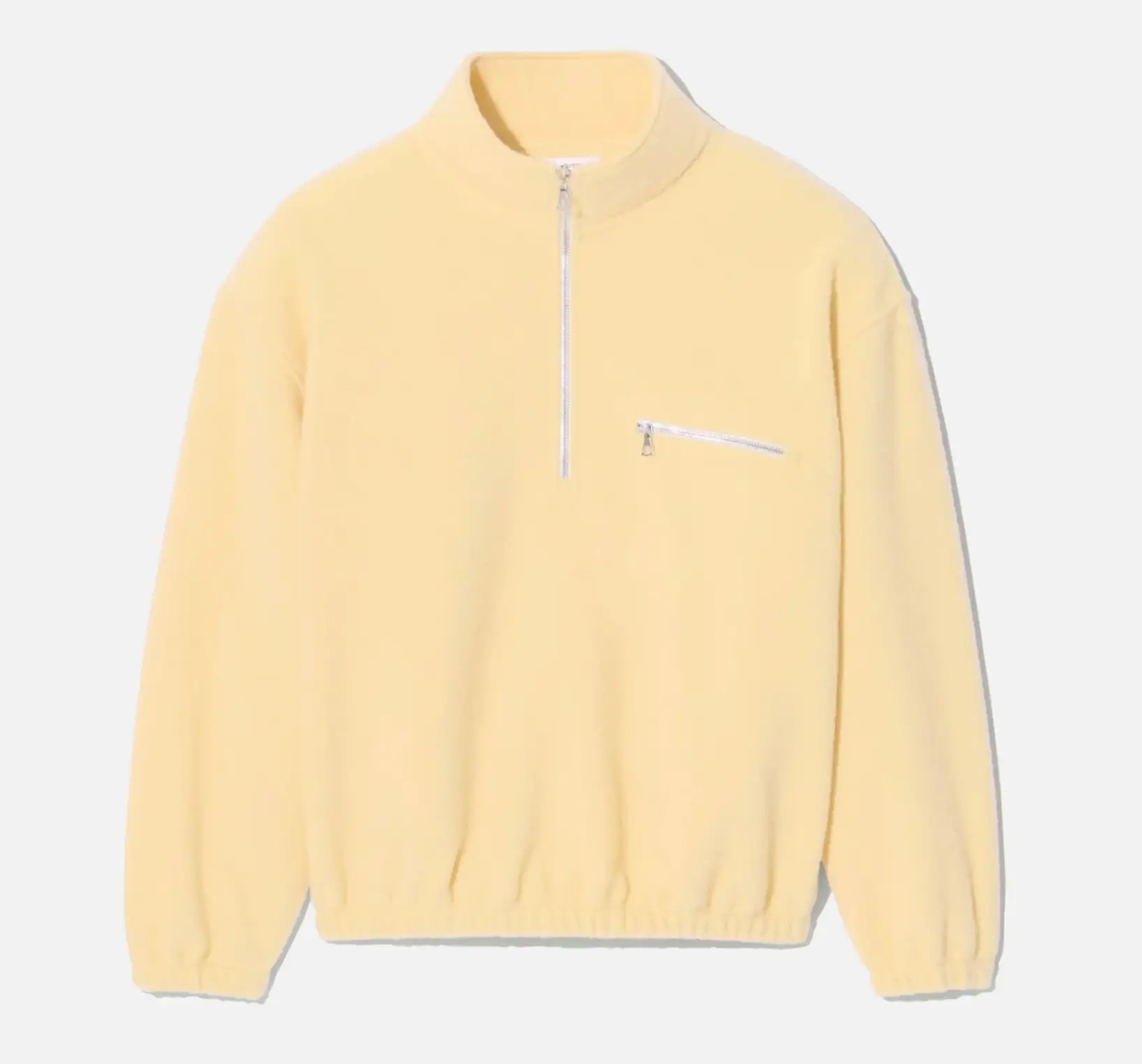
A half frontal metal zipper by Riri anchors the piece, introducing a tactile contrast between the softness of wool and the precision of engineered hardware. Riri zippers are known for their durability and smooth operation, elevating what might otherwise be a utilitarian component into a marker of quality.
The standing collar provides both structure and protection, framing the neck while maintaining a clean silhouette. It eliminates the need for additional layering in mild conditions, reinforcing the garment’s role as a standalone outer layer during mid-season transitions.
A chest pocket with security zipper introduces functionality without disrupting the overall minimalism. Its placement is intuitive—accessible, balanced, and integrated into the garment’s geometry rather than applied as an afterthought.
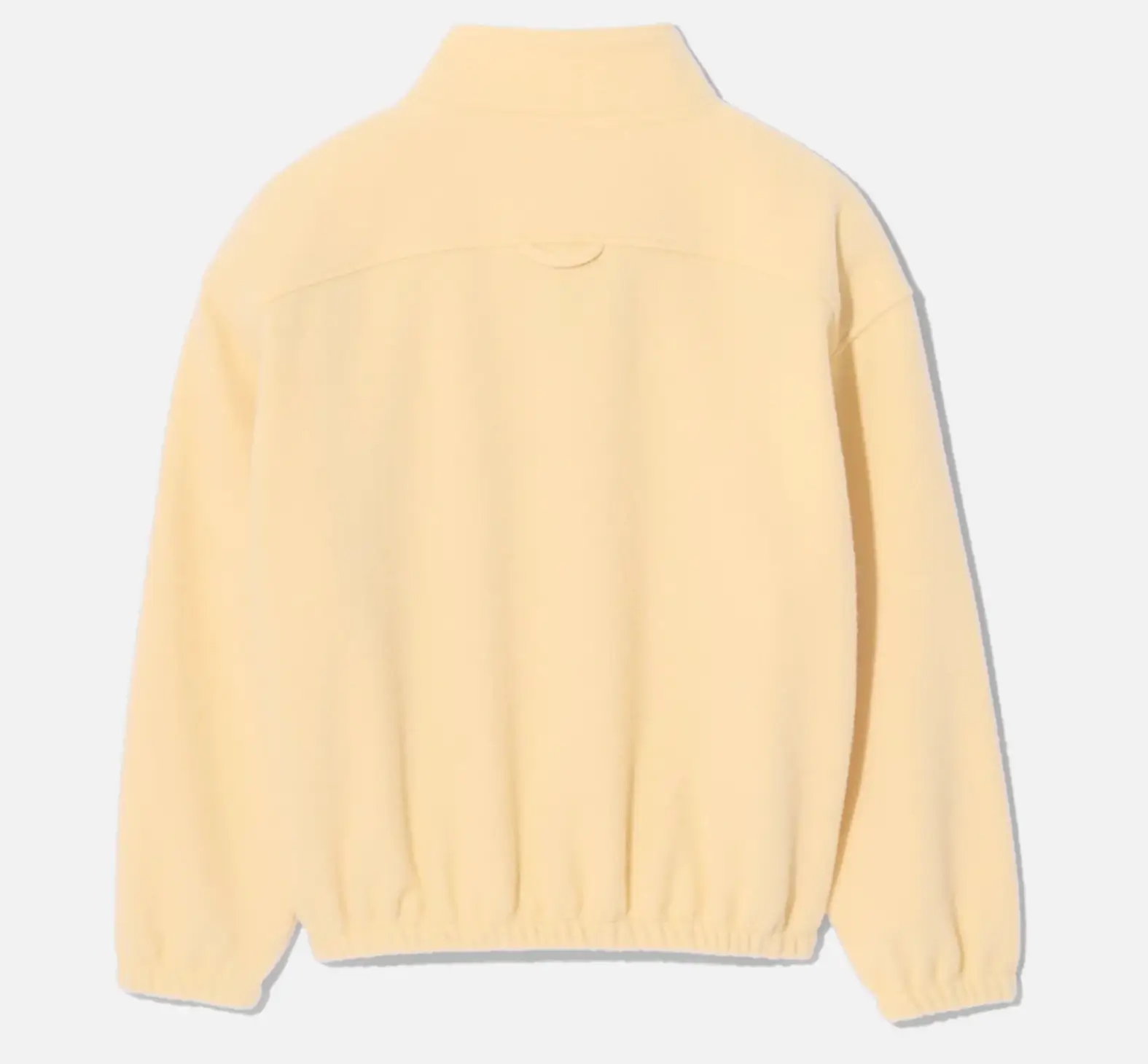
Perhaps most telling is what the fleece does not include. The completely unlined interior strips the garment down to its essential material expression. This choice reduces weight, enhances breathability, and allows the wool’s natural properties to operate without interference.
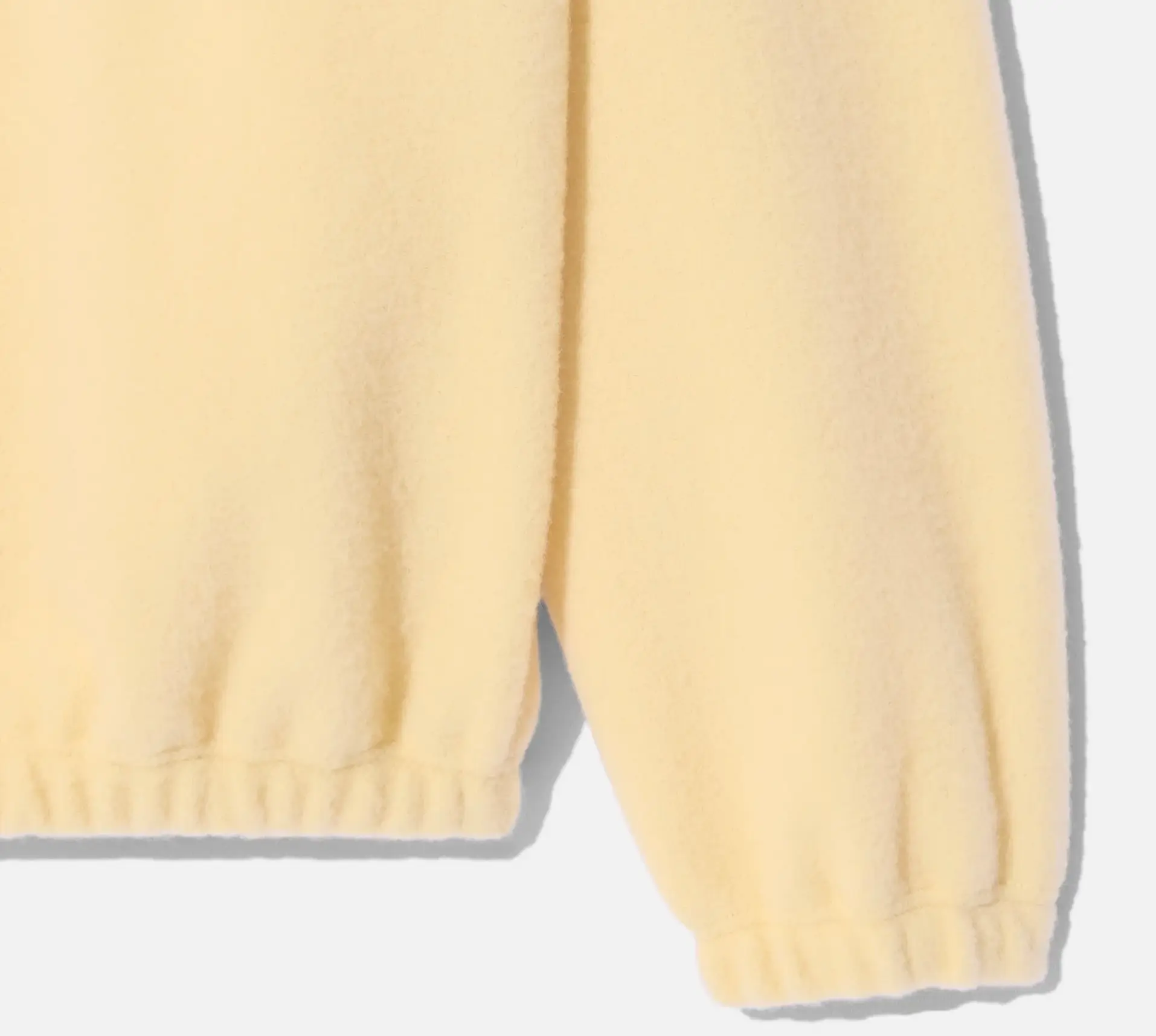
Elasticated finishes at the bodice and cuffs provide subtle structure, ensuring the garment retains its shape while adapting to movement. The result is a silhouette that feels both relaxed and controlled—a balance between sport and refinement.
flow
Wool’s performance characteristics are often discussed, but rarely fully appreciated. In the context of Rier’s fleece, these properties become central to the garment’s identity.
Unlike synthetic fibers that trap heat in a static manner, wool operates as a dynamic regulator. It responds to the body’s microclimate, retaining warmth in cooler conditions while releasing excess heat as temperatures rise. This adaptability makes the fleece particularly suited for mid-season wear, where temperature fluctuations are constant.
The fiber’s structure also allows it to manage moisture effectively. Wool can absorb a significant percentage of its weight in moisture without feeling wet, drawing perspiration away from the skin and allowing it to evaporate gradually. This contributes to a sense of consistent comfort, even during periods of activity.
The tactile experience is equally important. The fleece’s fluffy, soft surface is not merely aesthetic—it enhances thermal efficiency by trapping air within the pile, creating a natural insulating layer.
View this post on Instagram
wear
Despite its warmth, the Rier fleece remains ultra lightweight, a characteristic that defines its versatility. It occupies a unique position within a wardrobe: substantial enough to function as outerwear, yet light enough to be layered beneath heavier garments when conditions demand.
This duality extends to its styling. The fleece carries a sportive sensibility, but one that is refined rather than overtly technical. It can transition from outdoor environments to urban settings without friction, reflecting a broader shift in contemporary fashion toward hybrid garments that resist strict categorization.
The absence of bulk also contributes to its portability. The garment can be easily packed, stored, or carried, reinforcing its role as a functional companion rather than a statement piece that demands accommodation.
sustainable
What distinguishes Rier’s approach is the coherence of its sustainability narrative. Each decision—material, production, construction—feeds into a larger system designed to minimize environmental impact.
The use of biodegradable wool addresses end-of-life concerns. Reduced washing requirements lower ongoing resource consumption. Localized production minimizes transportation emissions. Even the choice of durable components, such as the Riri zipper, extends the garment’s usable lifespan.
This is sustainability not as a singular feature, but as an integrated framework. The fleece does not rely on recycled synthetics or complex blends that complicate recyclability. Instead, it embraces simplicity—one material, carefully executed.
position
In a market saturated with high-visibility branding and performance claims, Rier operates with restraint. The fleece does not announce itself loudly; it reveals its value through use, through touch, through longevity.
This positioning aligns with a broader cultural shift toward quiet luxury and material authenticity. Consumers are increasingly attuned to the origins and implications of what they wear, seeking products that align with both aesthetic and ethical considerations.
Rier’s fleece answers this demand without compromise. It offers a garment that is at once technically capable, environmentally responsible, and visually understated.
fin
The Rier natural wool fleece represents a return to first principles—material honesty, functional clarity, and environmental awareness. It challenges the assumption that innovation must be synthetic, proposing instead that the future of outerwear may lie in rediscovering and refining what already exists in nature.
In its construction, the fleece embodies a rare balance: heritage and modernity, softness and structure, performance and responsibility. It is not a rejection of progress, but a redefinition of it—one that places the environment, the wearer, and the craft on equal footing.
As the fashion industry continues to grapple with its environmental impact, pieces like this do more than offer an alternative. They establish a new standard—quietly, precisely, and with the enduring logic of wool.