BALMUDA The Clock: A Pocket Watch Reimagined as Ambient Experience

March 20, 2026
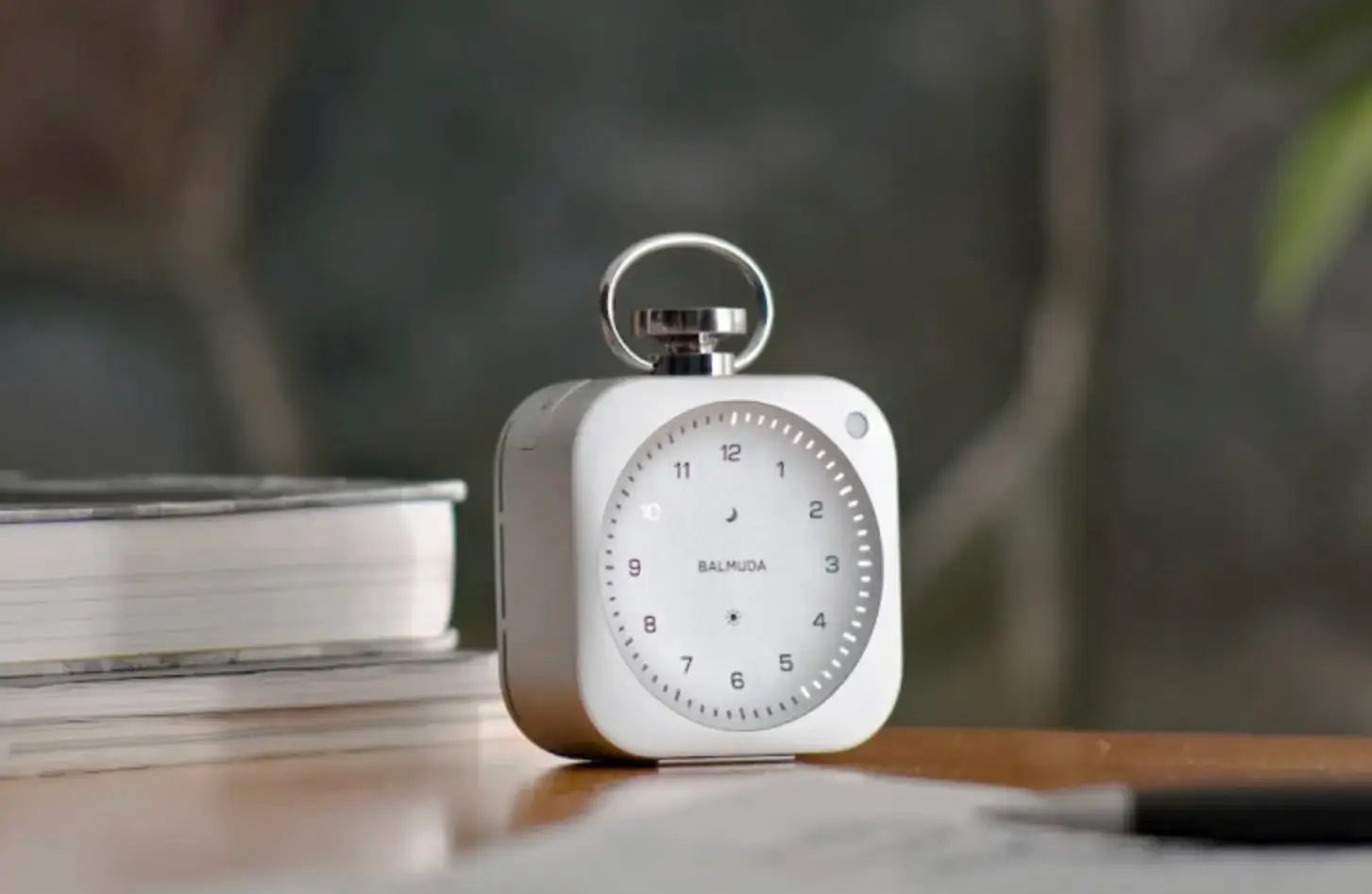
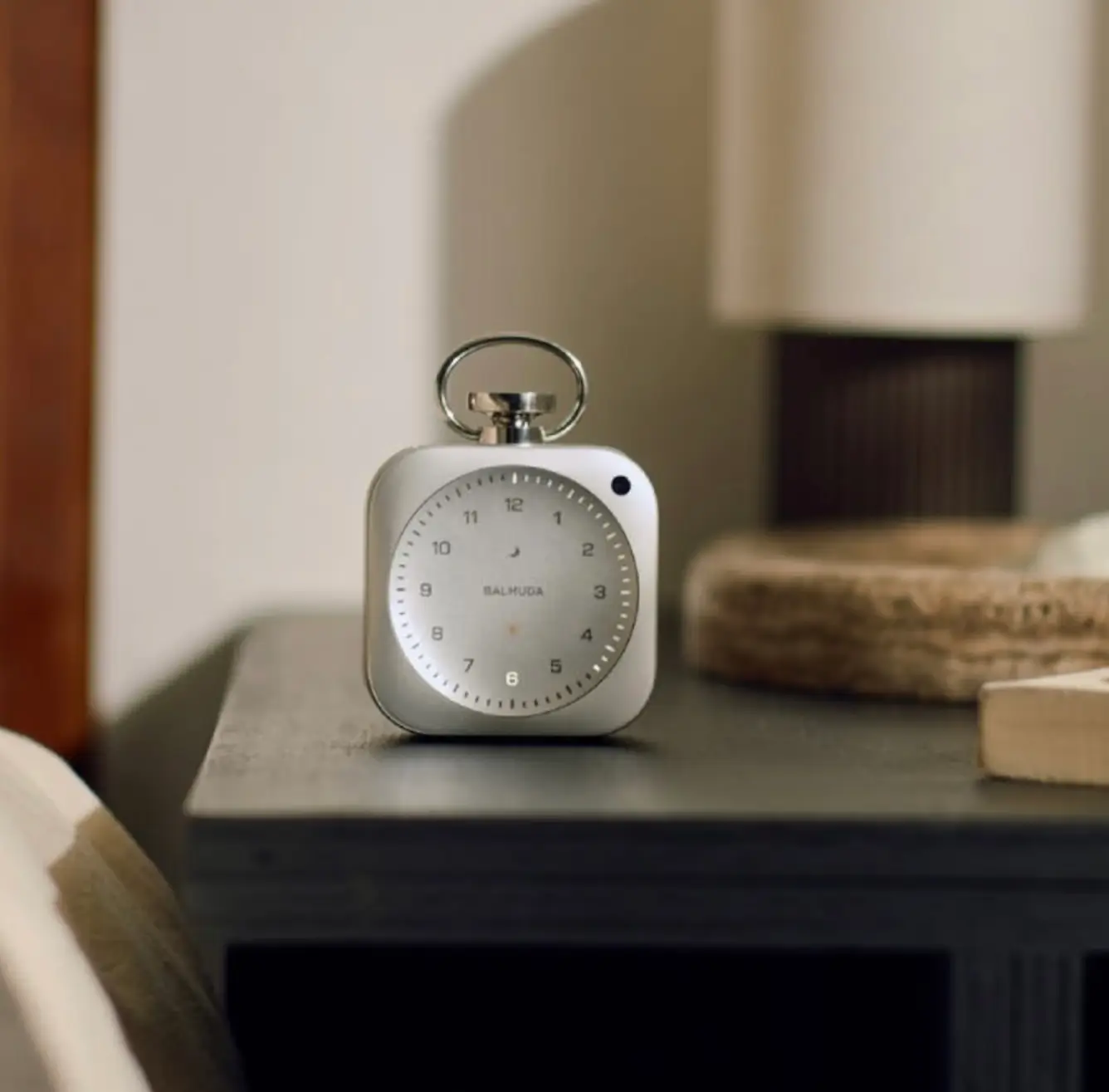
BALMUDA has never been interested in simply making appliances. The Tokyo-based brand has built its identity around rethinking the emotional experience of everyday objects—turning a toaster into a ritual, a lantern into an atmosphere, a speaker into a spatial presence. With The Clock, BALMUDA enters one of design’s most saturated categories—timekeeping—and quietly dismantles it.
Because The Clock does not tell time in the conventional sense. It translates it.
What emerges is not a device but a philosophy: time as something to be felt, not measured. Light replaces hands. Motion replaces digits. Sound replaces urgency. The result is an object that exists somewhere between a watch, a sculpture, and a meditation tool—an instrument not of precision, but of perception.
imagine
At first glance, The Clock reads as familiar. Its silhouette recalls the curvature and intimacy of a traditional pocket watch—an object historically associated with personal time, carried close to the body, consulted in moments rather than constantly.
Yet BALMUDA strips that lineage of its mechanical expectations.
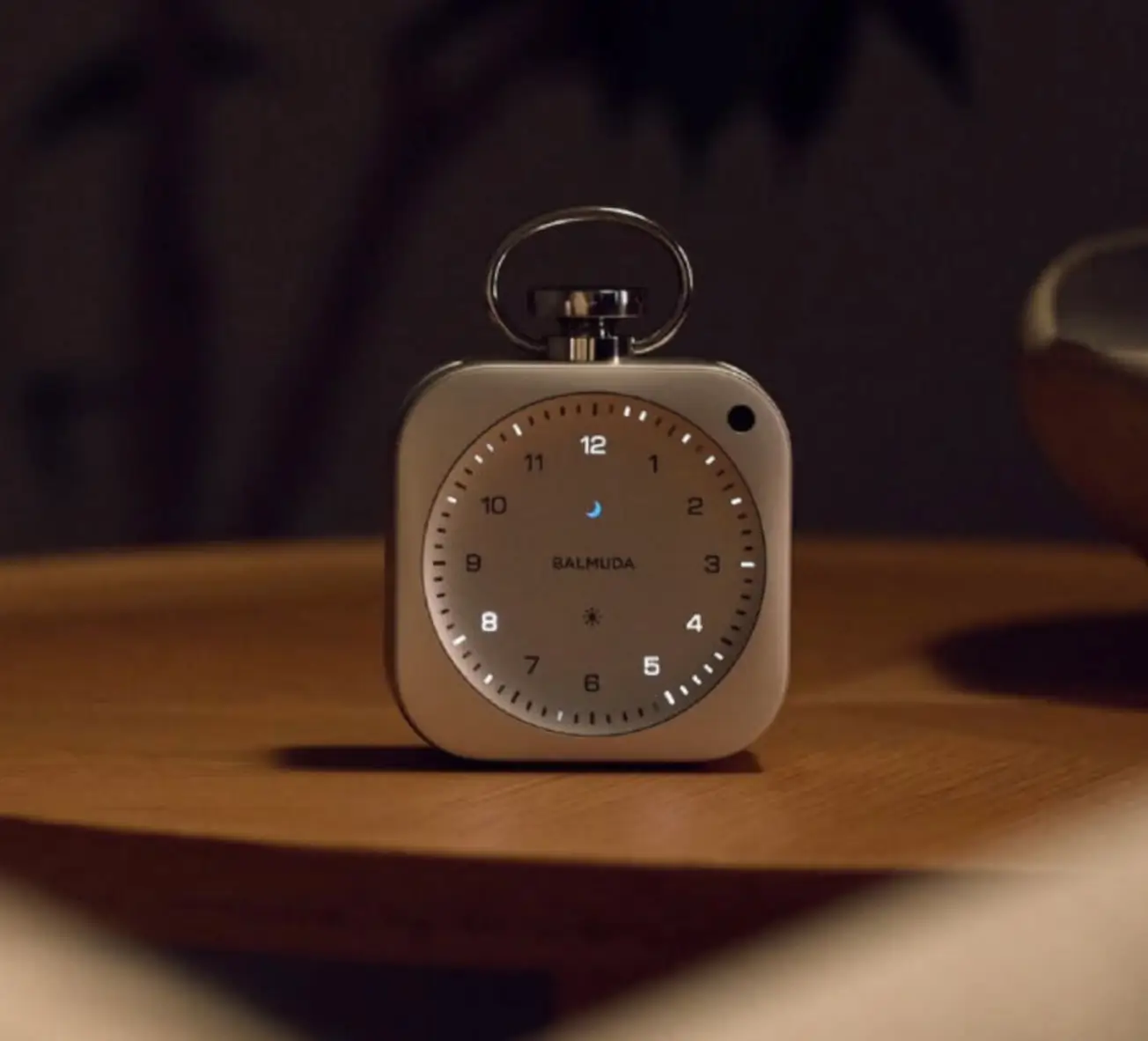
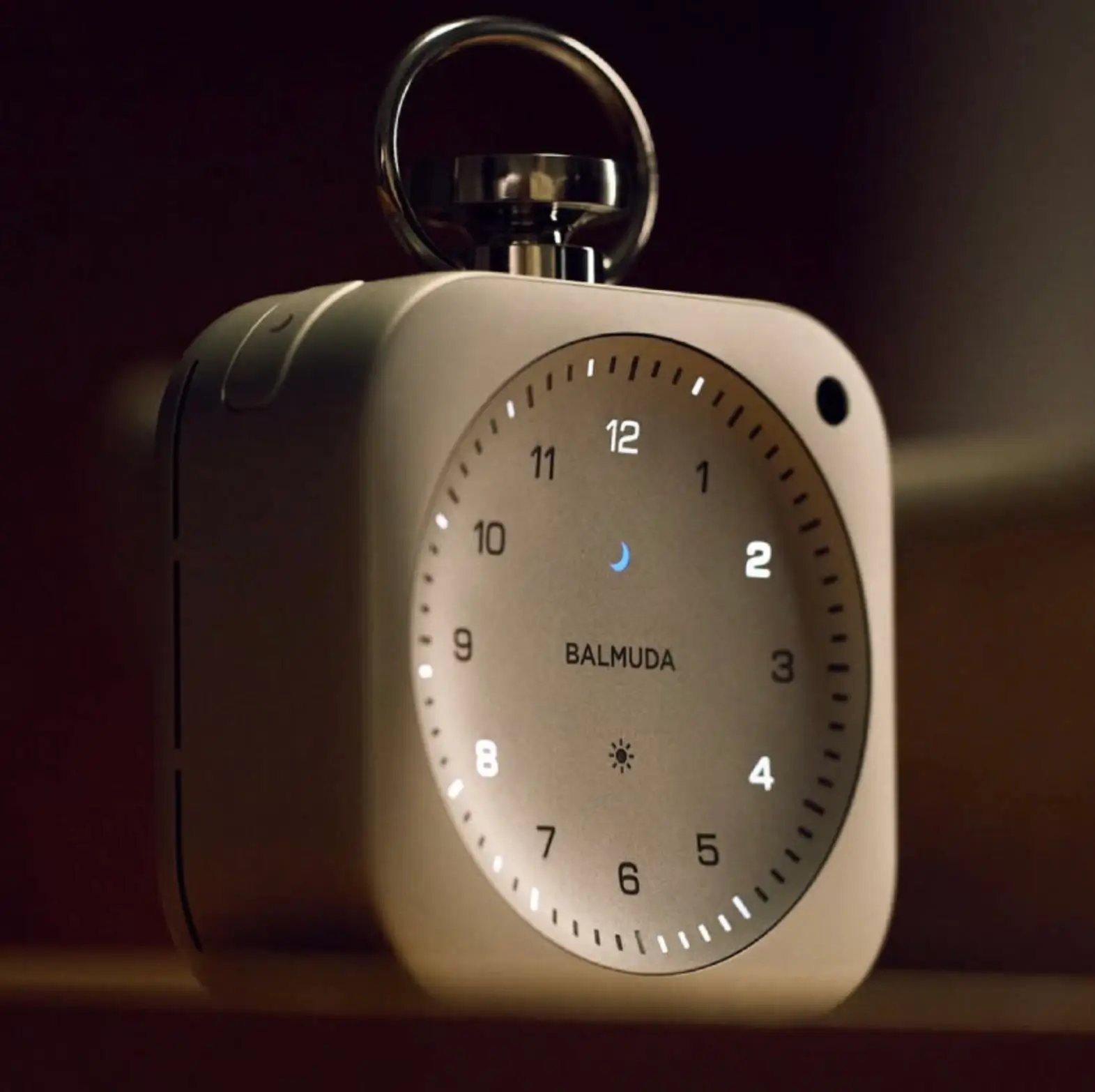
There are no hands. No ticking second. No numerals interrupting the surface. Instead, the face becomes a canvas—an illuminated field where time is suggested rather than declared.
Machined from a solid block of aluminum, the device carries a density that feels deliberate. At approximately 200 grams, it resists disposability. This is not plastic consumer tech; it is an object meant to age, to patina, to remain.
The tactility matters. BALMUDA understands that in a digital era, weight becomes meaning. The Clock’s mass grounds it in the physical world, counterbalancing the intangible nature of time itself.
Even its portability—the inclusion of a cloth carrying bag—feels intentional. This is not a clock meant to sit passively on a desk. It is meant to travel, to accompany, to become part of a user’s rhythm.
idea
At the core of The Clock is a system BALMUDA calls Light Hour.
Rather than rotating hands or changing digits, the device uses a moving arc of light to indicate the passage of time. The illumination sweeps across the dial in a slow, pendulum-like motion—subtle enough to almost disappear in the moment, yet undeniable over duration.
This is where The Clock departs entirely from traditional horology.
Conventional clocks emphasize precision and immediacy. They break time into measurable units—seconds, minutes, hours—creating a constant sense of progression, often bordering on urgency.
Light Hour does the opposite.
It dissolves time into continuity.
There is no sharp transition between moments, no mechanical tick reinforcing the march forward. Instead, time becomes ambient—something that exists in the background, shaping experience without demanding attention.
This shift is psychological as much as visual. By removing explicit markers, BALMUDA reduces the anxiety associated with timekeeping. The user is no longer counting minutes; they are inhabiting them.
phil
The conceptual backbone of The Clock lies in an unlikely source: the Foucault pendulum.
During development, BALMUDA’s design team visited the National Museum of Nature and Science to observe the pendulum firsthand. Unlike conventional pendulums, which swing in predictable arcs, the Foucault pendulum reveals the rotation of the Earth itself—its plane of motion slowly shifting over hours.
The key is subtlety.
In real time, the movement is almost imperceptible. Only through extended observation does the transformation become clear.
This is precisely the temporal quality BALMUDA sought to capture.
The Clock’s Light Hour mimics this slow evolution. It resists the instant gratification of digital displays, instead encouraging a longer view—a recalibration of attention.
In doing so, the device aligns itself with a broader philosophical tradition: time as flow rather than fragmentation.
perm
BALMUDA’s decision to machine The Clock from a single block of aluminum is not merely aesthetic—it is ideological.
In a market saturated with lightweight, disposable electronics, aluminum signals permanence. It suggests that the object is not meant to be replaced annually, but retained.
The machining process itself ensures precision. Every curve, every edge, every surface finish is intentional. There is a quiet rigor to the construction, echoing the brand’s broader design language—minimal, but never simplistic.
The 200-gram weight becomes a sensory anchor. When held, The Clock feels substantial enough to command attention, yet compact enough to remain intimate.
This balance between portability and presence is crucial. It reinforces the idea that The Clock is both a personal object and a spatial one—equally at home in the palm or on a table.
flow
Beyond light, The Clock integrates sound as part of its temporal language.
Rather than alarms designed to interrupt, BALMUDA introduces tones that guide. Gentle audio cues can mark transitions—moments of rest, periods of focus, intervals of reflection.
This transforms the device from a passive indicator into an active participant in daily life.
Time is no longer something observed externally; it becomes something experienced internally.
The inclusion of sound also aligns The Clock with broader trends in wellness-oriented design. As digital culture accelerates, there is a growing demand for objects that slow perception—devices that create space rather than consume it.
BALMUDA positions The Clock within this context. It is not productivity-driven. It is presence-driven.
move
The decision to make The Clock portable introduces a subtle but important shift in how time is engaged.
Traditional clocks are fixed. They belong to spaces—walls, desks, rooms. Their role is environmental.
The Clock, by contrast, is personal.
It can be carried, repositioned, integrated into different contexts. It moves with the user, adapting to changing environments rather than dictating them.
This mobility reintroduces a sense of ritual.
Taking The Clock out of its cloth bag, placing it on a surface, observing its light—these actions become intentional gestures. They slow the user down, creating moments of awareness that conventional devices often erase.
In this sense, The Clock functions less like a tool and more like a companion.
culture
BALMUDA’s approach places The Clock firmly within the realm of object culture—a space where design intersects with art, lifestyle, and identity.
Like collectible design pieces or high-end mechanical watches, The Clock is not defined solely by what it does, but by what it represents.
It embodies:
-
a rejection of digital urgency
-
an embrace of analog sensibility within a digital framework
-
a commitment to material quality and longevity
-
a belief in design as emotional experience
This positions The Clock alongside a new generation of products that blur categories—objects that are simultaneously functional, decorative, and conceptual.
psych
One of the most compelling aspects of The Clock is its psychological impact.
By removing explicit time markers, it disrupts привычный patterns of behavior. Users cannot glance quickly to check the exact minute. Instead, they must engage more deeply—interpreting the position of light, estimating duration, experiencing time as a continuum.
This has subtle but meaningful effects:
-
reduced time anxiety
-
increased presence
-
a shift from micro-management to macro-awareness
In a world dominated by notifications, deadlines, and constant updates, this recalibration feels radical.
The Clock does not demand attention; it invites it.
balmuda
The Clock is not an isolated experiment. It is part of a broader trajectory within BALMUDA’s product ecosystem.
From steam-powered toasters to portable lanterns, the brand consistently explores how design can transform routine into ritual.
What distinguishes BALMUDA is its refusal to separate function from emotion. Every product is conceived not just as a tool, but as an experience.
The Clock extends this philosophy into the realm of time—a domain traditionally dominated by precision engineering and utilitarian thinking.
Here, BALMUDA introduces ambiguity, softness, and interpretation.
fin
BALMUDA’s The Clock is, at its core, an act of reframing.
It takes one of the most fundamental human constructs—time—and strips it of its conventional representations. In doing so, it reveals something often overlooked: that time is not just measured, but experienced.
Through light, motion, sound, and material, The Clock transforms time into atmosphere.
It asks the user to slow down, to observe, to feel.
In a culture defined by speed, that gesture carries weight.
And perhaps that is BALMUDA’s most radical proposition—not to tell us what time it is, but to remind us what it feels like.