Ready or Not 2: Here I Come — The Hardest Scene Emerges Through Control Rather Than Chaos

March 20, 2026
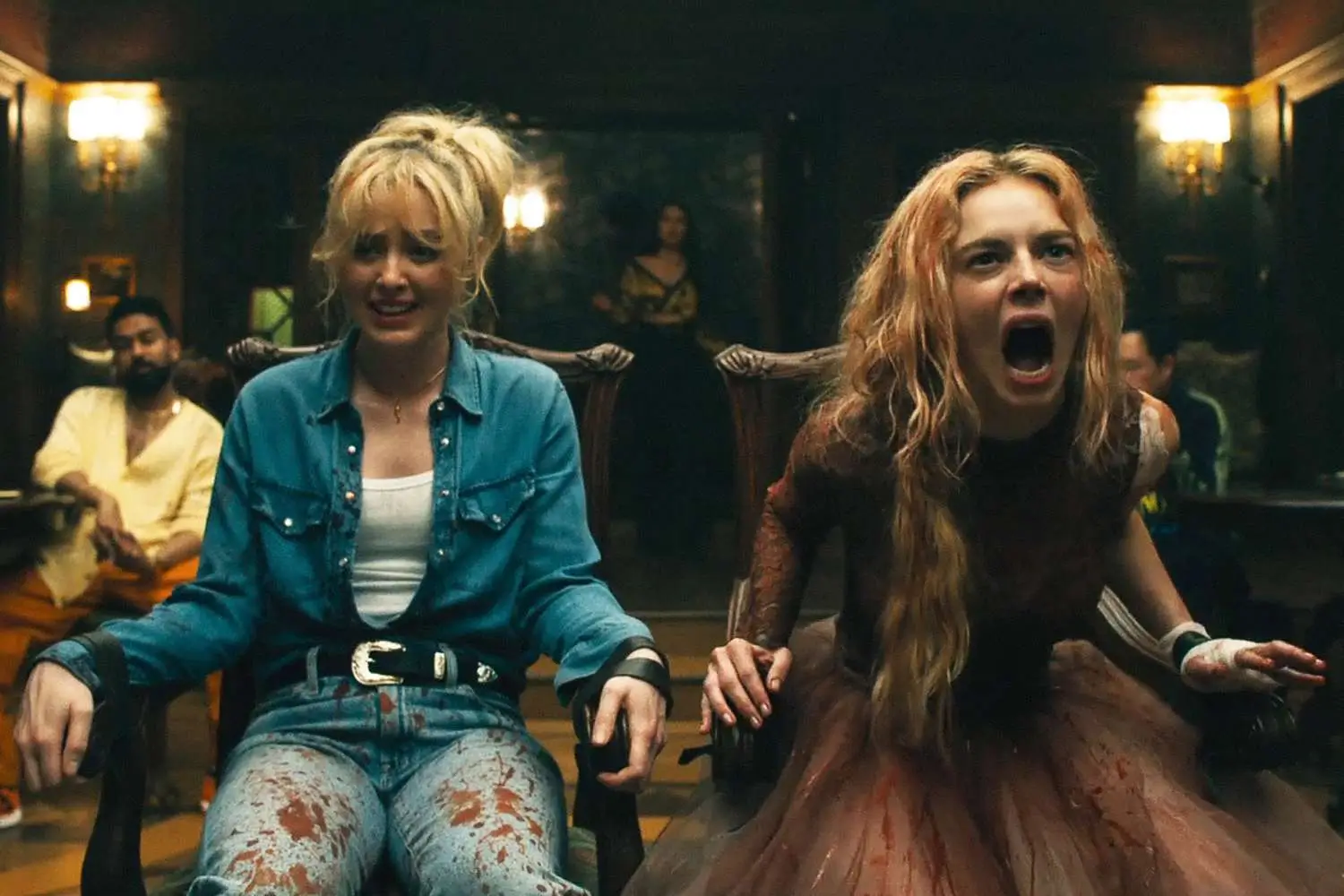
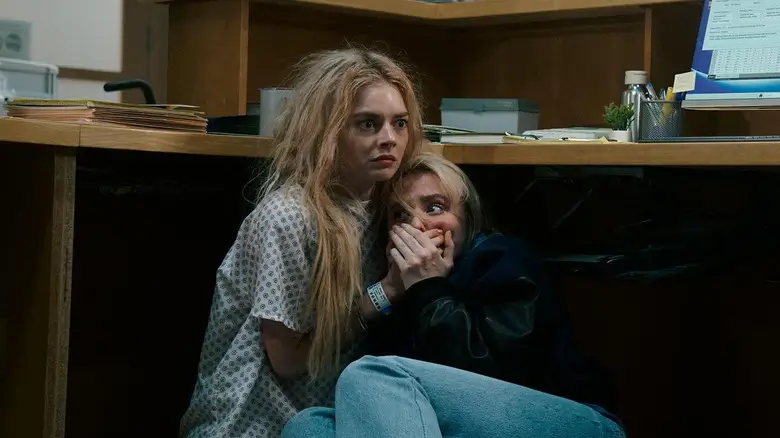
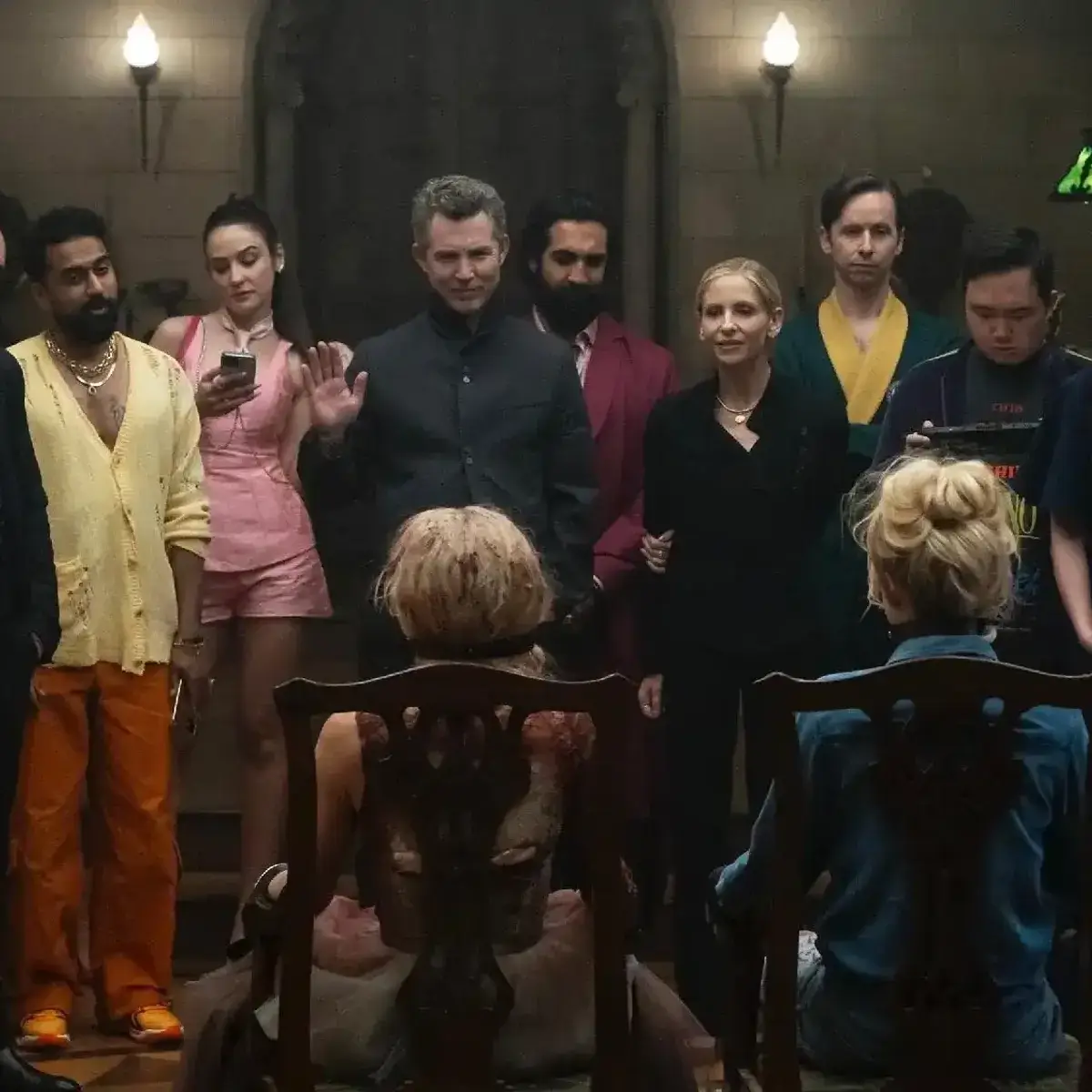
When Ready or Not arrived in 2019, it felt like a lightning strike—equal parts horror, satire, and survival thriller, stitched together with a precision that elevated it beyond genre expectations. The film’s final act, drenched in blood and punctuated by absurdist violence, became instantly iconic. Naturally, anticipation for Ready or Not 2: Here I Come has been shaped by a single question: how do you escalate chaos that already bordered on operatic?
For directing duo Matt Bettinelli-Olpin and Tyler Gillett—collectively part of the filmmaking collective Radio Silence—the answer wasn’t simply “more blood.” It was, paradoxically, less.
The most difficult scene to craft in Ready or Not 2, by their own admission, didn’t involve violence at all. No arterial spray, no splintered bone, no grand guignol theatrics. Instead, it hinged on something far more elusive: sustained tension without release.
genre
Horror cinema often relies on escalation. Stakes rise, bodies fall, and the audience is carried forward by a rhythm of shock and aftermath. But in Ready or Not 2, Bettinelli-Olpin and Gillett faced a creative paradox: how do you maintain the franchise’s identity while resisting its most recognizable impulses?
The answer lay in restraint.
The “hardest scene” in question unfolds as a prolonged sequence—dialogue-heavy, spatially intricate, and emotionally charged. It required the directors to strip away the very tools that made the original film so viscerally effective. Without blood as punctuation, every beat had to land through performance, blocking, and timing.
In other words, the scene had to breathe.
Back for Round Two. READY OR NOT 2: HERE I COME. Only in theaters March 20th. #ReadyOrNot2 pic.twitter.com/zkwQF91KTT
— Searchlight Pictures (@searchlightpics) February 5, 2026
flow
What makes a scene difficult isn’t always what’s visible on screen. In this case, the complexity lived beneath the surface.
The sequence reportedly involved multiple characters occupying the same physical space, each with competing motivations and shifting alliances. Think less about action and more about choreography—not of bodies in combat, but of intentions in collision.
Actors had to hit precise marks while maintaining emotional authenticity. Camera movement had to feel fluid yet deliberate. Dialogue overlapped, intersected, and occasionally collided. The margin for error was razor-thin.
Unlike action scenes, where chaos can sometimes mask imperfection, this kind of sequence exposes everything. Every glance, every pause, every line reading becomes magnified.
stir
One of the defining qualities of Ready or Not was its tonal dexterity. It could pivot from dread to dark humor in a matter of seconds, often within the same frame. Replicating—and evolving—that balance in the sequel presented another layer of difficulty.
In a bloodless scene, tone becomes even more precarious.
Push too far into comedy, and tension dissolves. Lean too heavily into seriousness, and the film risks losing its satirical edge. Bettinelli-Olpin and Gillett had to navigate this tightrope with surgical precision, ensuring that the scene felt cohesive within the film’s broader emotional landscape.
This is where direction becomes less about control and more about calibration. Tiny adjustments—an actor’s delivery, a camera linger, a beat held half a second longer—can shift the entire tone of a moment.
View this post on Instagram
show
Without the spectacle of violence, the burden shifts almost entirely onto the actors.
In this scene, performance becomes the primary vehicle of tension. Micro-expressions replace jump scares. Subtext carries more weight than action. Silence, in many ways, becomes louder than sound.
This kind of acting demands a different kind of discipline. It’s not about reacting to external stimuli, but about generating internal stakes that feel just as urgent. For the directors, it meant creating an environment where actors could explore those nuances while still hitting the precise technical requirements of the scene.
It’s a delicate dance: freedom within structure.
cam
Another challenge lay in how the scene was captured.
Rather than relying on rapid cuts or disorienting edits, the directors leaned into longer takes and deliberate camera movement. The camera doesn’t just observe—it participates. It weaves through the space, aligning the audience with shifting perspectives and emotional beats.
This approach amplifies tension but also increases difficulty. Longer takes mean fewer opportunities to “fix it in post.” Everything has to work in real time: performance, blocking, focus, lighting.
In many ways, the camera becomes another character—one that must be precisely choreographed alongside the rest.
idea
If blood is the punctuation of horror, silence is its grammar.
In crafting this scene, Bettinelli-Olpin and Gillett leaned heavily into spatial dynamics. Who stands where. Who moves first. Who hesitates. These choices shape the audience’s perception of power and vulnerability.
The absence of overt violence allows these elements to come into sharper focus. A closed door becomes ominous. A glance across a room carries weight. Even negative space—the empty areas within a frame—can generate unease.
This is suspense in its purest form: anticipation without resolution.
theater
There’s an almost theatrical quality to the scene’s construction.
With multiple characters sharing a confined space, the directors approached the sequence with a stage-like sensibility. Blocking became essential—not just for visual clarity, but for narrative coherence. Every movement had to serve a purpose, guiding the audience’s attention without overtly signaling it.
This theatrical influence also reinforces the film’s satirical undercurrent. The characters, bound by the absurd rules of their world, perform roles that are both literal and metaphorical. The scene becomes a kind of dark stage play, where tension builds not through action, but through expectation.
edit
Ironically, a scene that appears seamless often requires the most intricate editing.
Even with longer takes, the assembly of the sequence demanded careful consideration. Rhythm had to be maintained without relying on traditional horror beats. Cuts, when they occurred, needed to feel invisible—supporting the flow rather than interrupting it.
This is where the directors’ collaboration with their editors becomes crucial. Together, they sculpt the scene’s pacing, ensuring that tension rises and falls in a way that feels organic.
aud
Perhaps the most significant challenge was psychological.
Audiences coming into Ready or Not 2 expect a certain level of carnage. By presenting a scene devoid of blood, the filmmakers intentionally subvert those expectations. The absence itself becomes a source of tension.
Viewers are conditioned to anticipate violence. When it doesn’t arrive, the suspense stretches, elongates, and intensifies. The question shifts from “what will happen?” to “when will it happen?”
And in that delay, the scene finds its power.
evolve
For Bettinelli-Olpin and Gillett, the decision to center the film’s most challenging moment around a bloodless sequence reflects a broader philosophy: evolution over repetition.
Sequels often fall into the trap of escalation for its own sake—bigger set pieces, louder moments, more spectacle. But Ready or Not 2 appears to take a different path, exploring new textures within its established framework.
By focusing on tension rather than gore, the filmmakers expand the franchise’s vocabulary. They demonstrate that what made the original film compelling wasn’t just its violence, but its control.
View this post on Instagram
film
It’s easy to assume that the most difficult scenes in a horror film are the most visually extreme. But as this example illustrates, difficulty often resides in the invisible.
A bloodless scene demands a different kind of precision—one that relies on coordination, nuance, and trust. It requires every department to operate in harmony, from acting and direction to cinematography and editing.
And perhaps most importantly, it requires confidence. Confidence to hold back. To resist the urge to fill every moment with spectacle. To trust that tension, properly constructed, is enough.
show
In the end, the hardest scene to craft in Ready or Not 2: Here I Come redefines what difficulty looks like in modern horror.
It’s not about the volume of blood or the scale of destruction. It’s about control—of tone, of pacing, of performance. It’s about understanding that sometimes, the most powerful moments are the quietest ones.
For Matt Bettinelli-Olpin and Tyler Gillett, this scene represents a kind of creative high wire act. One misstep, and the tension collapses. But when executed correctly, it becomes something far more enduring than shock value.
It becomes suspense in its purest form.
fin
If Ready or Not taught audiences anything, it’s that horror can be both brutal and playful. With Ready or Not 2, Bettinelli-Olpin and Gillett seem poised to deepen that duality.
The hardest scene in the film—devoid of blood yet rich in tension—serves as a reminder that horror isn’t defined by what we see, but by what we feel. It’s the space between moments, the anticipation of impact, the uncertainty of outcome.
In a genre often driven by excess, restraint becomes radical.
And in that restraint, Ready or Not 2: Here I Come may find its most lasting impression—not in the scenes that shock, but in the ones that linger.