Unheardof Piggy Runner 2.0: Mischief, Memory, and Myth of the Suburban Skate Crew

March 21, 2026
intro
“Look at those piggies go” isn’t just a tagline—it’s a tone. It’s skittish, slightly irreverent, and rooted in something far more personal than most sneaker releases dare to admit. With the Piggy Runner 2.0, Unheardof leans fully into storytelling, transforming a childhood mythology into a fully realized footwear universe.
This isn’t simply a sequel. It’s an expansion—of characters, of memory, and of the chaotic energy that defines youth when rules feel optional and the world is a playground waiting to be disrupted.
At the center of it all is Philip Lipschutz, whose personal history continues to shape the brand’s creative direction. Where other labels chase trends, Unheardof builds worlds. The Piggy Runner 2.0 is one of its most vivid.
stir
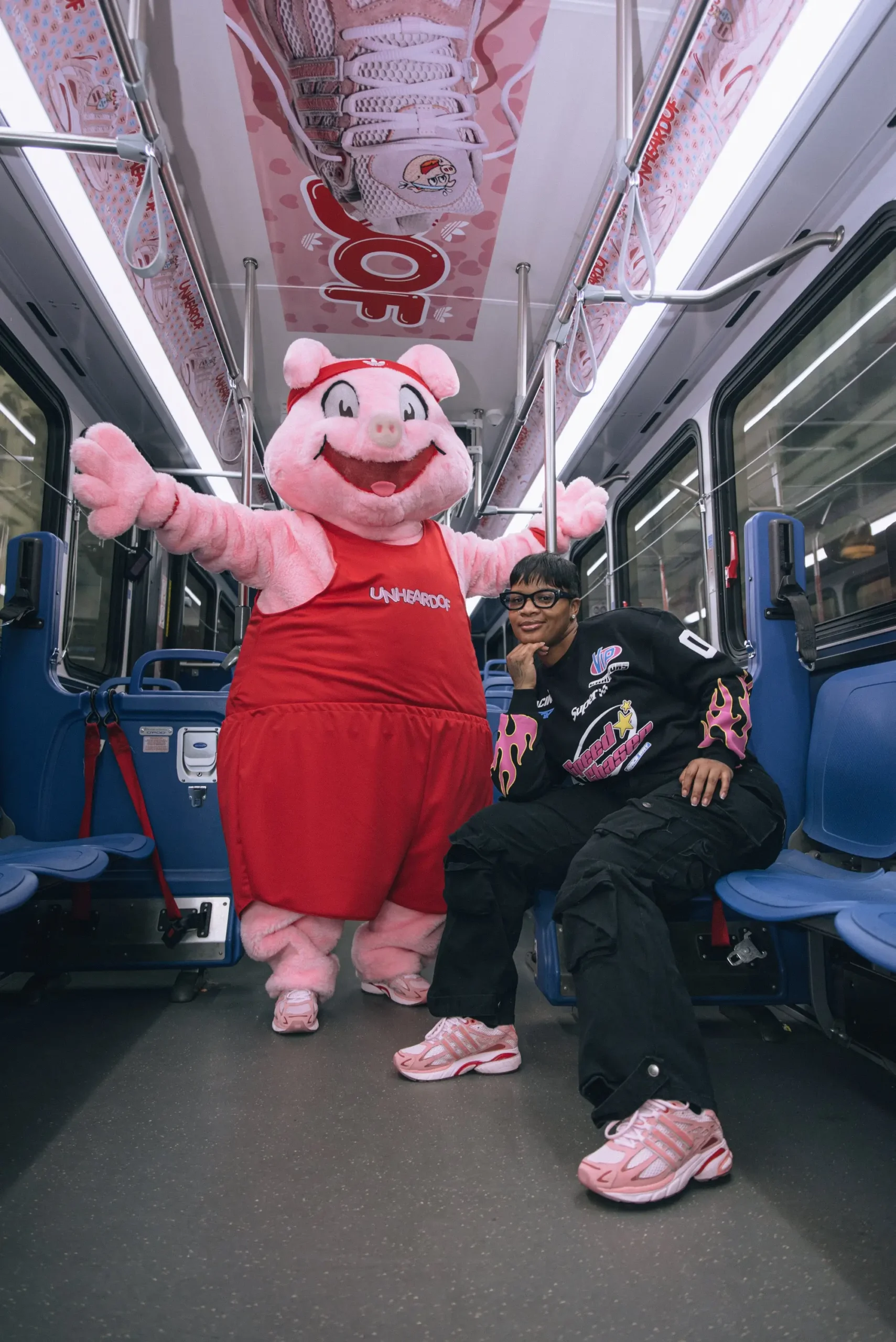
The first Piggy Runner introduced the world to “Porkchop”—a tongue-in-cheek alter ego of Lipschutz himself. It was a character built on humor and self-awareness, but also on authenticity. Porkchop wasn’t just a mascot; he was a memory, a reflection of a younger self navigating suburban spaces with nothing but a skateboard and a sense of possibility.
Piggy Runner 2.0 expands that narrative into a full cast.
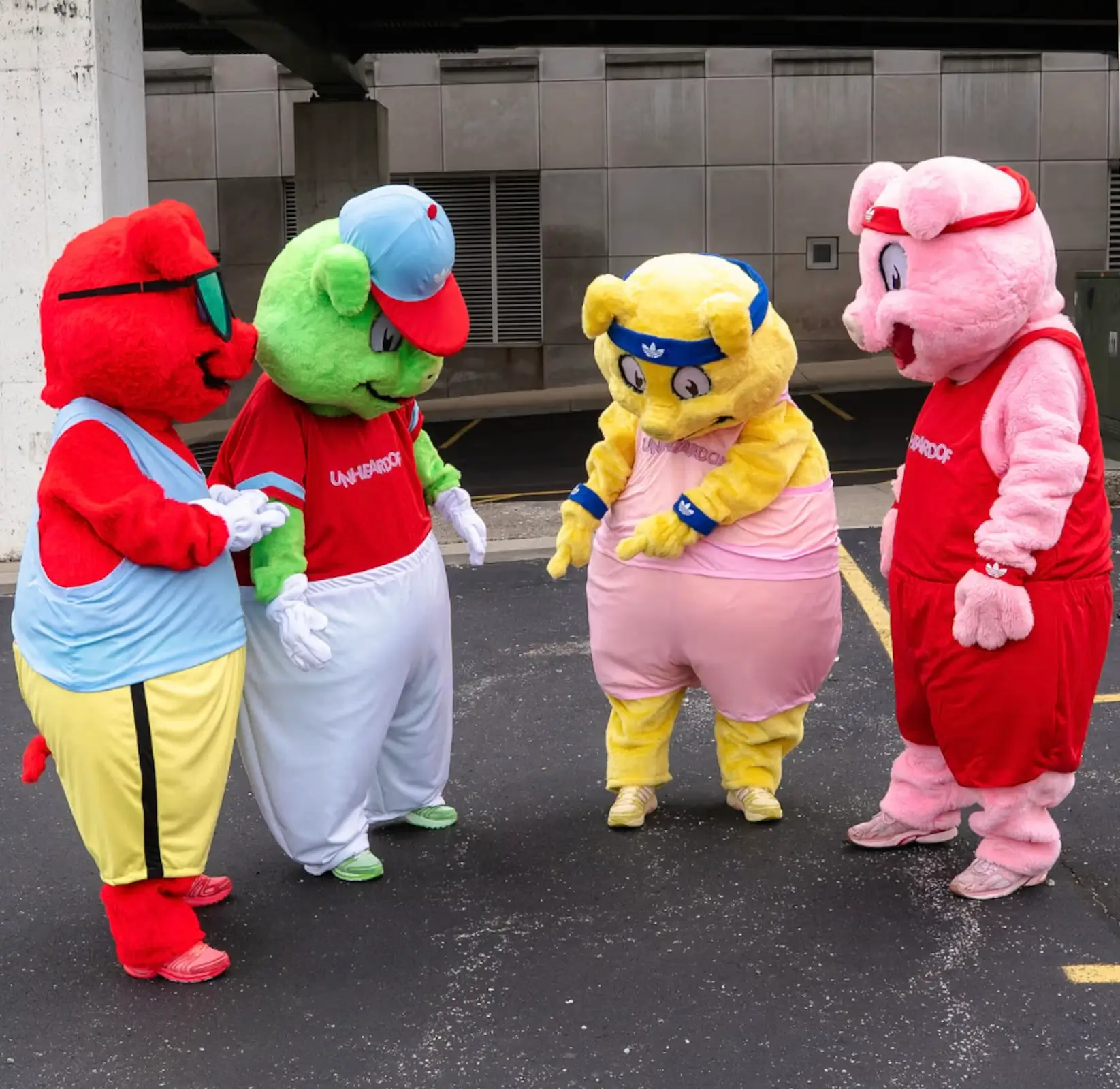
Cupcake. Cheeseburger. Steve-O.
Each name feels deliberately unserious, almost absurd. But beneath that surface is a deeper intention: these are avatars of friendship. They represent the kind of bonds formed in motion—skating through parking garages, cutting through neighborhoods, turning mundane environments into stages for improvisation.
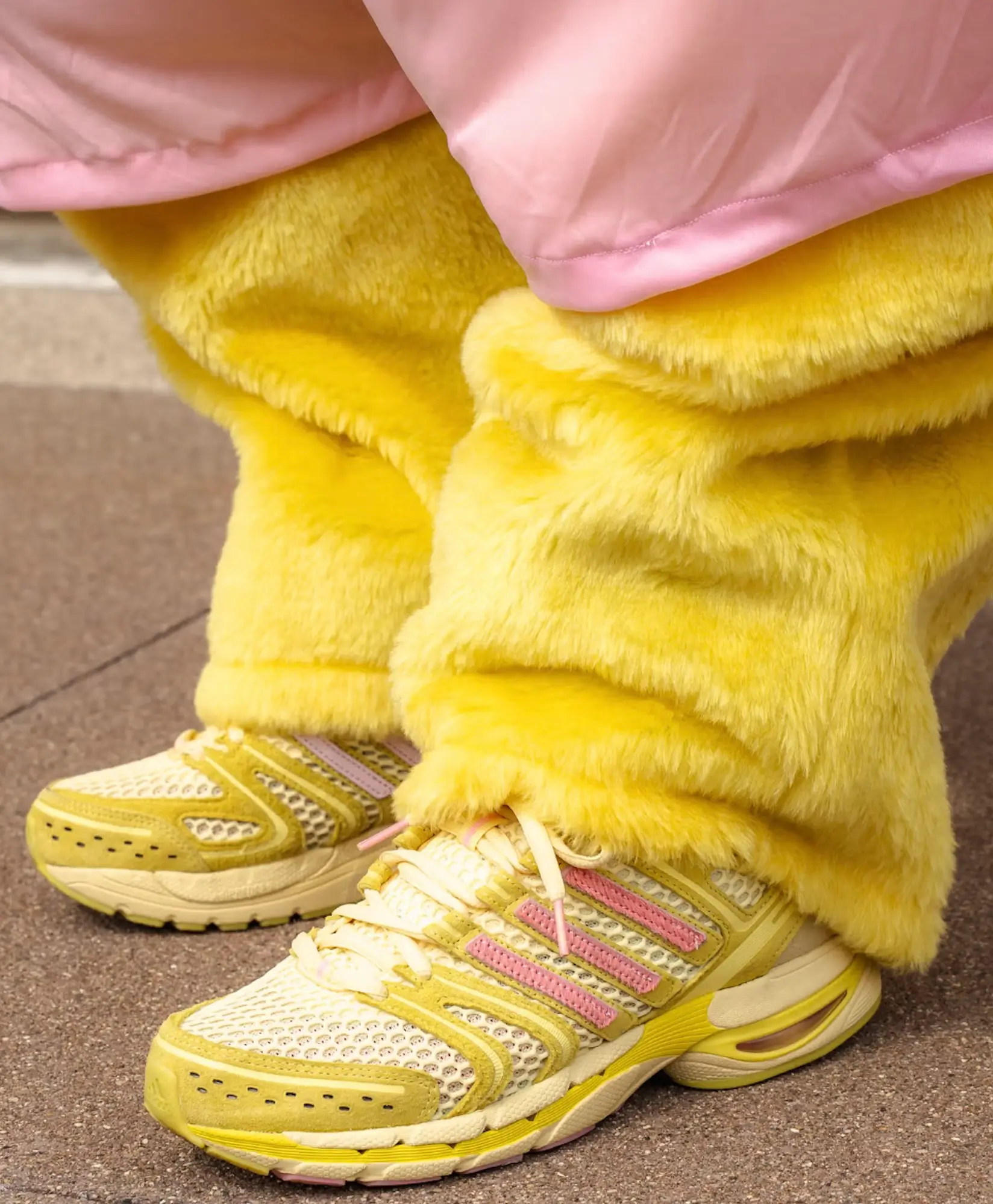
The colorways—green, yellow, and red—anchor each character visually while reinforcing their individuality. They are distinct, yet unified, much like the friendships they symbolize.
flow
The Piggy Runner 2.0 is rooted in a very specific kind of Americana: suburban skate culture. Not the polished, competition-ready version, but the raw, unfiltered experience of kids creating their own terrain.
Parking garages become playgrounds. Curbs become obstacles. Security guards become part of the narrative.
This is the environment that shaped Lipschutz and his crew, and it informs every aspect of the release. The sneakers carry that energy—not just in their design, but in their attitude.
There is a looseness to the concept, a refusal to take itself too seriously. Yet at the same time, there is precision in execution. This duality—chaos and control—is what gives the Piggy Runner its identity.
View this post on Instagram
lang
At first glance, the Piggy Runner 2.0 reads as whimsical. The pig motif, the bright colorways, the character-driven branding—it all leans toward the playful.
But look closer, and the design reveals a more considered approach.
The silhouettes are built for wearability. The materials balance durability with comfort. The color blocking is deliberate, ensuring that each pair stands out without becoming overwhelming.
This is where Unheardof differentiates itself. The brand understands that storytelling alone isn’t enough. The product must hold its own.
The pig motif, in this context, becomes a unifying symbol rather than a gimmick. It ties the collection together while allowing each pair to maintain its own identity.
limit
Scarcity has become a predictable tool in sneaker culture, but the Piggy Runner 2.0 approaches it with a sense of narrative alignment.
Each piggy is limited to 2,500 units.
This number feels intentional—large enough to allow access, but small enough to preserve exclusivity. It mirrors the idea of a tight-knit friend group: not everyone is invited, but those who are become part of something specific.
The pricing, set at $185, positions the sneaker within reach while still maintaining a sense of value. It’s a balance that reflects Unheardof’s broader philosophy—accessible, but not diluted.
rel
The launch strategy reinforces the brand’s identity. The Piggy Runner 2.0 will release exclusively through Unheardof, both in-store and online at unheardofbrand.com.
This decision is significant.
In an era where wide distribution often equates to success, Unheardof chooses control. By limiting availability to its own channels, the brand maintains a direct connection with its audience.
The release time—11:00 AM ET—adds a sense of ritual. It creates a shared moment, a point of convergence for the community.
This is not just a drop. It’s an event.
myth
What makes the Piggy Runner 2.0 particularly compelling is its use of mascots as narrative devices.
In many ways, these characters function like modern mythology. They are exaggerated, stylized, and slightly absurd—but they carry emotional weight.
Porkchop, Cupcake, Cheeseburger, Steve-O.
They are not just names. They are placeholders for experiences, for inside jokes, for moments that might seem insignificant to outsiders but are deeply meaningful to those who lived them.
By translating these figures into physical objects, Unheardof creates a bridge between memory and material. The sneakers become more than products; they become artifacts.
idea
The Piggy Runner 2.0 arrives at a moment when shoe culture is increasingly driven by narrative. Consumers are no longer satisfied with aesthetics alone. They want context, meaning, and connection.
Unheardof delivers all three.
The collection taps into a universal theme—friendship—while grounding it in a specific cultural context. It speaks to anyone who has ever been part of a group that felt like its own world.
At the same time, it resists overexplanation. The story is there, but it is not forced. It invites interpretation.
fin
The Piggy Runner 2.0 is, at its core, about movement—physical, emotional, and cultural.
It moves through memory, revisiting moments of youth. It moves through space, capturing the energy of skate culture. And it moves through the present, positioning itself within a sneaker landscape that increasingly values authenticity.
Under the direction of Philip Lipschutz, Unheardof continues to carve out its own lane. The Piggy Runner 2.0 is not trying to compete with the industry’s biggest players. It is building something different.
Something more personal. More specific. More alive.
And as those piggies go, they carry with them a story that feels both individual and universal—a reminder that sometimes, the best ideas come from the simplest moments.