Michael B. Jordan and the $18M Miami Vice Equation

March 22, 2026
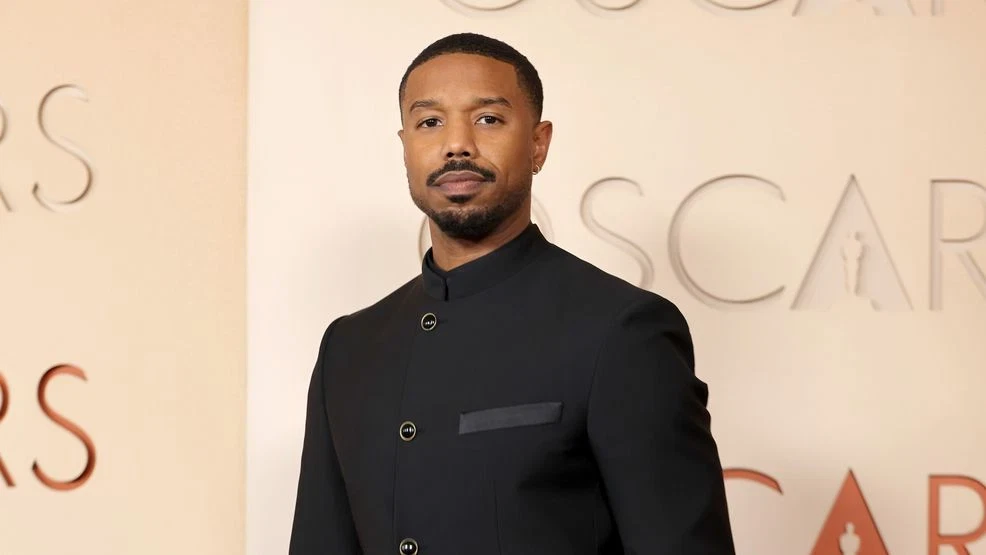
The reported $18 million price tag attached to Michael B. Jordan for the upcoming Miami Vice reboot isn’t just a headline-grabbing number—it’s a lens into how Hollywood now values star power, cultural relevance, and timing. While the figure remains unconfirmed and sits firmly in negotiation territory, its existence signals something larger: Jordan has entered a new echelon, where salary isn’t just compensation—it’s positioning.
stir
Over the past decade, Jordan has engineered one of the most deliberate ascents in Hollywood. From breakout roles in Fruitvale Station to blockbuster dominance in Black Panther and the Creed franchise, his trajectory has been less about volume and more about calibration. Each role reinforced a dual identity: prestige actor and commercial anchor.
Unlike many of his contemporaries, Jordan’s brand isn’t tethered to a single genre. He moves fluidly between indie credibility and studio spectacle, a balance that studios covet. By the time conversations around Miami Vice began circulating, he wasn’t just a bankable name—he was a cultural signal. Casting him doesn’t just secure a lead; it reframes the entire project.
why
In today’s Hollywood economy, $18 million sits comfortably within A-list territory. For context, actors operating at the top tier—especially those coming off awards recognition or major franchise success—regularly command eight-figure upfront salaries, often supplemented by backend deals.
Jordan’s reported ask aligns with several key factors:
- post-awards leverage: Following heightened critical recognition, actors often renegotiate their market value upward
- franchise credibility: Leading a successful series like Creed demonstrates reliability in carrying a film financially
- global appeal: Studios increasingly prioritize actors with international draw, not just domestic recognition
In that sense, the number isn’t inflated—it’s strategic. It communicates status to both studios and audiences.
View this post on Instagram
theme
The project itself carries weight. Originally brought to cinematic life by Michael Mann in 2006, Miami Vice has long been associated with a specific aesthetic language: neon minimalism, digital grit, and understated masculinity. Any reboot isn’t just revisiting a title—it’s reinterpreting a legacy.
Attaching Jordan to the film suggests a recalibration. Where the original leaned into cool detachment, a modern iteration could pivot toward charisma and emotional texture. Jordan’s presence would likely shift the tone from purely atmospheric to character-driven, broadening its appeal.
And that’s where the economics come in. If a studio believes that a lead actor can redefine the audience for a reboot—expanding it beyond nostalgia into something culturally current—then a higher salary becomes less a cost and more an investment.
pos
In Hollywood, salary negotiations are rarely just about money. They’re also about narrative. A reported $18 million ask does several things simultaneously:
- It positions Jordan alongside the industry’s highest-paid actors
- It signals confidence in his box office draw
- It creates leverage in backend participation (profit shares, bonuses, etc.)
Even if the final number lands lower, the initial ask sets the tone. It reframes the conversation from “what is he worth?” to “how close can we get to that number?”
This is a well-established tactic among top-tier talent. The headline figure becomes part of the negotiation choreography, shaping expectations before contracts are finalized.
show
Reports have also suggested a potential salary gap between Jordan and co-star Austin Butler, with Jordan’s figure potentially doubling Butler’s. While such disparities often spark conversation, they’re not unusual.
Hollywood salaries are rarely equal; they’re calibrated based on perceived draw, recent performance, and negotiating power. Butler, despite his acclaim, occupies a slightly different lane—one defined more by transformation and prestige roles than by franchise leadership.
Jordan, by contrast, brings a hybrid value: he can open a film and sustain it. That distinction, however subtle, often translates directly into salary.
industry
What makes this moment particularly interesting is how it reflects a larger shift in Hollywood economics. The streaming era briefly disrupted traditional salary structures, with studios experimenting with buyouts and reduced upfront pay in exchange for guaranteed deals.
But theatrical filmmaking—especially for high-profile reboots—has reasserted the importance of star-driven marketing. In a crowded content landscape, recognizable faces cut through noise. They become the campaign.
Jordan’s reported $18 million ask can be read as part of this recalibration. It’s a reminder that, despite algorithmic recommendations and franchise IP, individual star power still carries measurable value.
compare
Of course, an $18 million salary isn’t without risk. For studios, it raises the financial stakes. The film must perform—not just critically, but commercially—to justify the investment.
But there’s also a counterargument: not paying for star power can be riskier. A reboot without a compelling lead risks fading into the background, overshadowed by more dynamic offerings.
Jordan’s involvement could function as both anchor and amplifier. His presence alone generates media attention, social engagement, and audience curiosity—all of which translate into measurable returns.
culture
Perhaps the most difficult element to quantify is Jordan’s cultural currency. Beyond box office numbers, he occupies a space where fashion, sport, and entertainment intersect. His appearances—whether on red carpets or in campaigns—carry aesthetic influence.
For a property like Miami Vice, which historically leaned heavily on style, this matters. Casting Jordan isn’t just about performance; it’s about visual identity. It’s about how the film will look, feel, and be perceived in a broader cultural context.
That kind of influence doesn’t show up on balance sheets, but it shapes outcomes nonetheless.
fwd
As of now, the $18 million figure remains a reported demand, not a finalized agreement. Negotiations are ongoing, and variables—from budget constraints to creative direction—will ultimately determine the outcome.
But regardless of where the number lands, the conversation itself is telling. It reflects an actor at the peak of his leverage, a studio weighing risk against reward, and an industry recalibrating how it values star power in an era of constant content.
sum
Michael B. Jordan’s reported $18 million ask for Miami Vice isn’t an anomaly—it’s a statement. It marks a moment where career momentum, cultural relevance, and industry economics converge.
Whether or not the deal closes at that exact figure almost feels secondary. The real story is what the number represents: a recalibrated hierarchy, where Jordan isn’t just participating in Hollywood’s system—he’s helping define its current terms.
And in that sense, the price tag isn’t just about a film. It’s about a shift.